AnnDee4444
Well-Known Member
I'd argue that over time aerodynamics is a greater load than the additional weight.
Sponsored
I’d love a fan controller imo, i’m a little anal with my idle times before shutting the jeep off. If temps over 200° i’ll run the heat at full heat and blower and that’ll bring the temps down to 188° in like 2 minutes. It’s a very efficient system if there’s no load. I’d love to have a mishimoto aluminum radiator also but apparently those full aluminum radiators(not specific to mishimoto) crack pretty often from body flex.I agree, I would rather the better cooling. Been waiting on a PWM fan controller to be designed for the 2.0 at RPMExtreme but they have yet to have a 2.0 enter their shop.
If anyone with a 2.0 is in their area ill pay $150 towards your controller so that i can get mine before these coming summer months.
http://www.rpmextreme.com/Product/311/Jeep-JL-PWM-FAN-CONTROLLER.aspx

I don't know you, nor do I care whether you believe me.Many would question your trustworthiness.
I’d love a fan controller imo, i’m a little anal with my idle times before shutting the jeep off. If temps over 200° i’ll run the heat at full heat and blower and that’ll bring the temps down to 188° in like 2 minutes. It’s a very efficient system if there’s no load. I’d love to have a mishimoto aluminum radiator also but apparently those full aluminum radiators(not specific to mishimoto) crack pretty often from body flex.
Don’t remember where I saw it but apparently our thermostats open at 195° partially and are fully open by 212°.
I simply refuse to buy vehicles with these small displacement turbo engines. There is no way they can last a reasonable 150k+ miles given the weight of the vehicle, all the internal stresses, combined with the type of use we but them through Jeeping. Low speeds, idling, then high speeds in high ambient. These is only so much surface area you can give a four cyl engine to disperse the loads. And, oh yes, let’s put 40s on the rig, too. Fergetit!
That and I didn't want to put premium fuel in it! They said "it's not required", that is until there is an engine problem!
What about the little 4 cylinder turbo engines in the big box trucks? They are hauling 2500 plus pounds up here in the Appalachian Mountains, and let's face it, they are not aerodynamic at all. We see 400,000 plus miles on them pretty regularly.Lightweight is the key word here. Any time you try raising power output or adding weight, the reliability will potentially go down.
A JL is a hell of a lot heavier than a Subaru type crossover or any other little s***tbox car.
The most important thing is how well the repair is done. If the dealership does a good job and uses the right parts and methods recommended by the manufacturer, your engine can be fixed to work well again. Whether they just fix the head or put in a new engine, how carefully and correctly they do the work will really matter for how reliable your engine will be in the future.My 18 JLU w 2.0L (Italian origin motor) blew the head gasket at 87. Have the Mopar service contract. Has been at dealer over 2 weeks with no update. Last they said they have to tear down to diagnose whether it needs just head pulled/machined/repaired or new motor. Is this motor going to make it to 200k after repair?
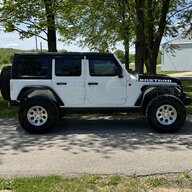
Just installed them myself…I had plans to mod my plastic vents, but I like the aluminum ones Motobilt came out with a few months back. No longer being in Texas and putting far less mileage on my Jeep has knocked this down the priorities list quite a bit for me.
Seems heat reduction from opening the vents is mostly anecdotal. There's a ton of threads on it, but I don't know how it could really hurt, especially at idle or off-roading. Plus, my compressor is under the hood, so keeping that cooler is another benefit.
One would hope that is part of the Research and Development that makes vehicles so expensive, but in reality, most of that testing is done in simulation, or extreme tests that are suppose to represent thousands of miles.The 2.0 turbo in our jeeps should easily make 200K. There's some people out there pushing close to that now.
As far as smaller turbocharged engines not running to higher mileage is a total crock of BS! Jeep did not just throw this 2.0 in the jeep and say ok all done. They had specific criteria that had to be meet. Because they knew how people use their jeeps. They tested this engine before hand also. Another good example is the Ecoboost Ford made, they tested it to 250K before they ever released it to the public.
I could go on and on about turbocharged engine's small or big, but I already know from experience on here it's just pissing into the wind. There's just too many people that don't know enough about the subject.
Hopefully the dealership can fix it for you, and if your lucky they might even be able to tell you what caused it. I would be willing to be it had nothing to do with being turbocharged.
Hope it works out for you.
The variable is always the customer. People overheat their engines every single day and blame the engine.One would hope that is part of the Research and Development that makes vehicles so expensive, but in reality, most of that testing is done in simulation, or extreme tests that are suppose to represent thousands of miles.
You can put a vehicle on a track and run it not stop for whatever simulation its suppose to represent. But, it still is not the same as owning a vehicle for 5-10 years of starting stopping, cold weather hot weather, short trips long trips, etc.
If the testing was that thorough a warranty of 10 years or 200k miles would be a safe bet. Unfortunately, the consumer is doing the long term testing, and Jeep makes changes based on warranty claims...
The 2.0 motor is not a motorcycle engine, and has no issue moving a Jeep around.it’s 1995cc turbo motorcycle engine, pushing around a full-size jeep. No it’s not gonna last 200K as you found out..
Alfa Romero has been running this engine since 2016, and I'm sure it was tested long before that. The engine has a pretty good track record based on the number of vehicles it is in.One would hope that is part of the Research and Development that makes vehicles so expensive, but in reality, most of that testing is done in simulation, or extreme tests that are suppose to represent thousands of miles.
You can put a vehicle on a track and run it not stop for whatever simulation its suppose to represent. But, it still is not the same as owning a vehicle for 5-10 years of starting stopping, cold weather hot weather, short trips long trips, etc.
If the testing was that thorough a warranty of 10 years or 200k miles would be a safe bet. Unfortunately, the consumer is doing the long term testing, and Jeep makes changes based on warranty claims...