Sponsored

New Version of PCV

Willys41

Well-Known Member
First Name
Larry
Joined
Nov 2, 2021
Threads
3
Messages
1,171
Reaction score
1,314
Location
Pleasanton Ca.
Vehicle(s)
2020 Jeep Willys
It's a great idea for a company to sell a product to make money.
TSB 09-012-22
After installing my UPR oil catch can ALL my spark knock was gone.I now have clean oil free air stream.
The first time I heard the spark knock at only 10k on the motor I was running 91 octane and at 4k elevation.
Now at 30k I have not heard ANY knocking.
Sponsored


 

Dusty Dude

Well-Known Member
Joined
Apr 16, 2023
Threads
57
Messages
1,692
Reaction score
3,807
Location
Colorado Springs, CO
Vehicle(s)
1970 Ply Roadrunner, 2010 Challenger SRT
I can see you don't care when climbing a steep incline that there is a possibility to suck oil into the PCV system and into the motor.
I have seen it in person and its not in my plans to have it happen to me.
Quite the opposite! Sorry for the misunderstanding. I installed a catch can on my Challenger when it was new. 170K+ miles later, my intake and cylinders are clean. A catch can was installed almost right away on my 3.6 for the same reasons you have highlighted. My point was that they didn’t have new engines burning oil back then like they do now. I believe all this oil blow by is a side effect of trying to achieve CAFE standards. Low tension piston rings in order to reduce friction.
 

Dusty Dude

Well-Known Member
Joined
Apr 16, 2023
Threads
57
Messages
1,692
Reaction score
3,807
Location
Colorado Springs, CO
Vehicle(s)
1970 Ply Roadrunner, 2010 Challenger SRT
Yea, okay.
Meanwhile every other car on the road is burning a half quart or more per 1000 miles and running along just fine.
That doesn’t make it right. Any engine that used that much oil back in the day would have been rebuilt or tossed in the scrapyard.
 

mwilk012

Well-Known Member
Joined
Mar 10, 2018
Threads
14
Messages
11,005
Reaction score
11,351
Location
Oklahoma
Vehicle(s)
2018 Ocean Blue JLU Rubicon
Occupation
Service
That doesn’t make it right. Any engine that used that much oil back in the day would have been rebuilt or tossed in the scrapyard.
There really isn’t a nice way to say “you’re just making this up”. We work on all makes and models. The only engine in America that doesn’t burn oil at an excessive rate is this one.
 

Dusty Dude

Well-Known Member
Joined
Apr 16, 2023
Threads
57
Messages
1,692
Reaction score
3,807
Location
Colorado Springs, CO
Vehicle(s)
1970 Ply Roadrunner, 2010 Challenger SRT
Yea, okay.
Meanwhile every other car on the road is burning a half quart or more per 1000 miles and running along just fine.
That doesn’t make it right. Any engine that used that much oil back in the day would have been rebuilt or tossed in the scrapyard.
There really isn’t a nice way to say “you’re just making this up”. We work on all makes and models. The only engine in America that doesn’t burn oil at an excessive rate is this one.
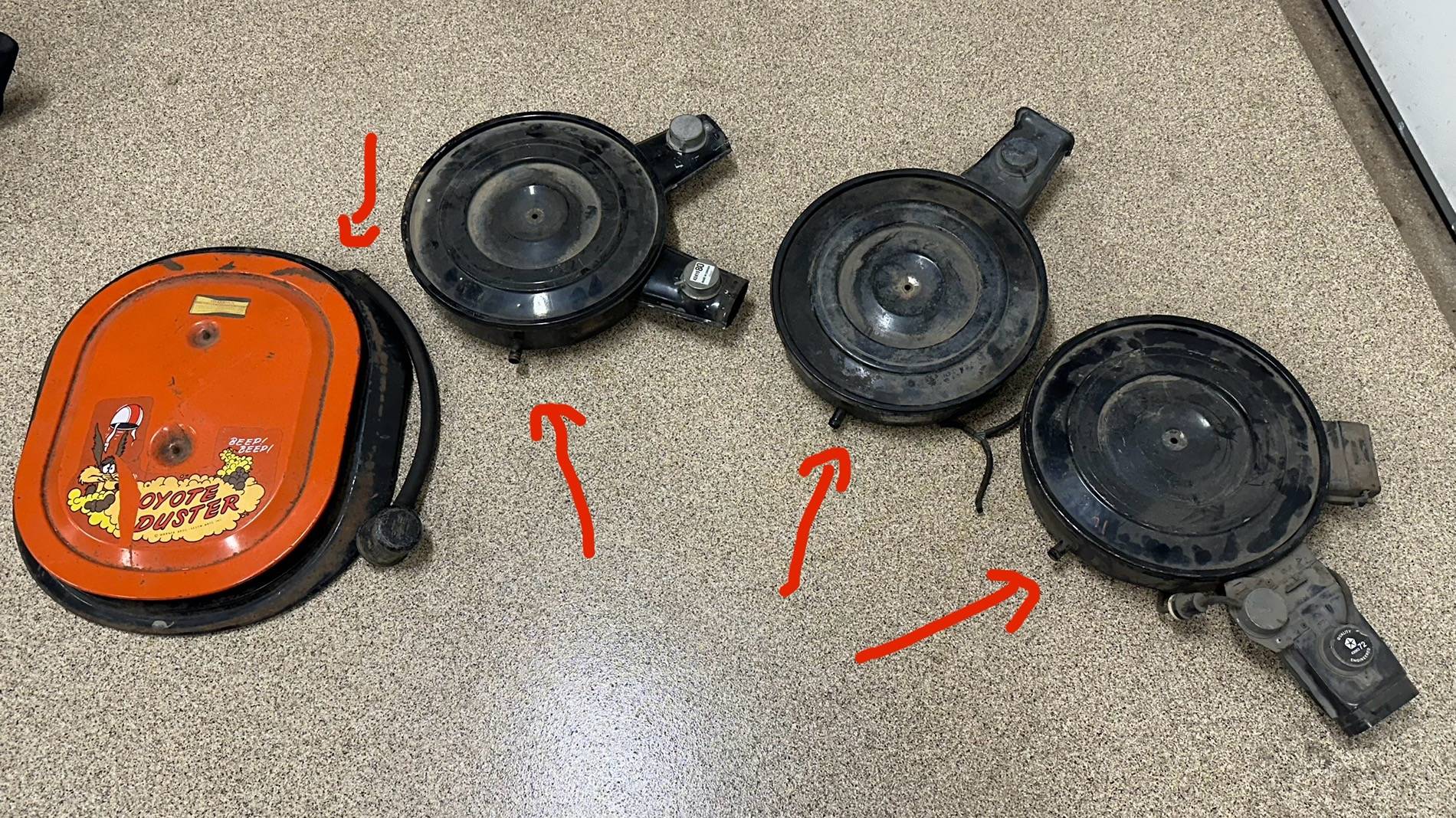
Oh, really? I’m making it up? Ok, since you are an expert that works on all makes and models, then look at this photo.

Jeep Wrangler JL New Version of PCV IMG_7955

The arrows point to where the PVC line connected to the intake system. It is outside of the air filter element. Every American manufacturer had the hose located in the same place. Why was it moved to an entry point behind the throttle body on the newer engines?

(Hint: I can show you pictures of the insides of these air cleaners and they are bone dry. Not a drop of oil in them.)
 

Sponsored

mwilk012

Well-Known Member
Joined
Mar 10, 2018
Threads
14
Messages
11,005
Reaction score
11,351
Location
Oklahoma
Vehicle(s)
2018 Ocean Blue JLU Rubicon
Occupation
Service
Oh, really? I’m making it up? Ok, since you are an expert that works on all makes and models, then look at this photo.

IMG_7955.jpeg

The arrows point to where the PVC line connected to the intake system. It is outside of the air filter element. Every American manufacturer had the hose located in the same place. Why was it moved to an entry point behind the throttle body on the newer engines?

(Hint: I can show you pictures of the insides of these air cleaners and they are bone dry. Not a drop of oil in them.)
Let's get specific on make and model and I'll give you the diagram. PCV should route to the carb on your old shit. The port on the air cleaner housing is not the PCV. Hell, your 3.6 has the same connection for the fresh air makeup back to the engine. PCV consumption is not the primary cause of oil consumption on most engines anyway. This really isn't anything worth arguing, its simply fact that the pentastar engines burn less oil than nearly any other engine on the road. Off the top of my head I can't think of another high production number engine that has such low consumption.
 

ym0bc1

Well-Known Member
Joined
May 24, 2023
Threads
71
Messages
428
Reaction score
285
Location
San Francisco Bay Area
Vehicle(s)
JLUR
In the TSB document, it refers to the engine sale code ERG or ERC. I'm wondering if anyone knows where to validate my engine is on this code? I have 2021 JL 3.6L "V6 24V VVT ETORQUE ENGINE UPG I" from build sheet.
 

mwilk012

Well-Known Member
Joined
Mar 10, 2018
Threads
14
Messages
11,005
Reaction score
11,351
Location
Oklahoma
Vehicle(s)
2018 Ocean Blue JLU Rubicon
Occupation
Service
In the TSB document, it refers to the engine sale code ERG or ERC. I'm wondering if anyone knows where to validate my engine is on this code? I have 2021 JL 3.6L "V6 24V VVT ETORQUE ENGINE UPG I" from build sheet.
That’s the 2 options on the JL’s for the 3.6.
 

Pareto Offroad

Well-Known Member
First Name
Brandon
Joined
Dec 6, 2023
Threads
12
Messages
205
Reaction score
335
Location
Durango, CO
Vehicle(s)
2020 JLUR
Occupation
Makin’ sawdust
Clubs
 
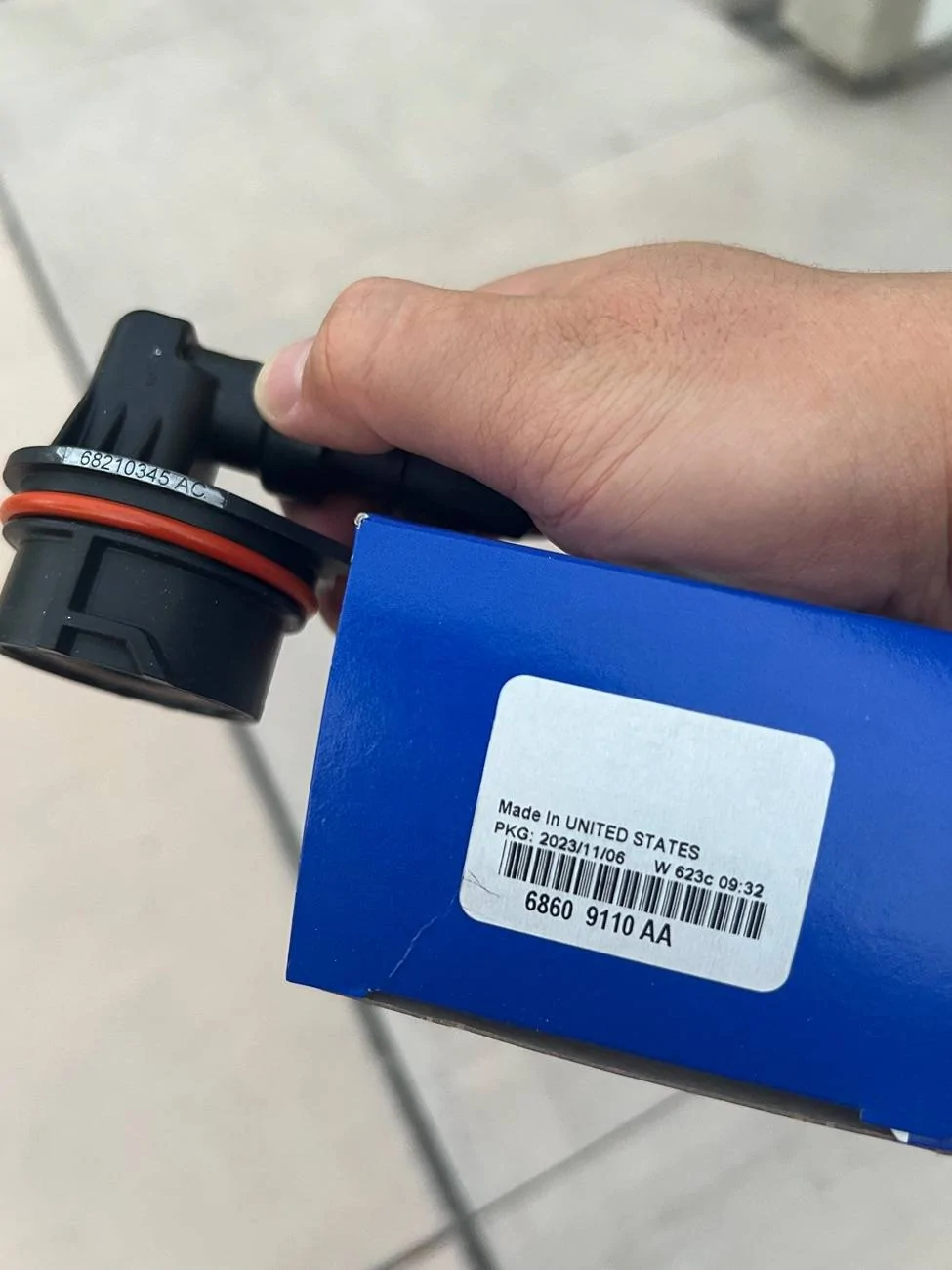
Current and serviceable part number being sold is 68210345AC
Previous # was 68210345AA

Please let me know if you have any other questions.
Thanks,
-Benny
You guys are a great resource here. I know it’s business, nevertheless Thanks!
 

ALRUI

Well-Known Member
First Name
Arnold
Joined
May 18, 2018
Threads
20
Messages
770
Reaction score
340
Location
Murphy, NC
Vehicle(s)
2018 JLU Sahara, 2003 F150 S-Crew FX4, Others
Let's get specific on make and model and I'll give you the diagram. PCV should route to the carb on your old shit.
Just a side note, the Road Runner the oval air cleaner came off of is likely worth double our Jeeps even in "shitty" condition:)
 

Sponsored

Dusty Dude

Well-Known Member
Joined
Apr 16, 2023
Threads
57
Messages
1,692
Reaction score
3,807
Location
Colorado Springs, CO
Vehicle(s)
1970 Ply Roadrunner, 2010 Challenger SRT
Just a side note, the Road Runner the oval air cleaner came off of is likely worth double our Jeeps even in "shitty" condition:)
I found that air cleaner half buried in the dirt next to a parts car in an abandoned farmyard. I paid two cans of Old Milwaukee beer for it…
 

ym0bc1

Well-Known Member
Joined
May 24, 2023
Threads
71
Messages
428
Reaction score
285
Location
San Francisco Bay Area
Vehicle(s)
JLUR
Looks like the latest part number is 68609110AB - it replaced all other variants (68210345AC, 68609110AA), and the TSB is referencing it.

I installed 68609110AA from two years ago and it still getting lots of oil in the catch can. Not sure if this would help.
 

roaniecowpony

Well-Known Member
Joined
Dec 4, 2018
Threads
194
Messages
12,944
Reaction score
20,492
Location
SoCal
Vehicle(s)
2018 JLUR, 14 GMC 1500 CC All TERRAIN
Occupation
Retired Engineer
I think a "catch can" is a wonderful thing....for a car or truck that never see's the angles I take my jeep to, and has an owner that is enough of an "enthusiast" that he'll drain the thing before it's a problem . It's simply an additional air-oil separator. Mann-Hummel makes some that are more sophisticated than the simple type of V8 juice can that is popular. But if you want to further define the difference between a simple catch-can and a more sophisticated OEM type of air-oil separator, I'd say catch-cans are simple, small, expansion oil vapor condensers, where an air-oil separator is often larger and has more baffling and some have membranes to catch droplets of oil, and the single thing that makes them practical for the general public, is they all have return lines to self-drain to the crankcase.

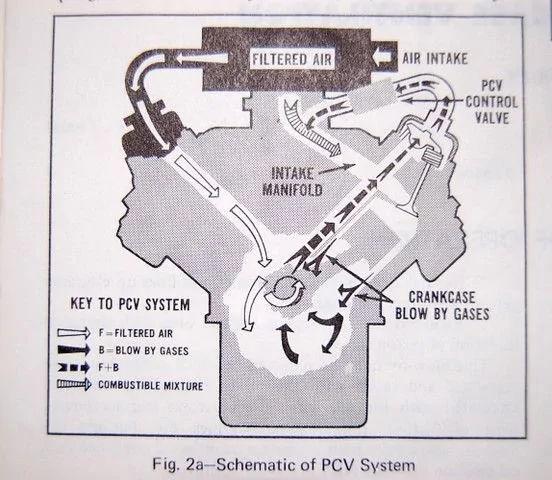
"Back in the day" we had carburetors that flushed the oil vapor down the hatch with fuel. They mixed right togther under the carburetor. That kept our intake manifolds pretty clean. Some engines had a plate that went under the carburetor, some attached to the carburetor itself, some to the intake manifold. There should not have been crankcase vapor going into the air filter housing.

Jeep Wrangler JL New Version of PCV pcv_schematic_d8a6db6f0c12e0269f890ff5ef69f93620eb067
 

roaniecowpony

Well-Known Member
Joined
Dec 4, 2018
Threads
194
Messages
12,944
Reaction score
20,492
Location
SoCal
Vehicle(s)
2018 JLUR, 14 GMC 1500 CC All TERRAIN
Occupation
Retired Engineer
In the TSB document, it refers to the engine sale code ERG or ERC. I'm wondering if anyone knows where to validate my engine is on this code? I have 2021 JL 3.6L "V6 24V VVT ETORQUE ENGINE UPG I" from build sheet.
ERG is E-Torque. ERC is the regular 3.6L.
Sponsored


Top