

Sponsored

PCV delete vs Catch can vs leave it alone.

RustyACE

Well-Known Member
First Name
Russell
Joined
Mar 18, 2024
Threads
11
Messages
95
Reaction score
80
Location
Nashville, TN
Vehicle(s)
2024 Rubicon X Rec, 2024 392 Rubicon FE
Let me start off by saying the area that I live in Nashville, Tennessee does not require any type of emissions testing. I’ve seen many people post PCV catch cans (expensive I might add), which ultimately just divert the gas/oil from the crank case into the can that can be emptied every so often. I saw this PCV delete kit on my favorite cheap shopping app Temu. I was wondering if anybody had actually, just diverted the PCV to an oil catching filter and not worry about the can. 18 bucks and free delivery seems like a reasonable experiment. Any pros or cons?
Jeep Wrangler JL PCV delete vs Catch can vs leave it alone. IMG_2963
Sponsored

 
OP
OP
RustyACE

RustyACE

Well-Known Member
First Name
Russell
Joined
Mar 18, 2024
Threads
11
Messages
95
Reaction score
80
Location
Nashville, TN
Vehicle(s)
2024 Rubicon X Rec, 2024 392 Rubicon FE
It’s just a filter. The PCV gases wouldn’t flow into air intake. Simply vented into a filter and then the atmosphere like they did before somebody vented into the intake air flow. Temu is simply Amazon without Bezos. So do you think would accomplish same as catch can? I get stuff there all the time- Temu that is.
 

grimmjeeper

Well-Known Member
First Name
Roy
Joined
May 6, 2021
Threads
13
Messages
8,282
Reaction score
41,350
Location
Castle Rock, CO
Website
www.grimmjeeper.com
Vehicle(s)
2021 Wrangler, 1987 Comanche, 1997 F250
Build Thread
Link
Occupation
enginerd
What problem are you trying to solve?
 
OP
OP
RustyACE

RustyACE

Well-Known Member
First Name
Russell
Joined
Mar 18, 2024
Threads
11
Messages
95
Reaction score
80
Location
Nashville, TN
Vehicle(s)
2024 Rubicon X Rec, 2024 392 Rubicon FE
No particular problem. I just see people that are installing the catch cans and was just curious if this was a more efficient fix.
 

Sponsored

Wbino

Well-Known Member
Joined
Mar 15, 2021
Threads
116
Messages
4,234
Reaction score
7,587
Location
NJ
Vehicle(s)
2021 Wrangler JL 3.6 Etorque -- 1999 SLK 230
Occupation
Retired
TEMU:
 

Willys41

Well-Known Member
First Name
Larry
Joined
Nov 2, 2021
Threads
3
Messages
1,167
Reaction score
1,301
Location
Pleasanton Ca.
Vehicle(s)
2020 Jeep Willys
Let me start off by saying the area that I live in Nashville, Tennessee does not require any type of emissions testing. I’ve seen many people post PCV catch cans (expensive I might add), which ultimately just divert the gas/oil from the crank case into the can that can be emptied every so often. I saw this PCV delete kit on my favorite cheap shopping app Temu. I was wondering if anybody had actually, just diverted the PCV to an oil catching filter and not worry about the can. 18 bucks and free delivery seems like a reasonable experiment. Any pros or cons?
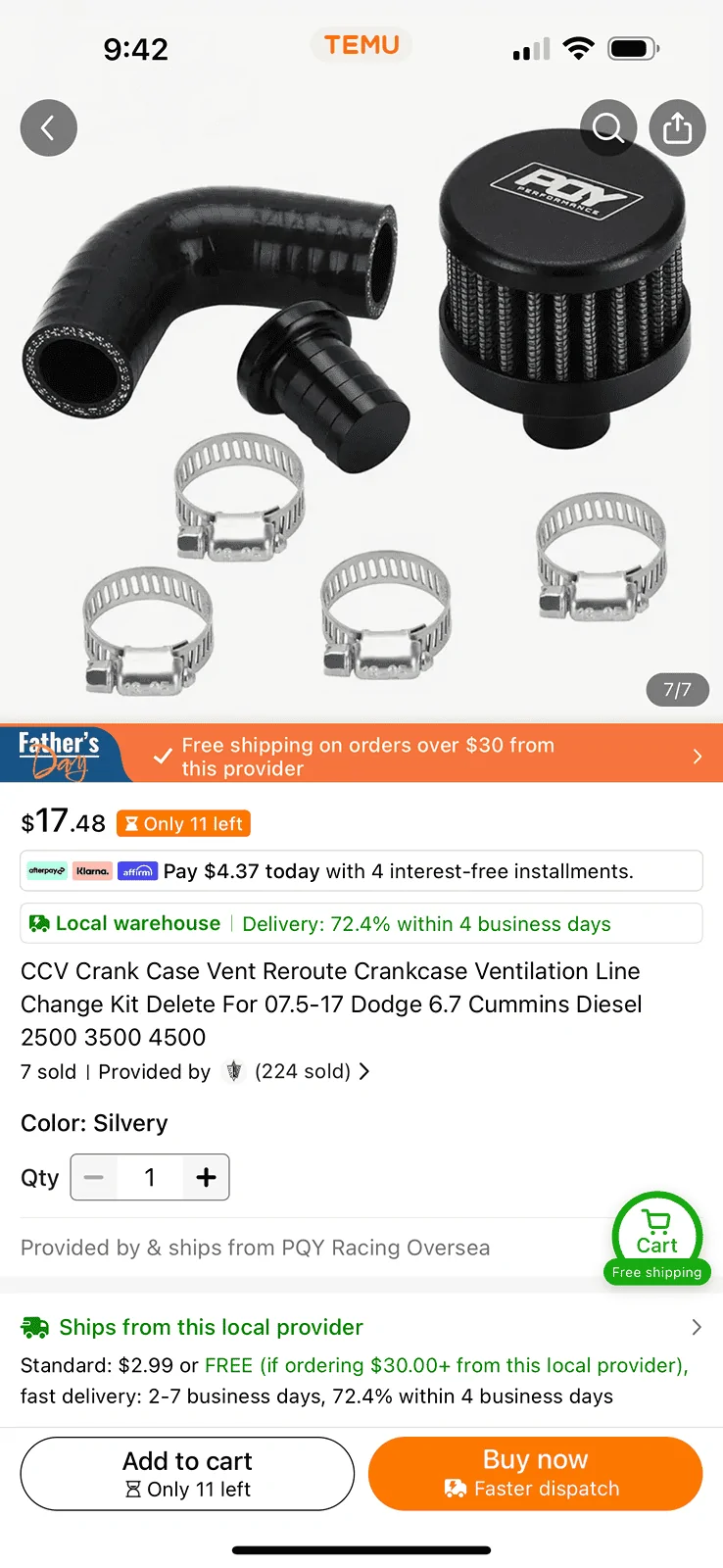
IMG_2963.png
I have a UPR oil catch can on both my 3.6 wranglers and my 2020 F250.
I was very skeptical at first put with a lot of research I discovered that it can be a benefit to keeping the intake air / intake manifold and combustion chamber clean and also prevent degrading of the fuel octane.
The main reason I decided to try a catch can on my 2020 Willys was under moderate lodes it would ping / spark knock like crazy even with 91 octane.
After installing the catch can NO more spark knock. Not even one ping.
As far as removing the PCV system BAD IDEA. The PVC system remove moister and dirty gasses that builds up in the crank case and with catch can you are now collecting it instead of burning it.
 

IanNubbit

Well-Known Member
First Name
Ian
Joined
Dec 12, 2021
Threads
2
Messages
490
Reaction score
800
Location
NJ
Vehicle(s)
2022 JT 6MT Sport & 2023 JL 2 Door 6MT Sport
Occupation
Jeep Dealer Tech
1st off, definitely don't "delete" a PCV valve, you'll run out of oil in days. With that being said, this is not what you are talking about, you're wondering if just not routing the oil back into the intake is a good idea. Short answer is both yes and no.
So, loads of people use to do this, everyone loved putting a little filter on their PCV valve on top of their valve cover, there is really nothing wrong with this besides what the government says, that and some minor vacuum imbalances and fluctuations. nothing really wrong with doing this besides just expelling oil everywhere in the engine bay which you will quickly notice. These engine dump some serious volume of oil out the PCV system. The idea of the OEM set-up is the re-route back in the intake for emission reasons and it works just fine. catch cans are great as they prevent that oil from creating a gooey sticky oily mess in the intake and on valve. There is some say that the oil helps lubricate, similar to the effect small amounts of oil on the cylinder walls, but realistically, OEM set-up ends up with excess amounts which is why catch cans are honestly great for multiple reasons.
With all that, both the options you're asking about is fine, but one is going to be better then the other for sure. for 99.99% of people, leaving it alone is best because people are too bothered to check their oil level these days so not having the extra service needed of checking the catch can is basically a must for them. Also venting it is like I said is basically mechanically fine, but there is a good chance the unregulated vacuum loss will create some computer issues and likely a CEL.
 

Chrisbayridge1

Well-Known Member
First Name
Chris
Joined
Mar 12, 2023
Threads
37
Messages
331
Reaction score
249
Location
Staten Island
Vehicle(s)
2023 Jeep Wrangler Rubicon
Clubs
 
Let me start off by saying the area that I live in Nashville, Tennessee does not require any type of emissions testing. I’ve seen many people post PCV catch cans (expensive I might add), which ultimately just divert the gas/oil from the crank case into the can that can be emptied every so often. I saw this PCV delete kit on my favorite cheap shopping app Temu. I was wondering if anybody had actually, just diverted the PCV to an oil catching filter and not worry about the can. 18 bucks and free delivery seems like a reasonable experiment. Any pros or cons?
IMG_2963.png
Let me start off by saying the area that I live in Nashville, Tennessee does not require any type of emissions testing. I’ve seen many people post PCV catch cans (expensive I might add), which ultimately just divert the gas/oil from the crank case into the can that can be emptied every so often. I saw this PCV delete kit on my favorite cheap shopping app Temu. I was wondering if anybody had actually, just diverted the PCV to an oil catching filter and not worry about the can. 18 bucks and free delivery seems like a reasonable experiment. Any pros or cons?
IMG_2963.png
Could be an expensive experiment 🤔 if you blow the engine
 
OP
OP
RustyACE

RustyACE

Well-Known Member
First Name
Russell
Joined
Mar 18, 2024
Threads
11
Messages
95
Reaction score
80
Location
Nashville, TN
Vehicle(s)
2024 Rubicon X Rec, 2024 392 Rubicon FE
Could be an expensive experiment 🤔 if you blow the engine
PCV system simply vents unused fuel and maybe some oil vapors from the crankcase back into the engine to increase fuel mileage. I don’t really care about the fuel mileage increase, I manage that with my lead foot.

This simply vents the crankcase fumes into the atmosphere via filter. So your opinion is don’t do it- which I appreciate.

It will have no affect on the engine as you are no longer routing gas and oil vapors back into your engine. Some claim this dirty air is being pumped into your clean engine after the filter and clogs stuff up- I’ve yet to see proof of that yet.

The question I have is the $200 catch can vs this $18 filter kit worth doing either? If my gas mileage starts sucking I can always simply go back to the PCV valve with little effort.
 

Sponsored

OP
OP
RustyACE

RustyACE

Well-Known Member
First Name
Russell
Joined
Mar 18, 2024
Threads
11
Messages
95
Reaction score
80
Location
Nashville, TN
Vehicle(s)
2024 Rubicon X Rec, 2024 392 Rubicon FE
1st off, definitely don't "delete" a PCV valve, you'll run out of oil in days. With that being said, this is not what you are talking about, you're wondering if just not routing the oil back into the intake is a good idea. Short answer is both yes and no.
So, loads of people use to do this, everyone loved putting a little filter on their PCV valve on top of their valve cover, there is really nothing wrong with this besides what the government says, that and some minor vacuum imbalances and fluctuations. nothing really wrong with doing this besides just expelling oil everywhere in the engine bay which you will quickly notice. These engine dump some serious volume of oil out the PCV system. The idea of the OEM set-up is the re-route back in the intake for emission reasons and it works just fine. catch cans are great as they prevent that oil from creating a gooey sticky oily mess in the intake and on valve. There is some say that the oil helps lubricate, similar to the effect small amounts of oil on the cylinder walls, but realistically, OEM set-up ends up with excess amounts which is why catch cans are honestly great for multiple reasons.
With all that, both the options you're asking about is fine, but one is going to be better then the other for sure. for 99.99% of people, leaving it alone is best because people are too bothered to check their oil level these days so not having the extra service needed of checking the catch can is basically a must for them. Also venting it is like I said is basically mechanically fine, but there is a good chance the unregulated vacuum loss will create some computer issues and likely a CEL.
In general the PCV system does not pump oil out of the engine. If it does you’ve got bigger problems. Just vapors- gas and oil mixture. It does not recycle/recover oil and put it back in the engine- it pumps it into your engine and burns it- theoretically to increase gas mileage. All the engines I used growing up just vented to the atmosphere to simply protect the seals in the engine from over pressurization. The government created a reason for engineers to figure out what to do with the crank case ventilation vapors. So they figured hey let’s call it improving gas mileage, and see what happens and everybody bought into a hook line and sinker. I’m just curious how much does your gas mileage really increase versus no change at all? Great conversation appreciate the response.
 

UnBilleted

Member
Joined
Feb 16, 2022
Threads
2
Messages
22
Reaction score
70
Location
Ca
Vehicle(s)
2020 JLUR
I think you should definitely do some more research before modifying the PCV system.
https://en.wikipedia.org/wiki/Crankcase_ventilation_system
I found this to be pretty informative, particularly the section describing the origin of pcvs in WWII to enable tanks to ford water.
I’ve never heard of a PCV system touted as increasing mileage, only as an emissions component.
 
OP
OP
RustyACE

RustyACE

Well-Known Member
First Name
Russell
Joined
Mar 18, 2024
Threads
11
Messages
95
Reaction score
80
Location
Nashville, TN
Vehicle(s)
2024 Rubicon X Rec, 2024 392 Rubicon FE
Great info and this is the answer I was looking for. I don’t usually ever look at Wikipedia but here was a pretty good explanation. “
There are two issues that can be caused by routing the crank breather into the intake system of an engine.

The main issue is with the buildup of oil inside the intake piping and manifold. During the normal operation of an engine the excess blow-by and oil vapors from the crank case are allowed to enter the intake system. The oil mist cools and layers the inside of the intake piping and manifold. Over time this layer can build up and thick sludge can accumulate.

This has been made worse with the introduction of the exhaust gas recirculation(EGR) system on more modern cars/jeeps use. The oil vapors can mix with the re-circulated exhaust gasses and soot which then builds up on the intake manifold and valves etc. This layer over time hardens and thickens repeatedly. It will then begin to clog up the throttle body, swirl flaps, or even the intake valves on direct injected engines.

Having a buildup of sludge can cause lower performance due to the limiting effect it has on the air flow to the engine. If the buildup becomes excessive on the throttle body it can cause poor idling as it can block the air flow whilst the throttle plate is shut.

Fitting a catch tank (can) will reduce the amount of oil vapor reaching the intake tract and combustion chamber. Without the oil vapor the soot from the EGR valve will not congeal so much on the intake which will keep the intake from becoming clogged.”
 
OP
OP
RustyACE

RustyACE

Well-Known Member
First Name
Russell
Joined
Mar 18, 2024
Threads
11
Messages
95
Reaction score
80
Location
Nashville, TN
Vehicle(s)
2024 Rubicon X Rec, 2024 392 Rubicon FE
A friend of mine has a race car and he uses a catch tank. He also runs alcohol which is a completely different problem aside from gasoline. He has a crankcase vacuum system that applies direct suction on the valve covers.
 

dstevens

Well-Known Member
Joined
Apr 13, 2023
Threads
8
Messages
946
Reaction score
1,602
Location
CA
Vehicle(s)
2024 JLURX
Just because your state does not have emissions checks does not make it legal. It is unlawful under the clean air act, although your chances of being caught and fined are tiny.

PCV uses intake manifold vacuum to draw fresh air through the crankcase to remove blow by gases. This reduces oil contamination and is generally good for the engine.

Aside from the positive aspects of retain the PCV, why remove it? You're polluting the air everyone else breathes with unburnt hydrocarbons and exhaust gases. It's not a particularly friendly thing to do to other people.
Sponsored


Top