

four low
Well-Known Member
- Joined
- Feb 1, 2017
- Threads
- 13
- Messages
- 3,106
- Reaction score
- 3,681
- Location
- central New York
- Vehicle(s)
- 2018 JL
Dammit ! I just ran out of popcorn....
Sponsored
How cool! I'd love to drop one of those into my Jeep and put a "Powered by Ferrarri" badge on it! Lol! 404hp would be nice!

You could be an adult about it, Chris, and simply recognize that I have a point, disagree on my choice of engine, and move on.AHH ding ding ding!! Now I get it Kevin!! You just have to be right. I'm the dummkopf here. I got caught up in that. Carry on!!
Some inlines do have exceptional longevity, but that's a real generalization. Some don't, especially in the 4 banger ranks. The Pentastar has demonstrated exceptional longevity and FAR lower warranty costs than many inline engines including the vaunted 4.0, which has also been known to reach 500k miles plus and has achieved legend status in the Jeep community. But they haven't made it to ultra high mileage at the rate the 3.6 has. But where the 3.6 absolutely whollops the 4.0, and nearly every other engine out there is in warranty repair costs. So the 3.6 is clearly an exception. It, in fact, has lower warranty claim costs than most mass produced engines ever made, in-line's included.I see nothing wrong with anyone that has an opinion of engine choice. Be it 2.0, 3.6 Etorque, 3.0 diesel, 4XE or 392.
As far as reliability is concerned, traditionally, an inline design will be the better choice for longevity. One also should consider cost of upkeep and ease of maintaining the engine.
Pretty much every major automaker makes outstanding engines. There really is very little reason for concern, across the entire range of automakers, over engine and transmission issues. Just like I find myself repeating over and over again in the warranty threads - we don't buy an extended warranty for the JL because we are worried about the engine and/or transmission...yet that's always the argument used against extended warranties. The concern is now on extended mechanical and electrical. The devices designed to dynamically change valvetrain or cylinder function (like VVT, DoD, AFM...etc) and the controllers for those devices, all types of forced induction, power assist systems, and also the myriad of computers spread around the vehicle.The truth is, FCA/Stellantis North American operations, contrary to popular belief, makes outstanding engines. I think we can all have a high level of confidence in the engine we chose.
Yeah, we can't tell much about this version. There are only a little more 2 million of them on the road. ?Essentially it's a wash between the 2 motors.
I don't think we can read too much into historical information on the V-6. The revised pentastar was introduced in 2016. It has new cylinder heads, ignition system, crankshaft, bearings & egr system. Pretty major overhaul.
The GME engine was also introduced in 2016, its a clean-sheet design.
So far, both engines seem to be pretty reliable but the jury is out on long term reliability until we get to 10-15 years of runtime on these units.
Traditionally, Straight-4s should be simpler than V-6, but this is offset by the Turbo which adds complexity.
Traditionally, Inline-4s should also be simpler/cheaper to service due to there being less components. But this is again offset by factors like
- The engine bay of my 2.0 is a complete mess, i don't think FCA organized it well, getting to components is a pain
- The spark plug interval for the 2.0 is 1/2 that of the 3.6
- The oil testing reports for the 2.0 I have seen indicates a slight but systematic oil dilution issue across these engines. I will be changing my oil more often because of this.
Direct injection engines also typically suffer from valve carbon buildup problems but the GME engine seems to have a surprisingly effective oil/water separation circuit.
Only time will will.
Others may learn something interesting. Such as 1 horsepower = 131.2 duckpower = 5 llamathrustsWhy? Unlike you I don't enjoy re-hashing the same argument over and over when its clear nothing positive will come of it.
Torque (which is literally feet x pounds) alone doesn't have a time component, which is required for calculating power. Torque alone is a rotating force that doesn't specify number of rotations or how long the force is being applied. Power involves time, which in the case of horsepower is minutes.Here it is, for like the billionth time - torque is the power an engine generates, LB/FT is the direct unit of measure of that power.
It was created to compare the work a steam engine could achieve to the work of an average horse. 'Horse' is just the variable that converts power into something that was well known at the time.Horsepower is a derived unit of measure created for relative comparison between power plants, it's not actually a real thing.
What you are calling "power" is actually WORK. That's the core of our disagreement. Replace the word "power" with the word "work" in your post, and we are in 100% agreement. Power does not require a time element. Horsepower was created to measure the effect of power or force being applied over a distance, and thus is a unit of measure of result (like the Watt), where LB/FT is a unit of measure of potential (like Volt). These units of potential are measures of POWER whereas the units of result are measures of WORK.Others may learn something interesting. Such as 1 horsepower = 131.2 duckpower = 5 llamathrusts
Torque (which is literally feet x pounds) alone doesn't have a time component, which is required for calculating power. Torque alone is a rotating force that doesn't specify number of rotations or how long the force is being applied. Power involves time, which in the case of horsepower is minutes.
The definition of one horsepower is 33,000 lb-ft/minute.
Just 33,000 lb-ft is not power, it is a rotating force that could be applied to lug-nuts.
It was created to compare the work a steam engine could achieve to the work of an average horse. 'Horse' is just the variable that converts power into something that was well known at the time.
Agreed.What you are calling "power" is actually WORK. That's the core of our disagreement. Replace the word "power" with the word "work" in your post, and we are in 100% agreement. Power does not require a time element. Horsepower was created to measure the effect of power or force being applied over a distance, and thus is a unit of measure of result (like the Watt), where LB/FT is a unit of measure of potential (like Volt). These units of potential are measures of POWER whereas the units of result are measures of WORK.
The word "power" is rampantly confused with the term "horsepower" when it relates to engines, but they are NOT the same thing.
On re-reading my post my wording sounds really nitpicky even to me, but I literally spent several semesters in college studying this stuff so there's too much of my brain dedicated to it....and this was the original disagreement anyway.

I now someone at FCA. Something like 40% of all warranty claims are related to the aux 12V battery and charging system of the ESS system. A bad aux 12V battery can cause all kinds of seemingly unrelated fault codes to pop up. I believe there have been constant updates and improvements to the ESS system since 2018. Hopefully the system is better today. Saying that, I think replacing the 12V aux battery and main battery every 3-4 years is a good idea as a preventative.Some inlines do have exceptional longevity, but that's a real generalization. Some don't, especially in the 4 banger ranks. The Pentastar has demonstrated exceptional longevity and FAR lower warranty costs than many inline engines including the vaunted 4.0, which has also been known to reach 500k miles plus and has achieved legend status in the Jeep community. But they haven't made it to ultra high mileage at the rate the 3.6 has. But where the 3.6 absolutely whollops the 4.0, and nearly every other engine out there is in warranty repair costs. So the 3.6 is clearly an exception. It, in fact, has lower warranty claim costs than most mass produced engines ever made, in-line's included.
I would wager that the 2.0 is doing very well in the warranty claim cost department, too. They would not tolerate anything less after nearly a decade with the Pentastar and its low costs and impact on FCA/Stellantis' bottom line.
The truth is, FCA/Stellantis North American operations, contrary to popular belief, makes outstanding engines. I think we can all have a high level of confidence in the engine we chose.
I think cost and ease of maintenance is pretty balanced between the 2.0 and 3.6. The 3.6 only uses 5 quarts of oil but I think you can find a filter a little cheaper for the 2.0. 2.0 requires more frequent spark plug changes, but they are far easier to access. I'm not sure, but I think they both wind up around 8k miles for oil changes using the oil life monitor, but I'd go less on the 2.0 due to the direct injection and turbo, but I only go 5k on the 3.6, so that's a wash. I'm pretty sure the 2.0 gets better mileage, although my wife's E-torque 3.6 is starting to make me think that may not now be the case. Certainly the gap has narrowed, if not closed, at least with my driving profile.

I'm not at all fanatical about any engine. I test drove north of 120 different jeeps, for the sole purpose of repeated direct comparisons of the 2.0 and 3.6 engines. I went into it with no biase, but being a long time fan of lower rpm working ranges pulled me to the 2.0 and away from the 3.6 that consistently required higher rpms to accelerate at the same rate.I know, but what you say you think and what you demonstrate you think are two different things. That Wikipedia link, though poorly written, does not disagree with what I told you.
Ok no. Look, i'm not going to pretend there aren't guys who are as fanatical about their 3.6l as you are with your 2.0l...of course there are. But the VAST majority of members here are much like myself and just slightly partial to one engine based on one or two issues (like the NVH issue for me). The real problem is that there are a couple 2.0l owners that, every time one of these threads comes up, barge in with "the 2.0l is just bettAR!!". You've done this yourself in this thread in fact...as soon as I brought up the NVH issue you pounced - you made several demonstrably false claims backed up with, essentially, "i'm a mechanic, so you're wrong". And now you try to project that on to me. Sorry, but no. I haven't made any demonstrably false claims in this thread - all i've said all along is what's objectively provable - the 3.6l has better low end torque, is more refined, and is less complicated. Does that make it better? It does to me, but it may not to you. Fine.
See this is great...I agree completely.
I believe that! But the batteries are not considered part of the engine, even though it won't function without it. It is a separate system.I now someone at FCA. Something like 40% of all warranty claims are related to the aux 12V battery and charging system of the ESS system. A bad aux 12V battery can cause all kinds of seemingly unrelated fault codes to pop up. I believe there have been constant updates and improvements to the ESS system since 2018. Hopefully the system is better today. Saying that, I think replacing the 12V aux battery and main battery every 3-4 years is a good idea as a preventative.
I'm not at all fanatical about any engine. I test drove north of 120 different jeeps, for the sole purpose of repeated direct comparisons of the 2.0 and 3.6 engines. I went into it with no biase, but being a long time fan of lower rpm working ranges pulled me to the 2.0 and away from the 3.6 that consistently required higher rpms to accelerate at the same rate.
Explain my false claims in detail. Explain exactly what makes one engine more refined than the other. Explain in detail how a 3.6 v6 is less complicated than an inline 4 cylinder engine.
Go back and reread yours and my initial posts in this thread. You came across as strongly against a particular engine. But I'm the fanatical one, right? You claimed that all 4 cylinder engines shake horribly. But I'm the one guilty of making false claims, right? I simply stated that out of many many test drives before ordering mine, I came across rough idlers on both engines. I didn't come across as having 3.6 hatred, like you have against the 2.0.
You continue on with being very dismissal to me, yet offer zero explanation behind your claims. Go back and read those engine threads again. Take note of how many false claims are made against the 2.0, yet there is zero explanation to back any of it up other than someone they once knew had a bad experience. And those 2.0 owners, who you obviously look down your nose upon, "barge in" for what? To follow suit by feeling the need to make doomsday predictions about the 3.6? Not at all. We simply point out how many decades turbos have been in successful use and how incredibly simple they are.
And don't accuse me of stating that I'm a mechanic so I am right. I'm simply compelled to repeat a similar warning in these engine threads, to be careful of taking mechanical advice from those who use phrases such as I think, I feel, I guess, etc. If one claims a turbo is suspect, an inline engine layout is complicated, or that a smaller displacement engine won't last in a Wrangler that weighs a paltry 5500lbs.... do yourself (those who start these threads) a favor and run from that misguided source. If someone uses the phrase that there's no replacement for displacement, you have found someone who's regurgitating something they heard many moons ago. It no longer applies to modern day mechanical and machining advancements that allow a higher degree of output density per cubic inch. This country has been built and run on equipment powered by 4 and 6 cylinder inline turbocharged engines. Here's a couple examples from the early 90's, so the outputs are lower than what's seen nowadays.
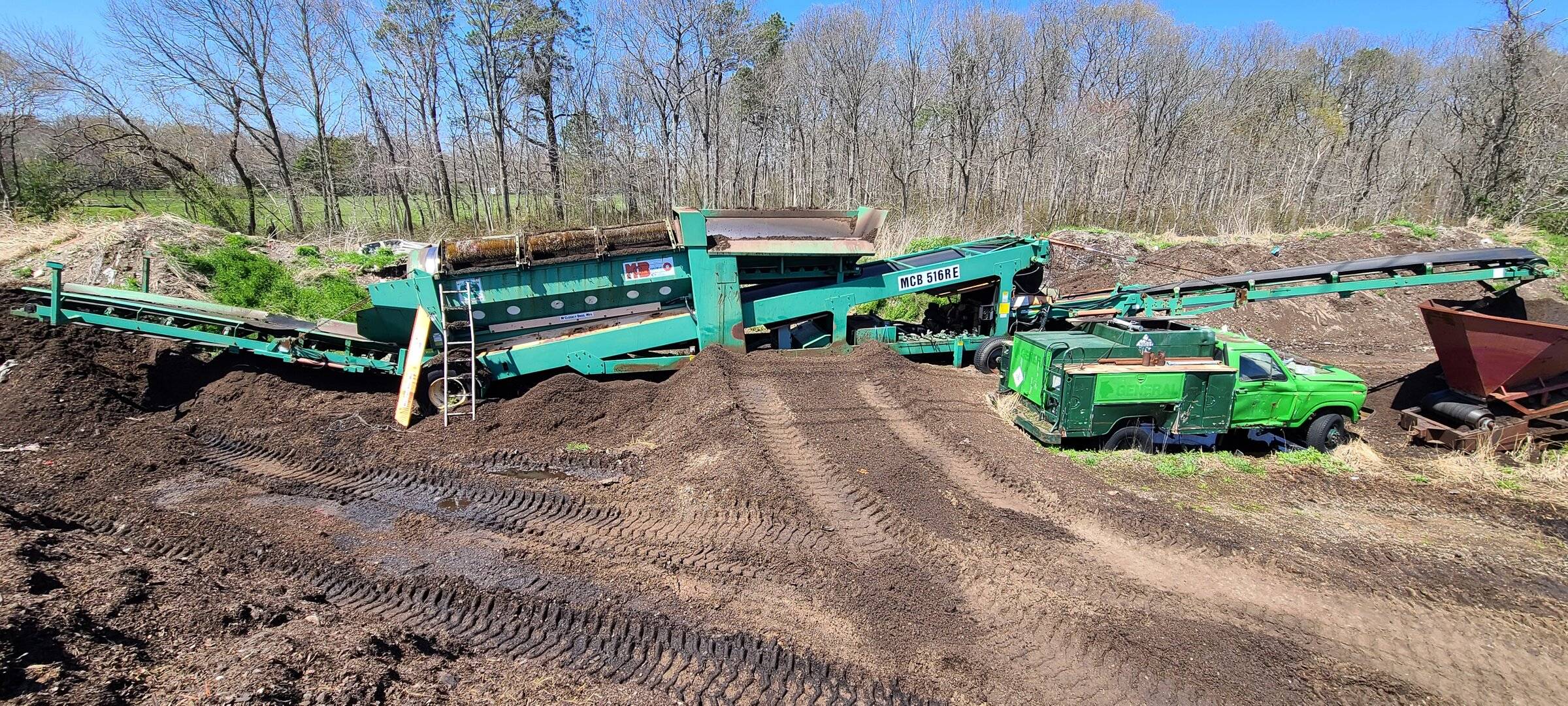
My trommel is powered by an i4 turbo of smaller displacement. The drum weighs the equivalent of 2 Jeeps and the 4 conveyor belts weigh another 4-5 Jeeps. At any given moment, there's upwards of another 5-7000lbs of material being processed through it. Its got over 16k hrs on the original engine and turbo, and it's working rpm is 2k. Runs like a top.

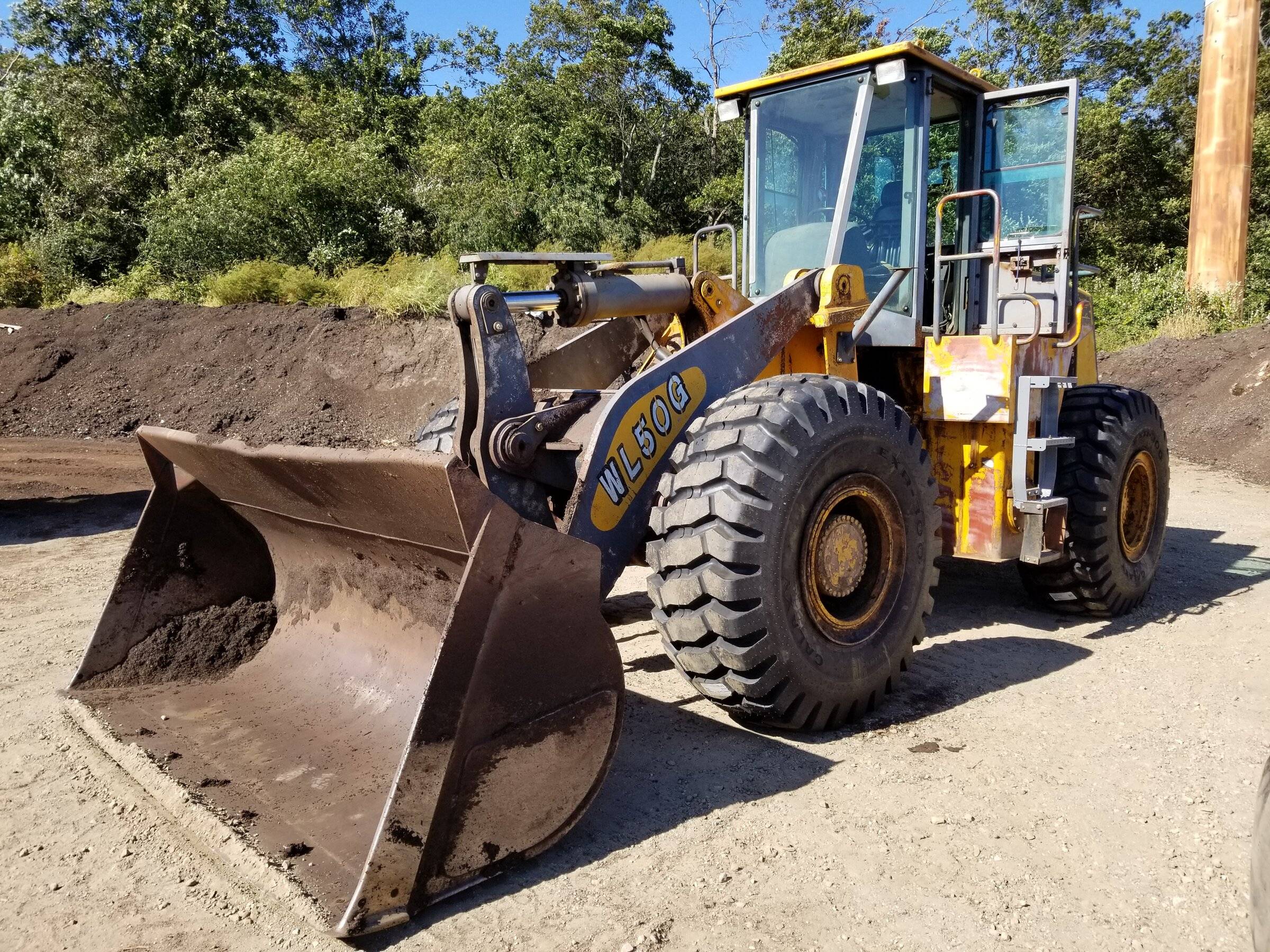
My current loader has a 5 cubic yard bucket and weighs 65k lbs. It's powered by the same 6bt Cummins found in Dodge pickups back in the early 90's, has about 225 hp and a bit over 300ft/lbs, about 20k hours on the original engine and turbo, and starts with a flick of the key.

This is a taste of what I was born and raised into working on and operating from 6-37 years old. Being private sector, I had to wear many hats. All phases of mechanical, equipment operator, and in house machinist. I tend to refrain from much mechanical talk in these threads, because someone else will start another one in a couple of days, so it's wasted effort. I regularly pm with some other members with mechanical backgrounds, that no longer bother with these threads, and ask why I do. I can never come up with a good answer. I should start taking their advice.


