roaniecowpony
Well-Known Member
I suppose, but the shed really hasn't been expanded all that much.Could increasing the size of the shed covering your tool over the years be an impediment! ?
Sponsored
I suppose, but the shed really hasn't been expanded all that much.Could increasing the size of the shed covering your tool over the years be an impediment! ?

Well, maybe a new “ride” with a smaller body over the frame?I suppose, but the shed really hasn't been expanded all that much.
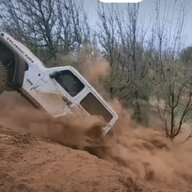
'Given the same PSI (and ignoring the spring effect of the sidewalls, for simplicity, though it's not really negligible it just makes everything a lot more complicated), any two tires will have the same size contact patch, because the pressure of the ground against the outside of the tire has to equal the pressure from the air against the inside of the tire (otherwise there would be a net force on the tire patch and it would be accelerating upward or downward). The tire will deform to achieve a contact patch such that the weight of the jeep on that wheel divided by the air presssure equals the contact patch area. For a narrower tire, what this means is that the contact patch will be longer (forward and backward) to achieve the same area with less width, meaning the tire will deflect more downward to achieve this longer contact patch. Hope that makes sense.



That's what she said.9” Minimum
And the "longer" contact patch of the narrower tire provides that, in a better way (length, vs width).More tread surface, particularly when aired down, allows the tire to conform around rocks and hard surfaces. And driving in sand is ALL about surface area.
I've slid sideways off of rocks enough that I'd far rather have that width and length-wise really doesn't matter much when your rolling in that direction.And the "longer" contact patch of the narrower tire provides that, in a better way (length, vs width).
Thanks, that's super helpful. In thinking about this I've been going back and forth on how much the sidewalls contribute to the downforce, and figured I'd err on the side of caution. But yeah, I can compress an empty tire by pushing on it, which, upon reflection, is going to be negligible compared to the ~1500 lbs of force the weight of the vehicle applies.'
Agree with every thing but ignoring the spring effect of the sidewalls, for simplicity, though it's not really negligible it just makes everything a lot more complicated- it is negligible down to 15 PSI for any tire and close enough to negligible for even bias and E rated tires. The sidewall is not a strong spring.
That's what BT39.com is based on.


A wider tire will make better contact with obstacles offroad and provide better grip. But, that increased contact and grip means more weight and worse fuel economy.
Thinner tires are better for snow, though I doubt an inch would make much of a difference.
Apple was pointing out an advantage for each, in its own paragraph. You seemed to have mashed them together. Yes, more surface contact from an aired down wider tire will have more grip than an equally aired down thinner tire."A wider tire will make better contact with obstacles offroad and provide better grip". I think the opposite is true. Thinner tires can be better in snow.
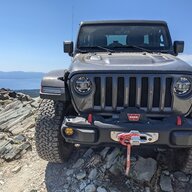
Careful what you ask for...This thread really needs pictures ? KM3s can be had in 12.5" and 13.5"