
Deleted member 59498
Guest
I only use radio, AM mostly, sports and news and stuff. Stub antennas lose a good amount of signal around here.
Sponsored


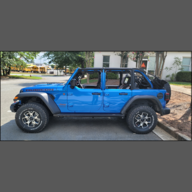
Did a little research and most cars use the antenna for the radio. In newer cars, it can also be used for bluetooth, Wi-Fi, keyless unlocking, and emergency services like onstar.So, stupid question. But I've removed the antenna from my JL due to car wash concerns and will be replacing it with a small flexi I bought once the proper adapter arrives.
But, the entire vehicle body is made of metal, why do we need an antenna instead of just hooking to that? I clearly don't understand how antennas work because it seems like a giant hunk of metal would be an excellent one, but if that were true then antennas would not exist.
Anyone able to science me on this?

Yes, they do.No they don't.
"..induces a small voltage" is key. that voltage isn't present in the absence of the RFYes, they do.
How does an antenna work?
The antenna at the transmitter generates the radio wave. A voltage at the desired frequency is applied to the antenna. The voltage across the antenna elements and the current through them create the electric and magnetic waves, respectively. At the receiver, the electromagnetic wave passing over the antenna induces a small voltage. Thus, the antenna becomes the signal source for the receiver input.
https://www.electronicdesign.com/te...333/electronic-design-welcome-to-antennas-101

"A voltage at the desired frequency is applied to the antenna." was the important part. My understanding of it is that the application of a very faint electrical charge was what allowed you to tune into different radio stations. Admittedly though, my own knowledge of the system is limited and I could be going off of false or assumed information. If that is the case, I stand corrected."..induces a small voltage" is key. that voltage isn't present in the absence of the RF
The antenna as a receiver I don't believe is energized or biased in any way to facilitate reception.
The wavelength of the desired carrier to be received would be what would inform us the minimum length of the receiving antenna which is not biased with any voltage (correct me here) whereas the transmitting antenna is propagating radiation as result of the power applied."A voltage at the desired frequency is applied to the antenna." was the important part. My understanding of it is that the application of a very faint electrical charge was what allowed you to tune into different radio stations. Admittedly though, my own knowledge of the system is limited and I could be going off of false or assumed information. If that is the case, I stand corrected.
Everything before the "receiver" portion is referring to the transmitting station, not your Jeep but the station that is sending out the signal.Yes, they do.
How does an antenna work?
The antenna at the transmitter generates the radio wave. A voltage at the desired frequency is applied to the antenna. The voltage across the antenna elements and the current through them create the electric and magnetic waves, respectively. At the receiver, the electromagnetic wave passing over the antenna induces a small voltage. Thus, the antenna becomes the signal source for the receiver input.
https://www.electronicdesign.com/te...333/electronic-design-welcome-to-antennas-101

Right Hand Drive models are inconvenient in the correct-side driving world.Another option:

Cool.Right Hand Drive models are inconvenient in the correct-side driving world.
I tuned into one of my local stations that I used to listen to as a teen, but stopped when I got shipped out 20+ years ago. I was surprised how great the programming was. I will be tuning in more often.Personally, AM/FM is the only thing I've listened to in the vehicle for over 15 years.