Sponsored

Shock Comparison

TaZ_65

Well-Known Member
First Name
Eric
Joined
Feb 19, 2021
Threads
7
Messages
93
Reaction score
165
Location
Northern Illinois
Vehicle(s)
JLUR
So, I switched shocks from Falcon 2.1 to Fox 2.5 tuned by @AccuTunedJL. I felt the butt in seat improvement immediately but wanted to prove that it wasn't placebo.

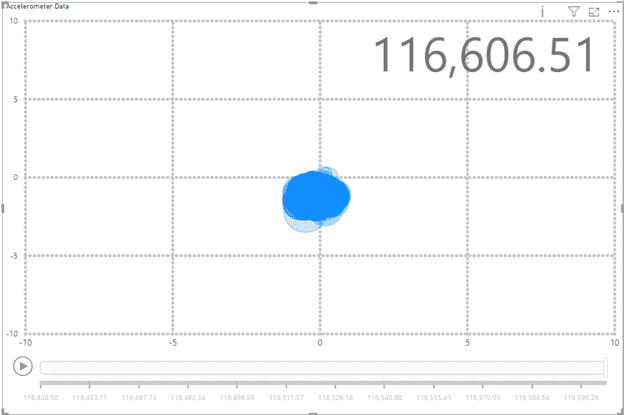
I figured why not download a data log app on my iPhone and compare the morning highway commute. I used the accelerometer X,Y, and Z readings over the course of the commute; I'm not an engineer but it seems reasonable... someone chime in.

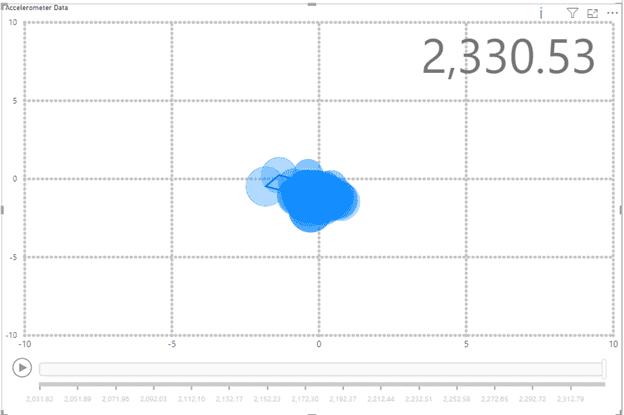
My conclusion is that the data shows less bumpiness and a tighter overall deflection (probably the wrong word) profile over the course of the drive. Mostly sharing because I love these new AccuTune shocks, but I would love to hear your feedback on whether this type of analysis is helpful in any way.

Before, with Falcon 2.1:

Jeep Wrangler JL Shock Comparison Before


After, with AccuTune Fox 2.5:

Jeep Wrangler JL Shock Comparison After
Sponsored


jadmt

Well-Known Member
First Name
jeff
Joined
May 19, 2020
Threads
78
Messages
5,094
Reaction score
9,701
Location
montana
Vehicle(s)
2024 wrangler rubicon w/AEV 2.5 dualsport lift
what app is that? looks interesting.
 
OP
OP

TaZ_65

Well-Known Member
First Name
Eric
Joined
Feb 19, 2021
Threads
7
Messages
93
Reaction score
165
Location
Northern Illinois
Vehicle(s)
JLUR
SensorLog for the data then used PowerBI to do the basic scatter plot, but I’m sure Excel would do fine.
 

phageghost

Well-Known Member
Joined
Jan 6, 2022
Threads
7
Messages
274
Reaction score
582
Location
San Diego, CA
Vehicle(s)
2022 JLURD
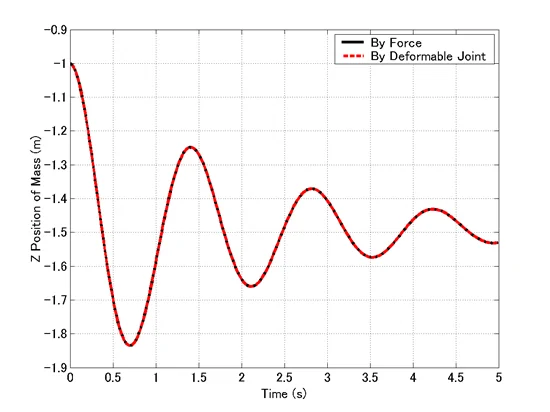
That just shows min/max forces. A completely undamped spring (no shocks) would show the same.

I'm not saying there isn't an improvement with the new shocks, but time is a factor when discussing ride quality.

Undamped:
_Wave_Feb_2020-01-b1a62c4514c34f578c5875f4d65c15af.jpg


Damped:
plot_spring_mass_damper_compare_R.png
Harmonic.png
Sure, but note that the extrema of the damped profile are smaller in magnitude -- there's progressively less acceleration at each direction change, which means the magnitude of the accelerometer readings will be lower, which will be reflected in the data. Furthermore, the shocks are operating the whole time, including the initial deflection as well as the follow-on oscillations, so no, even the max acceleration for the profile would also be lower for the damped situation than the undamped. The shocks are working the whole time to resist acceleration including during the initial "bump."

In the last plot, y-axis is displacement, and acceleration is proportional to force, so compare the 2nd derivatives of the "overdamped" vs "undamped" profiles and it's clear the overdamped situation will experience far less acceleration for the same initial displacement.


:beer:
 

Sponsored

AnnDee4444

Well-Known Member
Joined
Jan 14, 2019
Threads
54
Messages
5,529
Reaction score
7,948
Location
Vehicle(s)
'18 JLR 2.0
it's clear the overdamped situation will experience far less acceleration for the same initial displacement.
I think this might be the opposite. Overdamped taken to an extreme would mean zero suspension movement. I expect this to have the highest possible acceleration reading when hitting a bump.
 

phageghost

Well-Known Member
Joined
Jan 6, 2022
Threads
7
Messages
274
Reaction score
582
Location
San Diego, CA
Vehicle(s)
2022 JLURD
So, I switched shocks from Falcon 2.1 to Fox 2.5 tuned by @AccuTunedJL. I felt the butt in seat improvement immediately but wanted to prove that it wasn't placebo.

I figured why not download a data log app on my iPhone and compare the morning highway commute. I used the accelerometer X,Y, and Z readings over the course of the commute; I'm not an engineer but it seems reasonable... someone chime in.

My conclusion is that the data shows less bumpiness and a tighter overall deflection (probably the wrong word) profile over the course of the drive. Mostly sharing because I love these new AccuTune shocks, but I would love to hear your feedback on whether this type of analysis is helpful in any way.

Before, with Falcon 2.1:
Before.png


After, with AccuTune Fox 2.5:

After.png
Your points are too big and opaque to properly judge by "calibrated eyeball." A 2d histogram or 2d kdeplot would be better. Or just some smaller, more transparent points. But, even better than the calibrated eyeball test is a statistical test.

In this case, we want to evaluate the hypothesis that the mean acceleration for the new shocks is lower than the mean acceleration for the old shocks.

We also don't care about the x and y (and z?) components of the acceleration, we just want the overall magnitude. So take the square root of the sum of squares of the components (AKA Euclidean Norm AKA Pythagorean Theorem) to get the magnitude of each point.

Now, you have collected data for the same route, but we need to take into consideration:

1. The circumstances of your commute are never exactly the same each time: windiness, road conditions, other drivers, temperature, etc. etc. So the specific oscillations your jeep experiences will be different each time, introducing noise into the measurement of the shocks inherent damping ability. This noise has both random/uncorrelated (the specific direction and magnitude of the wobbles taken by the jeep on its particular path over the pavement) and systemic/correlated (say, a heavy traffic commute or a warm day) components. Note that what we are treating as random noise may also be partly systemic. To get around the systemic noise you'd want to perform multiple tests for each condition on multiple days, trying to match them as much as possible in terms of the variables that you think might affect the results. And even track the values of these variables for each experiment and regress them out. But we don't have that kind of motivation or resources, so let's ignore all of that and assume your two commutes are reasonably similar.

2. So that leaves the random component. The approach to dealing with this is a statistical test, specifically a test that the mean values of the populations (all the values the accelerometer would take on if your commute was infinite in length) are different, using a sample of that population (the data you actually gathered). Specifically, a one-sided test that the mean acceleration with the new shocks is lower than the old shocks (if you thought there was a possibility that the new shocks were worse, you could run a 2-sided test to examine that at the same time). The classic statistical tests for this purpose are the Mann-Whitney U test (makes no assumptions about the distribution of the data but we don't need to do that since I will be many ducats that your data is approximately normal given the law of large numbers), the Student's t-test (assumes the sample follows a t-distribution, which basically will be indistinguishable from a normal distribution for your sample size, which means you can do a z-test instead).

So . . . drop the two datasets into separate columns in Excel, take the square root of the sum of squares of the acceleration components to get the magnitude then run the T.TEST() function on them with tails=1, type=2. If the reported p-value is low, then your results are unlikely under the null hypothesis that the acceleration magnitudes are the same between shocks. A standard cutoff is p < 0.05, which means that there's a 5% chance of observing such a difference or greater if there is truly no difference. But the choice of p-value threshold is up to the operator to declare something "statistically significant."

Hope this helps, happy to explain anything that wasn't clear.
 

phageghost

Well-Known Member
Joined
Jan 6, 2022
Threads
7
Messages
274
Reaction score
582
Location
San Diego, CA
Vehicle(s)
2022 JLURD
I think this might be the opposite. Overdamped taken to an extreme would mean zero suspension movement. I expect this to have the highest possible acceleration reading when hitting a bump.
Hmm, yes this is true -- it's the movement of the vehicle we care about not the suspension. So an ideal suspension would provide 0 damping during the initial deflection and then max damping from there on out as long as the wheel returned to ride height before the next bump to prevent "jacking"), but that's not generally feasible, of course.

So the accelerometer is measuring the initial hit (which will be higher for stiffer shocks) as well as the rocking motions until the oscillations settle (which will be lower for stiffer shocks). So we shouldn't expect monotonic changes in acceleration magnitude with respect to shock stiffness. However, I would contend that mean acceleration magnitude is a decent first-order approximation of "ride comfort" under uncontrolled conditions, so finding the shock stiffness that minimizes that value seems like the optimization problem. Of course, given human physiology and psychology, we can imagine that bigger bumps are perceived to be more annoying than smaller ones, in a supra-linear fashion. So maybe mean squared acceleration magnitude is a better minimization target? Or some exponent between 1 and 2? We'd need to calibrate against reports from human volunteers . . .

I'm sure there's extensive literature on this sort of thing, much of it probably proprietary to the automakers, though.
Sponsored


Top