
Sponsored

Gunfighter
Well-Known Member
- First Name
- P.J.
- Joined
- Oct 7, 2020
- Threads
- 16
- Messages
- 580
- Reaction score
- 949
- Location
- West Michigan
- Vehicle(s)
- 2021 Jeep Wrangler High Altitude
- Occupation
- Trying not to get warning points
- Vehicle Showcase
- 1
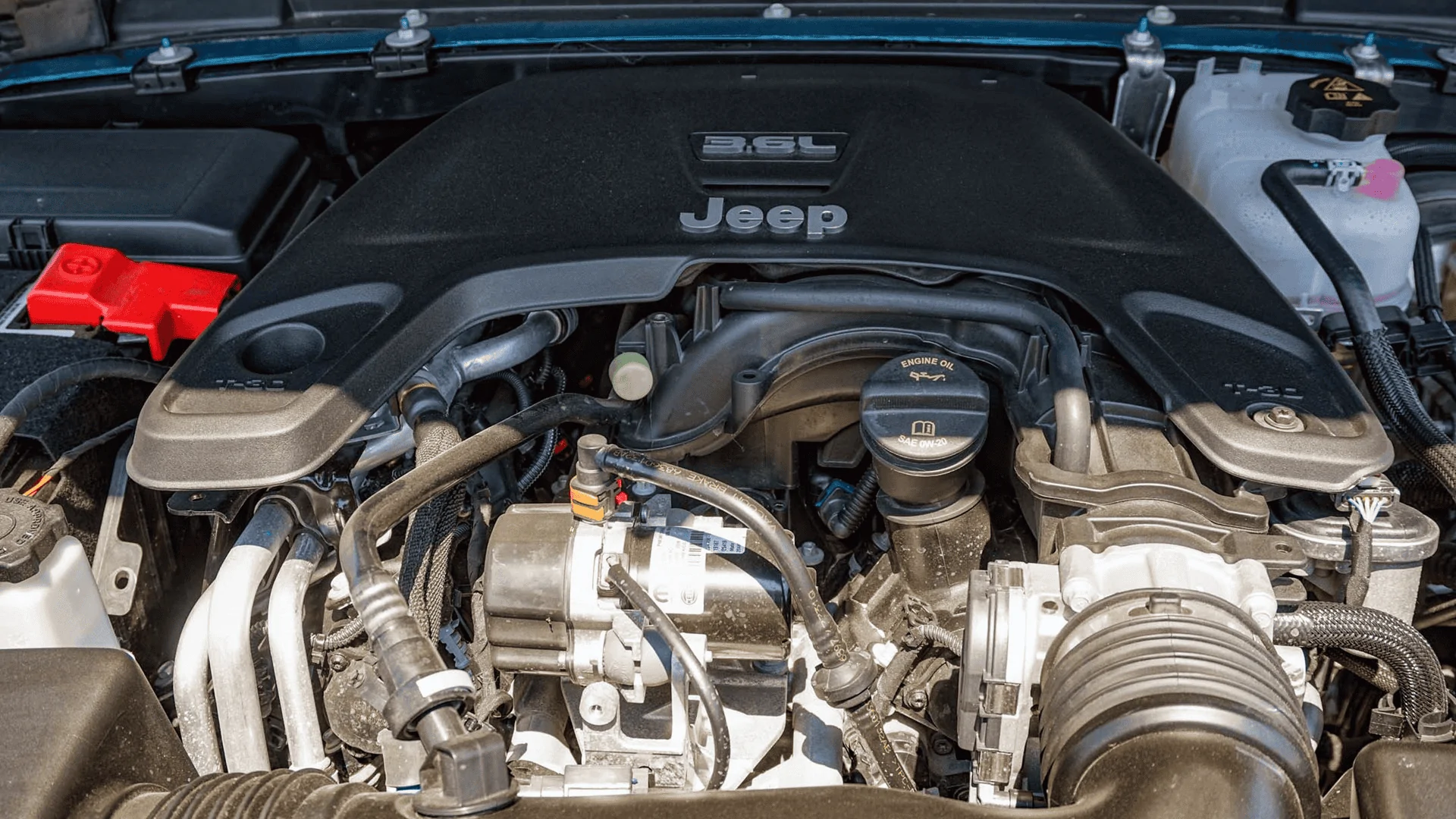
3.6 non-eTorque

3.6 eTorque

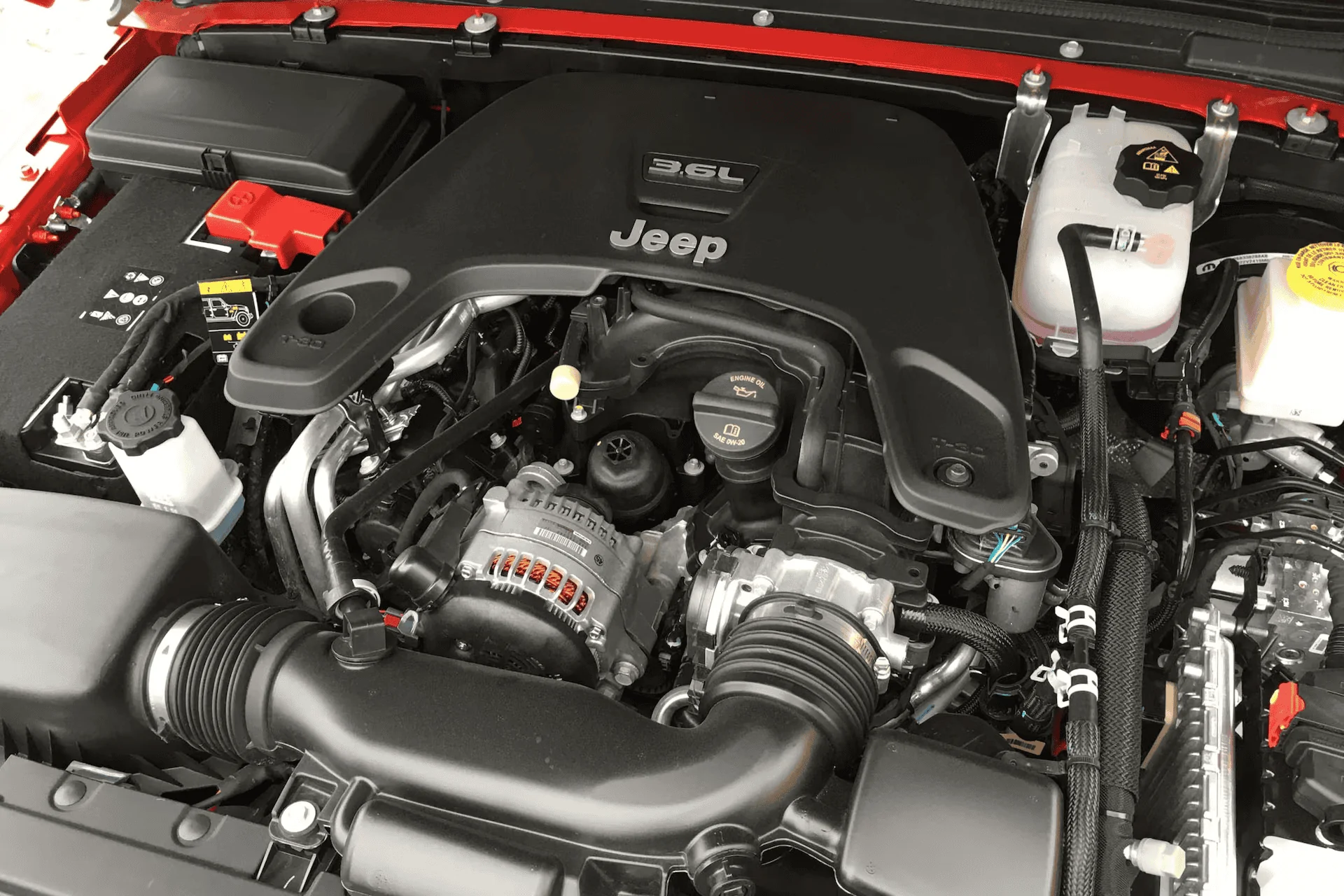
3.6 eTorque
AnnDee4444
Well-Known Member
= no eTorque6 speed manual transmission.
Sponsored

Terrymo
Well-Known Member
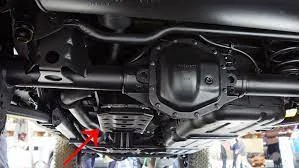
And just to add to the pics above. If you have an etorque, the etorque battery will be under the skid plate the red arrow is pointing to. Non etorque will not have this skid plate

Jeepeto
Well-Known Member
- First Name
- Josh
- Joined
- Jul 24, 2021
- Threads
- 37
- Messages
- 2,271
- Reaction score
- 5,771
- Location
- North Texas
- Vehicle(s)
- 2021 JLUR XR
- Build Thread
- Link
- Occupation
- Sparky
- Vehicle Showcase
- 2
Without popping the hood, if you feel the need to disable the ESS when you drive it, you don’t have an E-Torque ?
I had the regular 3.6 on Jeepeto II, and it drove me nuts, had to disable it with the tazer. With the E-Torque on Jeepeto III, it’s so fast and seamless that I don’t ever find myself turning it off.
I had the regular 3.6 on Jeepeto II, and it drove me nuts, had to disable it with the tazer. With the E-Torque on Jeepeto III, it’s so fast and seamless that I don’t ever find myself turning it off.
JLfromCA
Well-Known Member
- First Name
- JL
- Joined
- Dec 15, 2023
- Threads
- 4
- Messages
- 507
- Reaction score
- 640
- Location
- California
- Vehicle(s)
- 2019 Mojito! 2 Door Rubicon/2024 Sarge Green 392
if you want your engine to last , Disable ESS. We were told all are life that start up is the hardest on your engine.Without popping the hood, if you feel the need to disable the ESS when you drive it, you don’t have an E-Torque ?
I had the regular 3.6 on Jeepeto II, and it drove me nuts, had to disable it with the tazer. With the E-Torque on Jeepeto III, it’s so fast and seamless that I don’t ever find myself turning it off.
Jeepeto
Well-Known Member
- First Name
- Josh
- Joined
- Jul 24, 2021
- Threads
- 37
- Messages
- 2,271
- Reaction score
- 5,771
- Location
- North Texas
- Vehicle(s)
- 2021 JLUR XR
- Build Thread
- Link
- Occupation
- Sparky
- Vehicle Showcase
- 2
Do you have anything to back up your claim?if you want your engine to last , Disable ESS. We were told all are life that start up is the hardest on your engine.
The way I understand it is cold start is hard because your engine oil has drained down into your oil pan, essentially leaving your engine dry during startup. If your engine shut off 15 seconds ago your engine is plenty lubricated for startup. E-Torque runs a belt driven generator/motor at ESS startups to propel the vehicle forward and start the ICE with zero lag and no extra wear on your main starter. I see no reason to disable it unless someone has data to explain otherwise.
Sponsored

Gangplank
Well-Known Member
- Joined
- Sep 15, 2019
- Threads
- 25
- Messages
- 1,123
- Reaction score
- 1,452
- Location
- Vero Beach, FL
- Vehicle(s)
- 2021 JLU Willys 3.6 eTorque w/ Mopar lift. 2022 JLU Rubicon 2.0T still stock
- Build Thread
- Link
Easy- either of these let you look up your build by VIN. The first one pulls up your window sticker
https://windowstickerlookup.com/
https://fcagroup.my.site.com/RAM/s/equipment-listing
Or look in your engine bay. If you have 3.6 etorque there is an extra cooling system on the right side. Can’t miss it really.
https://windowstickerlookup.com/
https://fcagroup.my.site.com/RAM/s/equipment-listing
Or look in your engine bay. If you have 3.6 etorque there is an extra cooling system on the right side. Can’t miss it really.

John VonJeep
Well-Known Member
- Joined
- Sep 27, 2021
- Threads
- 86
- Messages
- 6,017
- Reaction score
- 38,205
- Location
- Middle of Nowhere
- Vehicle(s)
- Many
As someone noted above, you do not have eTorque because you have a manual. It was never offered with a manual.Can get much better of an explanation than this. Thanks for the efforts to show photos!
The main difference in the pictures is the belt start generator sitting in the front of the engine bay on the eTorque model.

Joe Nichols
Well-Known Member
If you don't have the small Aux battery under your fuse panel and have the 48V battery underneath your frame with it's own skid plate, located directly under the left passenger seat, you have the etorque engine.How can I tell if I have eTorque or not? I don't have my window sticker anymore. I have a 2023 JL 4 Door with the 3.6L regular gas engine and a 6 speed manual transmission.
AnnDee4444
Well-Known Member
I've owned my eTorque equipped Jeep since January 2019... which is a little longer than 5 years. I thought there was a problem with eTorque for a while as it was always in a "not ready" state, but it ended up being a failing 12V battery. The 48V battery was covering for the 12V.I get it your pro E torque. Keep your vehicle, long-term. Be our long-term tester. Put your money where your mouth is and keep your vehicle long past the warranty. Which will never happen. And stick around the forum so we could have this conversation in five years. Good luck.
Oh and even though my vehicle warranty is long gone the eTorque system is still covered for 3 more years (8 years total) due to it being part of emissions compliance.
I see you've selectively quoted https://www.autocar.co.uk/car-news/new-cars/stop-start-long-term-impact-your-car-s-engine#:~:text=Does stop-start wear out my engine?. Here's the article below.“Does stop-start wear out my engine?
When it comes to durability and long life, all the bases relating to the starter gear itself should be covered, but the higher number of stop-start cycles lead to increased engine wear.
“A normal car without automatic stop-start can be expected to go through up to 50,000 stop-start events during its lifetime,” says Gerhard Arnold, who is responsible for bearing design at automotive component manufacturer Federal Mogul.
“But with automatic stop-start being activated every time the car comes to a standstill, the figure rises dramatically, perhaps to as many as 500,000 stop-start cycles over the engine’s life.” That’s a big jump and one that poses major challenges to the durability and life of the engine’s bearings.
A fundamental component of the engine and also one of the heaviest is the crankshaft. It’s supported as it spins by a number of precision ground journals along its length running in ‘plain’ main bearings (no ball bearings or rollers, just smooth metal). These are the main bearings and the effect is greater on the bearing at the back of the engine immediately adjacent to the starter motor.
When the engine is running, the crankshaft and main bearing surfaces don’t actually touch, but are separated by a super-thin film of oil, fed under pressure and pumped around the bearing surfaces by the action of the spinning crankshaft. This process is called ‘hydrodynamic lubrication’ but when the engine stops, the crank settles onto the bearing, the two metal surfaces coming into contact
When the engine starts, there’s a point before the two surfaces become separated by the oil film called the ‘boundary condition’, where the crankshaft is spinning, but there’s metal-to-metal contact between the bearing surfaces.
This is when most wear takes place. Fitting stop-start means the boundary condition (and metal-to-metal contact) could exist perhaps 500,000 times in the life of the engine instead of 50,000 and normal bearings would wear out long before that.”
\
Does stop-start wear out my engine?
When it comes to durability and long life, all the bases relating to the starter gear itself should be covered, but the higher number of stop-start cycles lead to increased engine wear unless steps are taken to prevent it. As a result, car manufacturers and component suppliers have taken many steps to ensure engine wear due to start-stop systems is minimal.
Firstly, the technology will only kick in once the engine has reached operating temperature, and will deactivative and restart the engine if the engine and oil temperature drops dramatically. Soot build-up and turbo wear is minimised due to complex engine management features. The engine will also prevent oil returning to the sump, meaning there's plenty of oil coating moving parts during restarts.
“A normal car without automatic stop-start can be expected to go through up to 50,000 stop-start events during its lifetime,” says Gerhard Arnold, who is responsible for bearing design at automotive component manufacturer Federal Mogul.
“But with automatic stop-start being activated every time the car comes to a standstill, the figure rises dramatically, perhaps to as many as 500,000 stop-start cycles over the engine’s life.”
That’s a big jump and one that poses major challenges to the durability and life of the engine’s bearings.
A fundamental component of the engine and also one of the heaviest is the crankshaft. It’s supported as it spins by a number of precision ground journals along its length running in ‘plain’ main bearings (no ball bearings or rollers, just smooth metal). These are the main bearings and the effect is greater on the bearing at the back of the engine immediately adjacent to the starter motor.
When the engine is running, the crankshaft and main bearing surfaces don’t actually touch, but are separated by a super-thin film of oil, fed under pressure and pumped around the bearing surfaces by the action of the spinning crankshaft. This process is called ‘hydrodynamic lubrication’ but when the engine stops, the crank settles onto the bearing, the two metal surfaces coming into contact.
How rust helps to prevent wear
When the engine starts, there’s a point before the two surfaces become separated by the oil film called the ‘boundary condition’, where the crankshaft is spinning, but there’s metal-to-metal contact between the bearing surfaces.
This is when most wear takes place. Fitting stop-start means the boundary condition (and metal-to-metal contact) could exist perhaps 500,000 times in the life of the engine instead of 50,000 and normal bearings would wear out long before that.
Two things prevent that happening. The first is that bearing manufacturers are developing new bearing material with greater self-lubricating properties to resist wear on start-up.
Federal Mogul has developed a new material called Irox with a polymer coating containing particles of iron oxide (rust), which in this microscopic form is surprisingly slippery.
In fact it’s so slippery that the coefficient of friction of an Irox bearing is 50 per cent lower than a conventional aluminium bearing and will easily last the life of an engine equipped with stop-start.
Low friction oils help prolong engine life
The second is improvements in lubricating oils. A modern engine oil contains an additive package comprising a complex chemical cocktail. The technical director of UK company, Millers Oils, Martyn Mann, says the formulation of these packages are critical: “We’ve reduced friction with our oils and improved durability of the oil film and we think that has to be the way forward with stop-start systems.”
Millers began researching low-friction oils in its laboratories back in 2006. “We put a formulation together, tested it on a friction rig and found we could reduce the sliding friction between typical components like pistons and liners by 50 percent,” says Mann.
Generally, this reduces heat, power loss, fuel consumption and wear but Miller’s new triple ester nano-technology, known as Nanodrive, goes further. Tiny nano-particles like microscopic ball bearings exfoliate under high pressure, the polymer ‘flakes’ adhering to the engine surfaces.
So far the technology is available only in Miller’s high-end racing oils, but in relation to stop-start, it could also reduce wear during each re-start when the most wear takes place.
With low-friction bearing and lubrication technology in place the potential threat to engine life by stop-start systems should theoretically be overcome. But the current technology is still relatively new and only time will tell whether every car manufacturer has got it right.
Last edited:
Jeepeto
Well-Known Member
- First Name
- Josh
- Joined
- Jul 24, 2021
- Threads
- 37
- Messages
- 2,271
- Reaction score
- 5,771
- Location
- North Texas
- Vehicle(s)
- 2021 JLUR XR
- Build Thread
- Link
- Occupation
- Sparky
- Vehicle Showcase
- 2
Based on this response, I think you implied a tone to my previous comment that was not there. It was not to challenge, just a simple question. It was never my intention to be anything less than friendly.I get it your pro E torque. Keep your vehicle, long-term. Be our long-term tester. Put your money where your mouth is and keep your vehicle long past the warranty. Which will never happen. And stick around the forum so we could have this conversation in five years. Good luck.
For what it’s worth, I’m not pro E-Torque. I would have rather had the ESS V6. I wanted less complexity not more. I was forced into engine choice with one of the very early XR packages, and have just found it to be much less intrusive than the ESS I had on my previous rig. It never bothered me enough to turn it off so I just leave it on.
As for long term durability, time will tell. I have less than stellar hopes for it, but primarily because it is an FCA product.
Thanks for the article clip, I’ll be curious if this ever becomes a recurring point of failure in the E-Torque motors. I will hopefully be long gone onto another rig by that point ? but it should be noted that it so rarely meets required conditions for an actual stop/start event that it still catches me off guard. I find myself thinking, “Oh yeah, it does that from time to time”. I wonder if the main bearing has been engineered for this? Judging by the engineering of the sun visor, I won’t hold my breath ?
Sponsored


