
Sponsored
Backup Lights
- Thread starter TravisRogers
- Start date
- Watchers 230

klhjeep2018
Well-Known Member
- First Name
- Kevin
- Joined
- Mar 15, 2018
- Threads
- 9
- Messages
- 694
- Reaction score
- 690
- Location
- Harpers Ferry, WV
- Vehicle(s)
- 2018 Rubicon JL
- Occupation
- Sales manager
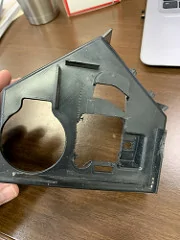
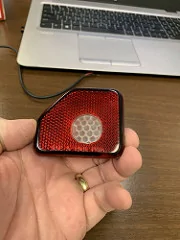
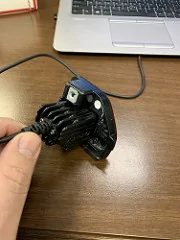
Good Job!!!Well i finally got around to starting this project. Removed the reflectors and had to do a little hacking but everything fits nicely.

vonbek
Well-Known Member
That looks rather cool, more details please.Well i finally got around to starting this project. Removed the reflectors and had to do a little hacking but everything fits nicely.
vonbek
Well-Known Member
Nice job!I have the parking sensors. Here's my thread on installing flush mount Rigid Ignite lights in the bumper. Hope it helps
https://www.jlwranglerforums.com/forum/threads/rigid-ignite-backup-light-installed.19307/

IndustrialAction
Well-Known Member
- First Name
- Patrick
- Joined
- Jun 21, 2018
- Threads
- 21
- Messages
- 571
- Reaction score
- 769
- Location
- Slower Lower Delaware
- Vehicle(s)
- 2019 Wrangler JLUR
- Vehicle Showcase
- 1
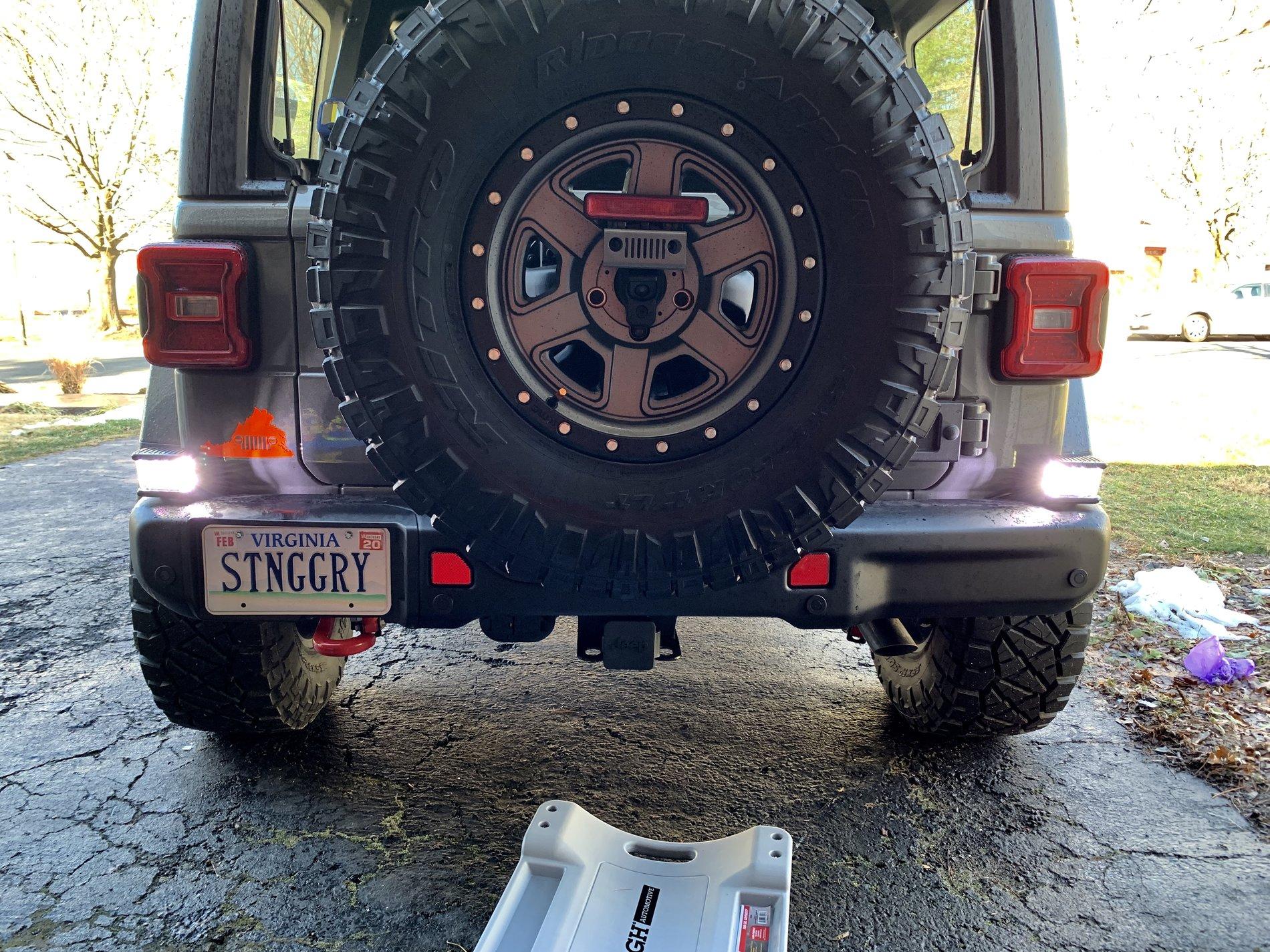
I opted to go with 4500lm (ea) side-shooters mounted in place of the carriage bolts on the rear bumper. I was concerned that the passenger side one would interfere with the tailgate but they never come close to one another. Ran the positive through the frame rail, out past the rear bump-stop and up over the muffler heat shield. The grounds are run separately to screws under the bumper on either side of the hitch. As I was thinking through the wiring I decided not to wire them in to the back-up lights. I don't need them coming on every time I'm in reverse, just certain situations so I opted to just go with Aux 4.
For those of you JUST going to an Aux, you do not need a diode. If you feel safer running one, go for it, but it isn't necessary. If you do go with one, I would recommend not using those huge $25 ones. A 15 amp diode costs about $1. I can show anyone how to solder it in if anyone needs help. It couldn't be easier. I also have a bag of them and would be happy to mail one out in an envelope if someone needed one.

For those of you JUST going to an Aux, you do not need a diode. If you feel safer running one, go for it, but it isn't necessary. If you do go with one, I would recommend not using those huge $25 ones. A 15 amp diode costs about $1. I can show anyone how to solder it in if anyone needs help. It couldn't be easier. I also have a bag of them and would be happy to mail one out in an envelope if someone needed one.
Sponsored

Rhinebeck01
Well-Known Member
- Joined
- May 9, 2018
- Threads
- 169
- Messages
- 12,678
- Reaction score
- 19,195
- Location
- Ormond Beach, Florida
- Vehicle(s)
- '18 JL Rubi, '26 Cybertruck, '01 Harley FatBoy
- Occupation
- Retired at 55 ..
@IndustrialAction
As mentioned in past posts here, indeed no diode is necessary is you go directly from the auxiliary lights to the Aux wire.
As for the inexpensive diodes... in the past I used them, say with with external wiring, and they just did not hold up to the elements.
Sure they will fair /work well for awhile, and then they die.
Best bet is to just pay for the pricier/beefier/Weather friendly, Roadmaster diode's or similar.
Again, the cheapies will work, work great and the price is right...... but they crap out, and usually do so when you are on a road trip and that ain't fun..
Note: For hook-ups with diode staying inside, using the passenger footwell Aux, the cheapies are aok.
.
As mentioned in past posts here, indeed no diode is necessary is you go directly from the auxiliary lights to the Aux wire.
As for the inexpensive diodes... in the past I used them, say with with external wiring, and they just did not hold up to the elements.
Sure they will fair /work well for awhile, and then they die.
Best bet is to just pay for the pricier/beefier/Weather friendly, Roadmaster diode's or similar.
Again, the cheapies will work, work great and the price is right...... but they crap out, and usually do so when you are on a road trip and that ain't fun..
Note: For hook-ups with diode staying inside, using the passenger footwell Aux, the cheapies are aok.
.
Rhinebeck01
Well-Known Member
- Joined
- May 9, 2018
- Threads
- 169
- Messages
- 12,678
- Reaction score
- 19,195
- Location
- Ormond Beach, Florida
- Vehicle(s)
- '18 JL Rubi, '26 Cybertruck, '01 Harley FatBoy
- Occupation
- Retired at 55 ..
@IndustrialAction
Forgot to ask.. Another forum member is saying that running a wire through the passenger side frame rail of a 4dr. JL is a major issue.(for him) Did you have any issues? I doubt you did.
How about telling of your wire run in frame rail experience..
I know running a wire through the 2dr passenger side frame rail is easy easy.
.
Forgot to ask.. Another forum member is saying that running a wire through the passenger side frame rail of a 4dr. JL is a major issue.(for him) Did you have any issues? I doubt you did.
How about telling of your wire run in frame rail experience..
I know running a wire through the 2dr passenger side frame rail is easy easy.
.
IndustrialAction
Well-Known Member
- First Name
- Patrick
- Joined
- Jun 21, 2018
- Threads
- 21
- Messages
- 571
- Reaction score
- 769
- Location
- Slower Lower Delaware
- Vehicle(s)
- 2019 Wrangler JLUR
- Vehicle Showcase
- 1
@IndustrialAction
As mentioned in past posts here, indeed no diode is necessary is you go directly from the auxiliary lights to the Aux wire.
As for the inexpensive diodes... in the past I used them, say with with external wiring, and they just did not hold up to the elements.
Sure they will fair /work well for awhile, and then they die.
Best bet is to just pay for the pricier/beefier/Weather friendly, Roadmaster diode's or similar.
Again, the cheapies will work, work great and the price is right...... but they crap out, and usually do so when you are on a road trip and that ain't fun..
Note: For hook-ups with diode staying inside, using the passenger footwell Aux, the cheapies are aok.
.
I would normally agree but wiring is something I do all the time in my non-Jeep hobby. I use diodes all the time in high and low power scenarios and I've never had one fail in several years of doing this. What it really comes down to is the user's ability to (1) solder and (2) heatshrink/weather-proof. A [properly] soldered diode is not going to separate, get water in, or any of the other things that could potentially happen to one of those huge $25 things. Plus, there's nothing to mount/hide really. A 15 amp diode is about the thickness of your pinky and maybe 1/4-1/3" wide.
I have no beef with anyone using the big ones. I just want to let people know that there is another option and if I were using one in a dual back-up/Aux scenario, I'd pick the solder-in version.
IndustrialAction
Well-Known Member
- First Name
- Patrick
- Joined
- Jun 21, 2018
- Threads
- 21
- Messages
- 571
- Reaction score
- 769
- Location
- Slower Lower Delaware
- Vehicle(s)
- 2019 Wrangler JLUR
- Vehicle Showcase
- 1
It wasn't hard to do BUT I had to come out right by the rear bump-stop. I couldn't see a good way to get down the hump in the frame-rail. It is a wicked bend and you've got the tire, shock, bumpstop, muffler and all that in the same area. I just came out by the bumpstop and ran the wire up over everything and zip tied away.@IndustrialAction
Forgot to ask.. Another forum member is saying that running a wire through the passenger side frame rail of a 4dr. JL is a major issue.(for him) Did you have any issues? I doubt you did.
How about telling of your wire run in frame rail experience..
I know running a wire through the 2dr passenger side frame rail is easy easy.
.
If I had to do it again though, I'd probably just wrap the wire in weather proofing and run it on top of the frame-rail with the rest of the wires up there.
Rhinebeck01
Well-Known Member
- Joined
- May 9, 2018
- Threads
- 169
- Messages
- 12,678
- Reaction score
- 19,195
- Location
- Ormond Beach, Florida
- Vehicle(s)
- '18 JL Rubi, '26 Cybertruck, '01 Harley FatBoy
- Occupation
- Retired at 55 ..
@IndustrialActionI would normally agree but wiring is something I do all the time in my non-Jeep hobby. I use diodes all the time in high and low power scenarios and I've never had one fail in several years of doing this. What it really comes down to is the user's ability to (1) solder and (2) heatshrink/weather-proof. A [properly] soldered diode is not separate, get water in, or any of the other things that could potentially happen to one of those huge $25 things. Plus, there's nothing to mount/hide really. A 15 amp diode is about the thickness of your pinky and maybe 1/4-1/3" wide.
I have no beef with anyone using the big ones. I just want to let people know that there is another option and if I were using one in a dual back-up/Aux scenario, I'd pick the solder-in version.
Well, guess we have different thoughts on this.
Reality is, diodes in general can be fickle and are known to be problematic in an install, whether it is in regard to trailer lighting, lights on a vehicle, aircraft wiring and more.
I myself try to avoid installs that use diodes but in the case of doing the back-ups on my JL, well, I folded.
Also, I have been wiring vehicles, RV, trailers, heavy equipment and more for over 50 years and many times I have had diodes chitt the bed.
Anyone that has done such wiring, knows diodes are nothing but trouble usually. And yes, even when they are installed using solder, heat shrink, etc.
To each his own but just makes more sense when doing external installations where weather/the elements are a factor, that you do buy, and use product that is designed to handle such if properly installed. Yes, to do a top notch/weatherable install, it does cost you a few $ more...
.
Sponsored
TJ2018
Well-Known Member
- First Name
- Eric
- Joined
- Nov 2, 2018
- Threads
- 10
- Messages
- 2,094
- Reaction score
- 10,069
- Location
- Orange County, CA
- Vehicle(s)
- 2018 Punk'n JLUR; 2020 Silverado Trail Boss
- Vehicle Showcase
- 1
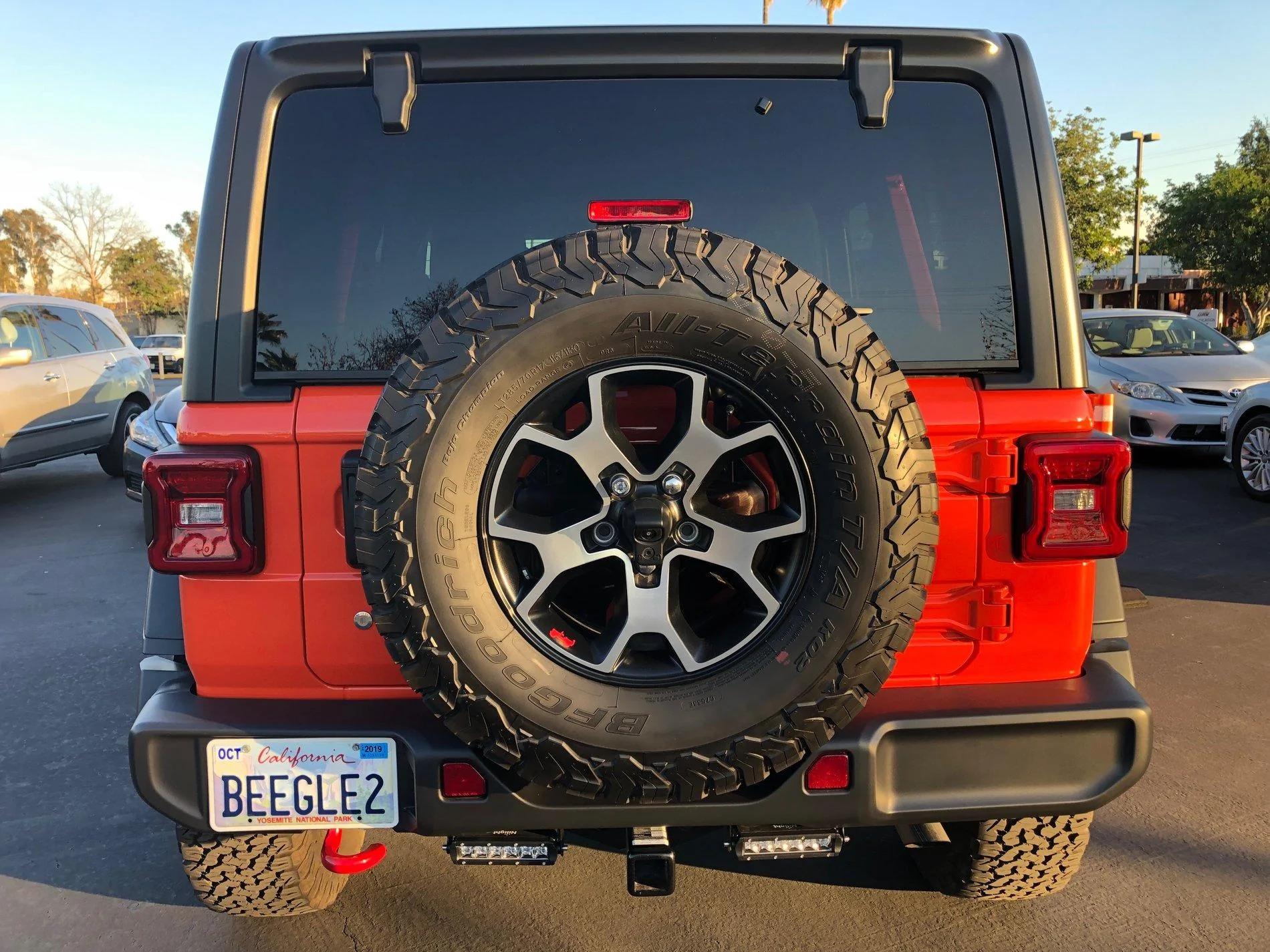
I'm confused about the diode requirement. I understand that it's like an electrical check valve to keep energy flowing one direction only, but are they only required if you want to control the aux backup lights separate from the reverse lights? I just connected a lighting relay with the trigger off the backup light circuit and main power to the lights through the relay. I only use them when in reverse so I have not wired up to an aux switch. In this case I'm presuming no diodes would be necessary.
My favorite install so far is the one by @Colorado Rubicon surface mount. My solution was much less elegant. If these get damaged or broken off I'll likely go with the surface mount floods. But until then these work just fine.
My favorite install so far is the one by @Colorado Rubicon surface mount. My solution was much less elegant. If these get damaged or broken off I'll likely go with the surface mount floods. But until then these work just fine.
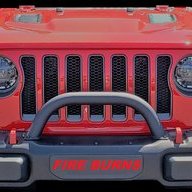
Fire Burns
Well-Known Member
Agreed that @Colorado Rubicon's install is probably the cleanest out there thus far, but it's a no-go for folks like me with the steal bumper and proximity sensors. My search continues...I'm confused about the diode requirement. I understand that it's like an electrical check valve to keep energy flowing one direction only, but are they only required if you want to control the aux backup lights separate from the reverse lights? I just connected a lighting relay with the trigger off the backup light circuit and main power to the lights through the relay. I only use them when in reverse so I have not wired up to an aux switch. In this case I'm presuming no diodes would be necessary.
My favorite install so far is the one by @Colorado Rubicon surface mount. My solution was much less elegant. If these get damaged or broken off I'll likely go with the surface mount floods. But until then these work just fine.
IndustrialAction
Well-Known Member
- First Name
- Patrick
- Joined
- Jun 21, 2018
- Threads
- 21
- Messages
- 571
- Reaction score
- 769
- Location
- Slower Lower Delaware
- Vehicle(s)
- 2019 Wrangler JLUR
- Vehicle Showcase
- 1
If you're going to tie something in to an existing circuit (like the back-up wiring) you need to use a rectifying (rectifier) diode. Due to the sensitivity of the computer system, if it reads an abnormality (unexpected condition) when sensing the connections, it might throw a code/not work as expected. The rectifier diode means that the power flows to your add-on but that no chatter/feedback comes back into the line which has the potential to mess with the expected conditions the computer is looking for.I'm confused about the diode requirement. I understand that it's like an electrical check valve to keep energy flowing one direction only, but are they only required if you want to control the aux backup lights separate from the reverse lights? I just connected a lighting relay with the trigger off the backup light circuit and main power to the lights through the relay. I only use them when in reverse so I have not wired up to an aux switch. In this case I'm presuming no diodes would be necessary.
My favorite install so far is the one by @Colorado Rubicon surface mount. My solution was much less elegant. If these get damaged or broken off I'll likely go with the surface mount floods. But until then these work just fine.
If you are just running to an Aux, you don't need a diode. That circuit is expected to have a draw on it and is more 'flexible' than if you're tying in to an existing component. Lets say I'm running rock lights and I want them to come on with the dome light AND run them to an aux. In that case, I'm going to use a diode on the circuit at both the tie-in and the aux switch to avoid the possibility of any weird chatter/feedback that might confuse the computer.
Personally, I don't see a need for an additional relay unless the power is coming straight from the battery to the add-on
TJ2018
Well-Known Member
- First Name
- Eric
- Joined
- Nov 2, 2018
- Threads
- 10
- Messages
- 2,094
- Reaction score
- 10,069
- Location
- Orange County, CA
- Vehicle(s)
- 2018 Punk'n JLUR; 2020 Silverado Trail Boss
- Vehicle Showcase
- 1
It was intended to isolate the additional load of the aux LED lights from the reverse light circuit (however small that additional load may be)... figured it couldn't hurt any. Also could bring in an aux trigger to the switch circuit for the ability to turn on w/o being in reverse... would probably need the diode to keep that from feeding back into the reverse light circuit.Personally, I don't see a need for an additional relay unless the power is coming straight from the battery to the add-on
Besides... Overkill is Underrated!

IndustrialAction
Well-Known Member
- First Name
- Patrick
- Joined
- Jun 21, 2018
- Threads
- 21
- Messages
- 571
- Reaction score
- 769
- Location
- Slower Lower Delaware
- Vehicle(s)
- 2019 Wrangler JLUR
- Vehicle Showcase
- 1
Totally agree! I over engineer everything too haha. I'd rather be overbuilt than underIt was intended to isolate the additional load of the aux LED lights from the reverse light circuit (however small that additional load may be)... figured it couldn't hurt any. Also could bring in an aux trigger to the switch circuit for the ability to turn on w/o being in reverse... would probably need the diode to keep that from feeding back into the reverse light circuit.
Besides... Overkill is Underrated!
Sponsored


