Sponsored

A better V6?

Ratbert

Well-Known Member
First Name
John
Joined
Jun 20, 2020
Threads
159
Messages
16,077
Reaction score
25,071
Location
PNW
Vehicle(s)
2022 AEV JL370 JLURD
Build Thread
Link
Occupation
Software Engineer
Clubs
 
You can turn off the electronic start/stop functionality of it with the dash button and there are various scenarios when portions of the system won't work at all (cold temps, batteries still charging, incline), but otherwise, it just does its own thing when it's able.
That's just the start / stop part that it plays, not the fundamental 1/4 turn of the tires performance aspect of it, right? I'm pretty sure the 1/4 turn of the tires performance aspect was what @Wbino was referencing with this:

I never shut the system down or have any need to.
None of it can be disabled by default, right?
Sponsored

 
  • Like
Reactions: AFD

AFD

Well-Known Member
Joined
Oct 13, 2021
Threads
15
Messages
3,803
Reaction score
7,310
Location
Northeastern US
Vehicle(s)
2023 JL Rubicon (2DR/V6)
That's just the start / stop part that it plays, not the fundamental 1/4 turn of the tires performance aspect of it, right? I'm pretty sure the 1/4 turn of the tires performance aspect was what @Wbino was referencing with this:
Yeah, afaik (and I'm not 110% sure about this), using that button should only disable the start/stop behavior, but shouldn't have any effect on the 1/4-wheel turn boost, the smoothing of the shift points and the regenerative braking. What I'm really not sure about is when the ESS system is "not ready" (due to incline angle, cold temp, cabin HVAC not yet to temp, batteries recharging and supposedly 2 dozen other reasons) is which of the non-ESS eTorque functions still continue to function.

On very cold sub-32F days (or after sitting overnight in very cold weather), my voltage meter likes to stay pegged at 15V for quite a while (usually 20 to 30 minutes of driving) and the ESS will display "not ready" at a stop. Other than the extreme cold weather disabler for ESS, this is likely due to the 48V lithium battery losing significant charge in the cold overnight and taking longer to recharge itself (or the 12V AGM). In this scenario, the regen should still be working (to help recharge faster), but I kinda doubt the 1/4-wheel boost and shift smoothing would be allowed to work if the 48V isn't recharged enough. I've noticed my auto trans shifts are definitely much rougher for a few minutes on those days, but also thought that maybe that was due to the fluids still being warmed up and circulated.

I drive around with the ESS button both on and off quite regularly and other than the engine shutting down or not, I personally cannot detect any difference in off-the-line launch and smoothness of shifts. From a stop, it always feels a bit "jumpy" whether that button is lit up or not.


I believe another pro is the eTorque saves the transmission clutches lifespan.

🤷🏼‍♂️
I honestly don't know much at all about automatic transmissions, but that kinda makes sense if the system is more precisely controlling engine RPM during shifts instead of putting that wear on the internal clutches. Sort of like rev-matching with a manual trans maybe? Dunno.
 

Ratbert

Well-Known Member
First Name
John
Joined
Jun 20, 2020
Threads
159
Messages
16,077
Reaction score
25,071
Location
PNW
Vehicle(s)
2022 AEV JL370 JLURD
Build Thread
Link
Occupation
Software Engineer
Clubs
 
Yeah, afaik (and I'm not 110% sure about this), using that button should only disable the start/stop behavior, but shouldn't have any effect on the 1/4-wheel turn boost, the smoothing of the shift points and the regenerative braking. What I'm really not sure about is when the ESS system is "not ready" (due to incline angle, cold temp, cabin HVAC not yet to temp, batteries recharging and supposedly 2 dozen other reasons) is which of the non-ESS eTorque functions still continue to function.

On very cold sub-32F days (or after sitting overnight in very cold weather), my voltage meter likes to stay pegged at 15V for quite a while (usually 20 to 30 minutes of driving) and the ESS will display "not ready" at a stop. Other than the extreme cold weather disabler for ESS, this is likely due to the 48V lithium battery losing significant charge in the cold overnight and taking longer to recharge itself (or the 12V AGM). In this scenario, the regen should still be working (to help recharge faster), but I kinda doubt the 1/4-wheel boost and shift smoothing would be allowed to work if the 48V isn't recharged enough. I've noticed my auto trans shifts are definitely much rougher for a few minutes on those days, but also thought that maybe that was due to the fluids still being warmed up and circulated.

I drive around with the ESS button both on and off quite regularly and other than the engine shutting down or not, I personally cannot detect any difference in off-the-line launch and smoothness of shifts. From a stop, it always feels a bit "jumpy" whether that button is lit up or not.
Thanks, that's what I was thinking, which seemed to conflict with what @Wbino was saying. That's not a shock, of course, but I wanted to make sure.
 

Zandcwhite

Well-Known Member
First Name
Zach
Joined
Sep 4, 2019
Threads
11
Messages
8,307
Reaction score
14,200
Location
Patterson, ca
Vehicle(s)
2019 jlur
I think anyone giving this much credit to the etorque system probably doesn't have frequent and continued experience with similar vehicles with AND without it. We currently own 2 V6 powered Jeeps, both on 3.5" lifts, both with large tires. My JT has 37s, her JLUR has 39s. She has 4.56 gears, I have 4.10s. Hers has etorque, mine doesn't. They drive the same as far as I can tell from any measurable or discernable aspect. The small difference in gearing makes up for the small difference in tire size to the point I'd bet 0-60 is nearly identical. I don't notice smoother shifts or take offs with the etorque in the slightest. She usually gets 1-2mpg less than I do but that is a function of tire size more than anything. The start/stop events may be ever so slightly smoother with the etorque but beyond that you'd be hard pressed to tell the difference period. Do I have a preference? Not at all. Would I choose one over the other if it was a no cost option? It makes so little difference in actual day to day driving I honestly wouldn't care. It's not an actual hybrid system with real regenerative braking that will make your brakes pads last longer. It's a higher voltage starter and alternator built into 1 and functionally does very little more than that in the real world. It's not going to make your transmission last longer or any of the other theoretical nonsense I read on here. It doesn't help gas mileage at all. It makes almost no difference in the real world period.
 
Last edited:

AnnDee4444

Well-Known Member
Joined
Jan 14, 2019
Threads
54
Messages
5,529
Reaction score
7,948
Location
Vehicle(s)
'18 JLR 2.0
If there's a tune, aux tank or supercharger for my 2-door v6 eTorque I'd honestly love to know about it.
Might not be what you're looking for, but: https://motobilt.com/products/rear-fuel-tank-skid-for-jeep-jlu?


Other random eTorque thoughts:
  • Lower center of gravity. Yes, lower weight would be better...
  • More total battery capacity from the factory. I always found it interesting that some people avoid eTorque's additional battery, then go and add something like the Genisis Offroad dual battery kit.
  • When the 48V batteries start to die, I could see the aftermarket coming up with a double 24V battery replacement (or even four 12V), wired in series for 48V output.
  • I wish there were more 48V accessories (mainly a winch). Sure the wiring would be longer, but it's much easier to deal with switching/running/terminating 8AWG. Plus I don't think things running off of the 48V side would drain the 12V battery.
 

Sponsored

Ratbert

Well-Known Member
First Name
John
Joined
Jun 20, 2020
Threads
159
Messages
16,077
Reaction score
25,071
Location
PNW
Vehicle(s)
2022 AEV JL370 JLURD
Build Thread
Link
Occupation
Software Engineer
Clubs
 
  • More total battery capacity from the factory. I always found it interesting that some people avoid eTorque's additional battery, then go and add something like the Genisis Offroad dual battery kit.
I'm not sure I understand your comment. Don't the eTorque and the Genesis system perform two completely different roles?
 

AnnDee4444

Well-Known Member
Joined
Jan 14, 2019
Threads
54
Messages
5,529
Reaction score
7,948
Location
Vehicle(s)
'18 JLR 2.0
I'm not sure I understand your comment. Don't the eTorque and the Genesis system perform two completely different roles?
Yes, but they both also provide additional battery capacity.
 

AnnDee4444

Well-Known Member
Joined
Jan 14, 2019
Threads
54
Messages
5,529
Reaction score
7,948
Location
Vehicle(s)
'18 JLR 2.0
Ditto for the aux battery. Yet people still supplement their batteries with something more hardcore.
I always thought the aux battery only supplies power during an ESS event, which would mean it only adds capacity at that time. I could be wrong though, don't have much experience with non-eTorque JLs. I doubt it's just wired in parallel, otherwise the aux battery delete would be as simple as just removing it.

I do know that during ESS on an eTorque Jeep it will keep the low voltage side at ~14V instead of 12.6V like a normal unrunning vehicle. This indicates that the 48V battery is providing capacity at all times.

FWIW: the 48V battery has less than half the storage of the 12V battery, but about 3.5 times more storage than the aux battery. The 3000W DC-DC converter could drain a full 48V battery in 8.6 minutes (assuming no losses, which there definitely are).
  • 48V etorque battery = 430 watt-hours
  • M-94R/H7 battery (main) = 80 amp-hours @ ~12V = 960 watt-hours
  • MTX-AUX12 battery (aux) = 10 amp-hours @ ~12V = 120 watt hours
 

Ratbert

Well-Known Member
First Name
John
Joined
Jun 20, 2020
Threads
159
Messages
16,077
Reaction score
25,071
Location
PNW
Vehicle(s)
2022 AEV JL370 JLURD
Build Thread
Link
Occupation
Software Engineer
Clubs
 
I always thought the aux battery only supplies power during an ESS event, which would mean it only adds capacity at that time. I could be wrong though, don't have much experience with non-eTorque JLs. I doubt it's just wired in parallel, otherwise the aux battery delete would be as simple as just removing it.

I do know that during ESS on an eTorque Jeep it will keep the low voltage side at ~14V instead of 12.6V like a normal unrunning vehicle. This indicates that the 48V battery is providing capacity at all times.

FWIW: the 48V battery has less than half the storage of the 12V battery, but about 3.5 times more storage than the aux battery. The 3000W DC-DC converter could drain a full 48V battery in 8.6 minutes (assuming no losses, which there definitely are).
  • 48V etorque battery = 430 watt-hours
  • M-94R/H7 battery (main) = 80 amp-hours @ ~12V = 960 watt-hours
  • MTX-AUX12 battery (aux) = 10 amp-hours @ ~12V = 120 watt hours
There are a plethora of LiFePO4 batteries that can be used with the Genesis system. Something as simple as the Dakota that they optionally bundle has over 1,600 watt hours of energy. Unlike the eTorque battery (430 watt hours where it's detrimental to deplete beyond ~50%) you can actually use most of that. And, of course, there are more powerful batteries available.

I'm just saying that eTorque is fairly wimpy when looking at something like a Genesis system.
 

Sponsored

AnnDee4444

Well-Known Member
Joined
Jan 14, 2019
Threads
54
Messages
5,529
Reaction score
7,948
Location
Vehicle(s)
'18 JLR 2.0
There are a plethora of LiFePO4 batteries that can be used with the Genesis system. Something as simple as the Dakota that they optionally bundle has over 1,600 watt hours of energy. Unlike the eTorque battery (430 watt hours where it's detrimental to deplete beyond ~50%) you can actually use most of that. And, of course, there are more powerful batteries available.

I'm just saying that eTorque is fairly wimpy when looking at something like a Genesis system.
Absolutely, but it's a beast when comparing to the aux battery. And when purchasing a new vehicle most people are really only comparing those two options anyway.

I want to know if this could replace the OEM 48V, and what it would take to wire it: https://dakotalithium.com/product/dakota-lithium-48v-golf-cart-battery-set/
 

Ratbert

Well-Known Member
First Name
John
Joined
Jun 20, 2020
Threads
159
Messages
16,077
Reaction score
25,071
Location
PNW
Vehicle(s)
2022 AEV JL370 JLURD
Build Thread
Link
Occupation
Software Engineer
Clubs
 

nagoya10

Well-Known Member
First Name
Mark
Joined
Jul 28, 2023
Threads
3
Messages
111
Reaction score
182
Location
Illinois
Vehicle(s)
2023 High Tide
eTorque is awesome and the stop/start function is seamlessly smooth. I don't really notice any boost when moving away from a stop, but whatever it provides is great.

The V6 Pentastar is an outstanding engine. It's essentially a high-performance engine that runs on 87 octane with smoothness and great manners. A very compact, well-designed engine that is actually fairly easy to work on. The torque and horsepower numbers are deceiving since it runs much better than you would think and can pass with ease and maintain high speeds easily. Mopar did an outstanding job when they designed this engine, only the Hemi is any better but that's primarily from a horsepower/torque aspect. If the Pentastar was upgraded to a V8 and a turbo added it would be hitting 500+ HP with ease.
 

AFD

Well-Known Member
Joined
Oct 13, 2021
Threads
15
Messages
3,803
Reaction score
7,310
Location
Northeastern US
Vehicle(s)
2023 JL Rubicon (2DR/V6)
Isn't the OEM 48V AGM? If so, the charging / maintaining algorithm would need to be changed.
Afaik, the battery pack under the vehicle is a 48V lithium and the one under the hood is a single 12V AGM. Can't figure out the rated capacity.

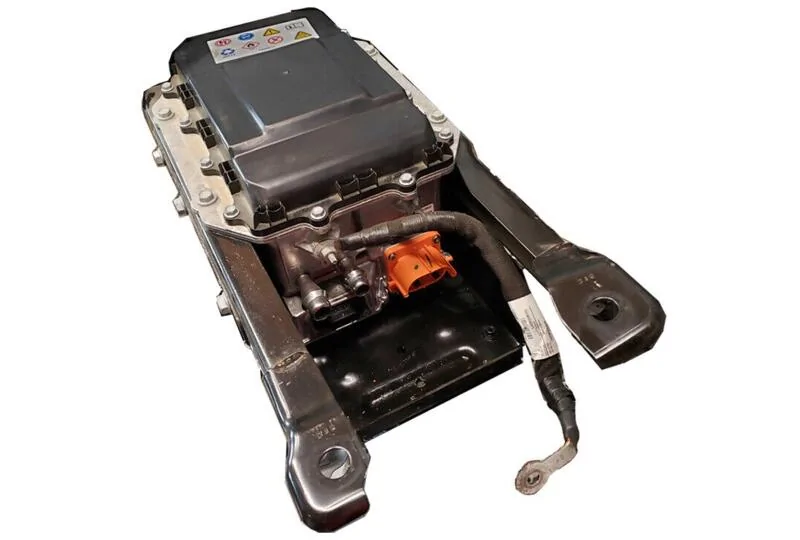
Wow, just found a new "con", lol. The replacement OEM 48V battery (68381513AA) is $2,050 for a new unit. However, the going price for a used one is under $700, though buying an old, used lithium battery seems like a gamble in itself.

But the big "pro" here is that it really doesn't matter at all if you bought a brand-new Wrangler v6 eTorque and trade it in before the 8-year EV/hybrid portion of your warranty expires, right? 😏

https://store.mopar.com/oem-parts/mopar-power-pack-unit-battery-kit-68381513aa

Jeep Wrangler JL A better V6? 1743230656586-k
 

Zandcwhite

Well-Known Member
First Name
Zach
Joined
Sep 4, 2019
Threads
11
Messages
8,307
Reaction score
14,200
Location
Patterson, ca
Vehicle(s)
2019 jlur
Afaik, the battery pack under the vehicle is a 48V lithium and the one under the hood is a single 12V AGM. Can't figure out the rated capacity.

Wow, just found a new "con", lol. The replacement OEM 48V battery (68381513AA) is $2,050 for a new unit. However, the going price for a used one is under $700, though buying an old, used lithium battery seems like a gamble in itself.

But the big "pro" here is that it really doesn't matter at all if you bought a brand-new Wrangler v6 eTorque and trade it in before the 8-year EV/hybrid portion of your warranty expires, right? 😏

https://store.mopar.com/oem-parts/mopar-power-pack-unit-battery-kit-68381513aa

1743230656586-kw.webp
I haven't seen knock off/refurbished etorque batteries but I know my buddy got one for his early mild hybrid escape for $600 when Ford wanted $3k for a new one. Hopefully as the early etorques get past the warranty period the aftermarket steps in.
Sponsored

 
Last edited:
  • Like
Reactions: AFD


Top