
Sponsored

0w20 more engine wear?

UncleJimmy

Well-Known Member
First Name
James
Joined
Mar 22, 2019
Threads
9
Messages
691
Reaction score
671
Location
AZ
Vehicle(s)
2020 JLUR; 2016 Toyota Tundra
The Pentastar uses coolant to moderate the oil temperature in that heat exchanger we are all calling a "cooler". The fact is, it acts like a pre-heater during warm up of the engine. The coolant heats much faster than oil in an unassisted system. Chrysler routed the coolant through this heat exchanger and it warms the oil very quickly and, as we all know, coolant temps can be at or near stable operating temps in a few minutes of driving. That's a good thing. However, when the coolant system is pushed to its limits, the oil temperatures are also heated right along with the coolant.

In aircraft systems, I've seen this type of design and it often is called a pre-heater and includes a thermostat to bypass it when heating is no longer desired. Chrysler seems to have shortcutted this and left out a true air-oil cooler and bypass thermostat.
I have read yours and others' comments on this before. It sounds like a good design in many ways. I really appreciate how quick the engine oil and cabin heat up.

I haven't had any issues with the 3.6s Wrangler cooling system provided I can get the fan to turn on at a reasonable rate and temp.
Sponsored

 

UncleJimmy

Well-Known Member
First Name
James
Joined
Mar 22, 2019
Threads
9
Messages
691
Reaction score
671
Location
AZ
Vehicle(s)
2020 JLUR; 2016 Toyota Tundra
UncleJimmy
I can see you came to the same conclusion I have
Two more things to consider ( can't remember if I told you about these )
About 4 months ago I installed the RPM Extreme JL fan controller. This is a game changer
It has lowered my coolant and oil temps about 25 to 30 degrees and reduced the amount of oil that my oil catch can collects
I used to see temps up HW80 to Lake Tahoe pushing 235 degrees
After fan controller same trip topped out at 212
With the fan controller average driving I am run about 188 to 195 degrees
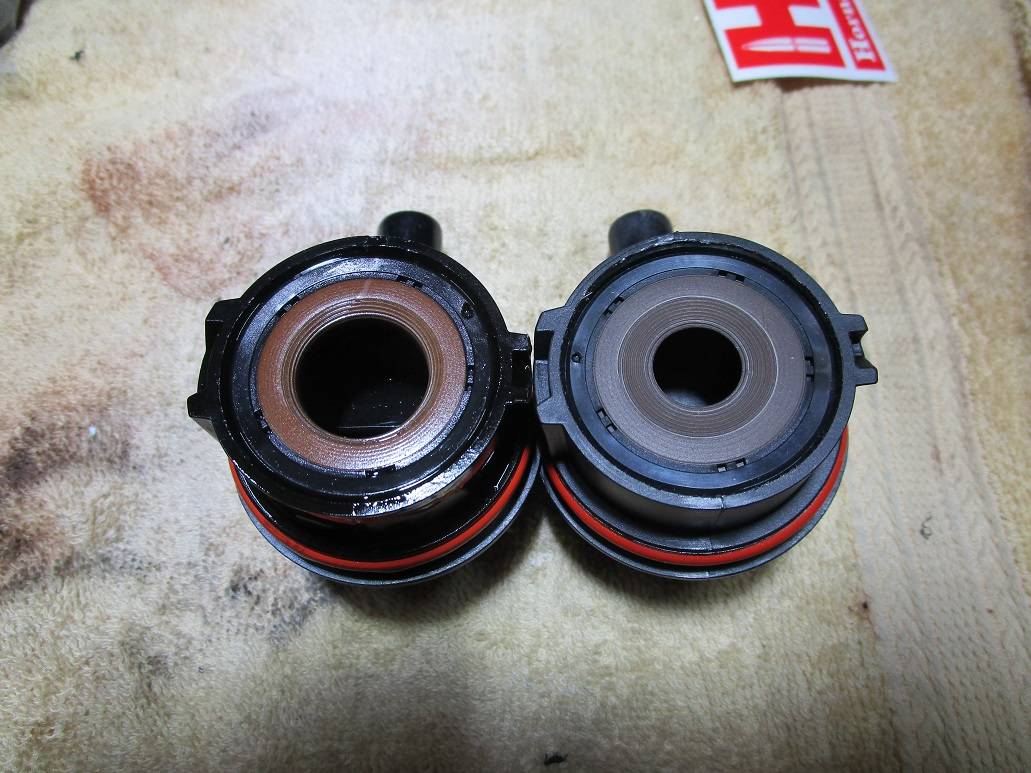
I just installed the updated PCV valve and have another 500 miles to go before I drain and check to see if it reduced the amount of oil in my catch can ( see pictures. New one on right )
I will keep you updated

IMG_1897 - Copy.JPG
Yes, you have convinced me to try your setup for the catch can and the fan controller. Seems like the lower amounts collected in catch makes me think you will have a lot less carbon build up and eliminated the ping. As far as temperatures go, in winter time daily driving my engine oil stays pegged between 188-192 F., where the thermostat opens. But as soon as I drive off road in low gear, temps climb really quick and cycle up and down which cant be good. Let us know how the PCV valve works out. How hard was to change out and did you do it from the top of the engine?
 

Willys41

Well-Known Member
First Name
Larry
Joined
Nov 2, 2021
Threads
3
Messages
1,170
Reaction score
1,312
Location
Pleasanton Ca.
Vehicle(s)
2020 Jeep Willys
From the top. flipped the hood back to the windshield
I found the easiest way was to just brake of the retaining tab and twist it off
I also wormed up the motor a little and I think that may of helped
Came rite off
 

m3reno

Well-Known Member
First Name
Sal
Joined
Jul 21, 2018
Threads
62
Messages
1,499
Reaction score
1,403
Location
caldwell
Vehicle(s)
2022 Jeep Wrangler JLU
So far i installed the new PCV valve and went back to 87 octane and have not had any low speed knocking. I'll know better when the climate gets warmer.
 

UncleJimmy

Well-Known Member
First Name
James
Joined
Mar 22, 2019
Threads
9
Messages
691
Reaction score
671
Location
AZ
Vehicle(s)
2020 JLUR; 2016 Toyota Tundra
So far i installed the new PCV valve and went back to 87 octane and have not had any low speed knocking. I'll know better when the climate gets warmer.
Another reason why I question if Ow20 is really what these engines were designed for, the hypothesis being too high of oil vapor being reintroduced via the PCV system reducing octane.
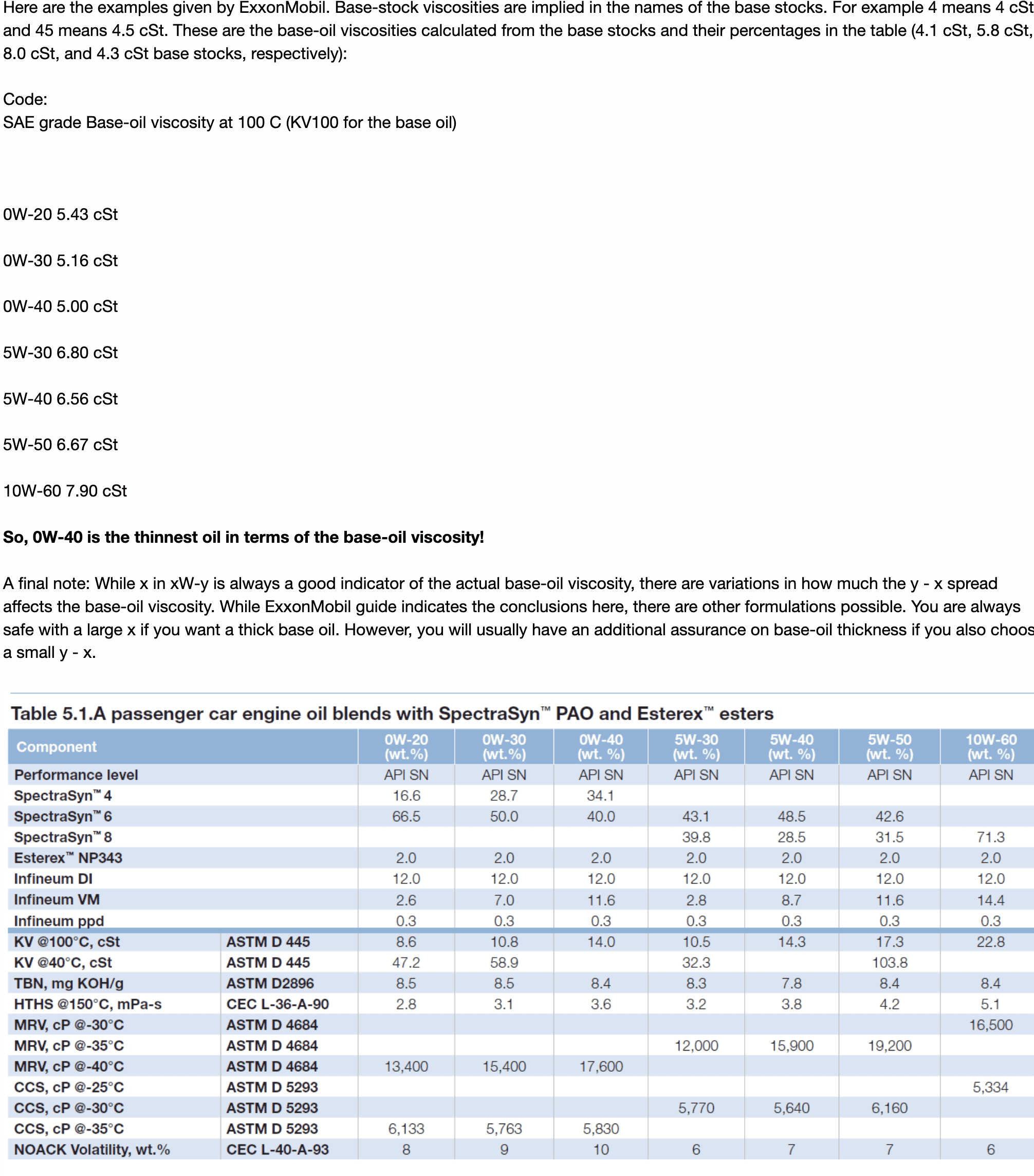
The NOACK volatility is lowest with 5w30 until it gets to 10w60 where it is the same (6).

https://bobistheoilguy.com/forums/threads/do-you-think-thats-thick-oil-think-again.286877/

Jeep Wrangler JL 0w20 more engine wear? ExonMobil Oil
 

Sponsored

Willys41

Well-Known Member
First Name
Larry
Joined
Nov 2, 2021
Threads
3
Messages
1,170
Reaction score
1,312
Location
Pleasanton Ca.
Vehicle(s)
2020 Jeep Willys
Maserati Ghibli engine 3.0 L V6 and the 3.6 pentastar
Maserati Owners manual recommend pennzoil ultra euro 5w40
Watch this youtube


UncleJimmy

Well-Known Member
First Name
James
Joined
Mar 22, 2019
Threads
9
Messages
691
Reaction score
671
Location
AZ
Vehicle(s)
2020 JLUR; 2016 Toyota Tundra
Maserati Ghibli engine 3.0 L V6 and the 3.6 pentastar
Maserati Owners manual recommend pennzoil ultra euro 5w40
Watch this youtube

Watched it.

Observation: They are almost identical except for the difference in displacement. Heads, timing cover, thermostat housing, water pumps etc. are interchangeable.

Conclusion: might want to consider 5w40???

Nice find.
 

roaniecowpony

Well-Known Member
Joined
Dec 4, 2018
Threads
194
Messages
12,943
Reaction score
20,489
Location
SoCal
Vehicle(s)
2018 JLUR, 14 GMC 1500 CC All TERRAIN
Occupation
Retired Engineer
Conversely, 0W-20 isn't going to hurt the motor at all. That's the real problem - all these threads where members claim "0W-20 will lead to destruction!!!". BS. As long as you do the research and ask the right questions so you know the risks of using an oil other than specified, go right ahead. But also don't try to steer everyone else into taking the same risks.

Not saying that you did this, of course...it's just a general commentary on this thread type - a type that exists on every single car forum ever.


There is the group that are followers of the owner's manuals to the T. They believe the manufacturer of their vehicle would only recommend the optimum oil in the best interest of longevity of the engine. After all, oil is all about longetivity of moving parts. Most of this group believes that any deviation from the recommendation invites risk. Risk of engine failure or the belief that any oil deviation invites risk of warranty denial. Many in this group also believe the engine was "designed for" the specific oil recommended in the owner's manual. That is, the engine has certain physical charateristics, that are different than other engines, which require these super thin oils.

There's those that know that 0w20 is an invention driven by ever mounting pressure to reduce fuel consumption, and while it was deemed to have met the engineering goals for adequate lubrication and engine life, statistically, the goal was not to idealize engine longevity. This group is also aware that products, including your vehicle, have a "design life" and engineering goals that are extensively tested to meet, statistically, to acceptable pass/fail rates, including the lubricants. This group understands that higher viscosity is directly tied to increased film thickness and film strength, and that these two characteristics affect wear. This group is comfortable moving to more traditional viscosity oils.

Just my observations from reading these forums, but I have read of many engine failures, as I'm sure many of you have, (not just jeep engines) where the vehicle was under warranty and the owner sought warranty remedy. In none of them have I read where the dealership or manufacturer actually performed an oil analysis, let alone, denied the claim due to a deviation of oil type recommended in the owner's manual, or denied a claim because the owner did not produce evidence of an oil change. Examples may be out there, I just haven't run across them.
 
Last edited:

m3reno

Well-Known Member
First Name
Sal
Joined
Jul 21, 2018
Threads
62
Messages
1,499
Reaction score
1,403
Location
caldwell
Vehicle(s)
2022 Jeep Wrangler JLU
I think 0W 30 in the winter and 5W 30 for the summer is a good midway point. I'm hoping the 5W 30 along with my new pcv valve will eliminate the low speed knock that I had in the summer months.
 

CarbonSteel

Well-Known Member
Joined
Jul 21, 2019
Threads
305
Messages
5,795
Reaction score
8,216
Location
Colorado
Vehicle(s)
2001 Cherokee; 2023 Bronco Wildtrak; 2024 Grand Cherokee 4xe
Vehicle Showcase
1
I think 0W 30 in the winter and 5W 30 for the summer is a good midway point. I'm hoping the 5W 30 along with my new pcv valve will eliminate the low speed knock that I had in the summer months.
0W-30 year round and I would go for the thickest viscosity at 100°C. To that end, I would run Mobil 1 ESP, which is very likely the highest performing off the shelf xW-30 oil out there. The certifications it carries far exceed most if not all oils in the same class.
 

Sponsored

CarbonSteel

Well-Known Member
Joined
Jul 21, 2019
Threads
305
Messages
5,795
Reaction score
8,216
Location
Colorado
Vehicle(s)
2001 Cherokee; 2023 Bronco Wildtrak; 2024 Grand Cherokee 4xe
Vehicle Showcase
1
There is the group that are followers of the owner's manuals to the T. They believe the manufacturer of their vehicle would only recommend the optimum oil in the best interest of longevity of the engine. After all, oil is all about longetivity of moving parts. Most of this group believes that any deviation from the recommendation invites risk. Risk of engine failure or the belief that any oil deviation invites risk of warranty denial. Many in this group also believe the engine was "designed for" the specific oil recommended in the owner's manual. That is, the engine has certain physical charateristics, that are different than other engines, which require these super thin oils.

There's those that know that 0w20 is an invention driven by ever mounting pressure to reduce fuel consumption, and while it was deemed to have met the engineering goals for adequate lubrication and engine life, statistically, the goal was not to idealize engine longevity. This group is also aware that products, including your vehicle, have a "design life" and engineering goals that are extensively tested to meet, statistically, to acceptable pass/fail rates, including the lubricants. This group understands that higher viscosity is directly tied to increased film thickness and film strength, and that these two characteristics affect wear. This group is comfortable moving to more traditional viscosity oils.

Just my observations from reading these forums, but I have read of many engine failures, as I'm sure many of you have, (not just jeep engines) where the vehicle was under warranty and the owner sought warranty remedy. In none of them have I read where the dealership or manufacturer actually performed an oil analysis, let alone, denied the claim due to a deviation of oil type recommended in the owner's manual, or denied a claim because the owner did not produce evidence of an oil change. Examples may be out there, I just haven't run across them.
Truth...every vehicle owner in the US needs to remember the CAFE credit game (aka maximum fuel economy across the entire fleet) is intertwined with millions of dollars. Dollars mean much more to an OEM than your engine lasting hundreds of thousands of miles.

In addition, make no mistake, they also spend millions in market research to understand how long people keep a vehicle on average. I can easily opine those who keep a vehicle "forever" are in the extreme minority.
 

UncleJimmy

Well-Known Member
First Name
James
Joined
Mar 22, 2019
Threads
9
Messages
691
Reaction score
671
Location
AZ
Vehicle(s)
2020 JLUR; 2016 Toyota Tundra
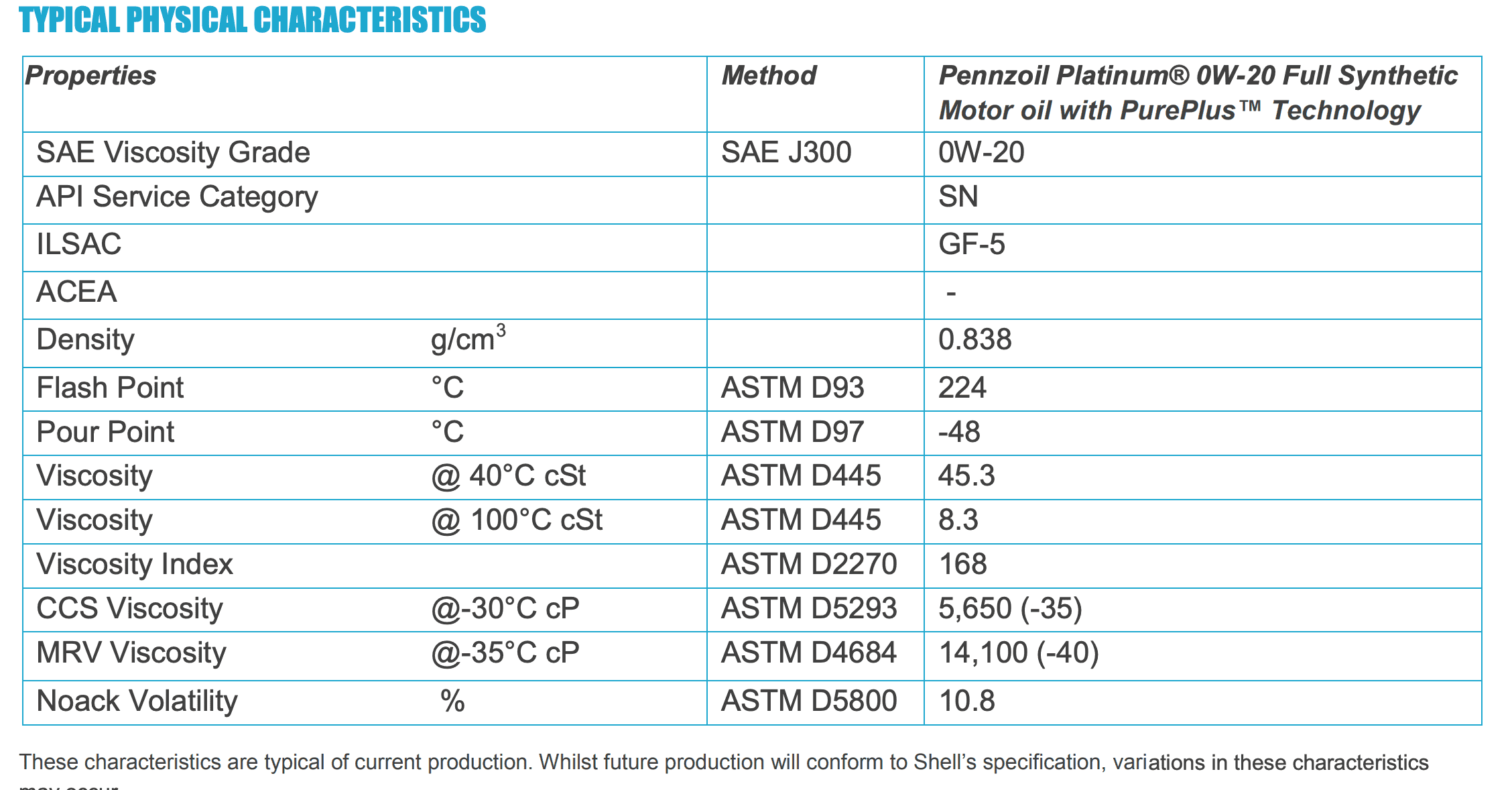
Pennzoil Platinum 0w20 has a higher NOACK volatility 10.8 vs 8 with some other synthetics. This is what my dealer uses for synthetic. Personally, I would avoid it, particularly if seeing oil temps 230+ F as in off roading/towing.

@Willys41 has shown lowering the temps significantly reduced amount of oil emulsion caught in the catch can. I would think oil volatility would be a large factor in that equation.

https://petroleumservicecompany.com/content/pdfs/PZL_PLAT_0W20_TDS.pdf

Jeep Wrangler JL 0w20 more engine wear? Pennzoil 0w20
 

UncleJimmy

Well-Known Member
First Name
James
Joined
Mar 22, 2019
Threads
9
Messages
691
Reaction score
671
Location
AZ
Vehicle(s)
2020 JLUR; 2016 Toyota Tundra
Truth...every vehicle owner in the US needs to remember the CAFE credit game (aka maximum fuel economy across the entire fleet) is intertwined with millions of dollars. Dollars mean much more to an OEM than your engine lasting hundreds of thousands of miles.

In addition, make no mistake, they also spend millions in market research to understand how long people keep a vehicle on average. I can easily opine those who keep a vehicle "forever" are in the extreme minority.
I agree. I also have some suspicions in the way oil is tested and rated, and if it is designed to benefit the CAFE narrative.

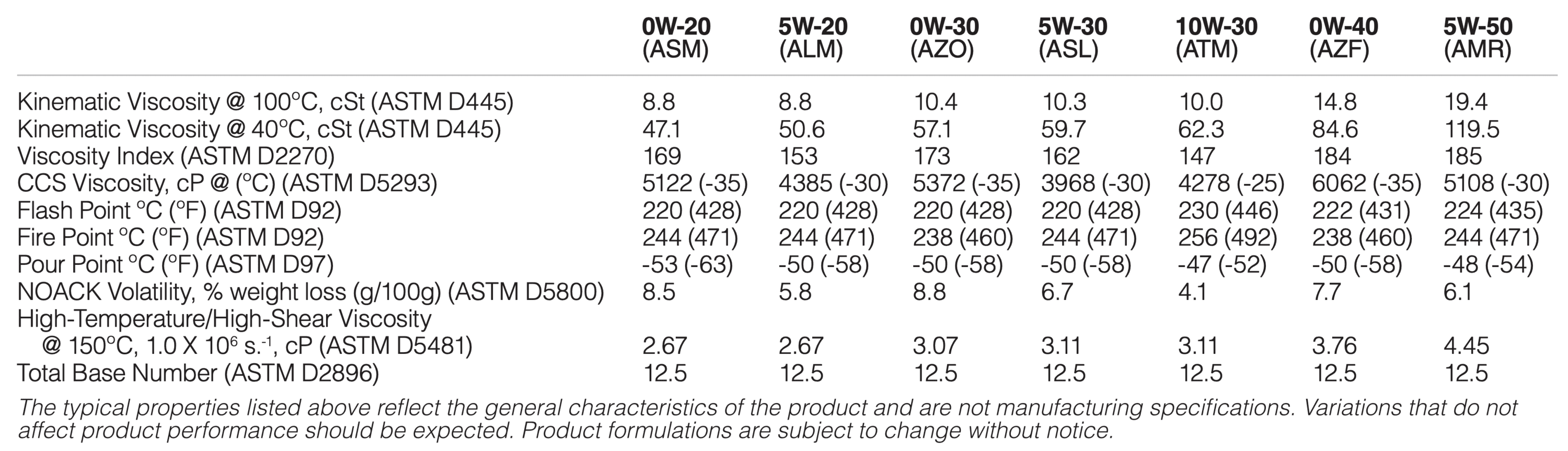
If we compare oil data across different weights there are a few things that make me wonder. First off, everyone seems to be (overly?) concerned with cold starting/increased start-up wear which coincidently happens to support the overall adoption of lighter viscosity oils. Taking a look at this data for example, the cold crank simulator (CCS) has a lower cP at 4278 for 10w30 vs 5122 for the Ow20. The difference is the former is at -25 C and the later is at -35 C. Those are extreme cold temps that most of us will never see.

Similarly, if we take the kinematic viscosity of the 10w30 at 40 C of 62.3 cSt, that's not much higher than the 0w20 of 47.1 cSt. Furthermore, if the engine was at a higher temp, say 50-90 C, even the 5w50 could potentially have a lower cSt than the 0w20 at 40 C.

It wasn't that long ago in North America when the OEMs recommended 10wX for temps above 0 F and 5wX for below 0 F. Have tolerances decreased so much to warrant 0wX year round? In some cases, they recently recommend that in global markets depending on the engine and manufacturer.

Getting back to the 3.6l Pentastar, from the OEM's perspective, for light duty, passenger applications perhaps lighter oils are appropriate for that market to maximize efficiency, but in higher load applications such as the Wrangler or RAM trucks, working at higher loads, and for a market that generally cares more about longevity than efficiency, then higher viscosity might be more appropriate.

I am not sure what the safe/optimal upper limit is but the fact that the Maserati 3.0 V6 and your friend running xW40, coupled with the generally lower volatility associated with heavier oils, is encouraging for the adoption of higher viscosity oils.

Jeep Wrangler JL 0w20 more engine wear? Viscosity Compariso
 

CarbonSteel

Well-Known Member
Joined
Jul 21, 2019
Threads
305
Messages
5,795
Reaction score
8,216
Location
Colorado
Vehicle(s)
2001 Cherokee; 2023 Bronco Wildtrak; 2024 Grand Cherokee 4xe
Vehicle Showcase
1
I agree. I also have some suspicions in the way oil is tested and rated, and if it is designed to benefit the CAFE narrative.

If we compare oil data across different weights there are a few things that make me wonder. First off, everyone seems to be (overly?) concerned with cold starting/increased start-up wear which coincidently happens to support the overall adoption of lighter viscosity oils. Taking a look at this data for example, the cold crank simulator (CCS) has a lower cP at 4278 for 10w30 vs 5122 for the Ow20. The difference is the former is at -25 C and the later is at -35 C. Those are extreme cold temps that most of us will never see.

Similarly, if we take the kinematic viscosity of the 10w30 at 40 C of 62.3 cSt, that's not much higher than the 0w20 of 47.1 cSt. Furthermore, if the engine was at a higher temp, say 50-90 C, even the 5w50 could potentially have a lower cSt than the 0w20 at 40 C.

It wasn't that long ago in North America when the OEMs recommended 10wX for temps above 0 F and 5wX for below 0 F. Have tolerances decreased so much to warrant 0wX year round? In some cases, they recently recommend that in global markets depending on the engine and manufacturer.

Getting back to the 3.6l Pentastar, from the OEM's perspective, for light duty, passenger applications perhaps lighter oils are appropriate for that market to maximize efficiency, but in higher load applications such as the Wrangler or RAM trucks, working at higher loads, and for a market that generally cares more about longevity than efficiency, then higher viscosity might be more appropriate.

I am not sure what the safe/optimal upper limit is but the fact that the Maserati 3.0 V6 and your friend running xW40, coupled with the generally lower volatility associated with heavier oils, is encouraging for the adoption of higher viscosity oils.

Viscosity Comparison.png
Yep; 130K miles later with him running 0W-40 from the first oil change, there have been zero issues so when I hear the 3.6L Pentastar is viscosity dependent, I can easily say "Prove it".

0W-20 is fine for the vast majority AS LONG AS you do you put the engine in a position where the viscosity does not afford enough protection. My Pentastar ran hot, worked at altitude, and weighed 5700# empty, I had zero compunction running 5W-30 in it.
 

roaniecowpony

Well-Known Member
Joined
Dec 4, 2018
Threads
194
Messages
12,943
Reaction score
20,489
Location
SoCal
Vehicle(s)
2018 JLUR, 14 GMC 1500 CC All TERRAIN
Occupation
Retired Engineer
I agree. I also have some suspicions in the way oil is tested and rated, and if it is designed to benefit the CAFE narrative.

If we compare oil data across different weights there are a few things that make me wonder. First off, everyone seems to be (overly?) concerned with cold starting/increased start-up wear which coincidently happens to support the overall adoption of lighter viscosity oils. Taking a look at this data for example, the cold crank simulator (CCS) has a lower cP at 4278 for 10w30 vs 5122 for the Ow20. The difference is the former is at -25 C and the later is at -35 C. Those are extreme cold temps that most of us will never see.

Similarly, if we take the kinematic viscosity of the 10w30 at 40 C of 62.3 cSt, that's not much higher than the 0w20 of 47.1 cSt. Furthermore, if the engine was at a higher temp, say 50-90 C, even the 5w50 could potentially have a lower cSt than the 0w20 at 40 C.

It wasn't that long ago in North America when the OEMs recommended 10wX for temps above 0 F and 5wX for below 0 F. Have tolerances decreased so much to warrant 0wX year round? In some cases, they recently recommend that in global markets depending on the engine and manufacturer.

Getting back to the 3.6l Pentastar, from the OEM's perspective, for light duty, passenger applications perhaps lighter oils are appropriate for that market to maximize efficiency, but in higher load applications such as the Wrangler or RAM trucks, working at higher loads, and for a market that generally cares more about longevity than efficiency, then higher viscosity might be more appropriate.

I am not sure what the safe/optimal upper limit is but the fact that the Maserati 3.0 V6 and your friend running xW40, coupled with the generally lower volatility associated with heavier oils, is encouraging for the adoption of higher viscosity oils.

Viscosity Comparison.png
Appreciate your thoughts on this. On what is a "safe" upper limit (of viscosity) I don't think that's an issue, as long as you're within cold start limits for the "w" rating.

Regarding "tolerances", let's use the correct term, lest the layperson get the wrong information. We're really talking about clearances (or gap), mainly between the pressure lubricated bearings of the crankshaft main bearings, rod bearings, and camshaft bearings. Most of the other parts like the rockers and camshaft lobes, rely on splash or spray lubrication wetting and film strength and thickness. For the layperson, "tolerances" are production allowances in dimensions, torques, etc. (e.g. the blueprint specifies 2.5000" - 2.5005", meaning the dimension can only vary 0.0005", and only between the specified sizes), 0.0005" being the tolerance of that feature.
Sponsored


Top