
Sponsored

0w20 more engine wear?

UncleJimmy

Well-Known Member
First Name
James
Joined
Mar 22, 2019
Threads
9
Messages
691
Reaction score
671
Location
AZ
Vehicle(s)
2020 JLUR; 2016 Toyota Tundra
Appreciate your thoughts on this. On what is a "safe" upper limit (of viscosity) I don't think that's an issue, as long as you're within cold start limits for the "w" rating.

Regarding "tolerances", let's use the correct term, lest the layperson get the wrong information. We're really talking about clearances (or gap), mainly between the pressure lubricated bearings of the crankshaft main bearings, rod bearings, and camshaft bearings. Most of the other parts like the rockers and camshaft lobes, rely on splash or spray lubrication wetting and film strength and thickness. For the layperson, "tolerances" are production allowances in dimensions, torques, etc. (e.g. the blueprint specifies 2.5000" - 2.5005", meaning the dimension can only vary 0.0005", and only between the specified sizes), 0.0005" being the tolerance of that feature.
Thanks for the clarification.

P.S. I think I already answered my own questions so I deleted those.
Sponsored
 

Willys41

Well-Known Member
First Name
Larry
Joined
Nov 2, 2021
Threads
3
Messages
1,170
Reaction score
1,312
Location
Pleasanton Ca.
Vehicle(s)
2020 Jeep Willys
First of all let me clear up some things
My jeep is far from stock with 37s bead locks and hauling about 1200 lbs extra weight all the time
I never had been talking about a stock jeep
These test that jeep performs is on stock jeeps with stock cooling systems
Keeping your oil and cooling system running cooler is a good thing under abnormal situation like a highly modified jeep or any vehicle
Jeep had a hard time getting the Gladiators cooling system work under abnormal situation

The only issue was, engineers were having a tough time creating a cooling system using the Wrangler’s front end (which the Gladiator shares) that could handle best-in-class mid-size truck loads.


https://jalopnik.com/the-engineering-behind-the-jeep-gladiators-tow-rating-1833657453
 

roaniecowpony

Well-Known Member
Joined
Dec 4, 2018
Threads
194
Messages
12,943
Reaction score
20,489
Location
SoCal
Vehicle(s)
2018 JLUR, 14 GMC 1500 CC All TERRAIN
Occupation
Retired Engineer
Last edited:

TheRaven

Well-Known Member
Joined
Oct 22, 2020
Threads
6
Messages
2,844
Reaction score
4,176
Location
Reading, Pennsylvania
Vehicle(s)
Sold
There is the group that are followers of the owner's manuals to the T. They believe the manufacturer of their vehicle would only recommend the optimum oil in the best interest of longevity of the engine. After all, oil is all about longetivity of moving parts. Most of this group believes that any deviation from the recommendation invites risk. Risk of engine failure or the belief that any oil deviation invites risk of warranty denial. Many in this group also believe the engine was "designed for" the specific oil recommended in the owner's manual. That is, the engine has certain physical charateristics, that are different than other engines, which require these super thin oils.

There's those that know that 0w20 is an invention driven by ever mounting pressure to reduce fuel consumption, and while it was deemed to have met the engineering goals for adequate lubrication and engine life, statistically, the goal was not to idealize engine longevity. This group is also aware that products, including your vehicle, have a "design life" and engineering goals that are extensively tested to meet, statistically, to acceptable pass/fail rates, including the lubricants. This group understands that higher viscosity is directly tied to increased film thickness and film strength, and that these two characteristics affect wear. This group is comfortable moving to more traditional viscosity oils.

Just my observations from reading these forums, but I have read of many engine failures, as I'm sure many of you have, (not just jeep engines) where the vehicle was under warranty and the owner sought warranty remedy. In none of them have I read where the dealership or manufacturer actually performed an oil analysis, let alone, denied the claim due to a deviation of oil type recommended in the owner's manual, or denied a claim because the owner did not produce evidence of an oil change. Examples may be out there, I just haven't run across them.
This is such a dumb argument. Thinking that you know more than the people who designed the engine just because "ah've been doin' this fer years and ain't never had no problems" is really foolish. It gets even sillier when you start with the fuel efficiency conspiracy theory - yes they are trying to destroy our engines in the name of fuel economy. LOL.

I'm not continuing this ridiculous argument that's been raging on every single car forum forever. It's tired.
 

Willys41

Well-Known Member
First Name
Larry
Joined
Nov 2, 2021
Threads
3
Messages
1,170
Reaction score
1,312
Location
Pleasanton Ca.
Vehicle(s)
2020 Jeep Willys
Yap. ESS and dissimilar dual battery's was a good idea too. lol
They will do any think to get there MPG ratings up
 

Sponsored

Tncdrew

Well-Known Member
First Name
Tom
Joined
May 3, 2022
Threads
24
Messages
1,781
Reaction score
3,496
Location
East Tennessee
Vehicle(s)
2022 JL Willys, 3.6L - 8spd
Maserati Ghibli engine 3.0 L V6 and the 3.6 pentastar
Maserati Owners manual recommend pennzoil ultra euro 5w40
Watch this youtube

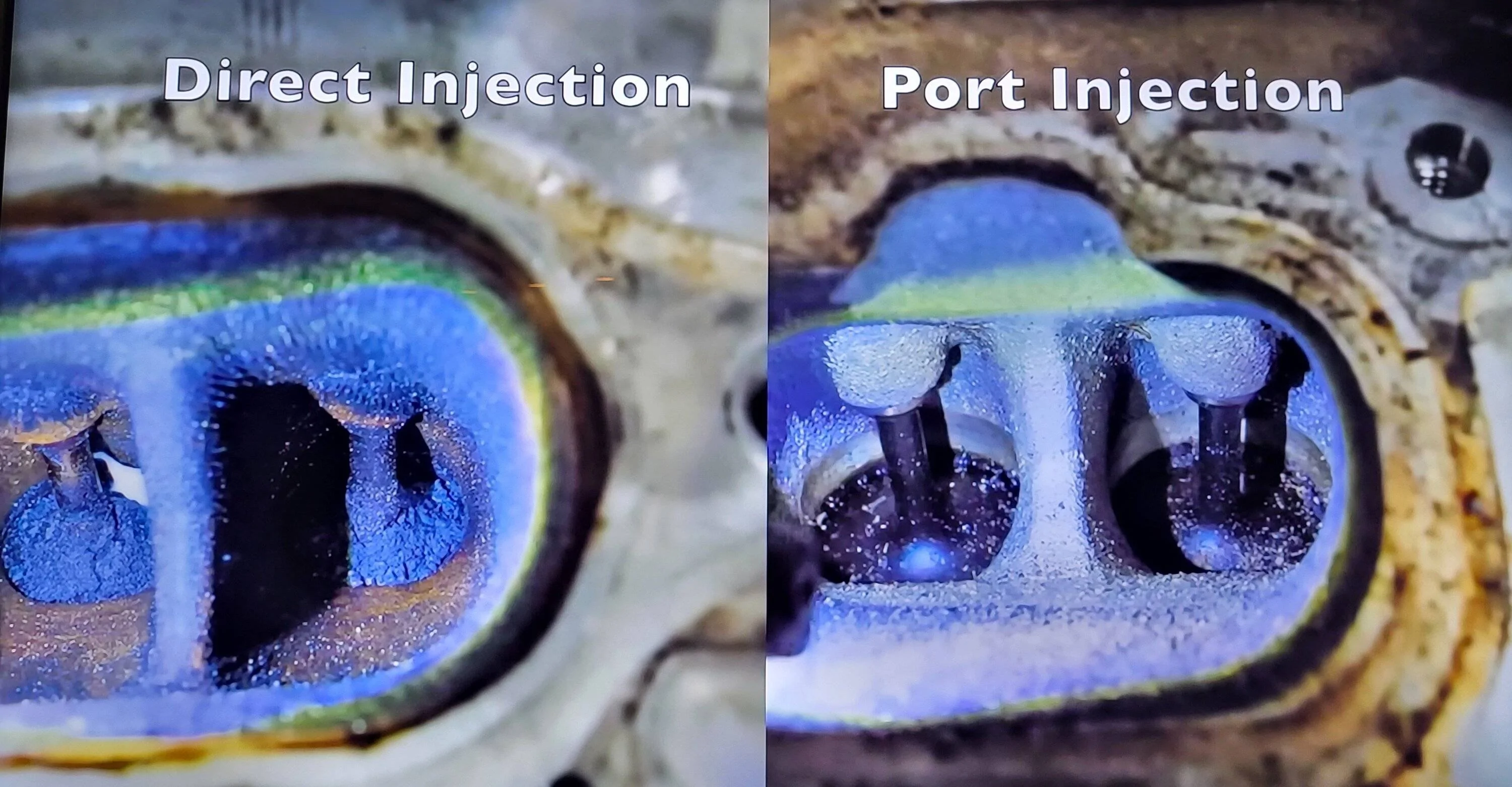
This was the most telling takeaway in this video IMO. So often you get blasted by the 2.0 guys on here for pointing this out...
But a picture is worth a thousand words. ?

Jeep Wrangler JL 0w20 more engine wear? 20240127_165058
 

CarbonSteel

Well-Known Member
Joined
Jul 21, 2019
Threads
305
Messages
5,795
Reaction score
8,216
Location
Colorado
Vehicle(s)
2001 Cherokee; 2023 Bronco Wildtrak; 2024 Grand Cherokee 4xe
Vehicle Showcase
1
Highly regarded for the greatest wear resistance of all oils in the same category based on real testing. Check them out.
Number 1 for 0W20 Quaker State “Ultimate Durability”
Number 1 for 5W30 Quaker State “Full Synthetic
Let me guess...Rat540?
 

roaniecowpony

Well-Known Member
Joined
Dec 4, 2018
Threads
194
Messages
12,943
Reaction score
20,489
Location
SoCal
Vehicle(s)
2018 JLUR, 14 GMC 1500 CC All TERRAIN
Occupation
Retired Engineer
Here's a few articles I've run across about low viscosity oils. If you read them, you will find a common thread that the reason for reduced viscosity is because of a drive toward reduced fuel consumption. You will also find a common challenge of reducing viscosity is that film strength is tied to viscosity, and therefore is requiring new additive technology to go to these lower viscosities.

I'm all for reduced fuel consumption, especially across the masses of vehicles. The rub (pun) for me comes with the Pentastar's chronic rocker/cam failure, that clearly hasn't been solved with the changes to date. This is my reason for seeking added film strength in the oil I choose for my 3.6L JLUR. YMMV


Motor Oil Viscosity: Engine Oil Grades | Castrol® USA

The Drive Toward Thinning Engine Oils - Engine Builder Magazine
Multiple honours for Dr. Raj Shah Petro Online (petro-online.com)

The Skinny On Light Weight Motor Oils - AMSOIL Authorized Dealer (lube-direct.com)

Ultra-low viscosity Mobil 1™ motor oil | Mobil™

Motor oil without oil? | LIQUI MOLY (liqui-moly.com)
 

Sponsored

Willys41

Well-Known Member
First Name
Larry
Joined
Nov 2, 2021
Threads
3
Messages
1,170
Reaction score
1,312
Location
Pleasanton Ca.
Vehicle(s)
2020 Jeep Willys
In theory
Having a higher octane can increase efficiency and performance
The motor is equipped with a knock censer and the PCM will retard the timing if it picks up spark knock

What would trigger a knock sensor?

The knock sensor uses an internal piezoelectric element to detect abnormal combustions inside the engine called a spark knock. Some of the common causes of spark knock include low octane fuel, overly advanced ignition timing, high engine operating temperatures, and more.

This is why I run the higher octane in my 3.6
 

azjl#3

Well-Known Member
First Name
Scott
Joined
Sep 24, 2022
Threads
17
Messages
3,060
Reaction score
3,706
Location
North AZ
Vehicle(s)
2024 silver zenith or atomic silver. JLUR Extreme Recon-ish
Occupation
retired, grumpy, yet, friendly
I tried running 91 for one tank, fuel mileage dropped 1.5 mpg, did not notice any extra power. Back to 87, still have not noticed pinging in last 4 versions of 3.6 from 4 degrees F to 128 degrees 7% grades 8000 ft to sea level, pulling 2-3000lb trailers.
 

jav_eee

Well-Known Member
Joined
Mar 7, 2023
Threads
7
Messages
363
Reaction score
381
Location
Texas
Vehicle(s)
2021 JTR
I tried running 91 for one tank, fuel mileage dropped 1.5 mpg, did not notice any extra power. Back to 87, still have not noticed pinging in last 4 versions of 3.6 from 4 degrees F to 128 degrees 7% grades 8000 ft to sea level, pulling 2-3000lb trailers.
probably just severely retarded timing to compensate ??
 

UncleJimmy

Well-Known Member
First Name
James
Joined
Mar 22, 2019
Threads
9
Messages
691
Reaction score
671
Location
AZ
Vehicle(s)
2020 JLUR; 2016 Toyota Tundra
Appreciate your thoughts on this. On what is a "safe" upper limit (of viscosity) I don't think that's an issue, as long as you're within cold start limits for the "w" rating.
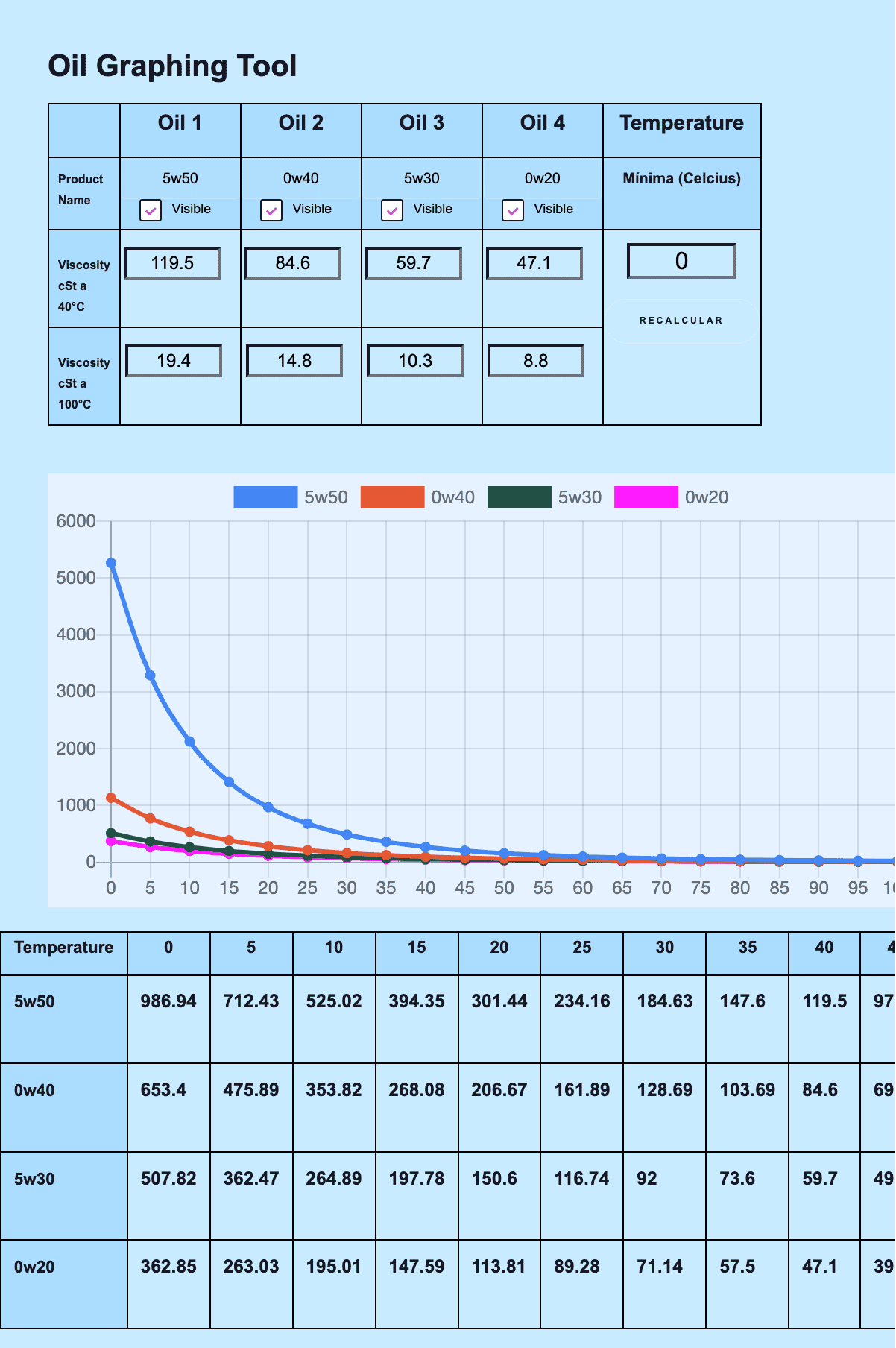
I was doing some more thinking on this and after studying this chart I started to think of different grade oils not in terms of variations of viscosity but in terms of variations of temperatures, i.e. the different grades "modify" the temperature of the oil relative to another grade of oil.

In this chart for example, if you take a heavier 5w50 and compare it to a lighter 0w20, the viscosity for the 5w50 at 100 C (212 F) is about the same as 0w20 at 65 C (149 F), so in a sense the heavier viscosity is "modifying" the oil temperature to behave the same as the lighter viscosity at the lower temp. In this case, therefore, if the oil viscosity was safe for the engine with 0w20 at 65 C it has to be safe with 5w50 at 100 C.

Where this get's more interesting, is if you start at 100 C and plot to 115 C (240 F) which is not an unheard of temp for these Jeeps under load, the 0w20 is at 6.6 cSt vs 14.2 for the 5w50, which is less than half the viscosity. That's significant. In the same way, you can think of your oil temp gauge as your "oil viscosity gauge".

The only area I see where the engine would see oil viscosities it hasn't seen before is dependent on how cold the ambient temps are. So from this data, I agree, the limit is not how high the grade is, but rather how cold the ambient temps are.

https://www.widman.biz/English/Calculators/Graph.html


Jeep Wrangler JL 0w20 more engine wear? 3


Jeep Wrangler JL 0w20 more engine wear? 2


Jeep Wrangler JL 0w20 more engine wear? 1
 
Last edited:


Top