
Sponsored

2nd 392
Well-Known Member
Many times (young passenger) in a 59 Chevy PU towing a 50 Jeep, you could see cars way down steep drops not retrieved. Lincoln Hwy 40, Donner Pass, gears required both up and down.

Beautiful drive, now a scenic route with large sections essentially original.
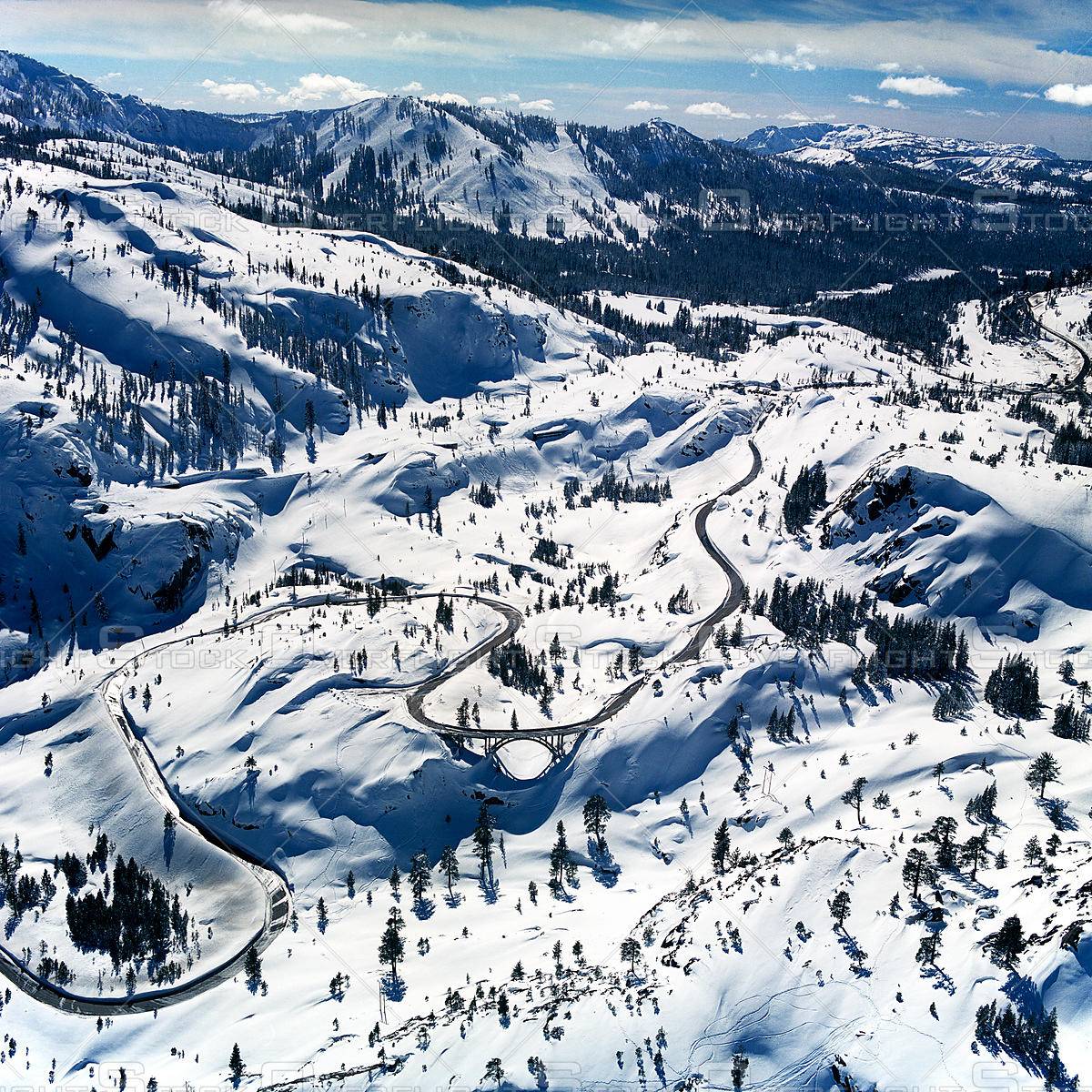
Beautiful drive, now a scenic route with large sections essentially original.
Radioman
Well-Known Member
- First Name
- Kent
- Joined
- Jan 17, 2024
- Threads
- 3
- Messages
- 214
- Reaction score
- 399
- Location
- Roseville, CA
- Vehicle(s)
- 2017 Toyota Highlander, 2020 Ford Ranger, 2025 Jeep Rubicon
- Occupation
- Retired Public Safety Communications Manager
Yep, drive it regularly when in the area. Very pretty with a great lookout at the bridge.Many times (young passenger) in a 59 Chevy PU towing a 50 Jeep, you could see cars way down steep drops not retrieved. Lincoln Hwy 40, Donner Pass, gears required both up and down.
Beautiful drive, now a scenic route with large sections essentially original.
Also, I always use engine braking, no matter which vehicle I'm driving.

BDinTX
Well-Known Member
- First Name
- Brad
- Joined
- Jul 18, 2020
- Threads
- 49
- Messages
- 2,953
- Reaction score
- 5,483
- Location
- Dallas, Tx
- Vehicle(s)
- 2020 JLU Rubicon Recon, 2021 JLU Rubicon
I was messing around with this today on mostly flat side roads. Even moderate engine braking was bringing down my turbo temp significantly.
Sponsored
DaltonGang
Well-Known Member
- Joined
- Sep 29, 2018
- Threads
- 93
- Messages
- 4,071
- Reaction score
- 5,909
- Location
- Doesn't Play Well With Others
- Vehicle(s)
- 2018 Wrangler JLU Sport S, Rubicon Suspension, Rims. Firecracker Red
Vacationing in Colorado has shown the Wrangler Engine brakes well. Without engine braking, the brakes would have been overheated for sure. Pikes Peak was definitely a test of how well it performs.
612Mpls
Well-Known Member
- First Name
- D.S.
- Joined
- Apr 20, 2024
- Threads
- 16
- Messages
- 117
- Reaction score
- 127
- Location
- Saint Paul, MN
- Vehicle(s)
- 2022 Jeep Wrangler JL
The only time you should use an automatic transmission for engine braking, is when you are going downhill. And you should have it in a lower gear before you make your descent.On the JL[U] specifically, is the wear and tear on engine and transmission components of manually downshifting (an automatic) to in part--in collaboration with the foot brakes--slow down the vehicle not worth it? Would it be better--assuming this engine braking isn't done in excess--to sooner wear out the brakes and replace them (a relatively minimal service item) than spare the brakes and put more of the deceleration efforts on engine's compression and transmission's innards?
Certainly we're working against the forces of inertia here when accelerating a vehicle but should we normally--big hill, lots of weight, and need to control excess speed notwithstanding as a good reason to downshift--leave deceleration to the brakes?
Thoughts?
TIA
612Mpls
Well-Known Member
- First Name
- D.S.
- Joined
- Apr 20, 2024
- Threads
- 16
- Messages
- 117
- Reaction score
- 127
- Location
- Saint Paul, MN
- Vehicle(s)
- 2022 Jeep Wrangler JL
another good point to add with engine braking, along with hydraulic, or air brakes, is to not just hold the brake pedal down constantly. Slow the vehicle down 5m.p.h. and take your foot off the brake, so air can get in between the shoes/pads, and cool them down. When speed increases step on the brakes and slow down another five. This cycle will keep you from getting brake fade. If your brakes fade they're useless. Or get some discs with holes drilled in themYes I've heard of those passes, I was using the Eisenhower as only one example. You missed my point entirely. I was really pointing out that for people who live in places that don't really have high hills and really long downhill grades, like the beaches of california or the hills of Pennsylvania, that out here, at least, there are some really good reasons for using engine braking and staying off the brakes.
I have seen the results of, and the white crosses on the side of the road after, when drivers have only relied on their service brakes descending some of the passes out where I live. I'll go ahead and put this out, flame suit on, but using your service brakes and engine braking are two tools that a driver can use to get down off a big hill. If you only lock yourself into using one of those two tools because it's too expensive to replace a clutch or transmission, well then you're doing it wrong. End of rant.
ppjcs
Active Member
- First Name
- Paul
- Joined
- Mar 20, 2024
- Threads
- 5
- Messages
- 43
- Reaction score
- 14
- Location
- Victoria, BC, Canada
- Vehicle(s)
- 2020 Wrangler Rubicon
I have had two manual Cherokees, one automatic Cherokee, one manual Wrangler Unlimited and now have an automatic Wrangler Unlimited Rubicon and have always used downshifting and brakes in conjunction and have never had apparent problems with doing it. One note though on long downgrades don't downshift then hold the brakes on, but instead apply a pumping action on the brakes so they don't fade out on you.
Valpo Jeep
Well-Known Member
- First Name
- Doug
- Joined
- Jun 15, 2022
- Threads
- 33
- Messages
- 1,082
- Reaction score
- 1,719
- Location
- Valparaiso IN
- Vehicle(s)
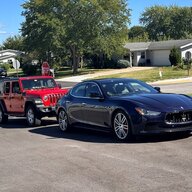
- 15 Mas Ghibli, 18 JLU, 05 Gulfstream RV
My old Audi would engine brake and use the rear brakes to modulate downhill speed when cruise control was turned on.
Engine braking is perfectly safe and fine IF you have a big enough engine to actually engine brake with. I used to have a Chevy Cruze with a 1.4 L 4-cyl. That engine was NOT big enough to effectively engine brake with. Wonder is the Jeep 2.0 has enough rotating mass to brake with.
Engine braking is perfectly safe and fine IF you have a big enough engine to actually engine brake with. I used to have a Chevy Cruze with a 1.4 L 4-cyl. That engine was NOT big enough to effectively engine brake with. Wonder is the Jeep 2.0 has enough rotating mass to brake with.
Sponsored
rickinAZ
Well-Known Member
Engine braking on very steep grades (think Pikes Peak, as @Ratbert pointed out) is one thing. Using downshift-braking on a regular basis (playing boy-racer) is another. Brakes are cheaper than transmissions. I lived at 8,200' for over thirty years to gain my experience on the subject. Every week I smelled that acrid odor of semis overcooking their brakes - even on less aggressive grades.
That said, 99.9% of the people using downshift-braking are NOT coming down Pikes Peak.
That said, 99.9% of the people using downshift-braking are NOT coming down Pikes Peak.
- Banned
- #27
Driving stick most of my life going back to the early 60s, I have ALWAYS downshifted and slowed down using the gears and engine braking. Most of my cars at trade time had 35k on the clock or better, several were past a 100k and one had 160k.On the JL[U] specifically, is the wear and tear on engine and transmission components of manually downshifting (an automatic) to in part--in collaboration with the foot brakes--slow down the vehicle not worth it? Would it be better--assuming this engine braking isn't done in excess--to sooner wear out the brakes and replace them (a relatively minimal service item) than spare the brakes and put more of the deceleration efforts on engine's compression and transmission's innards?
Certainly we're working against the forces of inertia here when accelerating a vehicle but should we normally--big hill, lots of weight, and need to control excess speed notwithstanding as a good reason to downshift--leave deceleration to the brakes?
Thoughts?
TIA
The result: I have NEVER done a brake job on a car in my life....NOTE I have replaced brakes when new with front high-performance pads from EBC, on my Jeeps and my F 450 trucks...I this by choice.
In all those years I have replaced only 2 clutches. 1 Clutch both clutches were good but the throw out bearing failed on on and on the the flywheel broke some teeth...so WHILE am in there I might as well replace the clutch pressure plate, throwout bearing, and clutch plate all at the same time.
You make the call!
JLeco2022
Well-Known Member
- First Name
- Steve
- Joined
- Jul 11, 2022
- Threads
- 12
- Messages
- 469
- Reaction score
- 642
- Location
- Anaheim, CA
- Vehicle(s)
- 2022 Wrangler 3.0 V6 Eco Diesel
vail pass has areas with no lines on the road, fun drive in the winterYou've obviously never heard of Donner Pass or Wolf Creek Pass or Vail Pass. There are plenty of long, winding downgrades in the US. Mostly in the Rockies, but can also be found in the Owyhees in Oregon, the Blue Ridge Mountains as well as the Appalachians (specifically W. Va. and PA) and the Catskills in New York.
To OP, there is nothing wrong with using your engine as a brake or retarder to control speed. Truckers do it all day every day. I drove a manual car for 6 years and never had any engine troubles due to downshifting engine braking. The only way you're going to hurt anything in the drivetrain is by letting your RPMs get too high. Avoid that and you're golden.
Opus
Well-Known Member
- Joined
- Jul 17, 2022
- Threads
- 112
- Messages
- 4,185
- Reaction score
- 10,303
- Location
- Midwest US
- Website
- www.jlwranglerforums.com
- Vehicle(s)
- 2023 Sport S, 2022 Sahara... 2014 Lynskey Peloton, 1983 Trek 420
- Build Thread
- Link
Where I finally learned my lesson was Teton Pass Hwy descending into Jackson, WY...
AndySpill
Well-Known Member
- First Name
- Andy
- Joined
- Oct 24, 2023
- Threads
- 73
- Messages
- 1,669
- Reaction score
- 1,282
- Location
- Pittsburgh
- Vehicle(s)
- 2018 JL Sahara
- Thread starter
- #30
It seems we hold different opinions on when and how quickly to invoke engine braking, but nevertheless find consensus that there exists some length and downgrade of road, whose steepness is up for discussion, particularly in advance of said downgrade, where engine braking's advantages outweigh the loss of foot braking, particularly when towing stuff that adds weight if not commensurate braking power.
I suppose that transmissions and engines are still cheaper than a vehicle totaled from foot brake loss, let alone what effects said totaling might have on its occupants and those people and property in the vicinity.
I suppose that transmissions and engines are still cheaper than a vehicle totaled from foot brake loss, let alone what effects said totaling might have on its occupants and those people and property in the vicinity.
Sponsored
Similar threads
- Replies
- 325
- Views
- 113,068


- Replies
- 26
- Views
- 5,302


