Sponsored

Does the 2.0 have an intercooler?

Skidplate

New Member
Joined
Feb 22, 2023
Threads
1
Messages
4
Reaction score
1
Location
Arizona
Vehicle(s)
JLU Rubicon 2.0
It appears that my 23 jlur 2.0 does not have an air to air heat exchanger for the inlet air to the turbo.
Is this because there's just no room behind the grill for one, in addition to not being able to deal with the added heat that would dump on the radiator?
Sponsored
 

C.Sco

Well-Known Member
Joined
Mar 19, 2023
Threads
13
Messages
1,264
Reaction score
2,698
Location
California
Vehicle(s)
2023 4xe Rubicon
Build Thread
Link
Vehicle Showcase
1
OP
OP

Skidplate

New Member
Joined
Feb 22, 2023
Threads
1
Messages
4
Reaction score
1
Location
Arizona
Vehicle(s)
JLU Rubicon 2.0

Headbarcode

Well-Known Member
First Name
Mike
Joined
Aug 16, 2018
Threads
26
Messages
7,755
Reaction score
18,009
Location
LI, New York
Vehicle(s)
2019 JLUR Stingray 2.0 turbo
Vehicle Showcase
1
It appears that my 23 jlur 2.0 does not have an air to air heat exchanger for the inlet air to the turbo.
Is this because there's just no room behind the grill for one, in addition to not being able to deal with the added heat that would dump on the radiator?
I'm not sure, here's another thread where people discuss it a bit:

https://www.jlwranglerforums.com/forum/threads/2-0t-intercooler-heatsoak.28081/

I think maybe it does sort of have an intercooler, but it's not a traditional air-to-air type, I think it uses engine coolant (which is not very "cool", but is perhaps cooler than running w/o any intercooler at all)
The 2.0 turbo engine has liquid cooled intercooler located in the intake manifold. Air to liquid cooling is more efficient at transferring heat than air to air cooling.
 

Sponsored

C.Sco

Well-Known Member
Joined
Mar 19, 2023
Threads
13
Messages
1,264
Reaction score
2,698
Location
California
Vehicle(s)
2023 4xe Rubicon
Build Thread
Link
Vehicle Showcase
1
The 2.0 turbo engine has liquid cooled intercooler located in the intake manifold. Air to liquid cooling is more efficient at transferring heat than air to air cooling.
For sure, but I would think it loses some efficiency as the liquid temperature itself approaches, say, 200 degrees.
 

Lapis

Well-Known Member
First Name
Tim
Joined
May 2, 2020
Threads
3
Messages
212
Reaction score
309
Location
SoCal Desert
Vehicle(s)
2019 JLU Rubicon Ocean Blue
For sure, but I would think it loses some efficiency as the liquid temperature itself approaches, say, 200 degrees.
It is not using the same coolant as the engine, it has it's own radiator, piping, overflow. It's a completely separate system, so while I'm sure it gets hot, it's probably not getting the same 200+ as the engine coolant
 

Borderline Jeep

Well-Known Member
First Name
Chris
Joined
Jul 6, 2022
Threads
1
Messages
70
Reaction score
104
Location
Houston TX
Vehicle(s)
2019 Jeep Rubicon
Vehicle Showcase
1
It is not using the same coolant as the engine, it has it's own radiator, piping, overflow. It's a completely separate system, so while I'm sure it gets hot, it's probably not getting the same 200+ as the engine coolant
I didn't know it was on a separate cooling system. Thank you for sharing.
 

MitchRoyce

Member
First Name
Mitchell
Joined
Apr 11, 2023
Threads
0
Messages
15
Reaction score
11
Location
Washington
Vehicle(s)
Subaru Legacy Touring Wagon GT-B
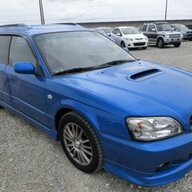
Well, it looks like there ain't no air to air heat exchanger for the inlet air to the turbo. Could be 'cause there's no room behind the grill for one, or 'cause it'd dump too much heat on the radiator.
 

Sponsored

Lapis

Well-Known Member
First Name
Tim
Joined
May 2, 2020
Threads
3
Messages
212
Reaction score
309
Location
SoCal Desert
Vehicle(s)
2019 JLU Rubicon Ocean Blue
Well, it looks like there ain't no air to air heat exchanger for the inlet air to the turbo. Could be 'cause there's no room behind the grill for one, or 'cause it'd dump too much heat on the radiator.
Also consider in an air-to-air cooled turbo system, the intercooler doesn't go on the air coming into the turbocharger, it goes on the air coming out of the turbocharger before it goes to the intake manifold, so it cools the air after it has been compressed (the turbo adds a lot of heat to the air). That's a lot more pressurized tubing that would be needed in the Jeeps engine bay that there isn't much room for.
 
OP
OP

Skidplate

New Member
Joined
Feb 22, 2023
Threads
1
Messages
4
Reaction score
1
Location
Arizona
Vehicle(s)
JLU Rubicon 2.0
Also consider in an air-to-air cooled turbo system, the intercooler doesn't go on the air coming into the turbocharger, it goes on the air coming out of the turbocharger before it goes to the intake manifold, so it cools the air after it has been compressed (the turbo adds a lot of heat to the air). That's a lot more pressurized tubing that would be needed in the Jeeps engine bay that there isn't much room for.
 
OP
OP

Skidplate

New Member
Joined
Feb 22, 2023
Threads
1
Messages
4
Reaction score
1
Location
Arizona
Vehicle(s)
JLU Rubicon 2.0
I did mean to say the air going to the intake manifold but my texting finger was not cooperative. I figured most people on here would get the point.
Sponsored


Top