Sponsored

Changing oil but not filter

OP
OP
Jeep Junkie

Jeep Junkie

Well-Known Member
First Name
Muhammad
Joined
Dec 7, 2024
Threads
256
Messages
3,476
Reaction score
3,088
Location
Seattle, WA
Vehicle(s)
2024 JL Wrangler Willys
Okay guys, choose the better option. I think I will choose option two, because I think SuperTech will kick HPL's butt.

1) HPL Supercar oil with a whopping TBN of 17 and amazing cleaning and protection, run for 12,000 miles. Cost $130
2) Walmart Supertech CHANGED SIX TIMES in those 12,000 miles. Cost less than $120
Sponsored

 

Jtphoto

Well-Known Member
First Name
Jeff
Joined
Dec 10, 2017
Threads
23
Messages
3,007
Reaction score
3,500
Location
Thunder Bay ON
Vehicle(s)
2022 Rubicon Xtreme Recon Granite Crystal
Say oil is changed every 2500 miles but filter every 5000 miles. What can go wrong, can the 2500 mile filter contaminate the new oil?
Thanks!
You’d be better off changing the filter at 2,500 and the oil at 5,000. But realistically 5,000 miles or every 6 months for both is plenty.
 

ForgottenTaco

Well-Known Member
Joined
Sep 30, 2022
Threads
1
Messages
896
Reaction score
2,212
Location
CT
Vehicle(s)
‘23 Sarge Green JLU Willys
Are you using old school pre synthetic oil that you change it that often?
 

ForgottenTaco

Well-Known Member
Joined
Sep 30, 2022
Threads
1
Messages
896
Reaction score
2,212
Location
CT
Vehicle(s)
‘23 Sarge Green JLU Willys
Okay guys, choose the better option. I think I will choose option two, because I think SuperTech will kick HPL's butt.

1) HPL Supercar oil with a whopping TBN of 17 and amazing cleaning and protection, run for 12,000 miles. Cost $130
2) Walmart Supertech CHANGED SIX TIMES in those 12,000 miles. Cost less than $120
Wtf is Walmart super tech? At least spend a little more and get a name brand like mobile or penzoil.
 
OP
OP
Jeep Junkie

Jeep Junkie

Well-Known Member
First Name
Muhammad
Joined
Dec 7, 2024
Threads
256
Messages
3,476
Reaction score
3,088
Location
Seattle, WA
Vehicle(s)
2024 JL Wrangler Willys
Wtf is Walmart super tech? At least spend a little more and get a name brand like mobile or penzoil.
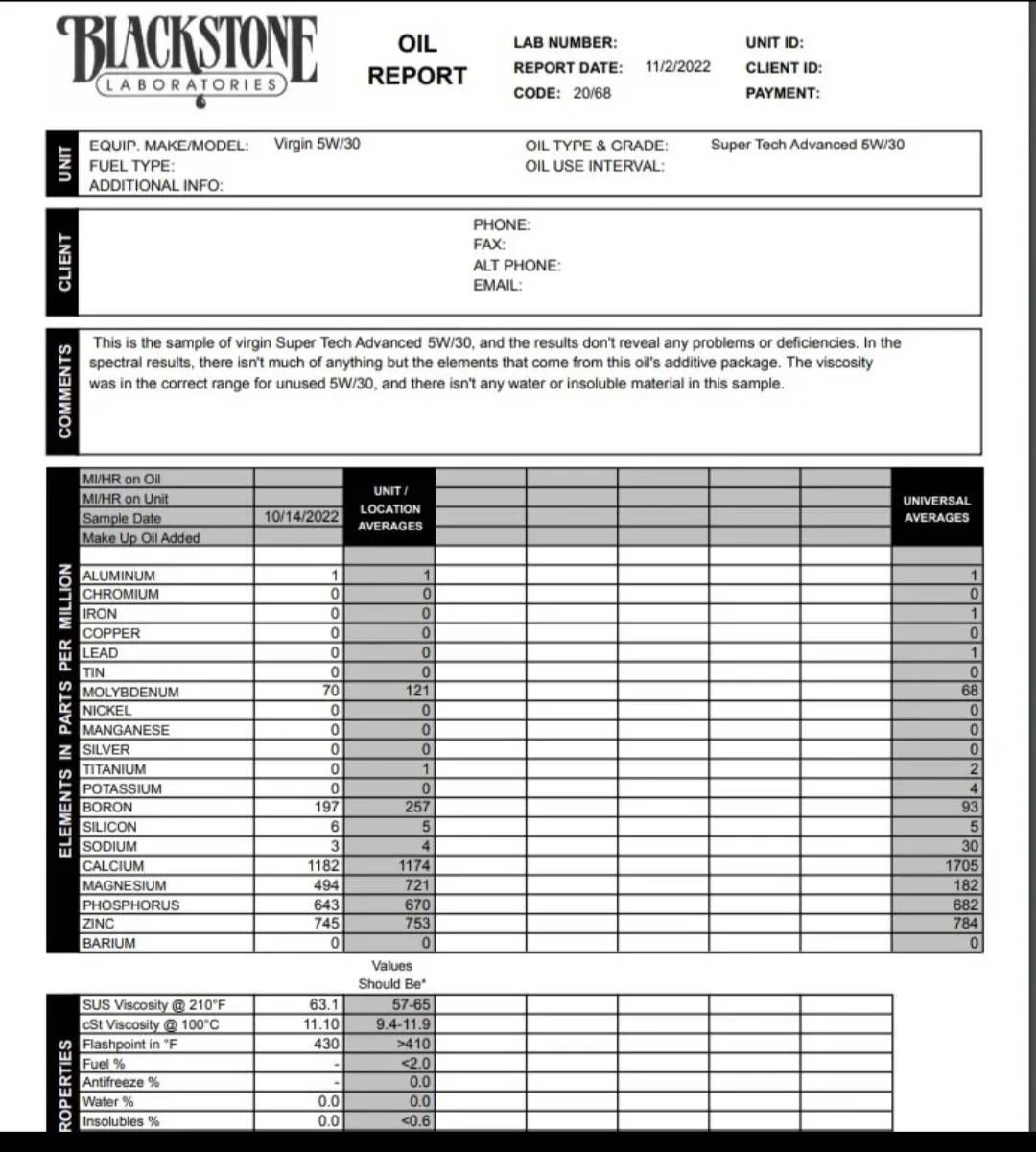
Look at this, looks like PUP 5w30 with higher viscosity 💪
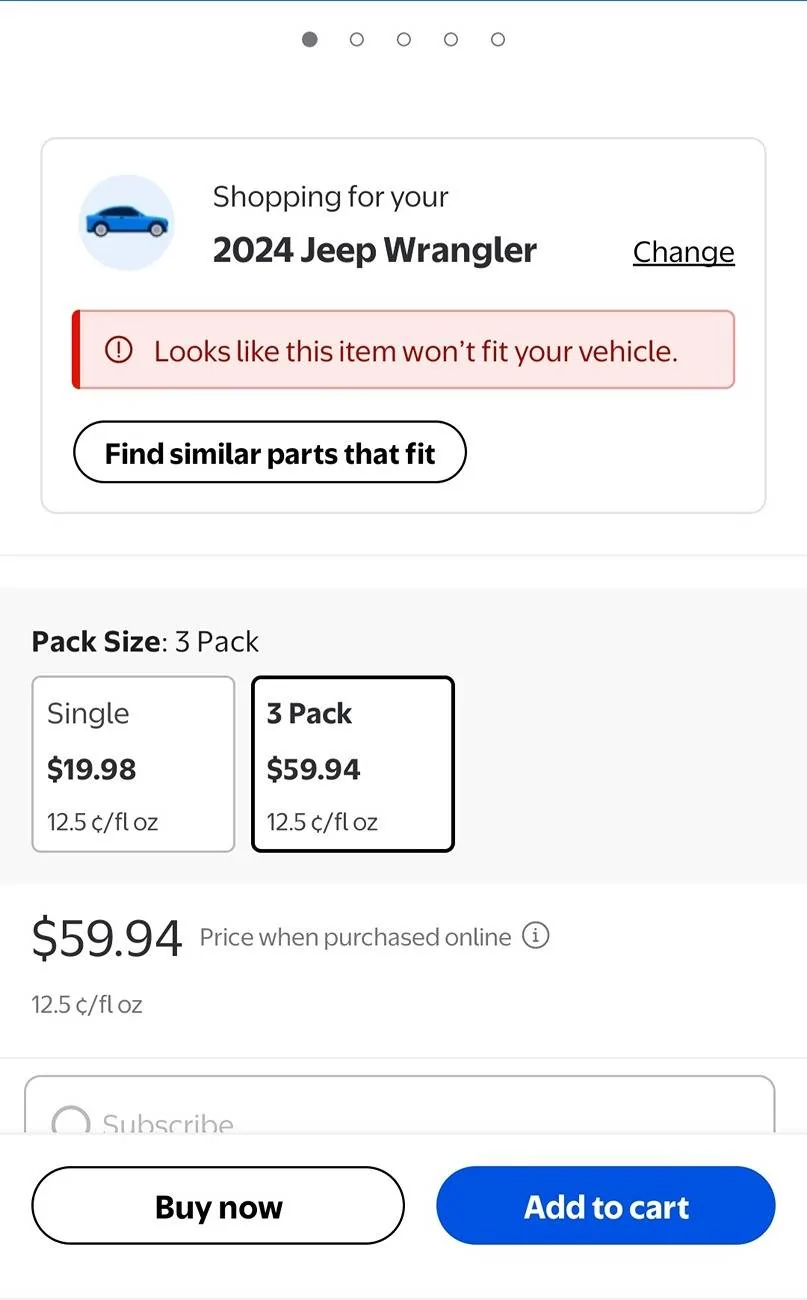
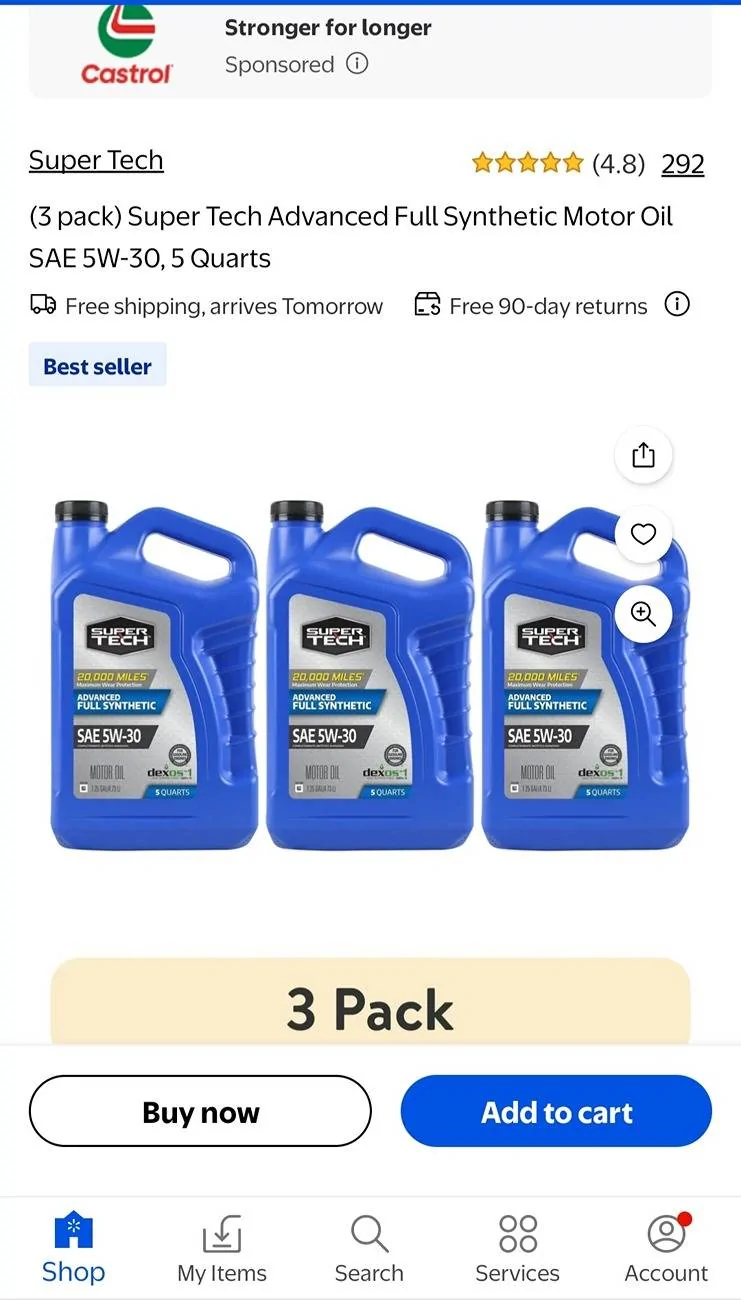
At that price I won't feel bad at all about 2k mile oil changes 😃👍

Jeep Wrangler JL Changing oil but not filter Screenshot_20250130_180926_Gallery
Jeep Wrangler JL Changing oil but not filter Screenshot_20250130_180529_Walmart
Jeep Wrangler JL Changing oil but not filter Screenshot_20250130_180519_Walmart
 

Sponsored

Heimkehr

Well-Known Member
First Name
James
Joined
Sep 3, 2020
Threads
48
Messages
11,090
Reaction score
22,477
Location
Pennsylvania
Vehicle(s)
2021 JLU 2.0T
Many Suzuki motorcycles have a recommendation to change filter every other change.

It all depends how much usage a machine gets but oil filter will have tons of life left especially with frequent oil changes
Pipped to the post. The Owner's Manual for my Suzuki makes that precise recommendation. I choose to incorporate a new filter with every fluid change, though, but that's because my dual sport is used as such, and because I want to prolong the health of the air-cooled engine for as long as I can manage. A lot is being asked of the 1.9 quarts of oil that it carries, so I provide every edge that I reasonably can.

To directly address the OP's inquiry:
It wouldn't occur to me to change an automobile's oil filter only during every other oil change, even if the Owner's Manual allowed it. Oil is the very lifeblood of any internal combustion engine. This is no time to experiment with false economies.
 

UncleJimmy

Well-Known Member
First Name
James
Joined
Mar 22, 2019
Threads
9
Messages
691
Reaction score
671
Location
AZ
Vehicle(s)
2020 JLUR; 2016 Toyota Tundra
Not trying to be a horse's ass here, BUT...

It sounds like you need to educate yourself on what a UOA can and cannot do--there is ZERO guess work about how long the oil can be ran in an engine using oil analysis PROVIDED the lab is properly accredited, which is not a Blackstone.

Moreover, I am not assuming anything. I am using factual data from an ISO certified oil testing facility that uses the latest ASTM testing methodologies to make data driven decisions about the health of the oil. For the record, you only need to do UOAs long enough to develop a trend to understand the health of the oil. I test mine every time, but that is just me.

In addition, changing your oil early does not mean that you do not have issues happening in the engine--mine developed a coolant leak and the UOA detected that leak long before ANY conventional method would thereby allowing me to take pre-emptive actions.

Next, there is ABSOLUTELY NOTHING in a 3.6L engine that will stress the oil more than a comparable direct-injected engine--especially a turbocharged direct injected engine. All of the things you call out above are NORMAL OPERATION and have been in nearly every engine since the early 2000's. Ethanol started appearing in gasoline in the late 1980s and so it is old news. I ran 15K OCIs in an engine including using E-85 most of the time and it ran fine when I sold it with 180K miles on it. Again, use the data and not seat of the pants assumptions.

Lastly, I am 1000% confident in my statements about fuel dilution with regards to the 3.6L as it is an MPI engine and 20 UOAs below support what I say. I KNOW that you can run the oil in a 3.6L longer than 2.5K or 3K miles--20 UOAs below show the TBN well above 2.0 at 5K miles, with a number of them above 3.0--there is no "guessing" about that.

I don't mean to be a horse's ass either....

In my career which is based on drawing conclusions from wide data points with millions of dollars at stake, I often noticed the new teammates were quick to draw conclusions often citing text-book answers that did not fully match up with real world outcomes. To be successful you had to take into account the data, yes, but also be able to take risks and trust your gut, intuition, experience and common sense. When it comes to oil and engines, there has been a lot of change and our knowledge is increasing, so who's to say in twenty or thirty years time we were doing it all wrong? You yourself just said Blackstone is innacurate yet that's what I see here more often than not. And how long did you use them drawing conclusions until you found that out? And what will be the next thing you/we discover that we later find out was actually wrong?

Now even with UOAs if we assume the are 100% accurate because such and such certification says so (ISO etc.), have you ever seen the data points in a UOA improve the longer you run the oil? Have you ever seen wear, contaminants, fuel dilution, viscosity, additives etc. improve over time?

You your self have said there are too many variables in driving conditions to compare engine wear between different viscosities, brands etc. and yet you are now stating that 5k is the cutoff and there is "no benefit" to changing the oil more frequently.

A 2500 mi OC with filter every other change is essentially a 5000 mi OC with a "refresh" half-way through. If you and I both did 5000 mi OCIs but I did the refresh half-way who is going to have less wear, less fuel dilution, higher viscosity, more additives etc.?
Now multiply that by the life of the engine and even the data (UOAs) will support that. The FACT of the matter is you loose nothing by doing a drain/refill half-way through vs. a UOA, and only gain better, measurable results.

Secondly, you CAN test the oil, but you CAN"T see inside the engine.

Engine builders and fleet managers have tested engines through disassembly at 2000, 3000, 5000+ mi intervals and have said 2000 mi is best for the engine. However, they and the OEMs have cost/benefit analysis, sales and marketing considerations etc., so they increase the interval to an "acceptable" level. It's the exact same argument you made about OEMs specifying low viscosity oils in the owners manual as the engineers determined (and I quote your remark) "they were acceptable, but not optimal."

Here's a UOA posted here today:

https://www.jlwranglerforums.com/forum/threads/oil-brand-and-oil-analysis.143358/

This is from Oil Analyzers (ISO 17025 accredited). It says he's got elevated copper, fuel dilution, and decreased viscosity yet, I quote, "Flagged data does not indicate an immediate need for maintenance action." According to who? The companies whose business is to sell UOAs? The UOA says monitor and no action needed. Are you going to tell me he would not benefit from a 3000 mi OC?

As I have previously stated, that benefit may or may not be worth it to you depending on how long you plan to keep your vehicle, and that's perfectly fine with me.

My last OC was 1735 mi/4 mos. Would you take my used oil and put in your engine?
I am going to guess that you would not, because it's absurd, and yet you will run used oil just to get more life out of the oil because the UOA says you can.

My question to you is what are you trying to achieve? Are you trying to extend the life of the oil or the life of the engine? You are not saving money or time because the cost and time to collect the sample, package it up and drop it off is about how long it would take for a simple drain (or suction) and refill.

Regarding all your other comments about these emissions tech being around for awhile, I re-assert these were all new to the JL platform in 2018.

And as for fuels and ethanol:

https://www.eia.gov/todayinenergy/detail.php?id=54839

Ethanol content in fuel has doubled since 2007.

And here is an engine that ran E85, short trips, and the effects are devastating. The same thing is happening to our engines but at a slower rate. This guy is an automotive engineer and race engine builder:


CarbonSteel

Well-Known Member
Joined
Jul 21, 2019
Threads
305
Messages
5,795
Reaction score
8,237
Location
Colorado
Vehicle(s)
2001 Cherokee; 2023 Bronco Wildtrak; 2024 Grand Cherokee 4xe
Vehicle Showcase
1
I don't mean to be a horse's ass either....

In my career which is based on drawing conclusions from wide data points with millions of dollars at stake, I often noticed the new teammates were quick to draw conclusions often citing text-book answers that did not fully match up with real world outcomes. To be successful you had to take into account the data, yes, but also be able to take risks and trust your gut, intuition, experience and common sense. When it comes to oil and engines, there has been a lot of change and our knowledge is increasing, so who's to say in twenty or thirty years time we were doing it all wrong? You yourself just said Blackstone is innacurate yet that's what I see here more often than not. And how long did you use them drawing conclusions until you found that out? And what will be the next thing you/we discover that we later find out was actually wrong?

Now even with UOAs if we assume the are 100% accurate because such and such certification says so (ISO etc.), have you ever seen the data points in a UOA improve the longer you run the oil? Have you ever seen wear, contaminants, fuel dilution, viscosity, additives etc. improve over time?

You your self have said there are too many variables in driving conditions to compare engine wear between different viscosities, brands etc. and yet you are now stating that 5k is the cutoff and there is "no benefit" to changing the oil more frequently.

A 2500 mi OC with filter every other change is essentially a 5000 mi OC with a "refresh" half-way through. If you and I both did 5000 mi OCIs but I did the refresh half-way who is going to have less wear, less fuel dilution, higher viscosity, more additives etc.?
Now multiply that by the life of the engine and even the data (UOAs) will support that. The FACT of the matter is you loose nothing by doing a drain/refill half-way through vs. a UOA, and only gain better, measurable results.

Secondly, you CAN test the oil, but you CAN"T see inside the engine.

Engine builders and fleet managers have tested engines through disassembly at 2000, 3000, 5000+ mi intervals and have said 2000 mi is best for the engine. However, they and the OEMs have cost/benefit analysis, sales and marketing considerations etc., so they increase the interval to an "acceptable" level. It's the exact same argument you made about OEMs specifying low viscosity oils in the owners manual as the engineers determined (and I quote your remark) "they were acceptable, but not optimal."

Here's a UOA posted here today:

https://www.jlwranglerforums.com/forum/threads/oil-brand-and-oil-analysis.143358/

This is from Oil Analyzers (ISO 17025 accredited). It says he's got elevated copper, fuel dilution, and decreased viscosity yet, I quote, "Flagged data does not indicate an immediate need for maintenance action." According to who? The companies whose business is to sell UOAs? The UOA says monitor and no action needed. Are you going to tell me he would not benefit from a 3000 mi OC?

As I have previously stated, that benefit may or may not be worth it to you depending on how long you plan to keep your vehicle, and that's perfectly fine with me.

My last OC was 1735 mi/4 mos. Would you take my used oil and put in your engine?
I am going to guess that you would not, because it's absurd, and yet you will run used oil just to get more life out of the oil because the UOA says you can.

My question to you is what are you trying to achieve? Are you trying to extend the life of the oil or the life of the engine? You are not saving money or time because the cost and time to collect the sample, package it up and drop it off is about how long it would take for a simple drain (or suction) and refill.

Regarding all your other comments about these emissions tech being around for awhile, I re-assert these were all new to the JL platform in 2018.

And as for fuels and ethanol:

https://www.eia.gov/todayinenergy/detail.php?id=54839

Ethanol content in fuel has doubled since 2007.

And here is an engine that ran E85, short trips, and the effects are devastating. The same thing is happening to our engines but at a slower rate. This guy is an automotive engineer and race engine builder:

Spend some time over at Bobistheoilguy.com. Look up DNewton and his posts on UOAs. He has forgotten more than you and I will ever know. In the end, a single UOA does not a trend make, but if you look at my UOAs you can see that my potassium started rising. There was a trend and I was able to use that trend to determine there was a problem in the engine.

No matter what, there is simply no way that you need to run 2.5 or 3K OCIs...it's a complete waste, but if it makes you comfortable, go for it.
 
OP
OP
Jeep Junkie

Jeep Junkie

Well-Known Member
First Name
Muhammad
Joined
Dec 7, 2024
Threads
256
Messages
3,476
Reaction score
3,088
Location
Seattle, WA
Vehicle(s)
2024 JL Wrangler Willys
Spend some time over at Bobistheoilguy.com. Look up DNewton and his posts on UOAs. He has forgotten more than you and I will ever know. In the end, a single UOA does not a trend make, but if you look at my UOAs you can see that my potassium started rising. There was a trend and I was able to use that trend to determine there was a problem in the engine.

No matter what, there is simply no way that you need to run 2.5 or 3K OCIs...it's a complete waste, but if it makes you comfortable, go for it.
What problem high potassium shows?
 

Sponsored

CarbonSteel

Well-Known Member
Joined
Jul 21, 2019
Threads
305
Messages
5,795
Reaction score
8,237
Location
Colorado
Vehicle(s)
2001 Cherokee; 2023 Bronco Wildtrak; 2024 Grand Cherokee 4xe
Vehicle Showcase
1
What problem high potassium shows?
Potassium and sodium are coolant, though back in the days of API SN and SN Plus there were some oils that had sodium as part of the additive pack.

The UOAs told me that I had a cracked head or cracked block and I was able to see it long before any other test would have showed it.
 

Scotty Scout

Active Member
First Name
Scott
Joined
Dec 18, 2024
Threads
0
Messages
42
Reaction score
84
Location
Michigan
Vehicle(s)
2024 Wrangler
I used to have a 2014 Honda Odyssey, and the official manufacturer recommended maintenance for that engine was the replace the filter every other oil change. When the oil life monitor would display that it was time for an oil change, it would say "service a" (just drain the oil out and put new oil in the engine) or "service b" (change the oil and the oil filter). The oil life monitor was coming on about every 8k miles.

I do all my own maintenance. It seemed pretty weird to me to not change the oil filter, but I trusted Honda and followed their specified maintenance plan. The engine had around 330,000 miles on it when a deer sprinting across the road ran right into the rear drivers side of the van hard enough to set off the side curtain airbags, which totaled it. The engine ran perfect. The oil level was always still exactly at the full mark when it was time to change it. In all those miles, I never once saw a single CEL or had to replace anything on the engine. Well, other than the scheduled stuff like spark plugs and I, of course, had to put THREE timing belts on it in all those miles!

So yeah, I feel extremely confident that will be fine changing the filter every other oil change. But how is it going to make you feel to leave that filter on there when you change your oil? Are you going to constantly second guess whether or not its causing some kind of problem? If you changed your oil every 2500 miles with synthetic 5w30 and a brand new oil filter every time, would that give you peace of mind that you would never have engine problems? Or would a part of you still worrying about rocker arm failure?
 
OP
OP
Jeep Junkie

Jeep Junkie

Well-Known Member
First Name
Muhammad
Joined
Dec 7, 2024
Threads
256
Messages
3,476
Reaction score
3,088
Location
Seattle, WA
Vehicle(s)
2024 JL Wrangler Willys
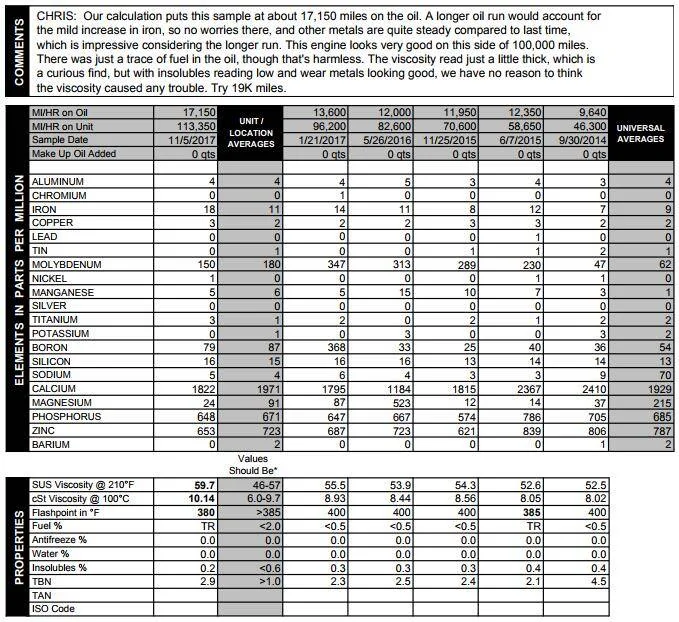
17,000 miles on PUP 0w20 and Napa filter. This is criminal. Blackstone says try 19,000 miles next 😡

Jeep Wrangler JL Changing oil but not filter full-49080-15834-fusion_17k_uoa
 

Fatbob Frank

Well-Known Member
First Name
Frank
Joined
Nov 4, 2024
Threads
0
Messages
1,120
Reaction score
4,778
Location
N.E. Iowa
Vehicle(s)
2024 Wrangler Willys
Occupation
Lab Tech
I have more of a problem with you changing the oil @ 2500 miles than keeping the old filter...
Seems like a waste to me.
If your filter is doing it's job then it's unnecessary, and if it isn't why would you want to keep it?
 

Deleted User 38384

Banned
Banned
Banned
Joined
Aug 4, 2020
Threads
140
Messages
6,081
Reaction score
10,670
Clubs
 
The oil filter housing gets cracked they say. So don't want to mess around with it too much
The only way you learn is by doing, not by avoiding your problems nor your fears.

There is in fact a point when it's just overkill and you're not actually helping your engine, you're just wasting your money and your time. But if that's your thing, flush away! 🤷‍♂️

If your filter is doing it's job then it's unnecessary, and if it isn't why would you want to keep it?
What he said! ☝
Sponsored


Top