Sponsored

Battery maintainer question

SteadyC

Well-Known Member
First Name
Chad
Joined
Jun 17, 2018
Threads
1
Messages
543
Reaction score
743
Location
Denver
Vehicle(s)
2018 JLS
No disrespect taken. But probably is best at this point that you spend some time to enquire at Optima or NOCO or CTEK or Odyssey and other battery manufacturers directly for more information to satiate your queries. Then report back their reasoning why they recommend not to charge dissimilar batteries in parallel.

This email excerpt was sent to me from my dealer after they contacted FCA internally after I questioned the FCA practice of not charging stored batteries at all:

“Best to remove both batteries and run a trickle charge on them both separately, prefer if he purchased one of the Mopar ones, but most safety trickle charges with dummy proof settings will work.”

This was posted by me a while back as well. Topic has been well hashed.
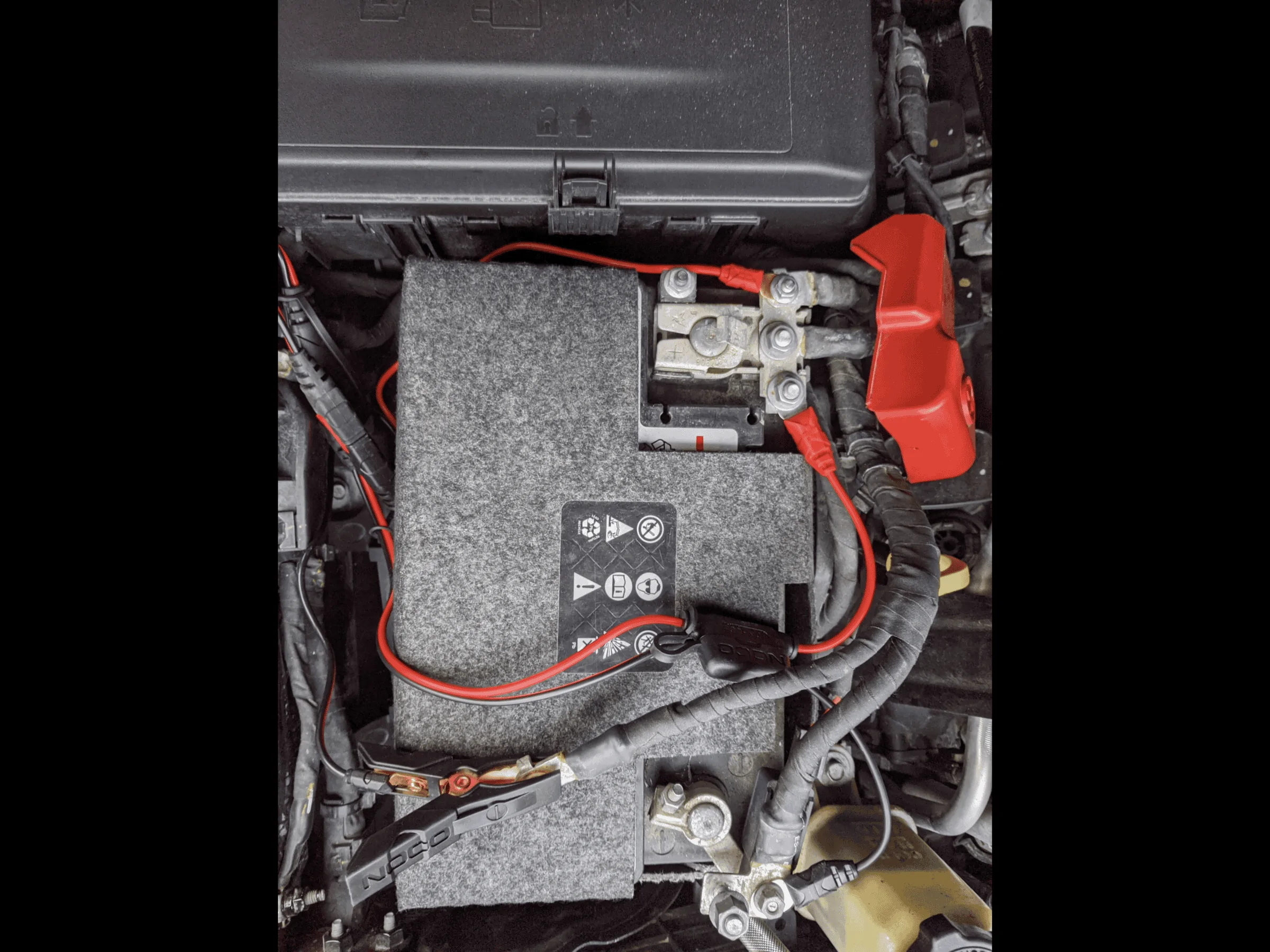
I read the link you provided from optima, and my issue is there was no science, just someone(s) opinion. i have the same issue in aquarium blogs, some post their opinions, I ignore them, and some post science. PH is a big topic. Just saying dissimilar batteries in parallel is not good, is just an opinion. Tell us why. They say they have charge and discharge dissimilarities. Sure, but what does that mean From amp, ohm, charge, testing, etc. perspectives? They don’t say, so they mean nothing. To me, the small battery and the main battery are connected most of the time, only time they are not is during ESS starts, means a lot to me, more than all the links with only opinions and no science. Jeep is not the only one doing 12V systems with two dissimilar battery sizes, must be some science. My wife’s F150 PowerBoost has three batteries, 12V main, 12V ESS, and hybrid battery, all charged by the same system. is Jeeps system perfect? Probably not, everyone are cutting costs. Higher quality batteries would probably end this conversation. Not that I want to jinx myself, but I have OEM batteries, both, will be 4 years in May. Charged by 3.5 amp Noco in parallel. I don’t even have the TSB that fixes non start scenario if ESS fails test. I think this means they can be charged in parallel successfully, done correctly. When I need to replace one, I will replace both, want to know both are fresh, together.
Sponsored

 
Last edited:

OldGuyNewJeep

Well-Known Member
First Name
Don
Joined
Sep 21, 2017
Threads
93
Messages
3,993
Reaction score
7,107
Location
CT
Vehicle(s)
2018 Wrangler JL, 2016 Yukon XL
To me, the small battery and the main battery are connected most of the time, only time they are not is during ESS starts, means a lot to me
And the failure rate is so ridiculous that we needed a “Battery Talk” sub forum.

Vet the science to satiate your curiosity, but there is no denying that it’s a crappy design.

If Odyssey tells me my battery will last longer by following their instructions, that’s what I will do. I mean, they are the loser in that scenario… better for their wallet if I wear it out faster, right?

You should post your question on the Enersys “contact us” page. They reply very quickly. Maybe they can offer you more than an opinion if you ask specific questions. Just a thought. I’d be curious to hear their reply.

I hear you on the opinions regarding aquariums… if you’re a reefer then you’re well familiar with all the theories surrounding dinoflagellates, for example. It’s exhausting, but sometimes anecdotes prove themselves…

https://m.youtube.com/results?sp=mAEA&search_query=Odyssey+academy+charging
 

WannFly

Well-Known Member
First Name
Priyo
Joined
Jul 30, 2021
Threads
40
Messages
845
Reaction score
1,211
Location
Atlanta
Vehicle(s)
2021 Rubicon 4Xe, 2026 MOAB
Build Thread
Link
Occupation
Cyber security
havent read everything, but doesnt look like many people use Battery Minder https://www.batteryminders.com/ ?

in Aviation world this is a big hit, worked on my plane 5+ years without a hitch. I might buy the automotive version from them and call it good
 

NewJLU2019

Well-Known Member
First Name
Curtis
Joined
Jul 19, 2019
Threads
17
Messages
2,189
Reaction score
3,429
Location
Texas
Vehicle(s)
2021 Rubicon Unlimited 2019 Sahara Unlimited
Occupation
Retired
Vehicle Showcase
1
These tiny 1-2 amp lawnmower tenders are the worst you can use, buy at least a 5 amp or 10 amp smart charger for a stock setup that has that baby battery.

These tiny ones that are sold barely kick out the required 14+ volts that AGM’s want to see, I have conversed with several AGM makers over this and they all laugh when you mention a “Battery Tender”

General rule of thumb is the amp output has to be in the .20-.35% range of the aH rating of the battery for the bulk charge then you can drop to a lower float charge to maintain.
Hello Wranglerman. Was wondering where you had been hiding. lol Hope all is well.
 

VKSheridan

Well-Known Member
First Name
Vince
Joined
Dec 21, 2019
Threads
9
Messages
1,030
Reaction score
1,654
Location
Broken Arrow, OK
Vehicle(s)
2020 2 Dr Rubicon JL Hardtop
Build Thread
Link
Occupation
Retired from the heavy equipment industry
Vehicle Showcase
1
No disrespect taken. But probably is best at this point that you spend some time to enquire at Optima or NOCO or CTEK or Odyssey and other battery manufacturers directly for more information to satiate your queries. Then report back their reasoning why they recommend not to charge dissimilar batteries in parallel.
You’re asking me to invest the time to prove unicorns are real when I’m telling you they aren’t.

I’ve provided several examples that illustrate how common “dissimilar batteries“ are charged unisolated in various applications without compromise or distress. I’ve tried to demonstrate how Ohm’s Law (V=I/R) dictates the rules of electricity using understandable examples and yet I’m falling short in helping you visualize the fallacy of what you’ve been taught.

There are countless applications whereas multiple batteries are connected in parallel and as long as the batteries are of the same voltage, it works.

Now if I’m putting a 6 volt battery in parallel with a 12 volt battery, that would definitely meet and exceed the definition of ”dissimilar” but 12VDC parallel with 12VDC, nah, we good.

Imagine if U-Boat crews had to isolate batteries to charge. They only had two batteries consisting of something like 196 individual cells. They didn’t toss both batteries when a cell failed, they replaced the single failed cell with a new one and moved on. One would think a new cell installed in series with sulphate cells would be stupid but Ohm’s Law says, nope. If they all have the same potential (voltage), they’ll balance.

No biggie. I‘m just glad we aren’t discussing hybrids and electrostatic force (Coulomb’s Law) because I’m a bit rusty on that….???
 

Sponsored

Jim_n_Tx

Well-Known Member
First Name
Jim
Joined
May 31, 2019
Threads
27
Messages
241
Reaction score
1,269
Location
Texas Gulf Coast
Vehicle(s)
TJ, Commando, JT , JL, M422
My motorhome and standby generator live on battery minders. No problems with either.
 

BRuby

Well-Known Member
Joined
Nov 28, 2019
Threads
5
Messages
752
Reaction score
896
Location
Chilling or working out at 60+
Vehicle(s)
JLUR Benz Porsche-M Subie-M
Yeah suspected you would refuse to validate and research yourself.

“Connecting batteries of different voltages in parallel - This is the big “no go area”. The battery with the higher voltage will attempt to charge the battery with the lower voltage to create a balance in the circuit.

Double check voltages – if you are using batteries with different amp hour capacities, it is highly likely that the voltages will be different (even if the stated voltage on the labels match). Check this with a voltmeter or you will experience problems”

https://batteryguy.com/kb/knowledge-base/connecting-batteries-in-parallel/

Thus you will never get a proper smart charge because the voltage will be based on a blended voltage. No battery manufacturer recommends charging dissimilar batteries in parallel. That in itself should be sufficient for most users. Real basic logic. No one is saying the Jeep system does not work. Instead we are saying it would work better if the batteries were the same.

But as noted - you do you. Pretty sure everyone is perfectly fine with that. While us that charge separately - will happily continue to charge separately and desulfate separately.
 
Last edited:

VKSheridan

Well-Known Member
First Name
Vince
Joined
Dec 21, 2019
Threads
9
Messages
1,030
Reaction score
1,654
Location
Broken Arrow, OK
Vehicle(s)
2020 2 Dr Rubicon JL Hardtop
Build Thread
Link
Occupation
Retired from the heavy equipment industry
Vehicle Showcase
1
ROFLMAO……. I can’t tell if you’re trolling for amusement or are truly confused and serious. I’ll go with the latter and see if I can help you understand what you’re reading.

Through good fortune, your recent reply literally makes my point so let’s use it:

You shared: “Connecting batteries of different voltages in parallel - This is the big “no go area”. The battery with the higher voltage will attempt to charge the battery with the lower voltage to create a balance in the circuit.”

You interpret: Batteries should be isolated to charge them properly (which absolutely guarantees no parity of charge).

Question: What do you think happens when you reconnect them after you’ve charged them?

Answer: The battery with the higher voltage will attempt to charge the battery with the lower voltage to create a balance in the circuit.

Translation: Because the two batteries are connected in the circuit’s normal state, the voltage IS balanced. It has to be, they’re connected. Any benefit (real or perceived) from charging them independently is nullified the instant you connect them. In fact, charging them separately creates imbalance and dissimilarity because the maintainer is phasing to the single battery versus the combination.

Reality: The two 12VDC batteries in the Jeep are connected, charged and exercised in parallel by thousands of vehicles day in and day out with zero issues. The alternator does not disconnect the batteries to charge them independently and absent of defect, life goes on.

Keep in mind, we are talking about maintainers, not trying to raise the dead.

With everything we’ve exchanged, are you still convinced creating dissimilarity by isolated charging is better than simply keeping both batteries at a common state of charge just like their alternator does every time you drive it?
 

Cajun21

Well-Known Member
Joined
Dec 30, 2021
Threads
1
Messages
261
Reaction score
254
Location
Arizona
Vehicle(s)
2021 JLUR, 2021 Ram 1500
Leave battery in the vehicle when you add the tender.
 

OldGuyNewJeep

Well-Known Member
First Name
Don
Joined
Sep 21, 2017
Threads
93
Messages
3,993
Reaction score
7,107
Location
CT
Vehicle(s)
2018 Wrangler JL, 2016 Yukon XL
havent read everything, but doesnt look like many people use Battery Minder https://www.batteryminders.com/ ?

in Aviation world this is a big hit, worked on my plane 5+ years without a hitch. I might buy the automotive version from them and call it good
Those are fantastic units, but VERY expensive. If your wallet is big enough you certainly won’t have any issues using one. Just make sure you get one that puts out enough current. 10% aH at minimum.
 

Sponsored

WranglerMan

Well-Known Member
First Name
Will
Joined
May 8, 2018
Threads
104
Messages
3,560
Reaction score
2,883
Location
Greenfield Indiana
Vehicle(s)
2018 Wrangler JLU Sahara
Occupation
Retired
Vehicle Showcase
1
Hello Wranglerman. Was wondering where you had been hiding. lol Hope all is well.
Yes sir doing well, I have been distant lately as I have lots of irons in the fire, the gas pipeline I run was recently sold again so will be working for another company, have been thru like 7 different transitions over my years as a Pipeline Controller but it’s all good and only have a few years left to retire and I’ve been cycling getting ready for the MS150 and have been working on my road bike.

My 2018 is running great and I have had zero issues since addressing some parasitic problems and my modding is not been much lately since I honestly don’t feel I need to change anything But I still lurk in the shadows ..lol

ROFLMAO……. I can’t tell if you’re trolling for amusement or are truly confused and serious. I’ll go with the latter and see if I can help you understand what you’re reading.

Through good fortune, your recent reply literally makes my point so let’s use it:

You shared: “Connecting batteries of different voltages in parallel - This is the big “no go area”. The battery with the higher voltage will attempt to charge the battery with the lower voltage to create a balance in the circuit.”

You interpret: Batteries should be isolated to charge them properly (which absolutely guarantees no parity of charge).

Question: What do you think happens when you reconnect them after you’ve charged them?

Answer: The battery with the higher voltage will attempt to charge the battery with the lower voltage to create a balance in the circuit.

Translation: Because the two batteries are connected in the circuit’s normal state, the voltage IS balanced. It has to be, they’re connected. Any benefit (real or perceived) from charging them independently is nullified the instant you connect them. In fact, charging them separately creates imbalance and dissimilarity because the maintainer is phasing to the single battery versus the combination.

Reality: The two 12VDC batteries in the Jeep are connected, charged and exercised in parallel by thousands of vehicles day in and day out with zero issues. The alternator does not disconnect the batteries to charge them independently and absent of defect, life goes on.

Keep in mind, we are talking about maintainers, not trying to raise the dead.

With everything we’ve exchanged, are you still convinced creating dissimilarity by isolated charging is better than simply keeping both batteries at a common state of charge just like their alternator does every time you drive it?
On my many conversations with battery makers and charger makers and not the the makers that make these little tenders they all advised that charging two batteries of dissimilar sizes is considered a big no-no but they could not commit to what the design is that the JL uses but said that when two batteries even if they both are 12 volts but different amp hour ratings are charged as one the smaller one usually suffers as the charger looks at the batteries as a single one and since The charger cannot separate the two the smaller one gets over charged.

They did say that the best way to address this was to charge them separately so each one is charged optimally so a way to address this would be put a manual disconnect between the two to utilize during charging.

They also all advised that these tender type maintainers were all meant to be used to maintain and not charge and the output of amps and volts is not enough to condition so its best to use any of them only after the battery has been properly charged.

I‘m sure this is a highly debatable subject and there are tons of science behind what’s right and what’s wrong and there are those that will say don’t use this or only use that but I went with what Full River advised on chargers and their minimum spec was a NOCO 10 and actually preferred it over the Odyssey 20 but liked the fact the Odyssey had a longer condition charge.

I paid a fairly hefty amount for my Full River 750’s so I will go by what they advised since they are under warranty and they advised that to be covered if the batteries were proven bad due to over or under charging the warranty would not be honored so I’ll go with what they say.

As far as what to do for those running a stock setup I would suggest charging separately with a charger designed for the size of battery for best life but that’s a personal choice.
 

BRuby

Well-Known Member
Joined
Nov 28, 2019
Threads
5
Messages
752
Reaction score
896
Location
Chilling or working out at 60+
Vehicle(s)
JLUR Benz Porsche-M Subie-M
VK it is plainly and painfully very obvious that you simply have no clue. Haha. My recommendation again is you do indeed need to spend some of your precious time researching fully before posting and spewing your useless battery knowledge nonsense. Reading it is like - WTF! More? Please no more BS VK! Only a troll persists and engages like you have.

Here is a simple quick disconnect setup that works 100% with the existing batteries. Batteries stay fresh and fully smart charged separately year round 24/7. Super easy to smart desulfate recondition as well. No BS.

As noted if Stellantis did not cheap out - and instead put in the same identical batteries - only one charger would be needed. This only applies for dissimilar. One always gets overcharged - the other always undercharged. A single charger or alternator cannot differentiate when connected in parallel. The voltage is blended so the smart charger can never apply the correct charging profile or desulfating profile. This horse has been beaten to death a long time ago. So doable and works - but is never recommended.

Seems with so many dead JL batteries - this is a slight problem. Maybe. Just maybe. You do you.

Edit:
https://www.jlwranglerforums.com/fo...battery-consolidated-information.25377/page-6

Jeep Wrangler JL Battery maintainer question F0B03C2F-82C4-4B95-93A7-E8B0657E19A8
 
Last edited:

VKSheridan

Well-Known Member
First Name
Vince
Joined
Dec 21, 2019
Threads
9
Messages
1,030
Reaction score
1,654
Location
Broken Arrow, OK
Vehicle(s)
2020 2 Dr Rubicon JL Hardtop
Build Thread
Link
Occupation
Retired from the heavy equipment industry
Vehicle Showcase
1
I apologize BRuby, I didn’t mean to upset you. Quite the opposite, you intrigue me with your persistence and passion for your perspective.

In the face of so many real world things that dispel the myths, I was trying to see if you could give something more than, “Because they say so” as to why you believe what you believe.

Although not a perfect analogy, I’m gonna try again:

Imagine you have two balloons connected to a water hose
The hose is regulated to no greater than 10 cups per minute at 14.7 p.s.i.
One balloon can hold 2 quarts (main) and the other a pint (aux)

You turn on the water.….

The little balloon having less rubber to stretch has higher resistance while the larger balloon with more rubber that can expand has less resistance.

You smugly grin as you watch water predictably following the least resistance and the big balloon starts filling….

As the resistance to stretch the big balloon increases as it fills, flow to the little balloon starts. As the resistance equalizes, so does the flow under equal pressure.

Both balloons fill to the extent of the pressure in the hose. Your gauge says something like 12.6 p.s.i.

You can clearly see the big balloon accepted more water for the same pressure than the small balloon but you also see the pressure in both balloons is the exact same. Makes sense.

Eager to rush to the forum to call VK an idiot with your findings, you pause.

Why did VK suggest this example? Is that clueless moron setting me up? Did he get booted from the Bronco forum so he came here? Why?

You grab a pencil and quickly sketch out the analogical correlation:

Water Pressure = Supply Voltage: Regulated up to 14.7 volts
Water Flow = Supply Amperage: Regulated up to 10 amps
Big Balloon = Higher Capacity 12 VDC Main Battery
Little Balloon = Lower Capacity 12 VDC Aux Battery

Why would them fools at Stellantis allow the big balloon to fill first? Why not install a higher flow hose and two large balloons so I can shut VK up?

You call Carlos Tavares and he answers due to recognizing your number in Caller ID.

Predictably, his reply to your question is because he’s cheap. The higher the amperage of the alternator, the higher the cost. The higher the capacity of the second battery, the higher its cost. He adds, if they didn’t increase the alternator amperage potential, it would actually take longer to fill the batteries. Before you can slam him with a witty rebuttal, he says, “Plus, you don’t need all that capacity to keep the controllers energized when ESS is active. It just doesn’t take much amperage to power 5 volt controllers”.

Livid at his indifference, you tell him all about overcharging and undercharging. “My Gawd Carlos, you’re an engineer, not a Bronco owner!” you scream….

While continuing to eat his Fritos, he nonchalantly tells you an overcharge is when voltage exceeds rating and undercharge occurs when resistance exceeds voltage. He asks if the alternator is dumping more than its rated voltage or is the lil battery resistance so high the alternator can’t charge it?

You say, “no, not yet”…..

It’s almost time to watch M.A.S.H. so thinking it will end the conversation quickly, he says he wants the main battery to get the most flow first. It’s needs more capacity to crank and if it ain’t got enough stored to do that, there’s no need for a full little battery.

In the background, you hear his wife yell, “If Carlos installed an isolator to ensure individual charging, that would gain nothing. If the lil’ battery gets flow thirsty, the main would never get replenished as the isolator will keep flow going into the aux hoping the voltage comes up. Vice versa, if the main gets weak, the isolator will have the flow going to it, leaving you stranded at a light if the IBS ignores your discharged aux.”

As you launch into a tirade on cross-discharge, his butler holding an embroidered dishrag interrupts and says, “Who cares? So the little battery wants some juice from the big battery. It has plenty to spare. If the big battery wants sauce, yeah, it can drain the little battery but again, so what? In either case you have a failed battery. If you read on the web you should change them both, at least the total cost is less than buying two main batteries.”

Before you can cuss at the concept, your iPhone goes dead. You plug it in and watch its even littler dissimilar battery suck flow from your Jeeps parallel circuit of two dissimilar batteries.

You wonder aloud why VK took the time to write this story. Is he right? No, idiots can’t be right.

Does he like to mess with my mind? Clearly, he is kind of a punk troll.

But what’s his angle? Maybe, just maybe he’s trying to help a fellow Jeepster out of a ditch hoping they’ll take their foot off the brake with this story…..

Nah, he’s got to be an idiot.
Sponsored


Top