
Sponsored

Winch Wiring Question

Terrymo

Well-Known Member
First Name
Terry
Joined
Jun 17, 2022
Threads
48
Messages
10,694
Reaction score
33,027
Location
SoCal
Vehicle(s)
2023 JLURXR 3.6 ET
Clubs
 
I think it's cute when everyone's nervous about shorting a little 12v car battery. Making the final connection on a large battery bank pushing 480v and 1,000A will have your full attention.... and there's still no fuse. We regularly wire 2x12v batteries in series on the trail and use them to weld (also known as intentionally shorting them to melt metal together) and people act like the potential shorting of 1 battery is going to cause a nuclear explosion. Relax, it's not that scary.
So I was remembering right about your occupation. See sometimes I do pay attention.
Sponsored


Zandcwhite

Well-Known Member
First Name
Zach
Joined
Sep 4, 2019
Threads
11
Messages
8,295
Reaction score
14,184
Location
Patterson, ca
Vehicle(s)
2019 jlur
It doesn’t work that way and I’m not going to pop a $35 fuse to prove how fuses work to ya so let’s move on and debate brands of oil……

Peace
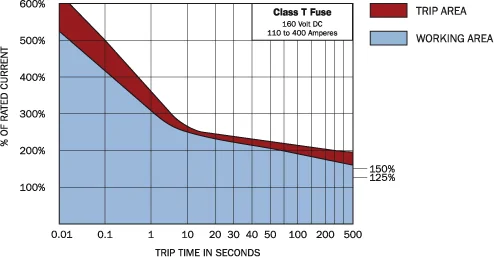
According to the manufacturer it does in fact work that way. My winch is rated at 420A. The class t fuse will flow 200% of is rating for nearly a full minute. Your 300A fuse will not pop at 650A, the full output capability of your stock battery, for about 40 seconds. By that point your battery will have likely discharged enough to be putting out less than 600A and that fuse will never blow as the battery will discharge faster than the 50 seconds that fuse will allow 200% of its rated current. It will allow 150% for nearly 10 minutes. Your battery won't outlast your fuse and the insulation will have already melted off your winch wires. It's a feel good measure at best.
Jeep Wrangler JL Winch Wiring Question ClassT_Fuse (1)
 

Flip

Well-Known Member
First Name
Johnny
Joined
Mar 25, 2023
Threads
137
Messages
6,379
Reaction score
12,797
Location
Virginia
Vehicle(s)
2023 Jeep Wrangler Sport
Build Thread
Link
Occupation
Retired Power Plant Engineer
Sorry John, was directing my reply to Zach.

He and I have different approaches to avoid molten copper. I prefer fuses and the best I can surmise is he prefers luck.

The goal for me is to protect the circuit.

If the winch is rated at 300 amps, anything higher isn’t really helping winch out, it’s heating copper. Whether we’re cooking the windings, glowing a lock washer or arcing a cable, it’s not enhancing the moment.

If a cable takes damage from a rock, routing, raccoon or a parking lot punk jumpers the hot lug for amusement, the ability to remove potential before things light the trail is important.

Some folks rely on a manual disconnect which can arc weld closed and burn fingers.

Some rely on a power relay which can also struggle to open with high flow and guys like me prefer to use a Class T inline fuse WITH my power relay.

If nothing bad happens and the fuse never blows, that’s cool. If a bad day comes and it does pop, I’ll be happy it blew before my Jeep lit up.

Your thoughts?
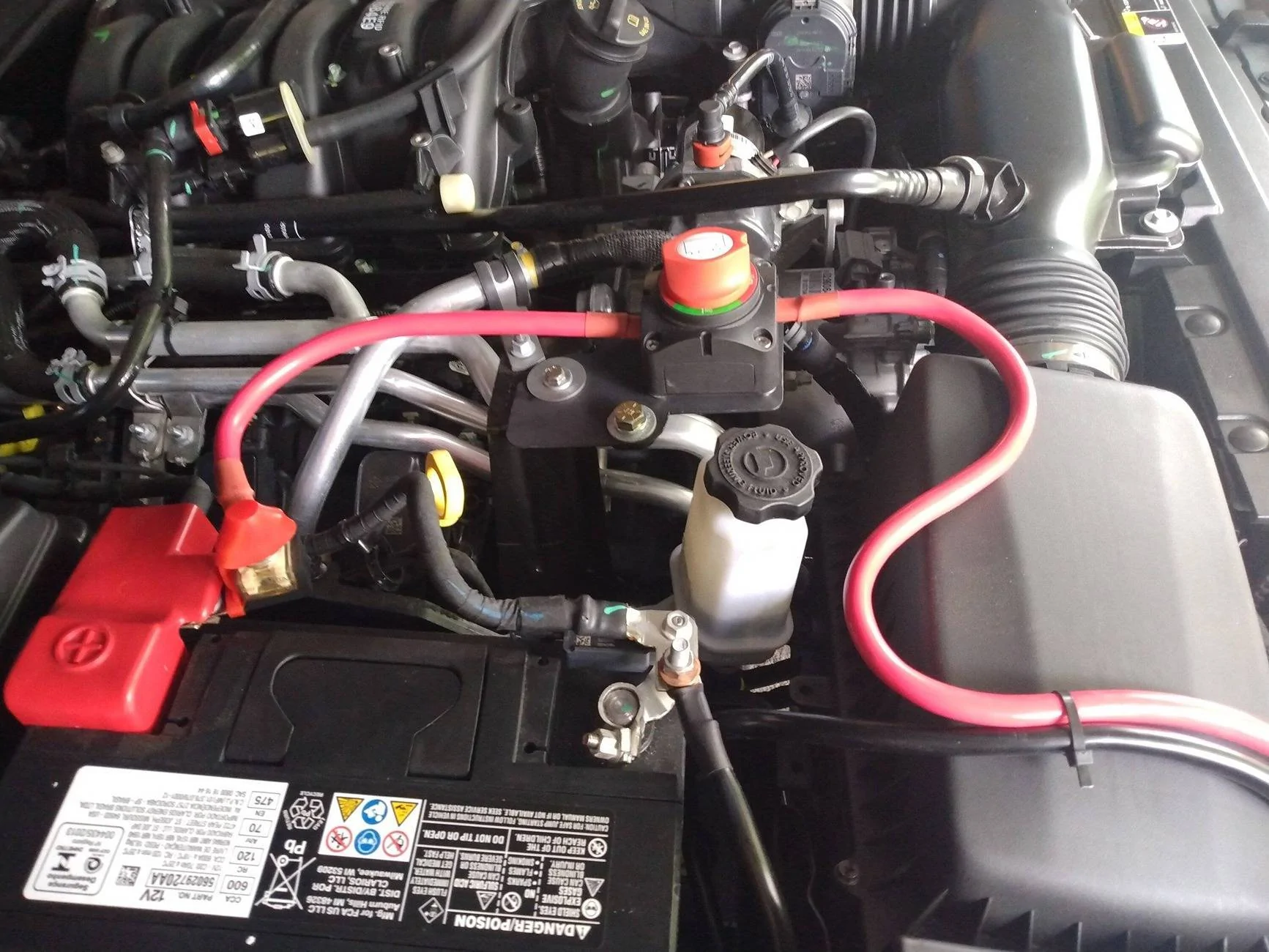
This is my current set up. (see photo) I have the cut off switch installed that came with my badlands winch. My previous badland winch did not come with a cut off switch, this was new to me. I almost decided not to install it. It seemed unnecessary but I had read an article that said something about, if a winch has a short it can drain a battery even when not in use. Around that time, almost 2 years ago a gentleman on the forum recommended installing a fuse for the winch to protect the wires which made sense to me so I bought this marine grade 300 amp fuse block & a spare fuse. The thought had occurred to me, why a fuse wasn't included but I figured better safe than sorry and I've always used some type of inline fuse on everything I installed in a vehicle, especially directly wiring it to the battery.

After reading articles the winch fuse is hit or miss, which came as quite a surprise to me, doesn't set well. I guess its fair to say had I known that, I probably would not have spent the money on it. Since I already have it and its been installed for almost 2 years now I'm going to leave it there. I don't believe its interfering with anything. From my inextensive reasearch regarding the amerage for the badland 9500 winch, I'm seeing max draw is 300 amps. My fuse is 300 amps. In theory the fuse should pop before the wires fry. In light of the new information I read, I question this theory and I'm not really sure how I could go about testing it. If it means hooking up my winch and throttling it to its max capacity over & over, stressing it out, stretching the rope to the thickness of kite string, hoping nothing snaps, or my front bumper doesn't come off. I'm not sure if I'm up for that. I am however wondering if I install a lower amp fuse. Maybe 150-200 amps. Do a few mild test runs to see if the fuse pops. Would this give some indication that the fuse is doing what its supposed to do?

Jeep Wrangler JL Winch Wiring Question rec2
 

VKSheridan

Well-Known Member
First Name
Vince
Joined
Dec 21, 2019
Threads
9
Messages
1,031
Reaction score
1,654
Location
Broken Arrow, OK
Vehicle(s)
2020 2 Dr Rubicon JL Hardtop
Build Thread
Link
Occupation
Retired from the heavy equipment industry
Vehicle Showcase
1
Zach, no clue about those fuse delays, my fuses pop like within 10 seconds of peak pull, even quicker at 200%.

I don’t have my spec sheet with me but when I was sizing, it wasn’t 600% for 30 minutes. If that were the case, I’d might as well bolt in a half-inch end wrench for a fuse and call it done.

It’s funny you mention welding with batteries. Not sure you know this but using the battery as a power source is how we’d solder the connecting bars on Exide electric lift truck batteries…..LOL

With the evolving tragedy of the Southern California fires, it furthers my conviction to avoid fire on the trail when possible.

Hope you guys aren’t affected.
 

Sponsored

VKSheridan

Well-Known Member
First Name
Vince
Joined
Dec 21, 2019
Threads
9
Messages
1,031
Reaction score
1,654
Location
Broken Arrow, OK
Vehicle(s)
2020 2 Dr Rubicon JL Hardtop
Build Thread
Link
Occupation
Retired from the heavy equipment industry
Vehicle Showcase
1
This is my current set up. (see photo) I have the cut off switch installed that came with my badlands winch. My previous badland winch did not come with a cut off switch, this was new to me. I almost decided not to install it. It seemed unnecessary but I had read an article that said something about, if a winch has a short it can drain a battery even when not in use. Around that time, almost 2 years ago a gentleman on the forum recommended installing a fuse for the winch to protect the wires which made sense to me so I bought this marine grade 300 amp fuse block & a spare fuse. The thought had occurred to me, why a fuse wasn't included but I figured better safe than sorry and I've always used some type of inline fuse on everything I installed in a vehicle, especially directly wiring it to the battery.

After reading articles the winch fuse is hit or miss, which came as quite a surprise to me, doesn't set well. I guess its fair to say had I known that, I probably would not have spent the money on it. Since I already have it and its been installed for almost 2 years now I'm going to leave it there. I don't believe its interfering with anything. From my inextensive reasearch regarding the amerage for the badland 9500 winch, I'm seeing max draw is 300 amps. My fuse is 300 amps. In theory the fuse should pop before the wires fry. In light of the new information I read, I question this theory and I'm not really sure how I could go about testing it. If it means hooking up my winch and throttling it to its max capacity over & over, stressing it out, stretching the rope to the thickness of kite string, hoping nothing snaps, or my front bumper doesn't come off. I'm not sure if I'm up for that. I am however wondering if I install a lower amp fuse. Maybe 150-200 amps. Do a few mild test runs to see if the fuse pops. Would this give some indication that the fuse is doing what its supposed to do?

rec2.jpg
It looks good John.

Like you, I don’t know how to conclusively confirm function short of direct shorting the fuse.

I guess a guy could put the fuse between jumper cable clamps and let ā€˜er rip.

I fear that’d be a great way to damage the battery and anything else that might dislike the clamps connected but yeah, you could confirm your disconnect and cables didn’t melt before the fuse flashed open.
 

Flip

Well-Known Member
First Name
Johnny
Joined
Mar 25, 2023
Threads
137
Messages
6,379
Reaction score
12,797
Location
Virginia
Vehicle(s)
2023 Jeep Wrangler Sport
Build Thread
Link
Occupation
Retired Power Plant Engineer
It looks good John.

Like you, I don’t know how to conclusively confirm function short of direct shorting the fuse.

I guess a guy could put the fuse between jumper cable clamps and let ā€˜er rip.

I fear that’d be a great way to damage the battery and anything else that might dislike the clamps connected but yeah, you could confirm your disconnect and cables didn’t melt before the fuse flashed open.
I like the idea of a lower amp fuse for a test run. I can't remember what they cost but I'm going to see if I cant find them on Amazon.
 

azjl#3

Well-Known Member
First Name
Scott
Joined
Sep 24, 2022
Threads
17
Messages
3,046
Reaction score
3,689
Location
North AZ
Vehicle(s)
2024 silver zenith or atomic silver. JLUR Extreme Recon-ish
Occupation
retired, grumpy, yet, friendly
@azjl#3

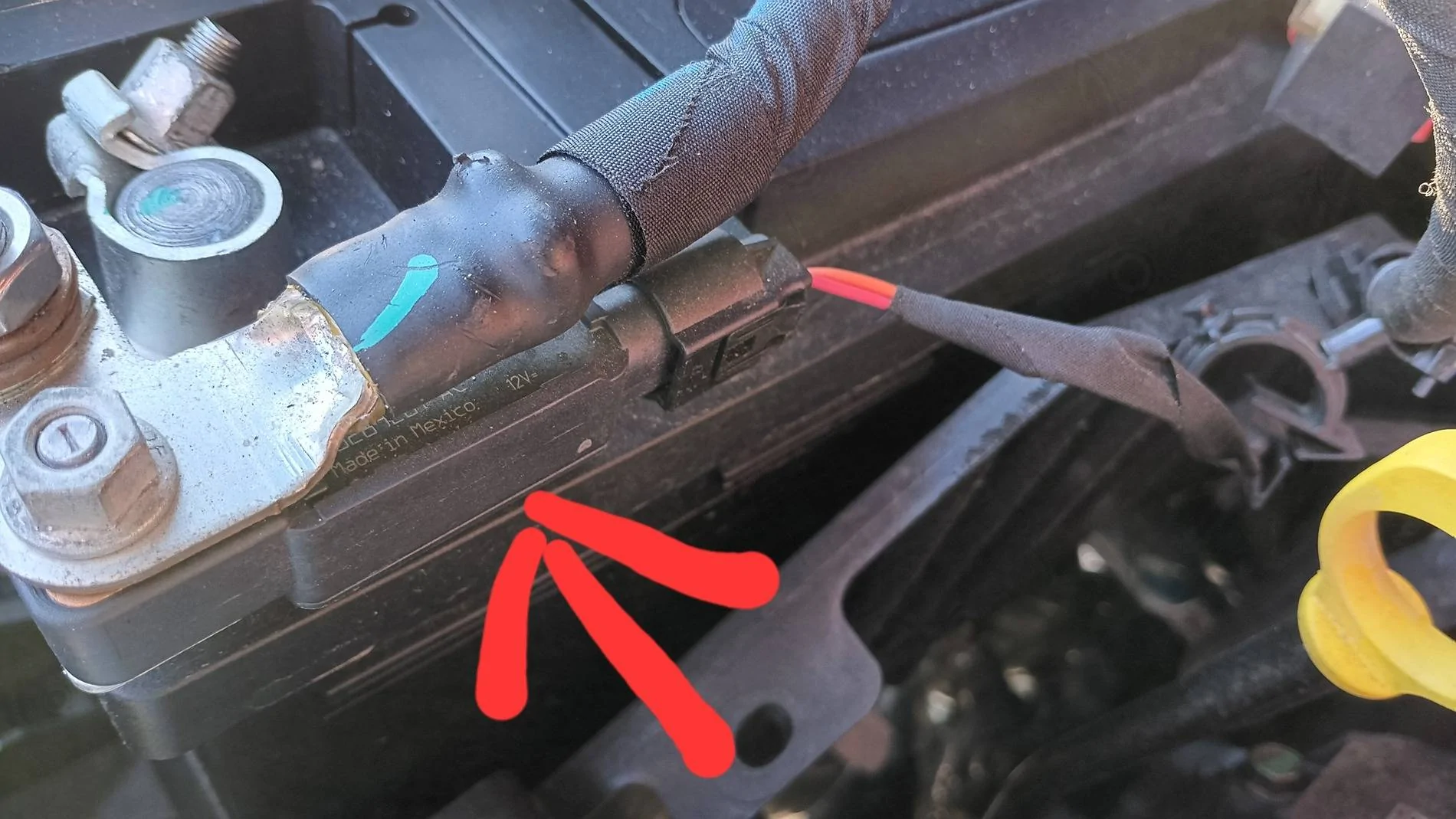
You talking about this?

Its factory, I don't know what that's for. The positive terminal has a fuse on it for the winch.

20250112_153244.jpg
That’s it thanks.

I’m throwing this out there, my fuse is the winch. I never do straight pulls, 5-10 seconds on, a few seconds off, repeat.
 

Zandcwhite

Well-Known Member
First Name
Zach
Joined
Sep 4, 2019
Threads
11
Messages
8,295
Reaction score
14,184
Location
Patterson, ca
Vehicle(s)
2019 jlur
Zach, no clue about those fuse delays, my fuses pop like within 10 seconds of peak pull, even quicker at 200%.

I don’t have my spec sheet with me but when I was sizing, it wasn’t 600% for 30 minutes. If that were the case, I’d might as well bolt in a half-inch end wrench for a fuse and call it done.

It’s funny you mention welding with batteries. Not sure you know this but using the battery as a power source is how we’d solder the connecting bars on Exide electric lift truck batteries…..LOL

With the evolving tragedy of the Southern California fires, it furthers my conviction to avoid fire on the trail when possible.

Hope you guys aren’t affected.
What size fuse are you running? If it pops within 10 seconds on a hard pull it's gotta be way under sized for your winch. That's why I don't run one. Properly sized for the 420A rating of my winch means it couldn't possibly blow from the full force of my battery and therefore it's pointless. Undersized it will blow when I'm trying to make a hard pull, making it useless to me.
 

VKSheridan

Well-Known Member
First Name
Vince
Joined
Dec 21, 2019
Threads
9
Messages
1,031
Reaction score
1,654
Location
Broken Arrow, OK
Vehicle(s)
2020 2 Dr Rubicon JL Hardtop
Build Thread
Link
Occupation
Retired from the heavy equipment industry
Vehicle Showcase
1
My winch is rated at 300 amps so I installed a 300 amp fuse. No need to go bigger and risk cooking my windings (or worse) or go smaller and derate my winch.

I try to limit my winch to 30 second cycles to keep the heat down but I’ve done a few pulls that I’d rather not do again and no, the fuse didn’t blow.

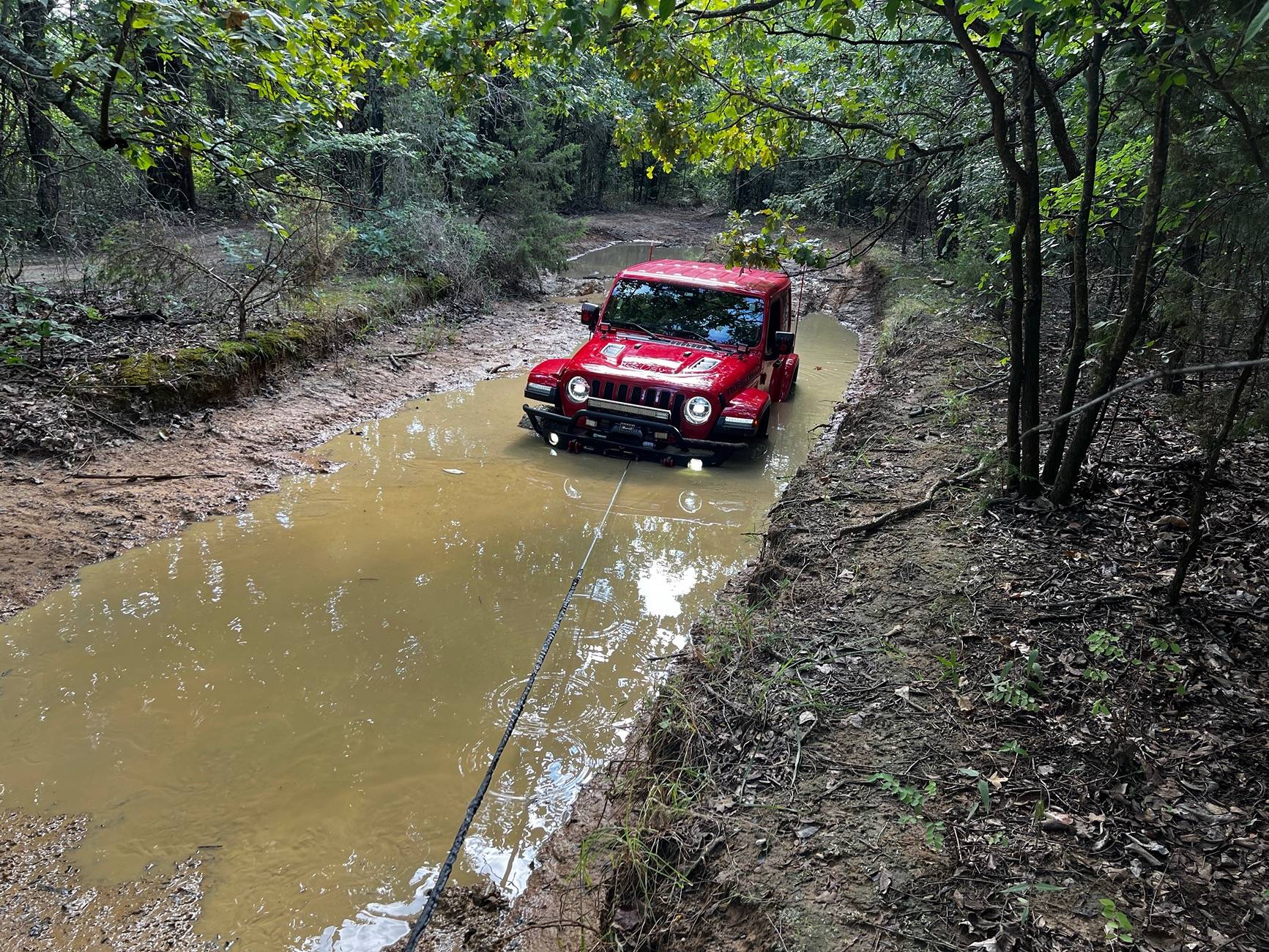
Here’s a picture of my differentials getting lubricated with Oklahoma clay. The suction would pull your shoes off. I was more focused on getting out than measuring amp draw but it ā€œfeltā€ I was close to stall on the initial tug, less once moving.

Jeep Wrangler JL Winch Wiring Question 0C98EC06-0A69-40A6-8316-AEACB0EC96C9


More electrical fires occur from unprotected circuits than fused ones so rather than asking why, ask yourself why not.

The worst that can happen is it burns up with your Jeep. The best is it burns up instead of your Jeep.

Peace
 

Sponsored

Zandcwhite

Well-Known Member
First Name
Zach
Joined
Sep 4, 2019
Threads
11
Messages
8,295
Reaction score
14,184
Location
Patterson, ca
Vehicle(s)
2019 jlur
My winch is rated at 300 amps so I installed a 300 amp fuse. No need to go bigger and risk cooking my windings (or worse) or go smaller and derate my winch.

I try to limit my winch to 30 second cycles to keep the heat down but I’ve done a few pulls that I’d rather not do again and no, the fuse didn’t blow.

Here’s a picture of my differentials getting lubricated with Oklahoma clay. The suction would pull your shoes off. I was more focused on getting out than measuring amp draw but it ā€œfeltā€ I was close to stall on the initial tug, less once moving.

0C98EC06-0A69-40A6-8316-AEACB0EC96C9.jpeg


More electrical fires occur from unprotected circuits than fused ones so rather than asking why, ask yourself why not.

The worst that can happen is it burns up with your Jeep. The best is it burns up instead of your Jeep.

Peace
Has your 300A fuse ever blown? I'm guessing no, because as I posted it will flow 450A for 500+ seconds. It will flow 600A for a full minute. That's long enough and high enough amperage to melt windings, insulation, etc. The fuse will outlast the batteries ability to push the current. It's false protection at best.
 

autotragic

Banned
Banned
Banned
Joined
Nov 29, 2023
Threads
7
Messages
3,199
Reaction score
6,516
Location
the cornbelt
Vehicle(s)
'21 JLR 6MT
My winch is rated at 300 amps so I installed a 300 amp fuse. No need to go bigger and risk cooking my windings (or worse) or go smaller and derate my winch.

I try to limit my winch to 30 second cycles to keep the heat down but I’ve done a few pulls that I’d rather not do again and no, the fuse didn’t blow.

Here’s a picture of my differentials getting lubricated with Oklahoma clay. The suction would pull your shoes off. I was more focused on getting out than measuring amp draw but it ā€œfeltā€ I was close to stall on the initial tug, less once moving.

0C98EC06-0A69-40A6-8316-AEACB0EC96C9.jpeg


More electrical fires occur from unprotected circuits than fused ones so rather than asking why, ask yourself why not.

The worst that can happen is it burns up with your Jeep. The best is it burns up instead of your Jeep.

Peace
Cool story bro.
 

VKSheridan

Well-Known Member
First Name
Vince
Joined
Dec 21, 2019
Threads
9
Messages
1,031
Reaction score
1,654
Location
Broken Arrow, OK
Vehicle(s)
2020 2 Dr Rubicon JL Hardtop
Build Thread
Link
Occupation
Retired from the heavy equipment industry
Vehicle Showcase
1
Has your 300A fuse ever blown? I'm guessing no, because as I posted it will flow 450A for 500+ seconds. It will flow 600A for a full minute. That's long enough and high enough amperage to melt windings, insulation, etc. The fuse will outlast the batteries ability to push the current. It's false protection at best.
No need to guess, I’ll tell you. No, I have not popped the fuse.

Not because of a chart you found on the web, or my battery’s too weak or I’m a master at dodging rocks. It’s because I haven’t shorted my winch cable to ground nor put my Jeep where I needed to exceed my winch’s amp rating to get out (yet).

I carry another safety measure that you might call ā€œfalse protectionā€; a fire extinguisher. Without lighting up a Jeep, there’s no guarantee it’ll be big enough to put out the fire but I still carry a pair (even though Warn doesn’t put ā€˜em in their kit)…..

Cheers
 

Zandcwhite

Well-Known Member
First Name
Zach
Joined
Sep 4, 2019
Threads
11
Messages
8,295
Reaction score
14,184
Location
Patterson, ca
Vehicle(s)
2019 jlur
No need to guess, I’ll tell you. No, I have not popped the fuse.

Not because of a chart you found on the web, or my battery’s too weak or I’m a master at dodging rocks. It’s because I haven’t shorted my winch cable to ground nor put my Jeep where I needed to exceed my winch’s amp rating to get out (yet).

I carry another safety measure that you might call ā€œfalse protectionā€; a fire extinguisher. Without lighting up a Jeep, there’s no guarantee it’ll be big enough to put out the fire but I still carry a pair (even though Warn doesn’t put ā€˜em in their kit)…..

Cheers
That's literally how class t fuse work though. You can pretend it isn't, but that's the real world testing from one of the largest manufacturers of fuses out there. A dead short might... might blow a 300A fuse. It won't blow a 400A fuse which is what I'd need for my winch. Unless you've massively upgraded the battery the available fault current simply isn't there.
 

VKSheridan

Well-Known Member
First Name
Vince
Joined
Dec 21, 2019
Threads
9
Messages
1,031
Reaction score
1,654
Location
Broken Arrow, OK
Vehicle(s)
2020 2 Dr Rubicon JL Hardtop
Build Thread
Link
Occupation
Retired from the heavy equipment industry
Vehicle Showcase
1
That's literally how class t fuse work though. You can pretend it isn't, but that's the real world testing from one of the largest manufacturers of fuses out there. A dead short might... might blow a 300A fuse. It won't blow a 400A fuse which is what I'd need for my winch. Unless you've massively upgraded the battery the available fault current simply isn't there.
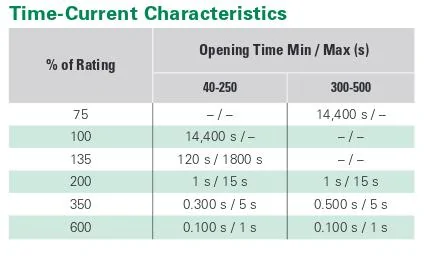
It looks like that chart is for Class T fuses from BlueSea but the table below is for Class T JJN, TJN and A3T fuses. I’m not saying this is *the* table for my fuse but the numbers are similar. They match up better than your graph.
Jeep Wrangler JL Winch Wiring Question IMG_1116


With you running a 500 amp winch with 500 amp capable cables, and perhaps a stock alternator, I’d go with a 500 amp ANL fuse and certainly not a Class T slow blow. If you get in a pickle where safety of the circuit is a lesser concern, you can always stack your lead on the hot side of the fuse (absent a short) and hope for the best.

I didn’t go with ANL even though they’re cheaper by a long shot but I’ll be damned if I can remember why….LOL
Sponsored


Top