
Sponsored

Winch Wiring Question

Zandcwhite

Well-Known Member
First Name
Zach
Joined
Sep 4, 2019
Threads
11
Messages
8,289
Reaction score
14,178
Location
Patterson, ca
Vehicle(s)
2019 jlur
That is one type of memory property Nicad has. The other more common is state of charge memory. If charging at above discharged on nicad batteries will limit nominal charge state. Less voltage less capacity. While AGM memory is the opposite. Discharging below 70% capacity will effect charging state. AGM is more critical than Flooded Cell. It doesn't happen quickly on first instance but it does effect capacity life with demands. This issue has nothing to do with desulfide. It's how AGM holds charge state internally compared to a top charge state.
If you do frequent hard pulls (pretty rare unless you run a recovery business), you'd probably want to go to a deep cycle for that reason. For the average wheeler who makes a few really hard pulls a year you are not building up that memory. Even with a high amp winch like mine, most pulls are easy and short, just getting you unstuck. That type of pull doesn't discharge the battery likely at all as it's running solely off the charging system.
Sponsored


slomatt

Member
First Name
Matt
Joined
Jul 29, 2024
Threads
0
Messages
7
Reaction score
6
Location
Bay Area, CA
Vehicle(s)
2021 JLU Rubicon
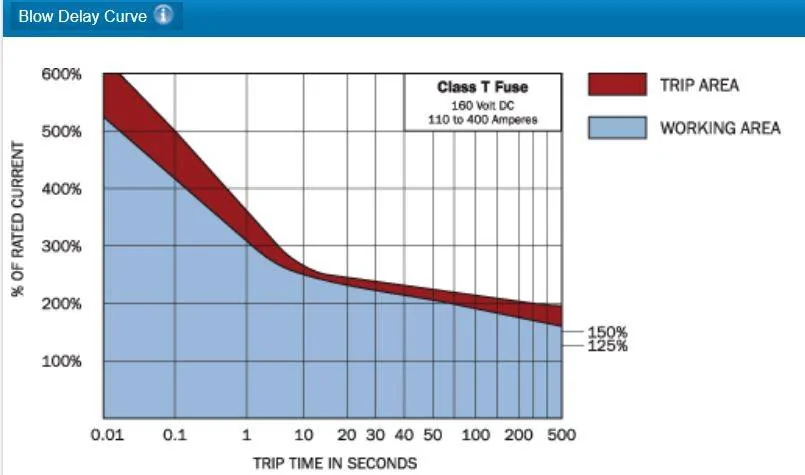
For those using a fuse to protect their winch's wiring keep in mind that fuses act on a "time delay curve". Here's a chart from Blue Sea.
https://www.bluesea.com/products/5190/MRBF_Terminal_Fuse_-_300A

If you run a 400A fuse to protect a 400A winch that fuse will pass 150% of current (600A) for over 3 minutes before blowing. If you want to have it act faster you need a smaller fuse so you are operating on the steeper part of the curve.

I think winch wiring gets confusing because they do not present a constant electrical load, so the wire sizes and corresponding fuse sizes are smaller than you would expect.
 

VKSheridan

Well-Known Member
First Name
Vince
Joined
Dec 21, 2019
Threads
9
Messages
1,031
Reaction score
1,654
Location
Broken Arrow, OK
Vehicle(s)
2020 2 Dr Rubicon JL Hardtop
Build Thread
Link
Occupation
Retired from the heavy equipment industry
Vehicle Showcase
1
For those using a fuse to protect their winch's wiring keep in mind that fuses act on a "time delay curve". Here's a chart from Blue Sea.
https://www.bluesea.com/products/5190/MRBF_Terminal_Fuse_-_300A

If you run a 400A fuse to protect a 400A winch that fuse will pass 150% of current (600A) for over 3 minutes before blowing. If you want to have it act faster you need a smaller fuse so you are operating on the steeper part of the curve.
I like your thinking Matt but I’m afraid your math is betraying you.

In your example, if all you do is put 600 amps across a 400 amp fuse, it will indeed have a potential delay with a MRBF fuse. But unfortunately, dead shorts experience whatever amperage the voltage source can provide.

If you haven’t facepalmed yet, that’s cool, let’s dust off our Ohm’s Law using an Optima Yellowtop DH7.

This beauty is rated at 880 CCA which means it can deliver 880 amps for 30 seconds on a zero degree day while maintaining terminal voltage of 7.2 volts.

But how much can that prom queen deliver in a dead short before potentially exploding? 600 amps? 800 amps? 1000 amps?

Assume your short is not absolute and provides .01 Ohms resistance. Ohm’s Law puts the potential output at 1,200 amps depending on battery construction and health.

1,200 amps is 300% of your desired amperage tolerance of 400 amps. With a Class T fuse, that’s about 1 second of sizzle my friend. Either the battery explodes, the cables fry or the fuse (if installed) will pop.

My fuse is 300 amps and will take about the same amount of time but will pop 100 amps sooner. If we install a 200 amp fuse to dodge delay, that puppy will go “bang” in nanoseconds in a short but it will be awful intolerant of using our winch.

The role of a fuse is to interrupt supply from demand. The better the battery, the faster the fire and the more the presence of a fuse is important.

Now, if your circuit is sized for 300 amps and your battery can only provide 300 amps, there’s no need for a fuse.

Have a good weekend!

Jeep Wrangler JL Winch Wiring Question IMG_1102
 

YBABRAT

Well-Known Member
Joined
May 12, 2024
Threads
55
Messages
1,409
Reaction score
1,355
Location
VIRGINIA
Vehicle(s)
2019 2 Door Rubicon X Wannabe
Occupation
None... but it pays well.
I like your thinking Matt but I’m afraid your math is betraying you.

In your example, if all you do is put 600 amps across a 400 amp fuse, it will indeed have a potential delay with a MRBF fuse. But unfortunately, dead shorts experience whatever amperage the voltage source can provide.

If you haven’t facepalmed yet, that’s cool, let’s dust off our Ohm’s Law using an Optima Yellowtop DH7.

This beauty is rated at 880 CCA which means it can deliver 880 amps for 30 seconds on a zero degree day while maintaining terminal voltage of 7.2 volts.

But how much can that prom queen deliver in a dead short before potentially exploding? 600 amps? 800 amps? 1000 amps?

Assume your short is not absolute and provides .01 Ohms resistance. Ohm’s Law puts the potential output at 1,200 amps depending on battery construction and health.

1,200 amps is 300% of your desired amperage tolerance of 400 amps. With a Class T fuse, that’s about 1 second of sizzle my friend. Either the battery explodes, the cables fry or the fuse (if installed) will pop.

My fuse is 300 amps and will take about the same amount of time but will pop 100 amps sooner. If we install a 200 amp fuse to dodge delay, that puppy will go “bang” in nanoseconds in a short but it will be awful intolerant of using our winch.

The role of a fuse is to interrupt supply from demand. The better the battery, the faster the fire and the more the presence of a fuse is important.

Now, if your circuit is sized for 300 amps and your battery can only provide 300 amps, there’s no need for a fuse.

Have a good weekend!

IMG_1102.jpeg
That is the main reason why I have stayed clear of fuse and standard circuit breakers. Too many variables to say one will work for all.

Basically it's why I've designed a circuit that is economical and easy to add to any vehical. I l completed configuring and testing on the bench, and pleased to have found it operates with only two components, with minimal wiring. Once I get my winch installed, I'll post a thread on the circuit for everyone.

The nice thing is that the smart controller only costs around $10 to $15 dollars and seems unlimited to how your power is utilized for winching. The trouble is I get too many against using a solenoid / contactor to switch on / off battery connection to winch, before and after use while using an aux switch.


I think I posted a circuit here... well anyway it was modified in design to use the bare minimum to operate. Just you loose constant power to winch when not in use, and ability to have powerless sleep mode if Aux switch is left active.
 

Sponsored

slomatt

Member
First Name
Matt
Joined
Jul 29, 2024
Threads
0
Messages
7
Reaction score
6
Location
Bay Area, CA
Vehicle(s)
2021 JLU Rubicon
My fuse is 300 amps and will take about the same amount of time but will pop 100 amps sooner. If we install a 200 amp fuse to dodge delay, that puppy will go “bang” in nanoseconds in a short but it will be awful intolerant of using our winch.

IMG_1102.jpeg
Hi Vince, thanks for the reply. I think we may both be saying the same thing, but from slightly different directions.

Many winches can draw over 400A, the one I'm using for my calculations draws a max of 415A. The stock wires that come with that winch are only rated at ~120A continuous so the manufacturer is assuming a low duty cycle during use.

You mentioned you use a 300A fuse, and I'm also advocating for using a fuse smaller than the winch's max current draw. It's interesting the compare the time current curves of your class T fuse vs a MRBF fuse. They follow generally the same shape, and I like that the class T has a steeper inflection point. I was specifically looking at a MRBF fuse because that puts the fuse as close the positive battery terminal as possible.

Jeep Wrangler JL Winch Wiring Question {filename}


For my winch with a max draw of 415A and using a MRBF fuse I think that 250A is the optimal fuse size. Based on the chart the approximate trip times at various currents would be:
- 200s @ 375A (150%)
- ~40s @ 415A (166%)
- 12s @ 500A (200%)
- 1s @ 750A (300%)

As you mentioned a lot of this depends on how much current the battery can source, but most reasonably high quality batteries can push > 750A into a short.

I don't expect to run the winch near max capacity for over 3 minutes straight, and I could theoretically run at max capacity for ~40s with this fuse (ignoring temperature derating). Above that the curve steepens, and as with your class T example if I hit 300% it blows in ~1s. By using a 250A fuse I'm intentionally lowering the 1s trip point, with a downside of potentially tripping the fuse during a sustained pull near max load. I'm ok with that, especially since with this type of fuse it is very easy to just remove the fuse and run directly off the battery (temporarily) if needed.

- Matt
 

VKSheridan

Well-Known Member
First Name
Vince
Joined
Dec 21, 2019
Threads
9
Messages
1,031
Reaction score
1,654
Location
Broken Arrow, OK
Vehicle(s)
2020 2 Dr Rubicon JL Hardtop
Build Thread
Link
Occupation
Retired from the heavy equipment industry
Vehicle Showcase
1
The ability to direct connect is a HUGE plus with MRBF fuses. They’re compact and easy to put inline in most applications which is cool. My only reservation is they are susceptible to arc continuity. But even with that, they beat going with nothing.

Word to the wise: If you’re going to run that size, check the warmth of the fuse after use. I had a mate “stack” a MRBF off his B+ terminal and winching warmed it enough to melt the battery case….LOL
 
OP
OP
Aussicon

Aussicon

Well-Known Member
Joined
Jan 7, 2024
Threads
16
Messages
307
Reaction score
633
Location
Cape Cod via Australia & N.Z
Vehicle(s)
2021 JL Rubicon Unlimited
Big thanks for all the helpful advice here. Certainly learned a lot, although it all got a bit technical a few pages in, but some great conversations none the less.
Finally finished my install today.
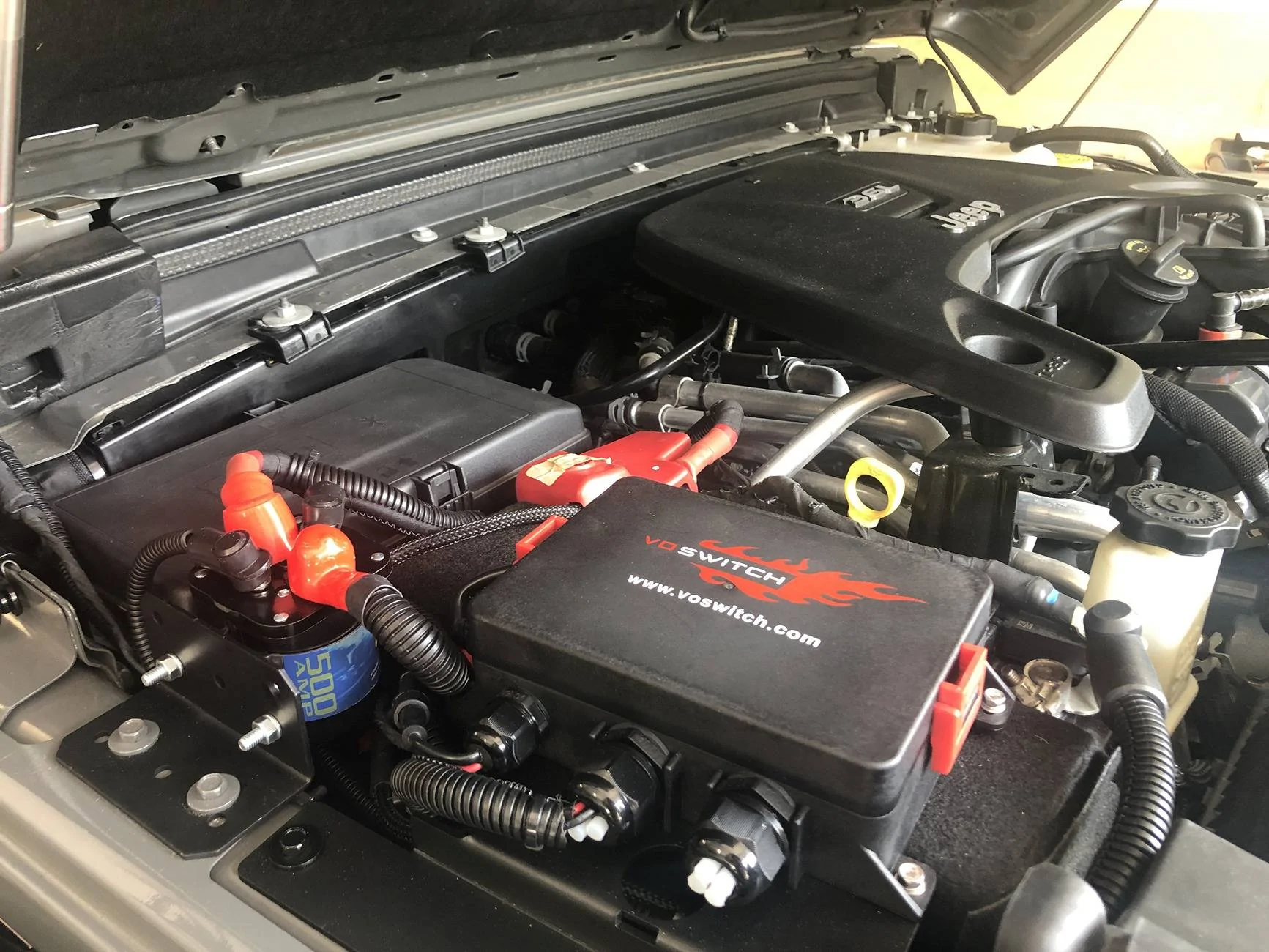
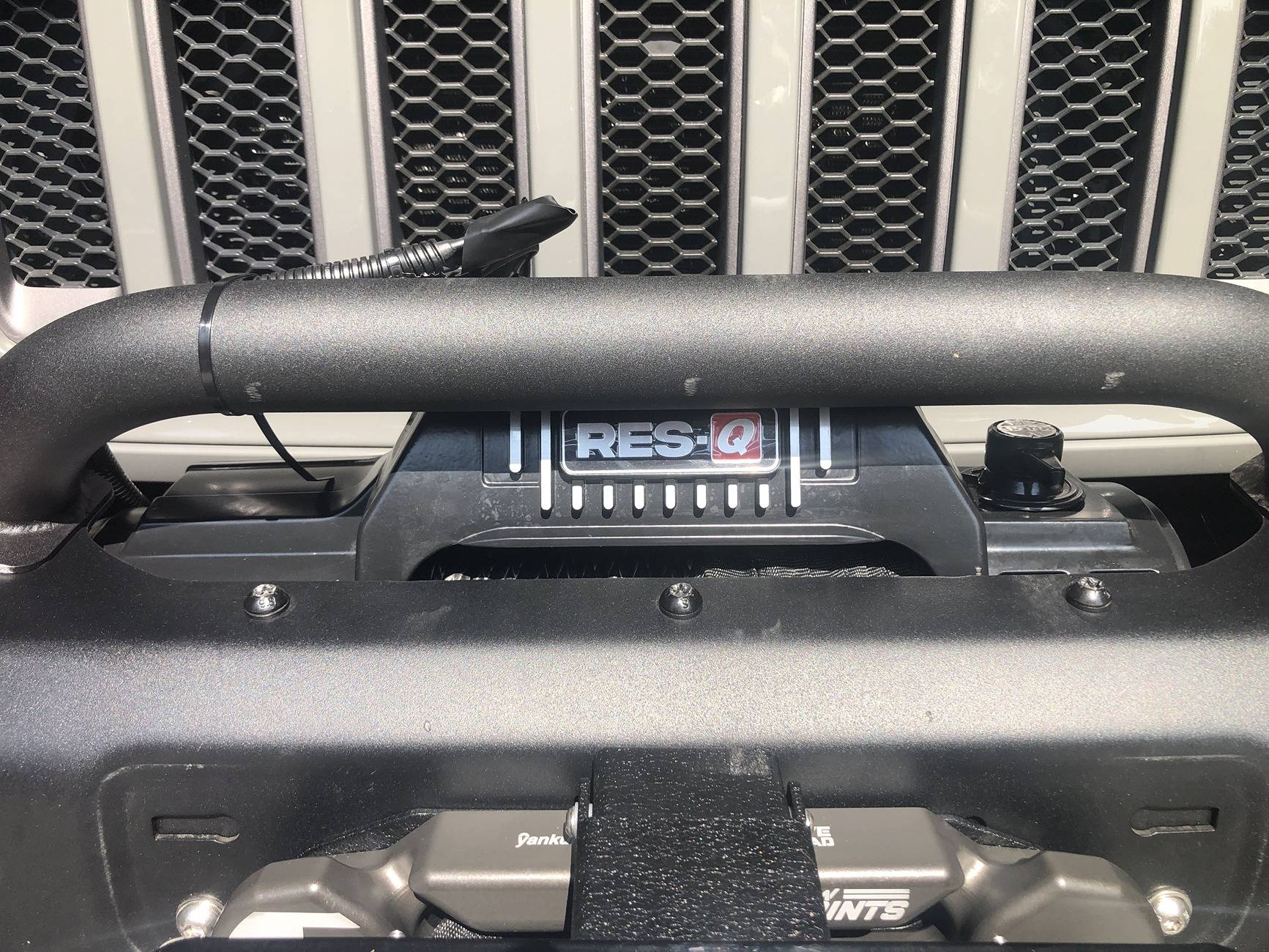
Started out with a Grimm Off Road winch plate, Quadratec Res-Q 12,000lb synthetic winch and Yankum fairlead. Ended up pulling the fender off to run all the wiring. Make sure you order more white plastic clips (Amazon) if you do this! Moved and remounted the Voswitch control box, then mounted the Stinger 500amp solenoid controller right next to it. Wired the trigger to AUX3.
Powered everything up, pressed the switch with my eyes closed and a fire extinguisher in the other hand......nothing went BANG or erupted in a ball of flame!

PS: cable on top of the winch is for the 2 X Stedi lights as soon as I make a mount for them.

Jeep Wrangler JL Winch Wiring Question winch3


Jeep Wrangler JL Winch Wiring Question winch2


Jeep Wrangler JL Winch Wiring Question winch1
 

Zandcwhite

Well-Known Member
First Name
Zach
Joined
Sep 4, 2019
Threads
11
Messages
8,289
Reaction score
14,178
Location
Patterson, ca
Vehicle(s)
2019 jlur
I like your thinking Matt but I’m afraid your math is betraying you.

In your example, if all you do is put 600 amps across a 400 amp fuse, it will indeed have a potential delay with a MRBF fuse. But unfortunately, dead shorts experience whatever amperage the voltage source can provide.

If you haven’t facepalmed yet, that’s cool, let’s dust off our Ohm’s Law using an Optima Yellowtop DH7.

This beauty is rated at 880 CCA which means it can deliver 880 amps for 30 seconds on a zero degree day while maintaining terminal voltage of 7.2 volts.

But how much can that prom queen deliver in a dead short before potentially exploding? 600 amps? 800 amps? 1000 amps?

Assume your short is not absolute and provides .01 Ohms resistance. Ohm’s Law puts the potential output at 1,200 amps depending on battery construction and health.

1,200 amps is 300% of your desired amperage tolerance of 400 amps. With a Class T fuse, that’s about 1 second of sizzle my friend. Either the battery explodes, the cables fry or the fuse (if installed) will pop.

My fuse is 300 amps and will take about the same amount of time but will pop 100 amps sooner. If we install a 200 amp fuse to dodge delay, that puppy will go “bang” in nanoseconds in a short but it will be awful intolerant of using our winch.

The role of a fuse is to interrupt supply from demand. The better the battery, the faster the fire and the more the presence of a fuse is important.

Now, if your circuit is sized for 300 amps and your battery can only provide 300 amps, there’s no need for a fuse.

Have a good weekend!

Jeep Wrangler JL Winch Wiring Question {filename}
I'm willing to bet there's 0 chance you actually get 1200A out of your battery in a dead short. I doubt you'd see much over the CCA rating. I think the stock JL battery is only rated at ~600 CCA. Which will drop off quickly in a dead short scenario. I'm still not sure you're cutting off much if any of the potential amp output running a big fuse, which in my opinion is why not 1 winch manufacturer recommends fusing your winch.
 

VKSheridan

Well-Known Member
First Name
Vince
Joined
Dec 21, 2019
Threads
9
Messages
1,031
Reaction score
1,654
Location
Broken Arrow, OK
Vehicle(s)
2020 2 Dr Rubicon JL Hardtop
Build Thread
Link
Occupation
Retired from the heavy equipment industry
Vehicle Showcase
1
I'm willing to bet there's 0 chance you actually get 1200A out of your battery in a dead short. I doubt you'd see much over the CCA rating. I think the stock JL battery is only rated at ~600 CCA. Which will drop off quickly in a dead short scenario. I'm still not sure you're cutting off much if any of the potential amp output running a big fuse, which in my opinion is why not 1 winch manufacturer recommends fusing your winch.
It’s a fool’s errand to bet against Ohm’s Law my man.

We can certainly bet if the battery will explode, plates will warp/fuse or internal buss’s tear with the brilliant blue flash but regardless, I = V/R. (12 volts divided by .01 resistance is 1,200 amps).

I know many winch manufacturers omit reference to circuit protection but let me indulge in just one more story.

Like all old men do, we were talking winches a couple years ago after the trails got soggy and we all got to stretch rope.

It was the usual friendly banter of, “Badlands versus Warn” that turned to cycle times, high amperage and getting out of the mud.

Predictably, one of the fellas wasn’t just unsure, he was absolutely, positively, and unapologetically 100% against fusing the power cable.

Grinning, I told him I’ll happily pinch his winch B+ cable to the frame so he can prove once and for all just how useless a fuse really is. I mean, what’s the worse that can happen, right?

With colorful adjectives and a bit of sputtering, he declined. I even asked twice.

I told him I have ZERO apprehension in doing the same test and asked if he really needed me to pop a $32 fuse simply to show him how fuses work. He said, “no” and started ripping on my lil’ Quadratech winch….LOL

I know everyone swears their cables won’t rub, their winch won’t short and fate smiles upon them. But getting a fire truck to a place your Jeep needs help to get out is a bitch…..
 

Sponsored

dsgrey

Well-Known Member
First Name
Kevin
Joined
Apr 19, 2019
Threads
5
Messages
1,122
Reaction score
1,183
Location
Texas
Vehicle(s)
2019 JLU
Vehicle Showcase
1
Granted his setup may have been questionable but evidence that a winch can overheat the battery. Winch battery fire
 

Zandcwhite

Well-Known Member
First Name
Zach
Joined
Sep 4, 2019
Threads
11
Messages
8,289
Reaction score
14,178
Location
Patterson, ca
Vehicle(s)
2019 jlur
Granted his setup may have been questionable but evidence that a winch can overheat the battery. Winch battery fire
What is one winching in the entrance of a cables? Being he was using the winch, none of the disconnect switches everyone swears by would have helped as they'd be in the on position.
 

Zandcwhite

Well-Known Member
First Name
Zach
Joined
Sep 4, 2019
Threads
11
Messages
8,289
Reaction score
14,178
Location
Patterson, ca
Vehicle(s)
2019 jlur
It’s a fool’s errand to bet against Ohm’s Law my man.

We can certainly bet if the battery will explode, plates will warp/fuse or internal buss’s tear with the brilliant blue flash but regardless, I = V/R. (12 volts divided by .01 resistance is 1,200 amps).

I know many winch manufacturers omit reference to circuit protection but let me indulge in just one more story.

Like all old men do, we were talking winches a couple years ago after the trails got soggy and we all got to stretch rope.

It was the usual friendly banter of, “Badlands versus Warn” that turned to cycle times, high amperage and getting out of the mud.

Predictably, one of the fellas wasn’t just unsure, he was absolutely, positively, and unapologetically 100% against fusing the power cable.

Grinning, I told him I’ll happily pinch his winch B+ cable to the frame so he can prove once and for all just how useless a fuse really is. I mean, what’s the worse that can happen, right?

With colorful adjectives and a bit of sputtering, he declined. I even asked twice.

I told him I have ZERO apprehension in doing the same test and asked if he really needed me to pop a $32 fuse simply to show him how fuses work. He said, “no” and started ripping on my lil’ Quadratech winch….LOL

I know everyone swears their cables won’t rub, their winch won’t short and fate smiles upon them. But getting a fire truck to a place your Jeep needs help to get out is a bitch…..
Assuming the battery has the ability to send 1200A, which it doesn't. Any fuse large enough to allow for a long pull at 400A is too big to pop even if the battery is pushing it's full CCA rating, which it can't do for long anyway.
 

THAW

Well-Known Member
First Name
Foster
Joined
Oct 28, 2022
Threads
4
Messages
2,183
Reaction score
3,013
Location
PNW - prefer Middle of Nowhere
Vehicle(s)
23 JL4DrRubicon
Granted his setup may have been questionable but evidence that a winch can overheat the battery. Winch battery fire
Despite what the article writer claimed, it's unlikely the battery "overheated". The fire was almost certainly caused by the winch wiring. (And smoke doesn't "bellow", it billows, but I digress.)

In that parking lot scenario, I'm skeptical there was enough load on the winch to cause significant heat buildup in a normally functioning winch system; there's a high likelihood it was wired improperly.
 

Terrymo

Well-Known Member
First Name
Terry
Joined
Jun 17, 2022
Threads
48
Messages
10,686
Reaction score
33,002
Location
SoCal
Vehicle(s)
2023 JLURXR 3.6 ET
Clubs
 
Despite what the article writer claimed, it's unlikely the battery "overheated". The fire was almost certainly caused by the winch wiring. (And smoke doesn't "bellow", it billows, but I digress.)

In that parking lot scenario, I doubt there was enough load on the winch to cause significant heat buildup in a normally functioning winch system. There's a high likelihood it was wired improperly.
If smoke gets loud it can bellow and billow.
Sponsored


Top