

Sponsored

chevymitchell
Well-Known Member
- First Name
- Shawn
- Joined
- Feb 18, 2018
- Threads
- 112
- Messages
- 5,019
- Reaction score
- 12,160
- Location
- Pueblo West, CO
- Vehicle(s)
- 2022 392XR, 2025 Wagoneer S, 2006 LJ 6-spd
- Occupation
- Avi Engineer
I think I understand your point now... You're saying the solenoid that's built into the starter motor is where the break in power is. Of course that's the case but it's all internal or mounted to the starter.That diagram is deceiving, the battery power goes to that starter relay (protected in the Jeep and controlled by computer) or you wouldn’t have a break in power to start / stop the starter motor.
Either way, there's a single cable running from the battery to the starter, unfused. The same with the winch. The solenoid is in the remote pack or built into the winch. A winch is just another DC motor. Call it a starter or a winch. They're really the same thing.
YBABRAT
Well-Known Member
Just giving the option for those with dual batteries. Not all JLs are equipped with a 250A alternator. If they watch their voltage drop too far with alternator pumping max current. A 250A max is around 200A. There will be a burden on charge system. I doubt I will allow such burden with my setup. But from some of the threads and discussion going on makes me wonder about how some will winch, either first timers or seasoned. When I do my thread, it's to enlighten winchers of all types. I tend to do things differently Than most.... and use to ridicule, until what I do for myself becomes more clear to them as it's form and function eventually gets praised. I had started on a thread almost 10 years ago and had skeptics give 2 cents, and eventually that 2 cents became praise. Not expecting it here, if anything thought before overkill or doing something stupid. My circuit will protect and handle winching both heavy and light.Sorry YBABRAT, I'm not totally clear on what you're saying. Are you planning on running a winch with engine charging off, and so want a cut-off before the battery is discharged beyond engine starting capacity? Are you planning on winching with engine charging and concerned about system/equipment damage from voltage drop? Can you clarify please.
I plan on posting next month.
YBABRAT
Well-Known Member
Seems like everyone is missing the boat. Reason why starter has no fused connection is simple, yet goes over people's heads. Starting system is indirectly isolated from charging system. The charging system is not functional during engine starting. If everyone winches without engine in operation the fuse / circuit breaker issue would not be much of an issue. Though if wiring is at fault with bad winch connections, will cause cables to fail or super drain battery. An AGM car battery can be effected by such things when depleting has gone below 12.1 V. A flooded cell can be depleted a bit more and is more robust in recovery, but is a lot slower than AGM in charging. Having a functioning charging system to compensate battery under winch loads is a concern with total available current capacity... since adding the alternator's current to battery current can provide almost double the current that is used by the winch to perform the job. Until a shorted out or failing battery condition during winching, the results could ruin various parts to your electrical system.It's not deceiving man.
That red wire is a cable straight from the battery to the starter post.
The starter relay output you see there is coming from the fuse box which is where the relay lives.
Nearly every vehicle made has its starter motor cabled straight to the battery.
Here's the full diagram:
https://www.jlwranglerforums.com/JL-Wiring-Diagrams/STARTING_CHARGING-SYSTEM---2.0L_3.6L---ESS.pdf
As for not using chassis ground it's because variables with fastener to metal and metal to metal contacts. If there were more ground wires than stock and of proper gauge. A chassis ground system will be best overall when directly connecting winch ground cable to battery. Chassis ground is the shortest path, the least resistive, and eliminates cable length issues with placement and strain relief.
All the issues brought up with chassis ground is bunk when ground has been properly utilized in a chassis ground environment. A chassis ground environment has redundancy for critical needs. Expecting stock chassis ground to safely provide for high current demands with most all other circuits functioning is a risk. Addressing and correcting the weak areas in the vehicals chassis ground setup will provide a cleaner and more stable platform for adding auxiliary electrical connections.

Zandcwhite
Well-Known Member
- First Name
- Zach
- Joined
- Sep 4, 2019
- Threads
- 11
- Messages
- 8,352
- Reaction score
- 14,279
- Location
- Patterson, ca
- Vehicle(s)
- 2019 jlur
Sure modern charging systems provide a large portion of the current draw, but my old XJ had a 90A alternator. I've also winched out of water too deep to safely start the engine. Just like the starter, the winch can and will run primarily or even exclusively off the battery.Seems like everyone is missing the boat. Reason why starter has no fused connection is simple, yet goes over people's heads. Starting system is indirectly isolated from charging system. The charging system is not functional during engine starting. If everyone winches without engine in operation the fuse / circuit breaker issue would not be much of an issue. Though if wiring is at fault with bad winch connections, will cause cables to fail or super drain battery. An AGM car battery can be effected by such things when depleting has gone below 12.1 V. A flooded cell can be depleted a bit more and is more robust in recovery, but is a lot slower than AGM in charging. Having a functioning charging system to compensate battery under winch loads is a concern with total available current capacity... since adding the alternator's current to battery current can provide almost double the current that is used by the winch to perform the job. Until a shorted out or failing battery condition during winching, the results could ruin various parts to your electrical system.
As for not using chassis ground it's because variables with fastener to metal and metal to metal contacts. If there were more ground wires than stock and of proper gauge. A chassis ground system will be best overall when directly connecting winch ground cable to battery. Chassis ground is the shortest path, the least resistive, and eliminates cable length issues with placement and strain relief.
All the issues brought up with chassis ground is bunk when ground has been properly utilized in a chassis ground environment. A chassis ground environment has redundancy for critical needs. Expecting stock chassis ground to safely provide for high current demands with most all other circuits functioning is a risk. Addressing and correcting the weak areas in the vehicals chassis ground setup will provide a cleaner and more stable platform for adding auxiliary electrical connections.
Sponsored
YBABRAT
Well-Known Member
Your in agreement with what I have pointed to on battery only without engine operation. What I have been on is overall protection, not that a fuse or circuit breaker is required. As long as a battery is connected to a functioning charging system the direct connection from winch to battery needs charging system to addressed or isolated. That's where a fuse or circuit breaker is in question.Sure modern charging systems provide a large portion of the current draw, but my old XJ had a 90A alternator. I've also winched out of water too deep to safely start the engine. Just like the starter, the winch can and will run primarily or even exclusively off the battery.
That is why my circuit was created. It has no baring on winch functionality as it stays passive until a set low voltage point is met during winch use. Just like a circuit breaker it will trip and disconnect the winch power... but is smarter in making the disconnect without delay or heat effecting accuracy. Properly setup it is a cheap and effective way to protect without much manual interaction. Pushing the Aux button to enable / disable winch and the rest is automatic. Properly winching without compromised electrical connections, may never need the circuit, but you'll never know when luck will have it.
Zandcwhite
Well-Known Member
- First Name
- Zach
- Joined
- Sep 4, 2019
- Threads
- 11
- Messages
- 8,352
- Reaction score
- 14,279
- Location
- Patterson, ca
- Vehicle(s)
- 2019 jlur
I understand the theory, I just don't feel it's necessary. No matter how good your charging system a hard pull will out pace it. You can hear it in the winch motors operation as the voltage drops. That said, at least on my experience the winch will stall before the voltage gets so low the engine stalls. To me it's an added complexity solution that's looking for a problem. Good luck and I hope it works well for you.Your in agreement with what I have pointed to on battery only without engine operation. What I have been on is overall protection, not that a fuse or circuit breaker is required. As long as a battery is connected to a functioning charging system the direct connection from winch to battery needs charging system to addressed or isolated. That's where a fuse or circuit breaker is in question.
That is why my circuit was created. It has no baring on winch functionality as it stays passive until a set low voltage point is met during winch use. Just like a circuit breaker it will trip and disconnect the winch power... but is smarter in making the disconnect without delay or heat effecting accuracy. Properly setup it is a cheap and effective way to protect without much manual interaction. Pushing the Aux button to enable / disable winch and the rest is automatic. Properly winching without compromised electrical connections, may never need the circuit, but you'll never know when luck will have it.
OP
OP

Aussicon
Well-Known Member
- Joined
- Jan 7, 2024
- Threads
- 16
- Messages
- 310
- Reaction score
- 646
- Location
- Cape Cod via Australia & N.Z
- Vehicle(s)
- 2021 JL Rubicon Unlimited
- Thread starter
- #38
Accepting that I’m electrically challenged, another thread has suggested the safest way to protect the winch circuit is to use a Class T fast blow fuse. Is this worth adding and if so, what size for a 12000lb winch?
Zandcwhite
Well-Known Member
- First Name
- Zach
- Joined
- Sep 4, 2019
- Threads
- 11
- Messages
- 8,352
- Reaction score
- 14,279
- Location
- Patterson, ca
- Vehicle(s)
- 2019 jlur
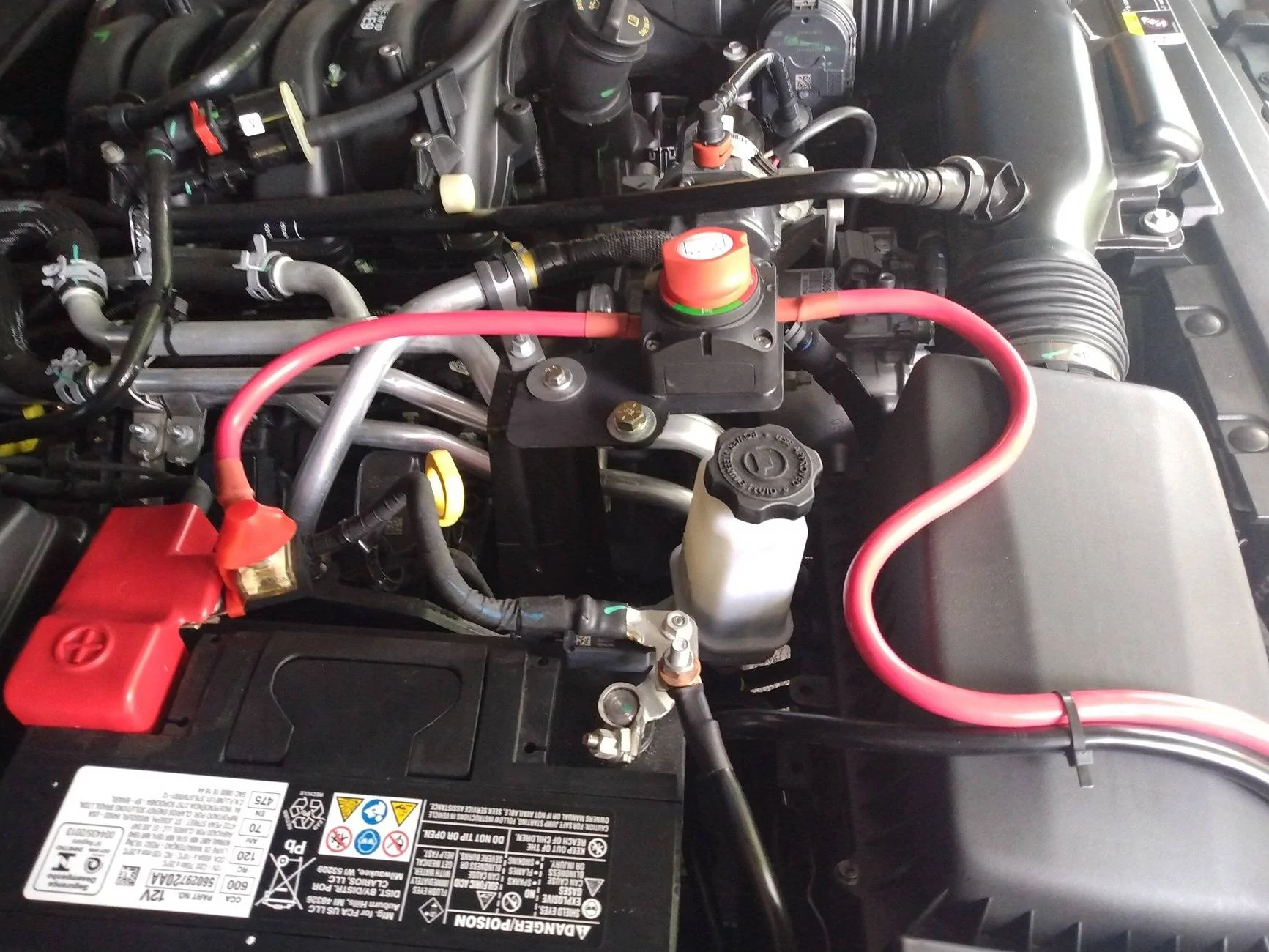
I'd suggest a simple disconnect switch. Any fuse large enough to allow the winch to operate at full load will still allow the wiring to overheat. A disconnect switch will protect the wiring in an accident, etc any time you aren't actively winching and when you are you will be very attentive to the front of the vehicle, winch, etc.Accepting that I’m electrically challenged, another thread has suggested the safest way to protect the winch circuit is to use a Class T fast blow fuse. Is this worth adding and if so, what size for a 12000lb winch?
OP
OP
Aussicon
Well-Known Member
- Joined
- Jan 7, 2024
- Threads
- 16
- Messages
- 310
- Reaction score
- 646
- Location
- Cape Cod via Australia & N.Z
- Vehicle(s)
- 2021 JL Rubicon Unlimited
- Thread starter
- #40
Yip - already have that installed.I'd suggest a simple disconnect switch. Any fuse large enough to allow the winch to operate at full load will still allow the wiring to overheat. A disconnect switch will protect the wiring in an accident, etc any time you aren't actively winching and when you are you will be very attentive to the front of the vehicle, winch, etc.
Sponsored
VKSheridan
Well-Known Member
- First Name
- Vince
- Joined
- Dec 21, 2019
- Threads
- 9
- Messages
- 1,041
- Reaction score
- 1,664
- Location
- Broken Arrow, OK
- Vehicle(s)
- 2020 2 Dr Rubicon JL Hardtop
- Build Thread
- Link
- Occupation
- Retired from the heavy equipment industry
- Vehicle Showcase
- 1
Negative sir.I'd suggest a simple disconnect switch. Any fuse large enough to allow the winch to operate at full load will still allow the wiring to overheat. A disconnect switch will protect the wiring in an accident, etc any time you aren't actively winching and when you are you will be very attentive to the front of the vehicle, winch, etc.
You rate the fuse size to the lowest rated component in the circuit whether it be the cable, solenoid, disconnect or winch. Trying to operate a 500 amp winch using a 200 amp cable will smoke the cable. Likewise, trying to pull 500 amps across a 150 amp rated disconnect or solenoid will make smoke there.
Using a disconnect or solenoid as a means of stopping high amperage flow is a fool’s errand. If the heat hasn’t already welded the contacts, it is extremely likely it will arc weld the minute you try to open the circuit. Even if you double the rating, that’s the amperage it can conduct closed. There is no rating for what it can handle when disrupting flow.
Breakers are not much better. They can pop with an incremental increase in amperage but can also arc conduct in a rapid high flow draw condition.
But what about a starter?
Unlike a starter that doesn’t have a length of exposed cable between the motor and the solenoid contact plate, your winch does.
Unlike a starter that might be energized for up to 30 seconds with combustion assistance and limited CCA from a battery, your winch will be pulling full load with charging system help and with fewer pauses between cycles.
TLDR: Anything short of using a fast blow Class T fuse in the circuit is risky.
Zandcwhite
Well-Known Member
- First Name
- Zach
- Joined
- Sep 4, 2019
- Threads
- 11
- Messages
- 8,352
- Reaction score
- 14,279
- Location
- Patterson, ca
- Vehicle(s)
- 2019 jlur
The solenoids on the winch controller are designed to interrupt high current flow regularly (500A rated on my winch), how else would they work? The disconnect switch isn't there for turning it on and off under load, but in the case of a stuck solenoid it would work. The disconnect is only there so the power cable isn't energized when not in use. My winch has a full load amp rating of 425A, and 2 gauge wire rated at 125A. Literally none of what you said is true, applicable in common winch application, or recommended by the manufacturers. You could put a 500A fuse on it, but that does nothing to protect the wire. The odds of a short during operation are very unlikely, so what is the point of the fuse? There's a reason not 1 winch manufacturer recommends fusing.Negative sir.
You rate the fuse size to the lowest rated component in the circuit whether it be the cable, solenoid, disconnect or winch. Trying to operate a 500 amp winch using a 200 amp cable will smoke the cable. Likewise, trying to pull 500 amps across a 150 amp rated disconnect or solenoid will make smoke there.
Using a disconnect or solenoid as a means of stopping high amperage flow is a fool’s errand. If the heat hasn’t already welded the contacts, it is extremely likely it will arc weld the minute you try to open the circuit. Even if you double the rating, that’s the amperage it can conduct closed. There is no rating for what it can handle when disrupting flow.
Breakers are not much better. They can pop with an incremental increase in amperage but can also arc conduct in a rapid high flow draw condition.
But what about a starter?
Unlike a starter that doesn’t have a length of exposed cable between the motor and the solenoid contact plate, your winch does.
Unlike a starter that might be energized for up to 30 seconds with combustion assistance and limited CCA from a battery, your winch will be pulling full load with charging system help and with fewer pauses between cycles.
TLDR: Anything short of using a fast blow Class T fuse in the circuit is risky.
VKSheridan
Well-Known Member
- First Name
- Vince
- Joined
- Dec 21, 2019
- Threads
- 9
- Messages
- 1,041
- Reaction score
- 1,664
- Location
- Broken Arrow, OK
- Vehicle(s)
- 2020 2 Dr Rubicon JL Hardtop
- Build Thread
- Link
- Occupation
- Retired from the heavy equipment industry
- Vehicle Showcase
- 1
I’m not sure which properties of electricity you disagree but none of what I’ve shared is untruthful.
Disconnects are not rated for opening amperage but rather conductance. Regardless, let’s talk about what happens when you twist that puppy under load. The contact bridge rotates away from the contacts creating a gap.
When you create a gap in the midst of electron flow, you begin the welding process.
Think of arc welding.
When you “strike the arc”, you are establishing electron flow.
Opening the gap after starting the flow is welding. If the gap gets too close, you stick the rod and things starts glowing. When you open a disconnect under high flow, it’s the exact same thing.
Power solenoids are rated for working amperage, not for their functionality as circuit breakers.
They *can* open under load assuming the bridge spring has enough force to break arc contact but if the spring is hot from bridge thermal transfer, it’s less likely to create sufficient gap.
Refer to what I said about arc welding for what occurs when you create that gap though.
The Directional Solenoid(s) you refer are akin to the solenoid on your starter and don’t have a length of cable between them and the motor. They are used for directional flow, not as circuit protection.
Similar to your starter, if a failure occurs between the solenoid and the motor, the “smoke” is inside the housing until that lower gauge wire fails open or the contacts flash green and fail open. That is why the winch OEM specifically requests a certain gauge or larger for supply. But if the high amp draw is before the directional contacts, you’re screwed.
To your other point, if you install a 500 amp fuse in a 150 amp circuit, that’s not going to protect the circuit if your power source can output 500 amps. Whatever is rated at 150 amps will fail instead of the 140 amp fuse you should have installed.
Summarily, if you have a 500 amp load, your circuit either needs to be able to handle 500 amps or be fused to whatever it can safely handle. If not, you‘re putting a horse saddle on a goat and that will only cripple the goat.
Let me ask you if using fuses designed to protect components seems stupid to you, how the hell does using the components not designed to protect components as protection make more sense?
Some winch manufacturers use internal fusible links for winch protection, but please put a URL link for whichever OEM you refer that instruct you specifically to go with the circuit unprotected.
Disconnects are not rated for opening amperage but rather conductance. Regardless, let’s talk about what happens when you twist that puppy under load. The contact bridge rotates away from the contacts creating a gap.
When you create a gap in the midst of electron flow, you begin the welding process.
Think of arc welding.
When you “strike the arc”, you are establishing electron flow.
Opening the gap after starting the flow is welding. If the gap gets too close, you stick the rod and things starts glowing. When you open a disconnect under high flow, it’s the exact same thing.
Power solenoids are rated for working amperage, not for their functionality as circuit breakers.
They *can* open under load assuming the bridge spring has enough force to break arc contact but if the spring is hot from bridge thermal transfer, it’s less likely to create sufficient gap.
Refer to what I said about arc welding for what occurs when you create that gap though.
The Directional Solenoid(s) you refer are akin to the solenoid on your starter and don’t have a length of cable between them and the motor. They are used for directional flow, not as circuit protection.
Similar to your starter, if a failure occurs between the solenoid and the motor, the “smoke” is inside the housing until that lower gauge wire fails open or the contacts flash green and fail open. That is why the winch OEM specifically requests a certain gauge or larger for supply. But if the high amp draw is before the directional contacts, you’re screwed.
To your other point, if you install a 500 amp fuse in a 150 amp circuit, that’s not going to protect the circuit if your power source can output 500 amps. Whatever is rated at 150 amps will fail instead of the 140 amp fuse you should have installed.
Summarily, if you have a 500 amp load, your circuit either needs to be able to handle 500 amps or be fused to whatever it can safely handle. If not, you‘re putting a horse saddle on a goat and that will only cripple the goat.
Let me ask you if using fuses designed to protect components seems stupid to you, how the hell does using the components not designed to protect components as protection make more sense?
Some winch manufacturers use internal fusible links for winch protection, but please put a URL link for whichever OEM you refer that instruct you specifically to go with the circuit unprotected.
Zandcwhite
Well-Known Member
- First Name
- Zach
- Joined
- Sep 4, 2019
- Threads
- 11
- Messages
- 8,352
- Reaction score
- 14,279
- Location
- Patterson, ca
- Vehicle(s)
- 2019 jlur
Every winch I've ever bought comes with the supply cables. On most winches in the 9-13k pound range they are 2 gauge. That wire is not rated for the 400+A max draw of the winch, yet it is supplied with the winch. Every winch wiring diagram and install manual shows either a disconnect switch near the battery(far less common) or hardwired directly to the battery. No, they don't specifically say don't use a fuse, but they sure as hell don't recommend one. Again, the disconnect isn't there for protection during winching. It's there to eliminate the power on the supply cables. Adding a fuse to the cables that only have power when the winch is in use is pointless. A 150A rated fuse will blow under a hard pull. A 500A fuse won't blow before the insulation melts off the 2 gauge wire. Why put on a fuse that is either too small to allow a full pull or too big to protect the wire just to protect cabling that is de-energized 99.9% of the time? Personally I've never even run a disconnect, just like the oem winch on the power wagon, the vast majority of winch manufacturers instructions, and the vast majority of winches on vehicles, but at least I can see them being somewhat useful. Again, no winch manufacturers RECOMMEND fusing. I didn't say they warn against them, but by not mentioning them in the instructions nor providing one, they clearly don't recommend one. The fusible link on some high end winches is only there to protect the motor, a short on the wiring will still draw full ampacity from the battery.I’m not sure which properties of electricity you disagree but none of what I’ve shared is untruthful.
Disconnects are not rated for opening amperage but rather conductance. Regardless, let’s talk about what happens when you twist that puppy under load. The contact bridge rotates away from the contacts creating a gap.
When you create a gap in the midst of electron flow, you begin the welding process.
Think of arc welding.
When you “strike the arc”, you are establishing electron flow.
Opening the gap after starting the flow is welding. If the gap gets too close, you stick the rod and things starts glowing. When you open a disconnect under high flow, it’s the exact same thing.
Power solenoids are rated for working amperage, not for their functionality as circuit breakers.
They *can* open under load assuming the bridge spring has enough force to break arc contact but if the spring is hot from bridge thermal transfer, it’s less likely to create sufficient gap.
Refer to what I said about arc welding for what occurs when you create that gap though.
The Directional Solenoid(s) you refer are akin to the solenoid on your starter and don’t have a length of cable between them and the motor. They are used for directional flow, not as circuit protection.
Similar to your starter, if a failure occurs between the solenoid and the motor, the “smoke” is inside the housing until that lower gauge wire fails open or the contacts flash green and fail open. That is why the winch OEM specifically requests a certain gauge or larger for supply. But if the high amp draw is before the directional contacts, you’re screwed.
To your other point, if you install a 500 amp fuse in a 150 amp circuit, that’s not going to protect the circuit if your power source can output 500 amps. Whatever is rated at 150 amps will fail instead of the 140 amp fuse you should have installed.
Summarily, if you have a 500 amp load, your circuit either needs to be able to handle 500 amps or be fused to whatever it can safely handle. If not, you‘re putting a horse saddle on a goat and that will only cripple the goat.
Let me ask you if using fuses designed to protect components seems stupid to you, how the hell does using the components not designed to protect components as protection make more sense?
Some winch manufacturers use internal fusible links for winch protection, but please put a URL link for whichever OEM you refer that instruct you specifically to go with the circuit unprotected.
VKSheridan
Well-Known Member
- First Name
- Vince
- Joined
- Dec 21, 2019
- Threads
- 9
- Messages
- 1,041
- Reaction score
- 1,664
- Location
- Broken Arrow, OK
- Vehicle(s)
- 2020 2 Dr Rubicon JL Hardtop
- Build Thread
- Link
- Occupation
- Retired from the heavy equipment industry
- Vehicle Showcase
- 1
Fair questions.
Reason #1 to recommend a fuse is to protect the circuit. Actually, that’s the only reason to fuse a circuit. If anything experiences amperage flow that exceeds the circuit’s capacity, it’s better to pop a fuse, not a part or worse, light a fire.
Similar to how you use a mechanical disconnect, I use a main power relay for power isolation. My winch receives no power unless I close the relay.
Like you said, absent power in those cables, there's nothing for that fuse to protect. That said, if damage occurs between uses and we energize the circuit, it’s far better to have the fuse blow than hope we can isolate the circuit before we need the fire extinguisher and that’s why I recommend the Class T fuse.
If we can agree to that, here’s what I’ve been told why OEM’s (including Ram) don’t fuse the circuit - The perception of prioritizing circuit protection over operator protection is a litigious risk.
Which sounds better in court if you’re Warn?
A) Zach’s PowerWagon got destroyed by a train because the blown factory fuse prevented recovery from the railroad tracks.
B) Zach’s PowerWagon was so stuck on the tracks, he burned up his winch, cables and battery trying to get unstuck when the train hit his truck.
Let’s tweak the story because we’re not Warn or Ram but ordinary working folk just like OP:
A) Zach got towed out of the bog because he was stuck so deep, it exceeded the amp rating of his circuit and the damn fuse blew.
B) Zach got towed out of the bog because he was stuck so deep, he burned up his gear, broke his rope and had to use up a fire extinguisher.
Regardless of what part smokes doesn’t change the depth of the bog. It only changes the extent and cost of damage.
The cool part? If you’re stuck and the fuse blows, you can now decide if you want to bypass the fuse, press your luck and risk smoking more parts or replace the fuse, break out your sheave block to double the force and halve the amp load and try again….
All the same, thanks for the conversation, stay safe out there!
Reason #1 to recommend a fuse is to protect the circuit. Actually, that’s the only reason to fuse a circuit. If anything experiences amperage flow that exceeds the circuit’s capacity, it’s better to pop a fuse, not a part or worse, light a fire.
Similar to how you use a mechanical disconnect, I use a main power relay for power isolation. My winch receives no power unless I close the relay.
Like you said, absent power in those cables, there's nothing for that fuse to protect. That said, if damage occurs between uses and we energize the circuit, it’s far better to have the fuse blow than hope we can isolate the circuit before we need the fire extinguisher and that’s why I recommend the Class T fuse.
If we can agree to that, here’s what I’ve been told why OEM’s (including Ram) don’t fuse the circuit - The perception of prioritizing circuit protection over operator protection is a litigious risk.
Which sounds better in court if you’re Warn?
A) Zach’s PowerWagon got destroyed by a train because the blown factory fuse prevented recovery from the railroad tracks.
B) Zach’s PowerWagon was so stuck on the tracks, he burned up his winch, cables and battery trying to get unstuck when the train hit his truck.
Let’s tweak the story because we’re not Warn or Ram but ordinary working folk just like OP:
A) Zach got towed out of the bog because he was stuck so deep, it exceeded the amp rating of his circuit and the damn fuse blew.
B) Zach got towed out of the bog because he was stuck so deep, he burned up his gear, broke his rope and had to use up a fire extinguisher.
Regardless of what part smokes doesn’t change the depth of the bog. It only changes the extent and cost of damage.
The cool part? If you’re stuck and the fuse blows, you can now decide if you want to bypass the fuse, press your luck and risk smoking more parts or replace the fuse, break out your sheave block to double the force and halve the amp load and try again….
All the same, thanks for the conversation, stay safe out there!
Sponsored


