
GATORB8
Well-Known Member
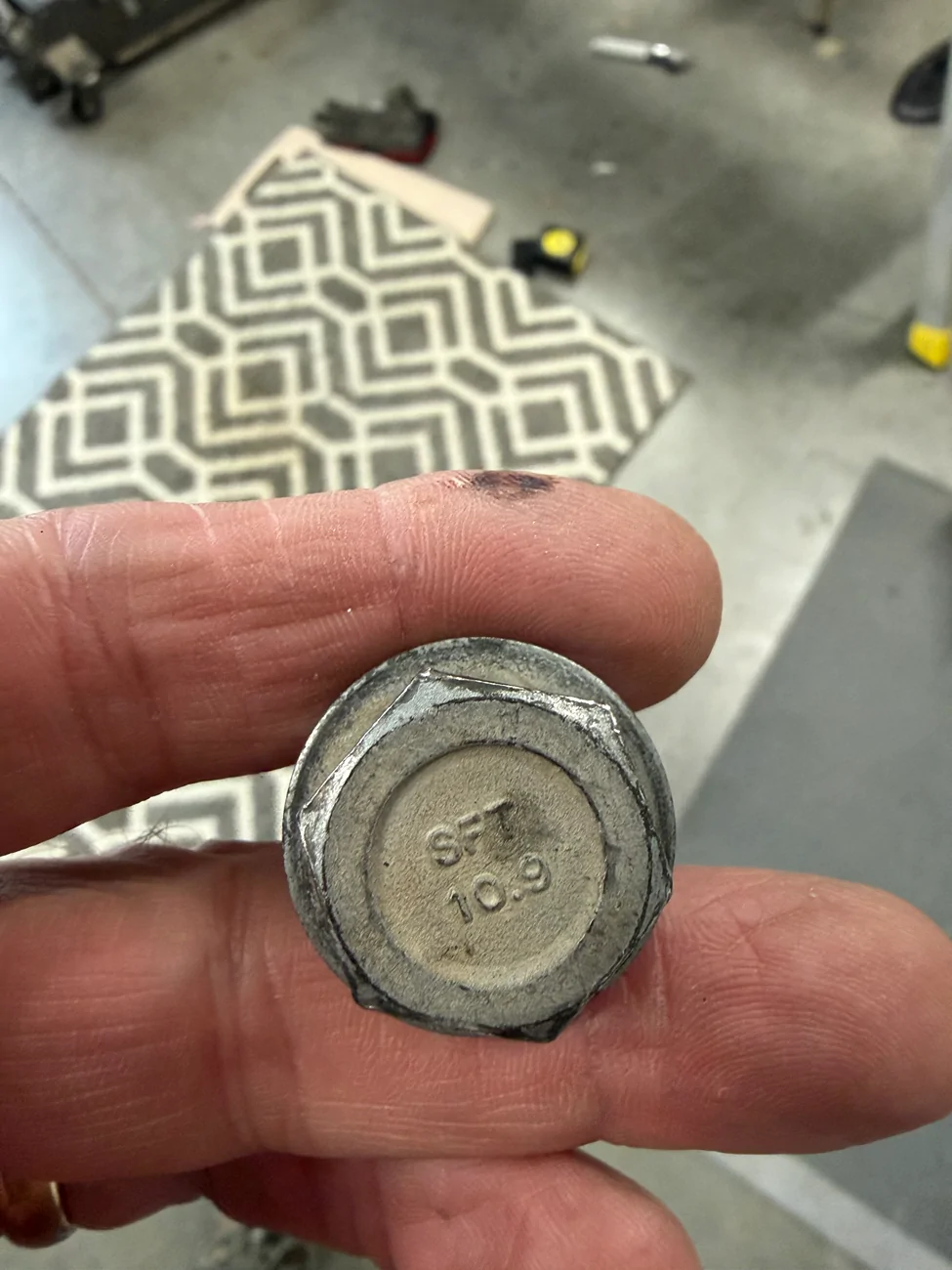
There was a question? I thought we were just researching bolts for fun.OK, let's give this another shot. I know the torque values are going to be different depending on lube/coating, so don't take those as absolute values or torque recommendations.
Bolt Grade Thread Torque
(dry, zinc)Clamp Load PSI Increase vs.
stock assumptionGrade 9 9/16-18 171 lb.ft. 21,412 PSI 75.8% Class 12.9 M14-1.5 ~159 lb.ft. ~20,370 PSI 67.2% Grade 9 9/16-12 153 lb.ft. 19,193 PSI 57.6% Class 12.9 M14-2 147.4 lb.ft. 18,879 PSI 55.0% Grade 8 9/16-18 146 lb.ft. 18,268 PSI 50.0% Class 10.9 M14-1.5 ~136 lb.ft. ~17,430 PSI 43.1% Grade 8 (OP) 9/16-12 130 lb.ft. 16,375 PSI 34.4% Class 10.9 M14-2 126 lb.ft. 16,154 PSI 32.6% Class 8.8 (stock?) M14-1.5 ~95 lb.ft. ~12,181 PSI 0.0% Class 8.8 M14-2 88.1 lb.ft. 11,289 PSI -7.3%
So back to my original question... is the benefit of changing the bolt really from the diameter increase, or ~50% clamping load increase (assuming torqued adequately)?
From what I've read, most shear connections consider any slip to be failure. I'm not sure it's something I want to allow here.
Sponsored