Sponsored

Tazer mini issues?

Do you have Tazer mini canbus issues?


  • Total voters
    47

Bob Burd

Well-Known Member
First Name
Bob
Joined
Apr 23, 2019
Threads
11
Messages
771
Reaction score
1,283
Location
San Jose, CA
Website
www.snwburd.com
Vehicle(s)
2018 JLUR
I've been chasing my tail with occasional canbus issues going back seven years. I ended up using my tazer mini to delete the swaybar disconnect which fixed the issues for a while. Then I started getting Service Lockers and Service 4WD messages after about 100Kmi, and after trying the Zauto locker bypass cable, inspecting the connectors, and looking for wire and grounding issues, I used the tazer to remove the lockers and FAD, on my way to building a Sport out of my JLUR. Now past 200Kmi, I'm getting Service Shifter errors which got so frequent that I can't rely on it any more and have to dig in deeper on the canbus. I'm an EE by trade, so I've some skills on electrical issues. I've spent the last week learning a lot more about canbus, and am beginning to suspect the tazer is the issue. I thought I'd take a poll concerning this to see if others are having issues. I have my suspicion as to the cause (and a fix), but will hold off on that until I get more data and can confirm. Don't get me wrong - I love the tazer and have used it extensively on this Jeep. I have no plans to get rid of it.
Sponsored

 
OP
OP

Bob Burd

Well-Known Member
First Name
Bob
Joined
Apr 23, 2019
Threads
11
Messages
771
Reaction score
1,283
Location
San Jose, CA
Website
www.snwburd.com
Vehicle(s)
2018 JLUR
Short story: When installed, the Tazer Mini changes the termination resistance seen on the CAN C bus and can lead to flaky behavior on the bus, and reliability issues on your Jeep.

Long story: There are two main communication buses in your Jeep, the high speed CAN C (500kbps) used for important things that need rapid updates (like ABS, TCM, PCM, etc) and the low speed CAN IHS (125Kbps) used for stuff like door locks, HVAC, and comfort settings. The CAN C bus is the problematic one, but the termination issue is created by the Tazer on both buses.

Here's the simple diagram for a CAN bus:
Jeep Wrangler JL Tazer mini issues? PXL_20251002_164259329[1]

CAN_H and CAN_L (also called CAN+ and CAN-) are simply a pair of twisted wires that can run for long distances, like 130ft. Various controllers (PCM, BCM, TCM, etc) are tied onto the bus along its length, with best results if these are short, like less than a foot. Each one is a stub off the main bus. At each end of the bus is a terminating resistor, chosen to be 120 ohms to match the characteristic impedance of the twisted pair. This is a complicated topic if you're not an EE, but let's just summarize and say that if the termination resistor matches the impedance of the line, there will be no signal reflection when the signal reaches the end. This makes for nice, clean waveforms. At slow speeds like on the CAN IHS, the reflections don't matter because the data is sampled well after the reflections have settled down. At high speeds, the reflections may still be active when the data is sampled and can cause errors. The CAN design is actually pretty robust and has lots of margin to work outside recommended values. The ideal (from a signal integrity standpoint) design in your Jeep would run this bus to all the various microcontrollers in a snaking fashion throughout the vehicle to keep the stubs as short as possible. In real life, you wouldn't want this bus snaking through the engine compartment or under the chassis because it would be easy to brick your Jeep while working in the engine bay or driving off-road. So instead, you have this non-ideal star connector behind your glove box (which everyone here knows about by now) and another, smaller one hidden in the passenger side back, above the wheel well. Each of these has a 120 ohm resistor and the two blocks are connected by a pair of twisted wires. The various controllers are then connect by stubs to to one of these two blocks. For 500Kbps, it is recommended to keep the stub length less than about 3ft, but some of these are longer - the swaybar disconnect is more than 6ft in length to the glove box connection point. But as mentioned, the CAN design is fairly robust and can tolerate these longer lengths without serious issues, and I've no doubt the Jeep designers tested this thoroughly before committing to the design.

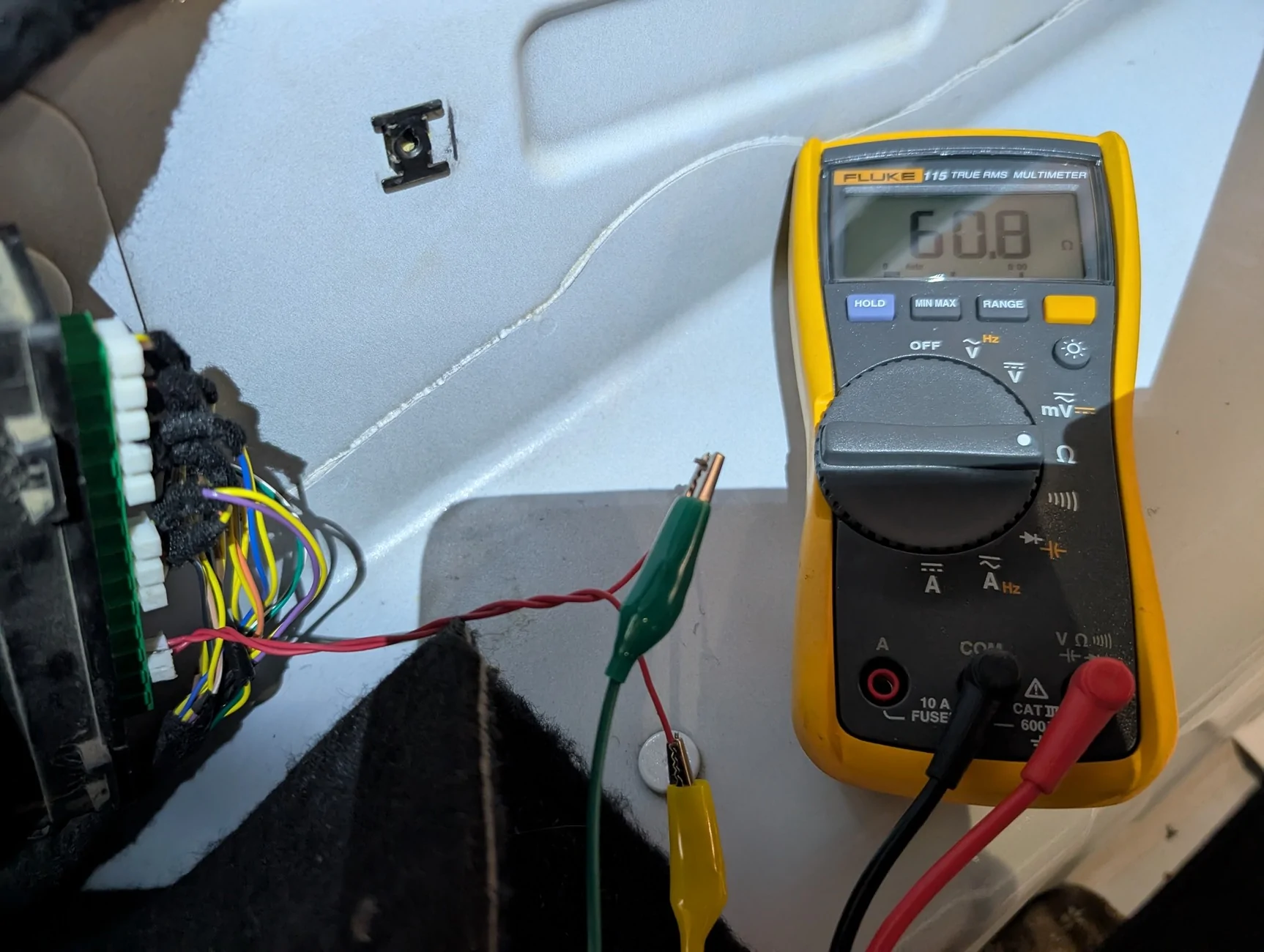
But what if the termination resistors are different from 120 ohm, or there's more than two resistors? Then the bus becomes less robust. It's easy to measure the bus resistance - simply connect an ohmmeter (or DVM) to the CAN+ and CAN- wires, which can be accessed from any of the unused ports on either star block:
Jeep Wrangler JL Tazer mini issues? PXL_20251001_234713799

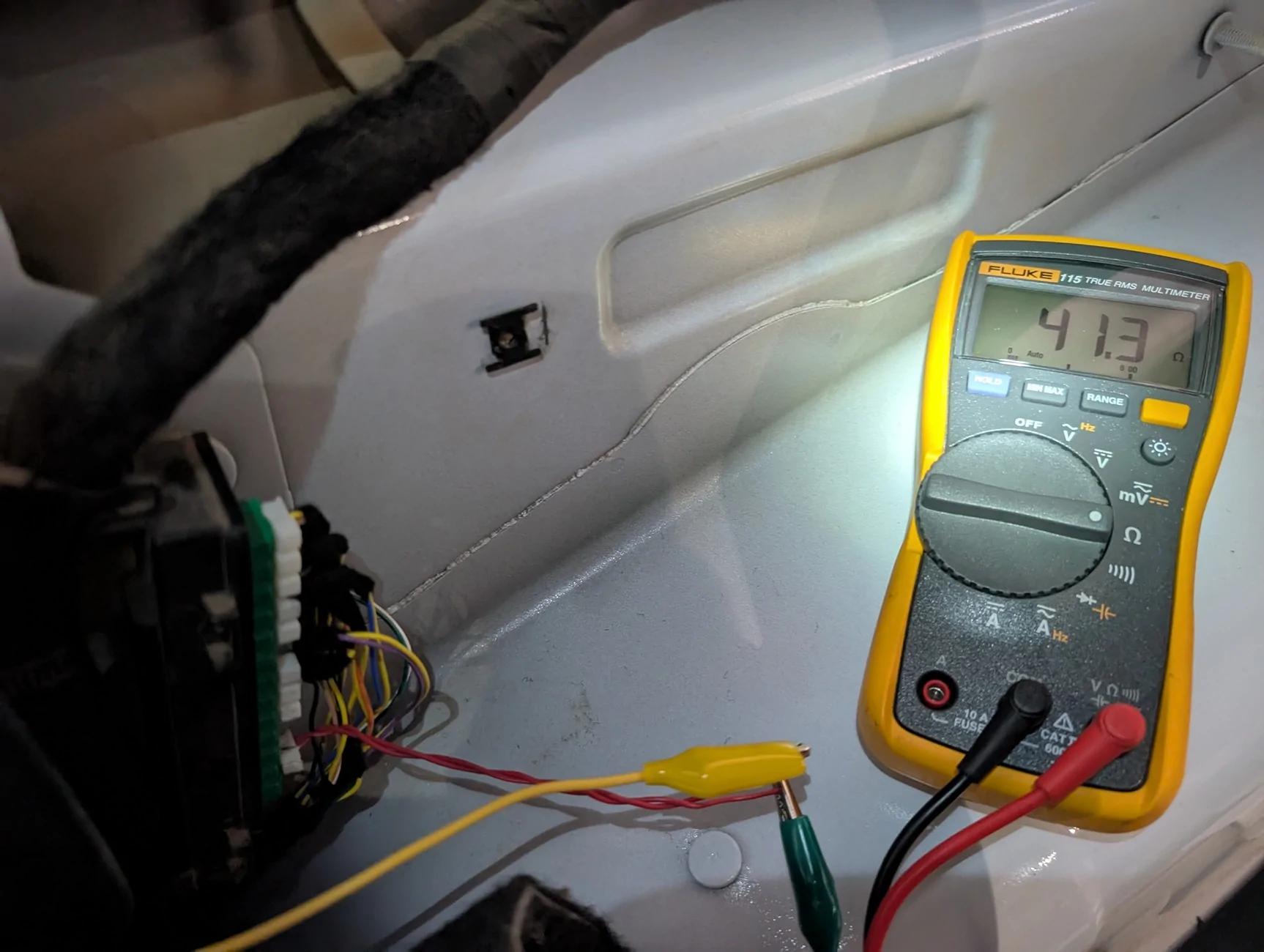
It should measure 60 ohms, which is the equivalent of the two 120 ohm resistors in parallel. If you measure the resistance between CAN+ and CAN- on an unconnected controller, the value will be around 40K ohms, which shows the controllers contribute very little to the overall CAN bus resistance. Now if you have a Tazer installed and do this same measurement, you will find:
Jeep Wrangler JL Tazer mini issues? PXL_20251001_233027985

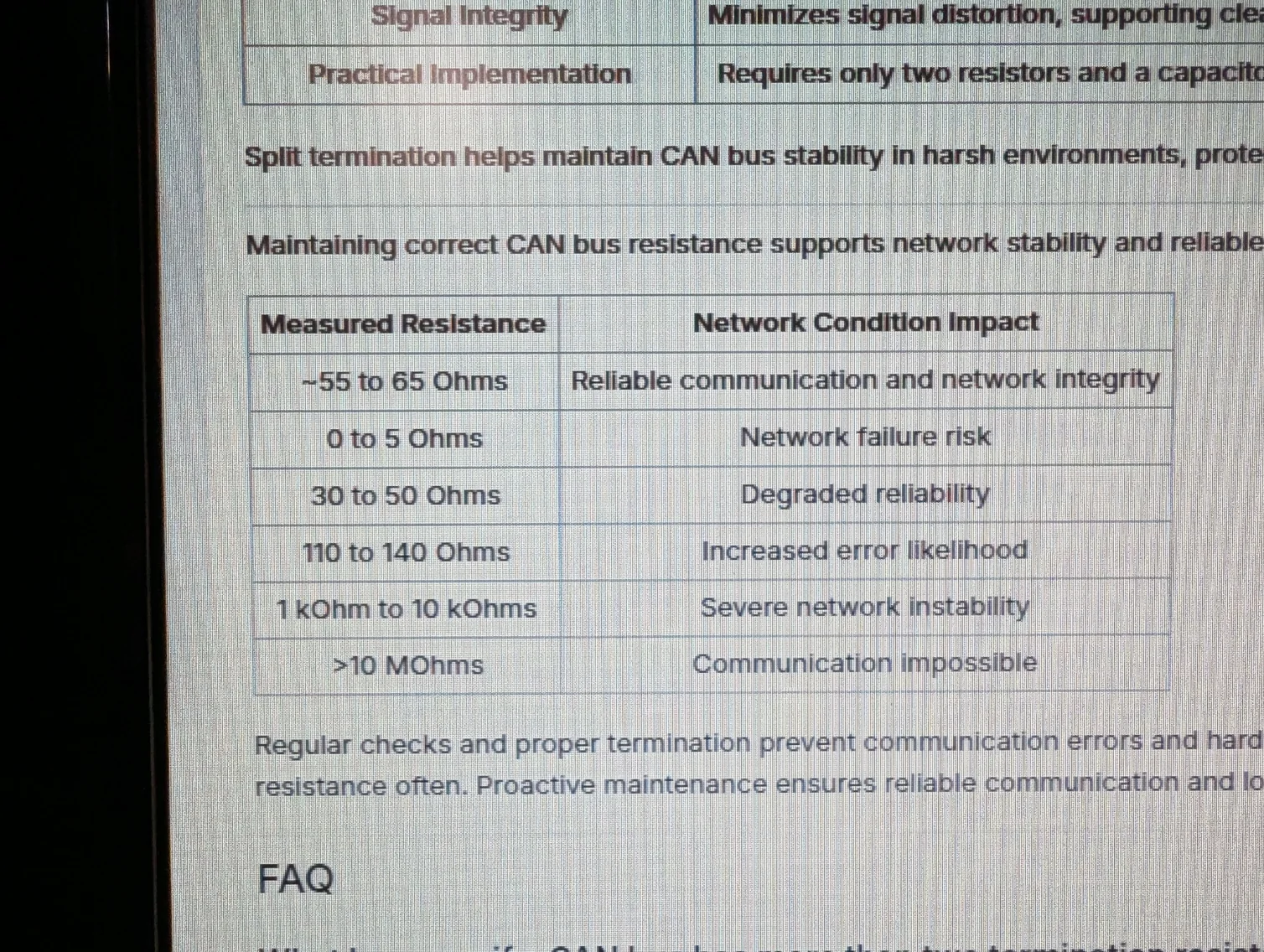
This is not good. The CAN bus design has some margin for the resistance value, but this is a chart I found on a CAN bus troubleshooting page>
Jeep Wrangler JL Tazer mini issues? PXL_20251002_001931670

40 ohms is right in the middle of the degraded reliability range, not good. In a well-designed topology (short stub lengths), this would probably not be a problem and the bus would continue to work, but long stubs are not considered a good topology. So why does the Tazer add an additional 120 ohms (math: three 120 ohm resistors in parallel is equivalent to 40 ohms) ? I sent Zautomotive an email last Sunday and the response on Thursday said the Tazer does not have any termination resistors. Yet, the resistance changes back to 60 ohms when I remove the Tazer. More digging was necessary.

The Tazer Mini is used to bypass the Security Gateway (SGW) module that was introduced in 2018. If you look at the wiring diagrams for the Security Gateway, your see three separate CAN C buses. Along with the main CAN C, there is a Diagnostic CAN C (going to the OBDII port) and a CAN C AT which goes to the radio. These were separated to keep "bad actors" from accessing the main CAN C bus, but also means only the dealer with special software and codes can get in from the OBDII port. The CAN C AT has a terminating resistor in the SGW, and another on the radio. The Diagnostic CAN C has no terminating resistors that I could measure, for reasons I don't understand, but don't matter for the discussion. When the Tazer is plugged in to replace the SGW, the Tazer shorts all three CAN C+ signals together, and separately, all the CAN C- signals together. Now, bad actors and anyone can access the main CAN C from the OBDII port. The real problem though, is the extra termination resistor on the CAN C AT bus at the radio that is now added to the main CAN C bus.

Way back in the day, my swaybar kept giving me these flaky errors which I could not trace down. Others had found chaffing on the harness by the bottom of the radiator, but mine were just fine. Still others said the green block behind the glovebox was the culprit, but replacing that did nothing. Unplugging the connector at the swaybar still left me with flaky CAN bus behavior. I eventually used the Tazer to delete the swaybar and pulled out its module's connection to the green block behind the glove box. Problems went away. Mostly. Then I started getting 4WD and Service Lockers errors intermittently. Eventually used the Tazer to delete the lockers. A month ago I started getting errors again after five years of none. It corresponded to my addition of the RPM Extreme Fan Controller. What does that have to do with it? Just a little - the install connects to, among other wires on the PCM connector, the CAN C+ and CAN C-, extending the stub length by another foot. The PCM CAN lines are also long, like the swaybar, but now long enough to cause signal integrity issues.

I don't think the long stub lengths are the real problem, but they contribute. The extra termination resistor needs to go. My fix is in a follow-on post, but not pretty.

I don't know why, but this extra copy of the first image won't delete no matter what I try. :(

Jeep Wrangler JL Tazer mini issues? PXL_20251002_164259329[1]
 
Last edited:
OP
OP

Bob Burd

Well-Known Member
First Name
Bob
Joined
Apr 23, 2019
Threads
11
Messages
771
Reaction score
1,283
Location
San Jose, CA
Website
www.snwburd.com
Vehicle(s)
2018 JLUR
I haven't heard back from Zautomotive since yesterday, but I suspect they are realizing this is an issue. I would love if they posted comments here, even if to tell me I'm full of shit, and why. I believe the real fix is to keep the CAN C and CAN C AT buses physically separated, but still connected through software layers or other means. This will require some extensive redesign of their product, not something that can be done with a software update.
If you haven't experienced any CAN bus issues with your Tazer plugged in, I suggest leaving it be - probably works just fine on most jeeps. The limited polling above suggests well more than half fall into this category. I want to keep the Tazer plugged in for the Stop/Start live feature, so here's my fix:

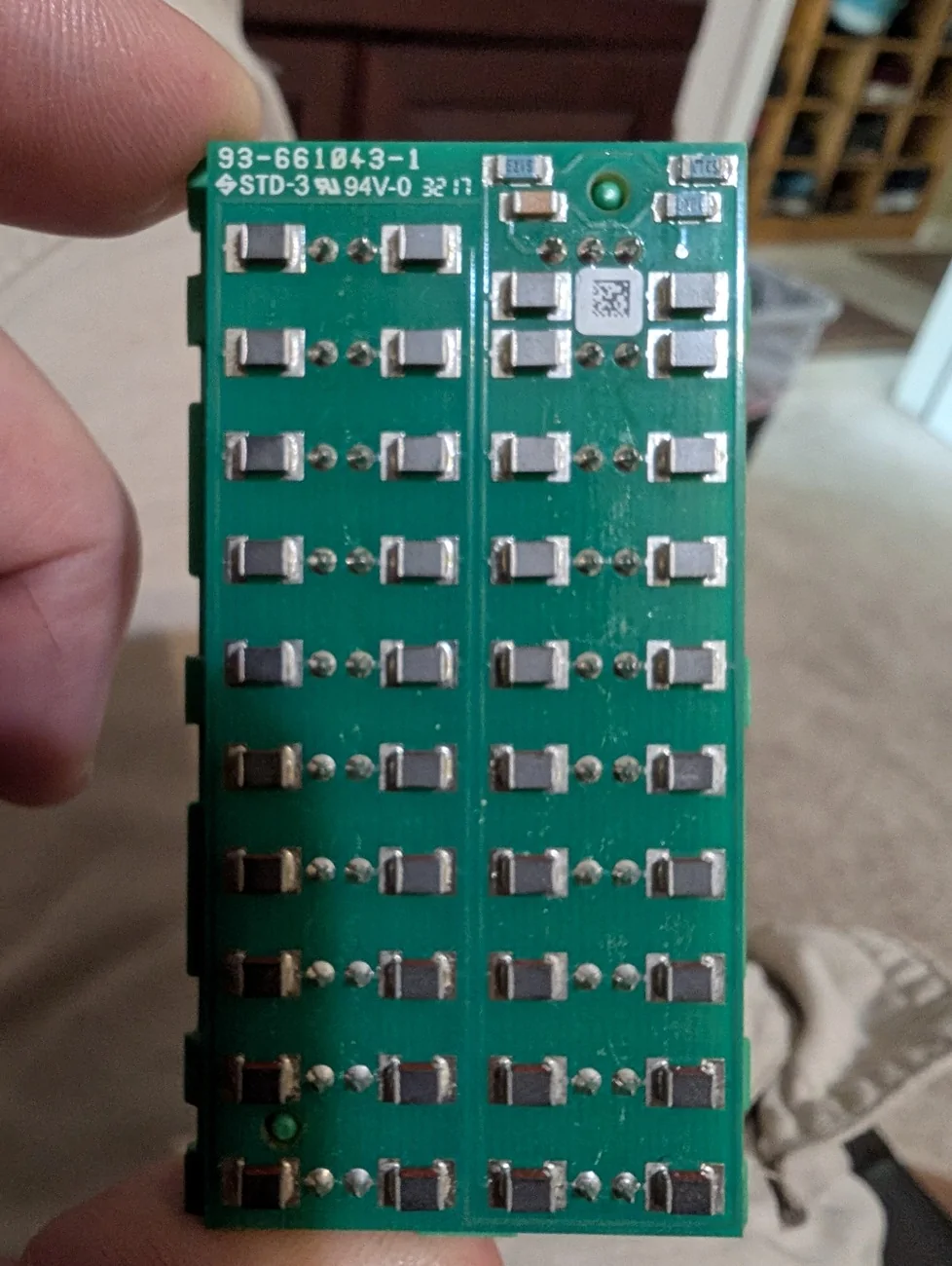
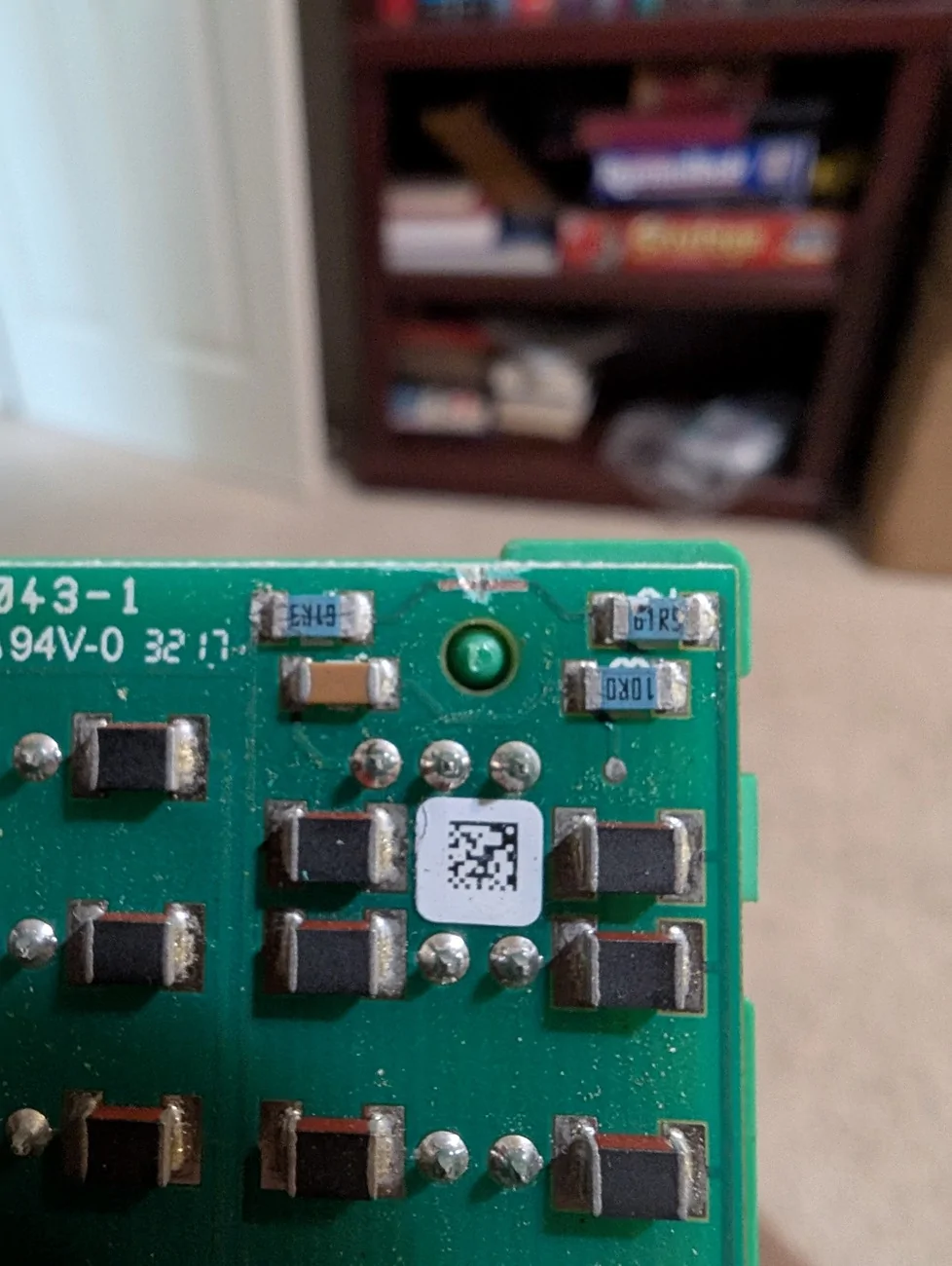
There are now three termination resistors on the combined CAN C/CAN C AT bus, one one each of the CAN C blocks and one on the radio. The CAN C block behind the glove box is in the middle, so removing this resistor is the best option from the topology design. My CAN C bus now extends from the radio on one end to the smaller star block above the wheel well. All stubs remain the same, or shorter. Removing the resistor does not require any soldering. If you take the black backing off the block, you'll see this:
Jeep Wrangler JL Tazer mini issues? PXL_20251001_213056787

For whatever reason (probably for something called split termination), they didn't use a single 120 ohm resistor, but two 60 ohm resistors in series, found in the upper right corner. This actually works to advantage, because instead of using a soldering iron to remove the resistors, I can cut the trace connecting the two with a box cutter or pen knife, effectively removing them from the circuit. There are no signal integrity issues caused by leaving these tiny stubs connected on only one end:
Jeep Wrangler JL Tazer mini issues? PXL_20251001_232649871

It's not a great solution, because now you are dependent on the Tazer being installed permanently. I haven't tried to see how well or bad it runs with a single terminator, but I expect it's not pretty. I had an extra green block from years ago when chasing down the issues with my swaybar, so I can swap the block out if I want to remove the Tazer. Again, not pretty, but it should work. I have about 50mi on my Jeep now with no errors, and my swaybar and lockers are now working again, also without errors.
 
Last edited:

jhmartin

Well-Known Member
First Name
Jason
Joined
Jun 8, 2019
Threads
10
Messages
89
Reaction score
193
Location
Seattle, WA
Vehicle(s)
JLUR
Clubs
 
I'd like to say that is a top-quality post with plenty of specific details which are often frustratingly lacking in problem descriptions. I'm looking forward to hearing what Z says about it. I have encountered some slight flakiness with the mini as well, such as sway bay light suddenly activating when no button was pressed.

Jeeps are known for enough electrical gremlins that top-tier mods really need to be careful about this sort of thing.
 

Ratbert

Well-Known Member
First Name
John
Joined
Jun 20, 2020
Threads
158
Messages
15,967
Reaction score
24,868
Location
PNW
Vehicle(s)
2022 AEV JL370 JLURD
Build Thread
Link
Occupation
Software Engineer
Clubs
 
I have encountered some slight flakiness with the mini as well, such as sway bay light suddenly activating when no button was pressed.
That happened lots with mine when coming off the interstate, but it was after using cruise at speed.
 

Sponsored

ErAcEr

Well-Known Member
First Name
Matthew (Mateo)
Joined
Jun 6, 2019
Threads
5
Messages
399
Reaction score
586
Location
Indianapolis, IN
Vehicle(s)
2018 JLU, 2021 ZH2 , 2018 Z900, 2013 Vulcan 1700
Occupation
Engineer/Technician
My Tazer stopped working maybe a week or so ago. Just got new tires on 12/12/25 and accessed the menu to change the size, all went well. Reboot procedure was fine. Then I noticed the other day that the stop/start wasn't auto turning on, and now I cannot access the Tazer menu from the EVIC. I sent an email to Tazer support, but figured I'd search the threads and post something here if anyone else is able to chime in.
 
OP
OP

Bob Burd

Well-Known Member
First Name
Bob
Joined
Apr 23, 2019
Threads
11
Messages
771
Reaction score
1,283
Location
San Jose, CA
Website
www.snwburd.com
Vehicle(s)
2018 JLUR
Mine stopped working after about 4yrs, same as you, couldn't get menu in EVIC. You can send it back to Zauto and get a refurbished one for something like $45
 

azjl#3

Well-Known Member
First Name
Scott
Joined
Sep 24, 2022
Threads
17
Messages
3,032
Reaction score
3,666
Location
North AZ
Vehicle(s)
2024 silver zenith or atomic silver. JLUR Extreme Recon-ish
Occupation
retired, grumpy, yet, friendly
maybe the canbus connector behind glove box door?

And I'll say it, Batteries real good?
 

ErAcEr

Well-Known Member
First Name
Matthew (Mateo)
Joined
Jun 6, 2019
Threads
5
Messages
399
Reaction score
586
Location
Indianapolis, IN
Vehicle(s)
2018 JLU, 2021 ZH2 , 2018 Z900, 2013 Vulcan 1700
Occupation
Engineer/Technician
Mine stopped working after about 4yrs, same as you, couldn't get menu in EVIC. You can send it back to Zauto and get a refurbished one for something like $45
Well hopefully they will replace it under warranty if thats the case, I bought it back in July.
 

Sponsored

ErAcEr

Well-Known Member
First Name
Matthew (Mateo)
Joined
Jun 6, 2019
Threads
5
Messages
399
Reaction score
586
Location
Indianapolis, IN
Vehicle(s)
2018 JLU, 2021 ZH2 , 2018 Z900, 2013 Vulcan 1700
Occupation
Engineer/Technician
maybe the canbus connector behind glove box door?

And I'll say it, Batteries real good?

Ill be checking the OHMS this weekend since I found the thread (currently at work). But yea, battery is good replaced it a couple years ago with the upgraded H7 or H9 whatever, and isolated the EES battery and pulled the fuse. In the summer months I keep the tender on it since I ride the motorcycle more than the Jeep.
 

Sasquatchilly

New Member
First Name
Thomas
Joined
Jan 1, 2026
Threads
0
Messages
4
Reaction score
4
Location
Texas
Vehicle(s)
Jeep wrangler rubicon 392
I haven't heard back from Zautomotive since yesterday, but I suspect they are realizing this is an issue. I would love if they posted comments here, even if to tell me I'm full of shit, and why. I believe the real fix is to keep the CAN C and CAN C AT buses physically separated, but still connected through software layers or other means. This will require some extensive redesign of their product, not something that can be done with a software update.
If you haven't experienced any CAN bus issues with your Tazer plugged in, I suggest leaving it be - probably works just fine on most jeeps. The limited polling above suggests well more than half fall into this category. I want to keep the Tazer plugged in for the Stop/Start live feature, so here's my fix:

There are now three termination resistors on the combined CAN C/CAN C AT bus, one one each of the CAN C blocks and one on the radio. The CAN C block behind the glove box is in the middle, so removing this resistor is the best option from the topology design. My CAN C bus now extends from the radio on one end to the smaller star block above the wheel well. All stubs remain the same, or shorter. Removing the resistor does not require any soldering. If you take the black backing off the block, you'll see this:
PXL_20251001_213056787.webp

For whatever reason (probably for something called split termination), they didn't use a single 120 ohm resistor, but two 60 ohm resistors in series, found in the upper right corner. This actually works to advantage, because instead of using a soldering iron to remove the resistors, I can cut the trace connecting the two with a box cutter or pen knife, effectively removing them from the circuit. There are no signal integrity issues caused by leaving these tiny stubs connected on only one end:
PXL_20251001_232649871.webp

It's not a great solution, because now you are dependent on the Tazer being installed permanently. I haven't tried to see how well or bad it runs with a single terminator, but I expect it's not pretty. I had an extra green block from years ago when chasing down the issues with my swaybar, so I can swap the block out if I want to remove the Tazer. Again, not pretty, but it should work. I have about 50mi on my Jeep now with no errors, and my swaybar and lockers are now working again, also without errors.
I watched a video, I believe it was one of ZTazer's very own videos about the cause of the service 4 wheel drive issue with the lockers. They supposedly use Hall effect sensors and the magnet gets covered up in metal powder
from the wearing of the ring & pinion gear set over time. Removing the differential covers and cleaning them off. It could be worth trying IMHO.
 

Vtur

Active Member
Joined
Sep 10, 2022
Threads
0
Messages
25
Reaction score
23
Location
Norcal
Vehicle(s)
Gladiator
You can add a 20R in series. I did this with my homemade sgw bypass module.
Sponsored


Top