
Sponsored

Mods please delete

Status
Not open for further replies.

AnnDee4444

Well-Known Member
Joined
Jan 14, 2019
Threads
54
Messages
5,529
Reaction score
7,948
Location
Vehicle(s)
'18 JLR 2.0
Maybe I'm overly hesitant to believe everything you say, but you're not just making things up, right?
I've done work all over the United States, specifically with electric service panels. Sizes & styles vary by region, but the overwhelming majority are 100A or more. I've never seen a single-family residence under 60A.


But I could be making this up, or I could be a dog.

Jeep Wrangler JL Mods please delete Internet_do
Sponsored


Zandcwhite

Well-Known Member
First Name
Zach
Joined
Sep 4, 2019
Threads
11
Messages
8,283
Reaction score
14,168
Location
Patterson, ca
Vehicle(s)
2019 jlur
I've done work all over the United States, specifically with electric service panels. Sizes & styles vary by region, but the majority are 100A or more. I've never seen a single-family residence under 60A.


But I could be making this up, or I could be a dog.

Internet_dog.jpg
And if you happen to be in an old home with a 60A service you can always upgrade. My house was built in 1935. It had a 60A service when I bought it. Now it has a 200A service. That's the beauty of EV, you can upgrade your own fuel delivery...at home. If I were commuting in my own vehicle I'd add solar too. Currently our power use is low enough I don't feel the need.
 

AnnDee4444

Well-Known Member
Joined
Jan 14, 2019
Threads
54
Messages
5,529
Reaction score
7,948
Location
Vehicle(s)
'18 JLR 2.0
And if you happen to be in an old home with a 60A service you can always upgrade. My house was built in 1935. It had a 60A service when I bought it. Now it has a 200A service. That's the beauty of EV, you can upgrade your own fuel delivery...at home. If I were commuting in my own vehicle I'd add solar too. Currently our power use is low enough I don't feel the need.
Not always... well actually anything is possible, it just might not make sense financially.

A panel upgrade could trigger other utility issues (transformer, wire, in-ground conduits, etc.). Then again I've also heard that insurance companies have started raising rates (or canceling) with older electric panels, so a main panel upgrade could possibly save money... or even fire damage.
 

Zandcwhite

Well-Known Member
First Name
Zach
Joined
Sep 4, 2019
Threads
11
Messages
8,283
Reaction score
14,168
Location
Patterson, ca
Vehicle(s)
2019 jlur
Not always... well actually anything is possible, it just might not make sense financially.

A panel upgrade could trigger other utility issues (transformer, wire, in-ground conduits, etc.). Then again I've also heard that insurance companies have started raising rates (or canceling) with older electric panels, so a main panel upgrade could possibly save money... or even fire damage.
True, but I don't think I've ever seen an underground service under 100A or a transformer and service drop that small. Typically the poles and transformers in these old neighborhoods were already upgraded in my experience. Not anyways to the point of supporting a 200A service, but 100A would be plenty assuming you're charging at night when use is low. Even in the hottest climates the AC doesn't run a lot in the middle of the night. In cold climate almost nobody runs of straight electric heating.
 

AnnDee4444

Well-Known Member
Joined
Jan 14, 2019
Threads
54
Messages
5,529
Reaction score
7,948
Location
Vehicle(s)
'18 JLR 2.0
True, but I don't think I've ever seen an underground service under 100A or a transformer and service drop that small. Typically the poles and transformers in these old neighborhoods were already upgraded in my experience. Not anyways to the point of supporting a 200A service, but 100A would be plenty assuming you're charging at night when use is low. Even in the hottest climates the AC doesn't run a lot in the middle of the night. In cold climate almost nobody runs of straight electric heating.
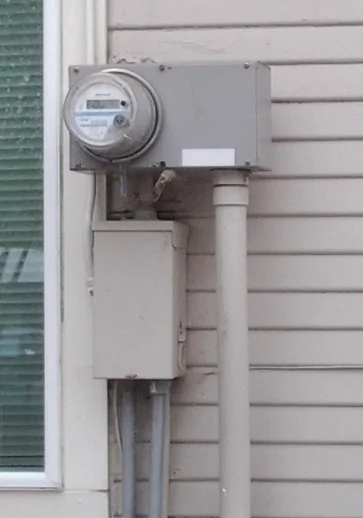
Underground conversions aren't that uncommon with old houses in city environments, but again everything varies by region. If I remember correctly, I've seen this mostly in Southern California (LADWP & SCE)

The top box is a retrofit that plugs into the meter socket, specifically for feeding underground. This house was likely overhead when built.

Jeep Wrangler JL Mods please delete Screenshot 2024-09-19 165121
 

Sponsored

TheRaven

Well-Known Member
Joined
Oct 22, 2020
Threads
6
Messages
2,844
Reaction score
4,176
Location
Reading, Pennsylvania
Vehicle(s)
Sold
I've done work all over the United States, specifically with electric service panels. Sizes & styles vary by region, but the overwhelming majority are 100A or more. I've never seen a single-family residence under 60A.
The vast majority ARE 100A. There are many 80A and 60A also...and of course the 150A and 200A. But the most common electrical service in the country is 100A.

Obviously you can upgrade your service...but that's no small project, and a lot to ask for someone just to buy a vehicle when they can simply choose an ICE-powered one and continue living their life.

One is really pushing the limits with a level 2 charger, AC, and the requisite basics on 80A (the practical limit of a 100A service). And that's only charging ONE vehicle.
 

AnnDee4444

Well-Known Member
Joined
Jan 14, 2019
Threads
54
Messages
5,529
Reaction score
7,948
Location
Vehicle(s)
'18 JLR 2.0
The vast majority ARE 100A. There are many 80A and 60A also...and of course the 150A and 200A. But the most common electrical service in the country is 100A.
So uh... got a source?

In addition to those sizes, 125A, 225A, & 400A are not extremely uncommon.
 

Zandcwhite

Well-Known Member
First Name
Zach
Joined
Sep 4, 2019
Threads
11
Messages
8,283
Reaction score
14,168
Location
Patterson, ca
Vehicle(s)
2019 jlur
The vast majority ARE 100A. There are many 80A and 60A also...and of course the 150A and 200A. But the most common electrical service in the country is 100A.
Which is still plenty to charge an EV at night when all your other appliances are off/ at their lowest usage. Sure if you went full EV adoption with multiple vehicles you'd need to upgrade, but like pushing for fringe examples in order to claim EV isn't accessible to anyone who wants it right now. It's not accessible if everyone in America wanted it tomorrow, although if you are ready to go out and purchase several $50-150k vehicles tomorrow I think you can afford a service upgrade?
 

TheRaven

Well-Known Member
Joined
Oct 22, 2020
Threads
6
Messages
2,844
Reaction score
4,176
Location
Reading, Pennsylvania
Vehicle(s)
Sold
So uh... got a source?

In addition to those sizes, 125A, 225A, & 400A are not extremely uncommon.
The source is I. One of my many stops in my career path was LEED-certified EMS/BMS architect. Like you, I know a lot about electrical distribution.

I know I know, that's not good enough. Whatever, I don't care.

Which is still plenty to charge an EV at night when all your other appliances are off/ at their lowest usage. Sure if you went full EV adoption with multiple vehicles you'd need to upgrade, but like pushing for fringe examples in order to claim EV isn't accessible to anyone who wants it right now. It's not accessible if everyone in America wanted it tomorrow, although if you are ready to go out and purchase several $50-150k vehicles tomorrow I think you can afford a service upgrade?
It's not a fringe example. It's an example that the largest segment of the population falls into. And yes, if you are determined and have the funding, you can get around the problem. But you can also just buy ICE or Hybrid and save all that time and money. That's why this is a barrier to EV adoption.
 

Zandcwhite

Well-Known Member
First Name
Zach
Joined
Sep 4, 2019
Threads
11
Messages
8,283
Reaction score
14,168
Location
Patterson, ca
Vehicle(s)
2019 jlur
So uh... got a source?

In addition to those sizes, 125A, 225A, & 400A are not extremely uncommon.
For a single family dwelling I'd say 400A is pretty uncommon? Multi-family or ag/farm use for sure though. Even the 1 bedroom apartments these days get a 125A.
 
Last edited:

Sponsored

Zandcwhite

Well-Known Member
First Name
Zach
Joined
Sep 4, 2019
Threads
11
Messages
8,283
Reaction score
14,168
Location
Patterson, ca
Vehicle(s)
2019 jlur
The source is I. One of my many stops in my career path was LEED-certified EMS/BMS architect. Like you, I know a lot about electrical distribution.

I know I know, that's not good enough. Whatever, I don't care.


It's not a fringe example. It's an example that the largest segment of the population falls into. And yes, if you are determined and have the funding, you can get around the problem. But you can also just buy ICE or Hybrid and save all that time and money. That's why this is a barrier to EV adoption.
Which part isn't a fringe example? People with a sub 100A service? Even if you're assumption that most have a 100A service, that's still plenty. Odds are that's not a 5k sqft home so the 2.5 ton AC is drawing ~20A at full load? Even a 30A L2 charger is enough to charge the largest tesla pack from 0-100% (which you never want to do) in under 10 hours. Even in the desert southwest where the AC will run a lot throughout the night, your secondary loads while you sleep aren't drawing a continously 30A...on both phases to even get you to the 80% of your 100A panel. Sure if you're trying to slow roast a brisket in the oven overnight you might be flirting with the limit, but I'd argue that ~200⁰ oven is running much and you shouldn't be ruining a brisket in an electric oven anyway. Or maybe Billy Bob is tweaking and trying to weld up yard art all night? He's probably tied into the neighbors service stealing power anyway.
 

TheRaven

Well-Known Member
Joined
Oct 22, 2020
Threads
6
Messages
2,844
Reaction score
4,176
Location
Reading, Pennsylvania
Vehicle(s)
Sold
Which part isn't a fringe example? People with a sub 100A service? Even if you're assumption that most have a 100A service, that's still plenty. Odds are that's not a 5k sqft home so the 2.5 ton AC is drawing ~20A at full load? Even a 30A L2 charger is enough to charge the largest tesla pack from 0-100% (which you never want to do) in under 10 hours. Even in the desert southwest where the AC will run a lot throughout the night, your secondary loads while you sleep aren't drawing a continously 30A...on both phases to even get you to the 80% of your 100A panel. Sure if you're trying to slow roast a brisket in the oven overnight you might be flirting with the limit, but I'd argue that ~200⁰ oven is running much and you shouldn't be ruining a brisket in an electric oven anyway.
Level 2 charger = 30A
old-ass 2-ton (or larger) AC unit = 30A
Refrigerator = 10A

Doing the math, that leaves 10A for EVERYTHING ELSE before you hit the practical limit for a 100A service. Don't use the microwave lol. Sure, if someone buys a brand new, energy efficient central air system and refrigerator the draw will be a lot less...but again, a lot to ask when they can just buy a hybrid or EV.

And again...thats one vehicle. Nearly 40% of American households own at least two vehicles.

You know I mentioned before that you and I mostly agree...we don't need to continue using up all this thread space on a minor part of our debate.
 

Zandcwhite

Well-Known Member
First Name
Zach
Joined
Sep 4, 2019
Threads
11
Messages
8,283
Reaction score
14,168
Location
Patterson, ca
Vehicle(s)
2019 jlur
Level 2 charger = 30A
old-ass 2-ton (or larger) AC unit = 30A
Refrigerator = 10A

Doing the math, that leaves 10A for EVERYTHING ELSE before you hit the practical limit for a 100A service. Sure, if someone buys a brand new, energy efficient central air system and refrigerator the draw will be a lot less...but again, a lot to ask when they can just buy a hybrid or EV.

And again...one vehicle. Nearly 40% of American households own at least two vehicles.

You know I mentioned before that you and I mostly agree...we don't need to continue using up all this thread space on a minor part of our debate.
Your fridge is only on 1 phase, so technically you've still got 30A at 120v as pretty much everything else in your house is 120V. Again it's plenty. I disagree that the practical limit is 80A on a 100A service anyway as things like your AC and refrigerator are intermittent loads that are typically idle more than they are running. You wouldn't have any issues running the full 100A with basically every load in your house at night being intermittent aside from the charger. If you're talking one of the small EVs like a leaf, you can get a 15A charger and it would still charge overnight. It's just not an issue in the majority of homes. Yes the fringe cases exist, but if you've still got that 60A fused main panel I'm guessing you're entire electrical system is a fire hazard of know and tube or aluminum wire and you need a whole bunch of upgrades.
 

TheRaven

Well-Known Member
Joined
Oct 22, 2020
Threads
6
Messages
2,844
Reaction score
4,176
Location
Reading, Pennsylvania
Vehicle(s)
Sold
Your fridge is only on 1 phase, so technically you've still got 30A at 120v as pretty much everything else in your house is 120V. Again it's plenty. I disagree that the practical limit is 80A on a 100A service anyway as things like your AC and refrigerator are intermittent loads that are typically idle more than they are running. You wouldn't have any issues running the full 100A with basically every load in your house at night being intermittent aside from the charger. If you're talking one of the small EVs like a leaf, you can get a 15A charger and it would still charge overnight. It's just not an issue in the majority of homes. Yes the fringe cases exist, but if you've still got that 60A fused main panel I'm guessing you're entire electrical system is a fire hazard of know and tube or aluminum wire and you need a whole bunch of upgrades.
All these workarounds, and "oh it's not a big deal" things you bring up add up to exactly what i'm getting at. All these things are barriers to EV adoption. They're all problems we need to solve before the public is ready for mass EV-adoption. I mean, yeah, TECHNICALLY, you can get away with these things, like you said. But this is you and I talking, guys who know the physical rules. The average Joe who is considering an EV knows none of this...and when they call that licensed electrician to install a level 2 charger, we both know he's not going to take on that liability. He's going to explain to that customer that they need a service upgrade, and then that customer is going to realize "crap, this is just for ONE car...what happens when my wife wants an EV too?!".

The bottom line is between these service issues and the state of electrical distribution in this country, we are a very long way off from large-scale EV adoption. We need better battery tech, we need better charging tech, we need huge, expensive, time-consuming grid upgrades. It's a lot.
 
Status
Not open for further replies.


Top