
Sponsored

Jumperless Aux Battery Bypass

kakwvu

Well-Known Member
First Name
Kyle
Joined
Oct 10, 2021
Threads
3
Messages
206
Reaction score
438
Location
Ripley, WV
Vehicle(s)
‘24 JLU Rubicon X
You had the Smart Stop Start brand that had trouble or a similar device. I ordered a Smart Stop Start Friday. I saw it recommended a few times in this thread.
It was that brand. It’s not a common issue, tech couldn’t find anything about it in the database using the error message I recorded while I stood next to him. I removed it a few days later and never got it again. Can’t prove it was that because no code, but the issue resolved once it was gone.

I’ve driven enough vehicles with start stop now that I just accept defeat lol. I’m sure it’ll be fine for you, but if you get that message (it populates in the digital part of your cluster), remove and see if it comes back.
Sponsored

 

noquartergiven

Well-Known Member
Joined
Sep 24, 2021
Threads
5
Messages
66
Reaction score
93
Location
New Jersey
Vehicle(s)
2021 JL Sport S
Just a note of thanks to @Jebiruph and others who added helpful info for this hack. Just did it on my '21...very straightforward. Got the ESS warning light last night. Done. Have the start stop eliminator already installed so I'm good to go.

Tip to others: Read all the instructions and cross posts about the cable change for MY 21+.

:rock:
 

JLRik

Well-Known Member
First Name
Rik
Joined
Oct 28, 2024
Threads
0
Messages
56
Reaction score
17
Location
Thousand Oaks CA
Vehicle(s)
2019 JL Rubicon
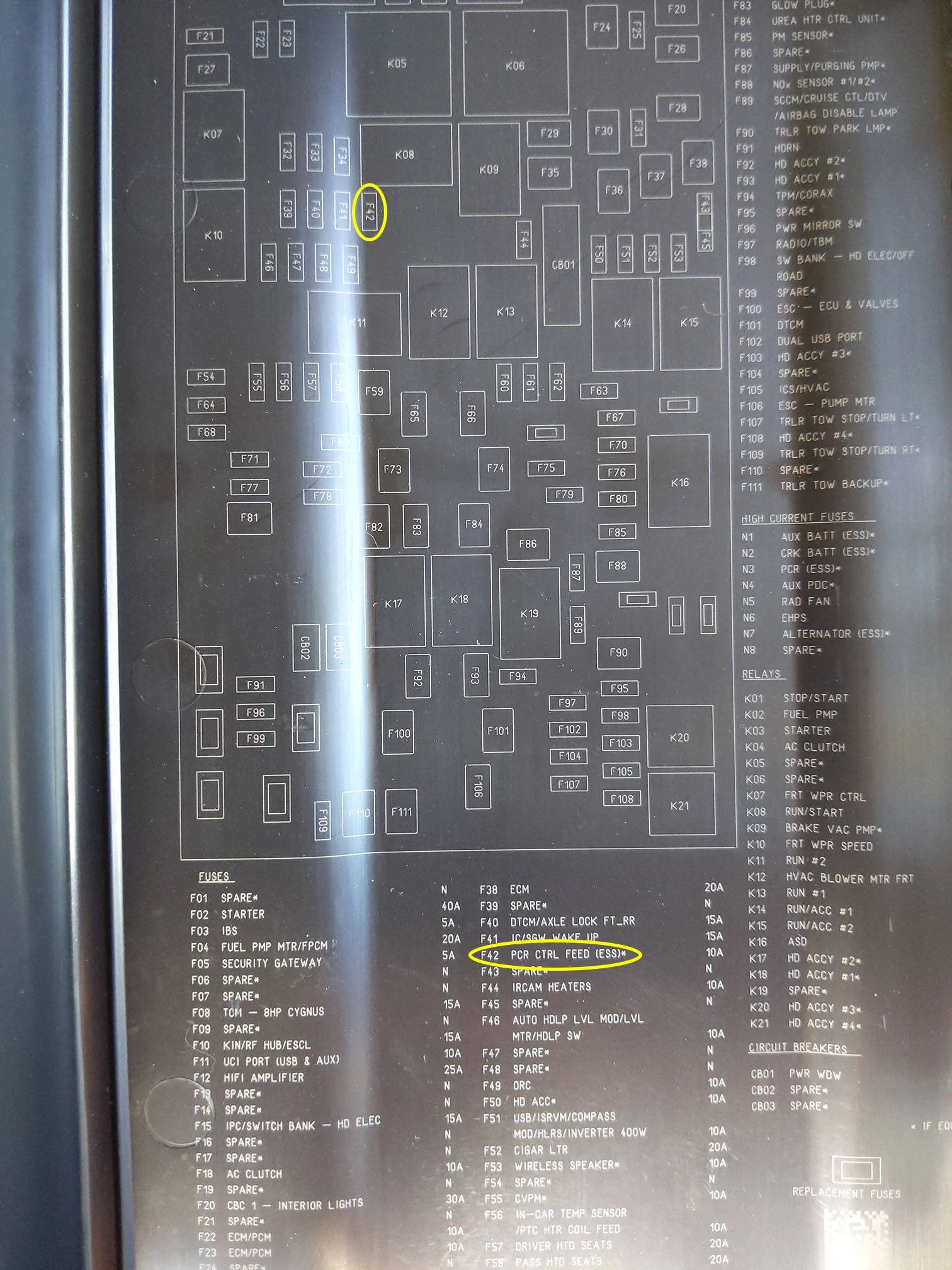
While working on another project, I was looking at the fuse descriptions on the underside of the PDC cover and saw this - F42 PCR CTRL FEED (ESS)*. Could it really be this easy? Yes it is. I pulled the fuse, disconnected the aux negative cable from the main battery negative post and it started right up without any errors.

Unplugging the PCR has always been an alternative to using an N1 N2 fused jumper, both methods defeat the aux battery pass/fail test that occurs prior to a cold start. Unlike using a jumper, unplugging the PCR doesn't require any additional parts, it's just not easy to get to the PCR plug. Removing the F42 fuse accomplishes the same thing as unplugging the PCR and the fuse is easy to get to.

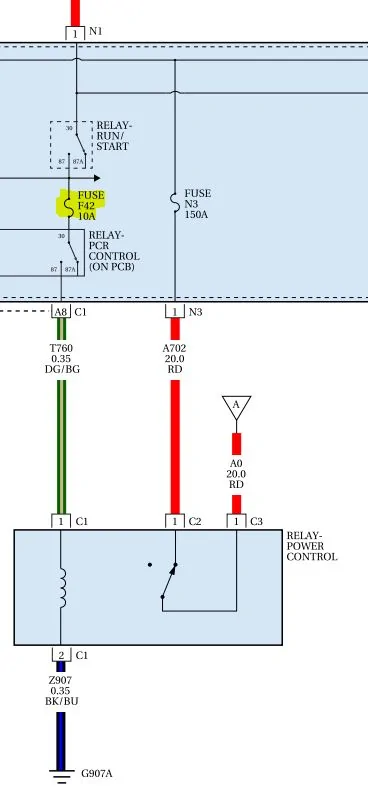
Other than a couple starts, I haven't had the chance for real world testing, but I did look at the schematic and verified that pulling the fuse accomplishes the same thing as unplugging the PCR, both prevent the relay from activating.

Here's the underside of the PDC cover showing the description and location of the fuse.
PCR fuse PDC.jpg


Here's the fuse location with the fuse removed.
PCR fuse PDC 2.jpg


Here's the schematic showing the fuse in the circuit.
pcr fuse 2.JPG
While working on another project, I was looking at the fuse descriptions on the underside of the PDC cover and saw this - F42 PCR CTRL FEED (ESS)*. Could it really be this easy? Yes it is. I pulled the fuse, disconnected the aux negative cable from the main battery negative post and it started right up without any errors.

Unplugging the PCR has always been an alternative to using an N1 N2 fused jumper, both methods defeat the aux battery pass/fail test that occurs prior to a cold start. Unlike using a jumper, unplugging the PCR doesn't require any additional parts, it's just not easy to get to the PCR plug. Removing the F42 fuse accomplishes the same thing as unplugging the PCR and the fuse is easy to get to.

Other than a couple starts, I haven't had the chance for real world testing, but I did look at the schematic and verified that pulling the fuse accomplishes the same thing as unplugging the PCR, both prevent the relay from activating.

Here's the underside of the PDC cover showing the description and location of the fuse.
PCR fuse PDC.jpg


Here's the fuse location with the fuse removed.
PCR fuse PDC 2.jpg


Here's the schematic showing the fuse in the circuit.
pcr fuse 2.JPG
Hello! I pulled the fuse as you instructed and disconnected the negative aux battery cable. When I cycle to the Autostop "feature," I get a "battery protection mode" message. Should that be the case with fuse pulled/negative disconnected? I recently purchased the Jeep (2019 3.6), and the reason I wanted to bypass the aux is because my initial message was the low charge one...and I figured that at 4 years old the aux battery is on its way out (main battery was replaced in 2022 based on the date code).

I was thinking of buying the auto stop disable, but wondering if that's a necessity given the message I'm getting.
 

Sponsored

joliett

Well-Known Member
First Name
Joel
Joined
May 12, 2021
Threads
17
Messages
118
Reaction score
64
Location
New York
Vehicle(s)
2021 Rubicon
Auto stop disable is not required or necessary. I just disable the auto start with the switch on the dash whenever I remember. Easy peasy.

Been running like this for a year.
 

Ratbert

Well-Known Member
First Name
John
Joined
Jun 20, 2020
Threads
159
Messages
16,163
Reaction score
25,238
Location
PNW
Vehicle(s)
2022 AEV JL370 JLURD
Build Thread
Link
Occupation
Software Engineer
Clubs
 
Hello! I pulled the fuse as you instructed and disconnected the negative aux battery cable. When I cycle to the Autostop "feature," I get a "battery protection mode" message. Should that be the case with fuse pulled/negative disconnected? I recently purchased the Jeep (2019 3.6), and the reason I wanted to bypass the aux is because my initial message was the low charge one...and I figured that at 4 years old the aux battery is on its way out (main battery was replaced in 2022 based on the date code).

I was thinking of buying the auto stop disable, but wondering if that's a necessity given the message I'm getting.
If you've done all that and are still getting the warning then it's extremely likely that your main is on its way out.

If you're thinking about getting something that will make clicking the button unnecessary then look at getting a Tazer. It's not cheap, but it does what you're looking for plus a crapload more. There are, of course, cheaper alternatives that don't do as much.
 

AndySpill

Well-Known Member
First Name
Andy
Joined
Oct 24, 2023
Threads
72
Messages
1,659
Reaction score
1,273
Location
Pittsburgh
Vehicle(s)
2018 JL Sahara
Hello! I pulled the fuse as you instructed and disconnected the negative aux battery cable. When I cycle to the Autostop "feature," I get a "battery protection mode" message. Should that be the case with fuse pulled/negative disconnected? I recently purchased the Jeep (2019 3.6), and the reason I wanted to bypass the aux is because my initial message was the low charge one...and I figured that at 4 years old the aux battery is on its way out (main battery was replaced in 2022 based on the date code).

I was thinking of buying the auto stop disable, but wondering if that's a necessity given the message I'm getting.
When you pull Fuse 42 and take the ESS/Aux battery out of the electrical schematic of the dual AGM battery JL: as you have reported doing, all calls by the vehicle to isolate the ESS/Aux battery, as normally happen for an instant at cold crank to test the ESS/Aux battery, and during ESS events, now get routed to all available batteries, of which you only have one: your main battery.

This is because by pulling Fuse 42 you deny the Power Control Relay (PCR) the ability to be energized--something the vehicle produces no error code on when this happens, and only when the PCR is energized can the batteries be separated.

The error messages you describe sound like they are happening because your main battery may need replacement, and your JL's test of (what it thinks is) the ESS/Aux battery, but is really the main battery, showed this main battery to be lacking in power when it, rather than the ESS/Aux battery was the one that got tested due to the cable and fuse pull.

IMHO the disabling of ESS events because of a potential need to replace your main battery--which I think BTW that you should load test--is not the way to approach turning off ESS any more than running your sedan with its "bagel" spare should be a way to force you to not speed on the highway--if you catch my analogy. The way to do it is to have a vehicle with sufficient battery power that "could" run ESS events, but doesn't because you've pressed the ESS off button or acquired aftermarket tech to do this for you.

There is yet another way to approach this, I don't recommend, but I'll offer it for completeness sake. That is to reinsert Fuse 42 but leave the ESS battery disconnected.

If you do this your first attempt to crank after effecting this change should fail, no current detected from a disconnected ESS battery, but subsequent attempts to crank should be successful if your main battery has adequate power, all while your vehicle will put the ESS off light on the dash.

People normally don't like these warning lights, and people in the know here have advised against this approach because the appearance of this ESS off warning light sometimes signals problems that having the light on all the time might mask...but it is a way to both run with a fully charged main battery and have the vehicle turn ESS off for you.
 

JLRik

Well-Known Member
First Name
Rik
Joined
Oct 28, 2024
Threads
0
Messages
56
Reaction score
17
Location
Thousand Oaks CA
Vehicle(s)
2019 JL Rubicon
When you pull Fuse 42 and take the ESS/Aux battery out of the electrical schematic of the dual AGM battery JL: as you have reported doing, all calls by the vehicle to isolate the ESS/Aux battery, as normally happen for an instant at cold crank to test the ESS/Aux battery, and during ESS events, now get routed to all available batteries, of which you only have one: your main battery.

This is because by pulling Fuse 42 you deny the Power Control Relay (PCR) the ability to be energized--something the vehicle produces no error code on when this happens, and only when the PCR is energized can the batteries be separated.

The error messages you describe sound like they are happening because your main battery may need replacement, and your JL's test of (what it thinks is) the ESS/Aux battery, but is really the main battery, showed this main battery to be lacking in power when it, rather than the ESS/Aux battery was the one that got tested due to the cable and fuse pull.

IMHO the disabling of ESS events because of a potential need to replace your main battery--which I think BTW that you should load test--is not the way to approach turning off ESS any more than running your sedan with its "bagel" spare should be a way to force you to not speed on the highway--if you catch my analogy. The way to do it is to have a vehicle with sufficient battery power that "could" run ESS events, but doesn't because you've pressed the ESS off button or acquired aftermarket tech to do this for you.

There is yet another way to approach this, I don't recommend, but I'll offer it for completeness sake. That is to reinsert Fuse 42 but leave the ESS battery disconnected.

If you do this your first attempt to crank after effecting this change should fail, no current detected from a disconnected ESS battery, but subsequent attempts to crank should be successful if your main battery has adequate power, all while your vehicle will put the ESS off light on the dash.

People normally don't like these warning lights, and people in the know here have advised against this approach because the appearance of this ESS off warning light sometimes signals problems that having the light on all the time might mask...but it is a way to both run with a fully charged main battery and have the vehicle turn ESS off for you.
Thanks! My main battery is relatively new, and although I didn't load test it yet I had it on trickle charge and it works fine to crank the car/run everything with no fault codes. Alternator shows charging anywhere from 14.2 to 14.3, so I guess my next question is is the ESS management system so sensitive as to test the main battery/the aux battery for an anomaly that would only show up under only the load test?

I ordered something to disable the stupid auto start, but being mechanically OCD I just wanted to make sure that everything was working as it should even before I disable it (before I install it).

The Auto stop system cycles through the usual things like seat belt disconnected, temperature not yet where it needs to be, etc etc but after all those clear the one that sticks is the battery protection mode one. Is it common for the main battery to be functioning seemingly as it should yet still have something wrong with it (sulfation/cell about to bad) that would trigger the battery protection mode even without showing any other signs?
 

AndySpill

Well-Known Member
First Name
Andy
Joined
Oct 24, 2023
Threads
72
Messages
1,659
Reaction score
1,273
Location
Pittsburgh
Vehicle(s)
2018 JL Sahara
Thanks! My main battery is relatively new, and although I didn't load test it yet I had it on trickle charge and it works fine to crank the car/run everything with no fault codes. Alternator shows charging anywhere from 14.2 to 14.3, so I guess my next question is is the ESS management system so sensitive as to test the main battery/the aux battery for an anomaly that would only show up under only the load test?

I ordered something to disable the stupid auto start, but being mechanically OCD I just wanted to make sure that everything was working as it should even before I disable it (before I install it).

The Auto stop system cycles through the usual things like seat belt disconnected, temperature not yet where it needs to be, etc etc but after all those clear the one that sticks is the battery protection mode one. Is it common for the main battery to be functioning seemingly as it should yet still have something wrong with it (sulfation/cell about to bad) that would trigger the battery protection mode even without showing any other signs?
Hi Rik:

I appreciate that your main battery is relatively new. But this said, if you said it, I missed when it was that you disconnected the ESS/Aux battery and what state that battery was in when you severed its connection to the vehicle's electrical system.

Sadly, one of the downsides to batteries in parallel, as found in the dual AGM battery JL design is that when one battery goes bad (and I'm not saying your ESS/Aux battery is or went bad, but if it was on its way out) the other battery is often taken out with it. This is because the bad battery becomes a black hole for the power of the good battery, not being charged from the power lost from the good battery, but rather that power from the good battery being lost from the vehicle's electrical system all together. This is why it's recommended that those running both batteries replace them when either goes bad.

A bad battery in this system can be like two beakers of water, connected at the bottom by a tube, where one of the beakers has a hole in it near its base. In absence of the hole, water, like voltage, seeks is own level and becomes equally high in both beakers. But with the hole, power in both batteries (water in the tubes) leaves the system altogether.

Do get the main battery load tested. You're problems may reside elsewhere or in multiple places but I believe it most prudent to rule in or out whether your main battery is capable of both delivering and accepting charge well (i.e. that which a battery needs to do): a function that a load tester (as opposed to a multimeter) seeks to establish.

Best of luck.
 

Sponsored

JLRik

Well-Known Member
First Name
Rik
Joined
Oct 28, 2024
Threads
0
Messages
56
Reaction score
17
Location
Thousand Oaks CA
Vehicle(s)
2019 JL Rubicon
Hi Rik:

I appreciate that your main battery is relatively new. But this said, if you said it, I missed when it was that you disconnected the ESS/Aux battery and what state that battery was in when you severed its connection to the vehicle's electrical system.

Sadly, one of the downsides to batteries in parallel, as found in the dual AGM battery JL design is that when one battery goes bad (and I'm not saying your ESS/Aux battery is or went bad, but if it was on its way out) the other battery is often taken out with it. This is because the bad battery becomes a black hole for the power of the good battery, not being charged from the power lost from the good battery, but rather that power from the good battery being lost from the vehicle's electrical system all together. This is why it's recommended that those running both batteries replace them when either goes bad.

A bad battery in this system can be like two beakers of water, connected at the bottom by a tube, where one of the beakers has a hole in it near its base. In absence of the hole, water, like voltage, seeks is own level and becomes equally high in both beakers. But with the hole, power in both batteries (water in the tubes) leaves the system altogether.

Do get the main battery load tested. You're problems may reside elsewhere or in multiple places but I believe it most prudent to rule in or out whether your main battery is capable of both delivering and accepting charge well (i.e. that which a battery needs to do): a function that a load tester (as opposed to a multimeter) seeks to establish.

Best of luck.
Thanks again! For a 2019 Rubicon with the tow package, and the LED lights, which battery do you recommend? I'm a fan of Odyssey batteries, but I imagine there may be a better choice for the JLs?
 

JLRik

Well-Known Member
First Name
Rik
Joined
Oct 28, 2024
Threads
0
Messages
56
Reaction score
17
Location
Thousand Oaks CA
Vehicle(s)
2019 JL Rubicon
Thanks again! For a 2019 Rubicon with the tow package, and the LED lights, which battery do you recommend? I'm a fan of Odyssey batteries, but I imagine there may be a better choice for the JLs?
Sorry to keep tapping into your knowledge but one more question...do you recommend leaving the auxiliary battery in regardless of its state (with only the negative disconnected and wrapped) or removing it all together if the intent is to never use it again?
 

Heimkehr

Well-Known Member
First Name
James
Joined
Sep 3, 2020
Threads
48
Messages
11,087
Reaction score
22,468
Location
Pennsylvania
Vehicle(s)
2021 JLU 2.0T
Thanks again! For a 2019 Rubicon with the tow package, and the LED lights, which battery do you recommend? I'm a fan of Odyssey batteries, but I imagine there may be a better choice for the JLs?
I just purchased and installed an Interstate H7 AGM battery. The OEM original was an H6, but H7s are a confirmed fit since they're standard when the Trailer Tow Group is part of the factory build. H7s also have an additional 200 cold cranking amps, which is the primary reason I selected the larger of the two compatible batteries.

do you recommend leaving the auxiliary battery in regardless of its state (with only the negative disconnected and wrapped) or removing it all together if the intent is to never use it again?
If you don't mind the trouble of removing the Aux battery, doing so is arguably better than leaving it in situ with a pulled fuse and taped-off Negative cable. Access is easy through the pax-side wheel well via pulling the fender liner back a bit. That's actually the factory-recommended procedure to gain access to the Aux battery. I'd recommend against the alternate method, which requires full removal and reinstallation of the PDC (aka fuse box.)
 

JLRik

Well-Known Member
First Name
Rik
Joined
Oct 28, 2024
Threads
0
Messages
56
Reaction score
17
Location
Thousand Oaks CA
Vehicle(s)
2019 JL Rubicon
I just purchased and installed an Interstate H7 AGM battery. The OEM original was an H6, but H7s are a confirmed fit since they're standard when the Towing Package is installed. They also have 200 additional cold cranking amps, which is the primary reason I selected the larger of the two compatible batteries.


If you don't mind the trouble of removing the Aux battery, that's better than leaving it in situ with a pulled fuse and taped-off Negative cable.
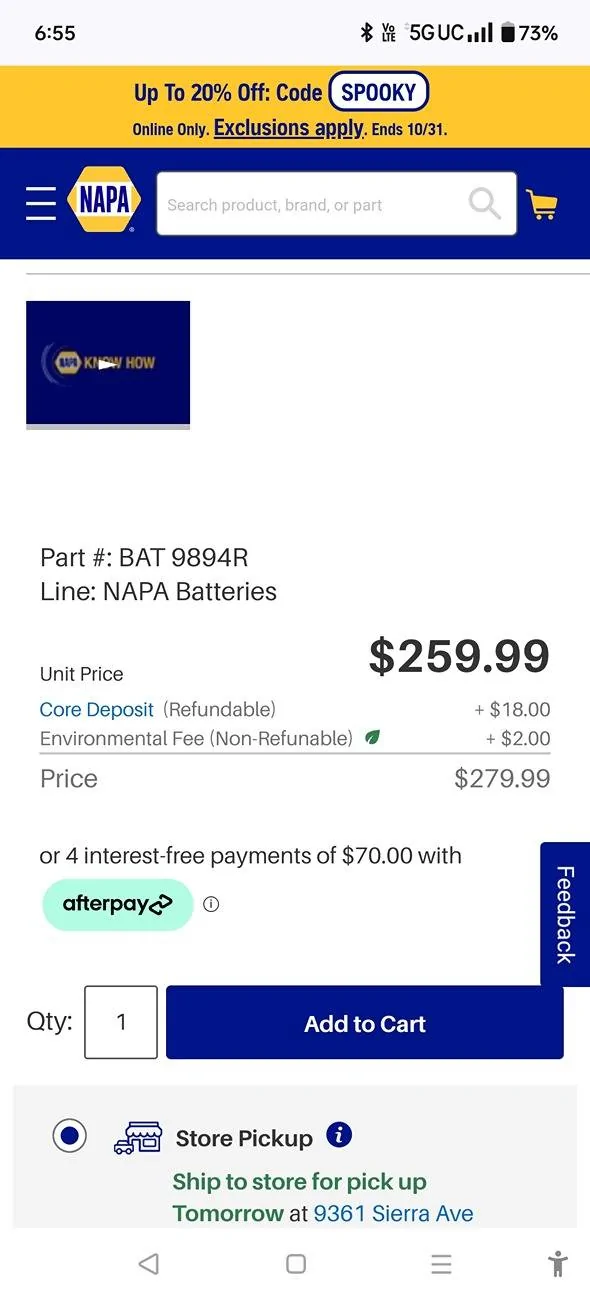
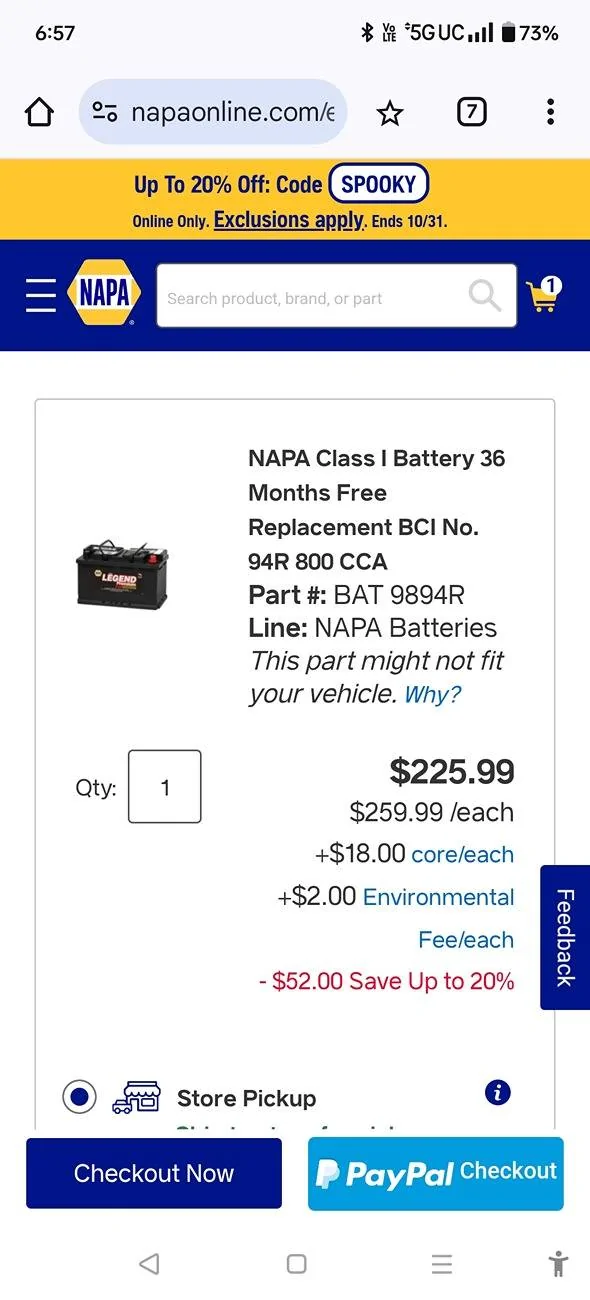
Would this be good? On sale. Is there any trickery that needs to be done if I pull the positive cable off the aux battery when I pull the aux battery? Or does it simply have to be taped off as well or can it be removed somewhere else close to the positive terminal on the main battery?

Jeep Wrangler JL Jumperless Aux Battery Bypass Screenshot_2024-10-29-18-55-49-12_40deb401b9ffe8e1df2f1cc5ba480b12
 

JLRik

Well-Known Member
First Name
Rik
Joined
Oct 28, 2024
Threads
0
Messages
56
Reaction score
17
Location
Thousand Oaks CA
Vehicle(s)
2019 JL Rubicon
Would this be good? On sale. Is there any trickery that needs to be done if I pull the positive cable off the aux battery when I pull the aux battery? Or does it simply have to be taped off as well or can it be removed somewhere else close to the positive terminal on the main battery?

Screenshot_2024-10-29-18-55-49-12_40deb401b9ffe8e1df2f1cc5ba480b12.webp
Whoops this is sale price here:

Jeep Wrangler JL Jumperless Aux Battery Bypass Screenshot_2024-10-29-18-57-20-81_40deb401b9ffe8e1df2f1cc5ba480b12
Sponsored


Top