- Thread starter
- Banned
- #1
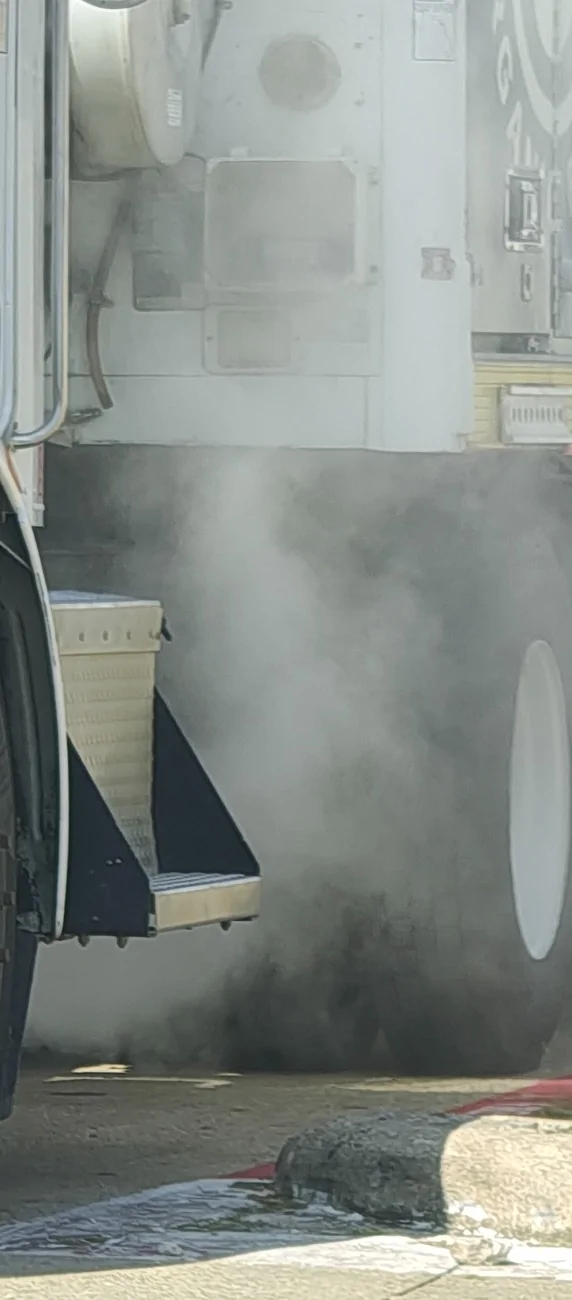
The Tractor with the route I'm on at work today is doing a Regen, and I'm trying to explain to the driver why we shouldn't be down stacking beer in that plume of noxious gases. He's telling me it's just water vapor and nitrogen gas which for the most part is harmless to humans.
I was trying to explain to him that there could also be ammonia gas in there.
It's one of those things where the people selling the idea that regens are actually good for the environment, aren't telling you the whole story.
If you do a Google search for what the runoff of a Diesel Regen is, you might get an answer like this:
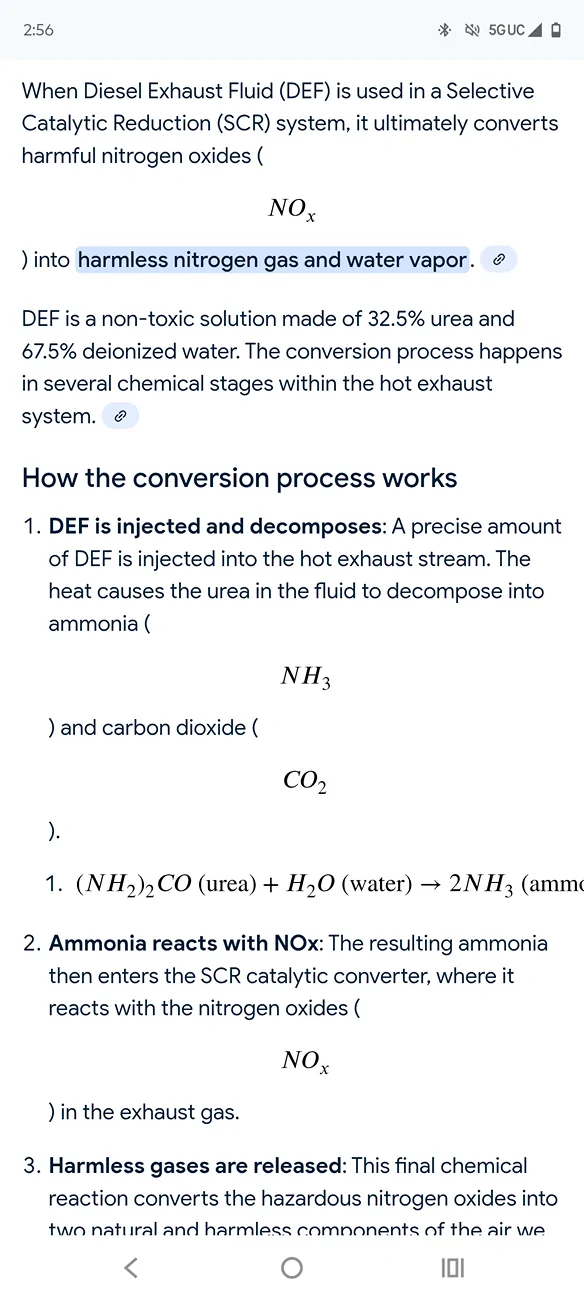
However if you've ever experienced firsthand the gas that comes out of a diesel's regen cycle, and you ask Google a different question that should result in the same answer, but doesn't, your search result might look something like this:
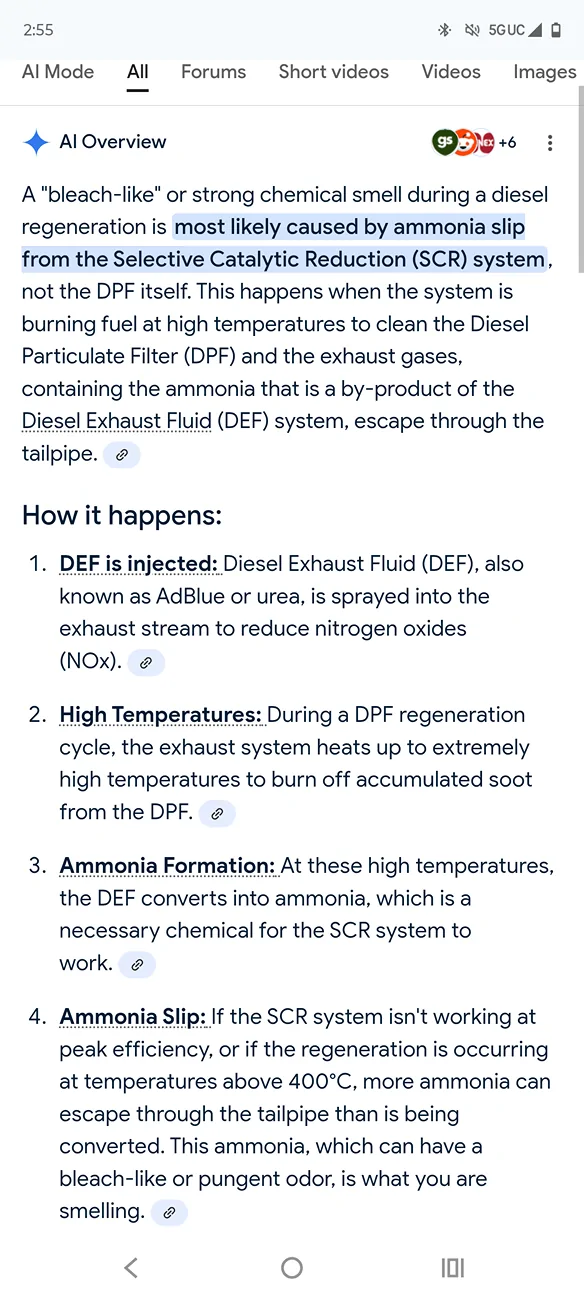
The simple answer is, not all of the ammonia from the urea / DEF process is going to burn off during the transference process. In fact quite a bit of it can reach your lungs if you breathe in this smoke. Don't believe me? Next time your EcoDiesel is regening, without breathing, go put your face over by the exhaust pipe. Not in direct path of the exhaust flow, but just off to the side will do the trick. The second your eyes start burning, and if you breathe in any little bit you'll start coughing... THAT'S AMMONIA!!!
If you're not aware of this, and you have a leak in your exhaust that is venting into the cabin of your Wrangler, You may not even know it, but the second year vehicle regens, you'll be wondering why the hell you can't breathe. In that case, the obvious choice would be to roll down the windows until you can stop the vehicle and safely get out of the vehicle until the regen process is done.
Be aware, that long bouts, or continued bouts of inhalation of ammonia gas, can kill you. It takes about 30 minutes of breathing in your Regen smoke before you'll actually receive a potentially lethal dose. Which if you're going to sit there and have trouble breathing for 30 minutes, you probably had it coming; Something in there about Darwinism.
After I showed this information to my driver, he decided he didn't care. So we agreed that he down stacks and I roll in..

Obviously there are going to be different amounts of ammonia for different vehicles:
If you have a clean and healthy diesel engine that has short passive regens often, you'll probably have more ammonia simply because there's less cleaning needed, but still the same amount of urea going through the system.
Whereas if you have a dirty engine that does mostly long active regions, you'll probably smell less ammonia in your exhaust. Again simply because you have a dirtier system, and more of that ammonia is getting used up and converted during the cleaning process.


Sponsored