
Sponsored
Guv
Well-Known Member
0-60 times are the same between etorque and non-etorque models. There goes the stop watch theory. Dynos typically start a pull around 2k rpms and the graphs are identical between etorque and non-etorque. If it helps at all it's at such low rpm and for such a short duration it doesn't do anything you can measure. At the cost of a $3k battery, $1-2k generator replacing the alternator, and an entire strand alone cooling system which will also require routine maintenance. Just watch how little time you actually spend below 1500rpm and you'll see why it had no gain.
So question; If the mild hybrid system allows an instant for the turbo to start spooling up then how is this not an improvement?0-60 times are the same between etorque and non-etorque models. There goes the stop watch theory. Dynos typically start a pull around 2k rpms and the graphs are identical between etorque and non-etorque. If it helps at all it's at such low rpm and for such a short duration it doesn't do anything you can measure. At the cost of a $3k battery, $1-2k generator replacing the alternator, and an entire strand alone cooling system which will also require routine maintenance. Just watch how little time you actually spend below 1500rpm and you'll see why it had no gain.
Personally, I don’t think I have noticed turbo lag on my 18 2.0 eTorque, now my round headlight WRX 5 speed had some definite lag.
Zandcwhite
Well-Known Member
- First Name
- Zach
- Joined
- Sep 4, 2019
- Threads
- 11
- Messages
- 8,307
- Reaction score
- 14,199
- Location
- Patterson, ca
- Vehicle(s)
- 2019 jlur
1/4 of a rotation is a joke as far as turbo spooling. .001s maybe? If it doesn't result in the slightest performance gain that can be measured anywhere how is it an improvement? There's no turbo lag because its a relatively small turbo on a low revving engine. From a stop if you're at all aggressive on the skinny pedal you're instantly well above 1500rpm and into boost. Watch the rpms in normal driving. Even immediately after a shift it's not below 1500rpm. That's why it does nothing in normal driving. Dead stop, 1/4 rotation, and it's an overpriced charging system doing nothing else. I don't think I've ever seen below 1500rpm in any driving scenario with the 8 speed auto. It will downshift 1st.So question; If the mild hybrid system allows an instant for the turbo to start spooling up then how is this not an improvement?
Personally, I don’t think I have noticed turbo lag on my 18 2.0 eTorque, now my round headlight WRX 5 speed had some definite lag.
Last edited:
Guv
Well-Known Member
I’ve always thought that “turbo lag” in a Wrangler 2.0 is really the transmission’s conservative shift strategy. I would wager some kind sport mode would eliminate much of this perceived turbo lag.

Terrymo
Well-Known Member
I’m laughing at all the race engine and dyno talk. Face the facts here people. If you have a 3.6 minivan motor or Singer sewing machine size 2.0 with a turbo, then you got a Jeep engine designed for doing Jeep things. Or maybe I just can’t feel all that raw power and the additional power from my 3.6 with etorque because my Placebo Dyno is broken.1/4 of a rotation is a joke as far as turbo spooling. .001s maybe? If it doesn't result in the slightest performance gain that can be measured anywhere how is it an improvement? There's no turbo lag because its a relatively small turbo on a low revving engine. From a stop if you're at all aggressive on the skinny pedal you're instantly well above 1500rpm and into boost. Watch the rpms in normal driving. Even immediately after a shift it's not below 1500rpm. That's why it does nothing in normal driving. Dead stop, 1/4 rotation, and it's an overpriced charging system doing nothing else. I don't think I've ever seen before 1500rpm in any driving scenario with the 8 speed auto. It will downshift 1st.
Sponsored
James Westfall
Well-Known Member
- Joined
- Aug 11, 2025
- Threads
- 1
- Messages
- 355
- Reaction score
- 423
- Location
- Eastern PA
- Vehicle(s)
- A blue one
- Occupation
- Long time listener, first time caller.
The truth. This is not the place for HP and power curve comparisons. To anyone not in the Jeep world looking in, we look like those kids from the early 00's with 120hp Civics and "fart can" exhausts thinking we're fast. Both of our main engine options are pretty embarrassing when compared with competitor's offerings. Jeeps have great attributes that place them head and shoulders above competitors...however engines are not one of them.I’m laughing at all the race engine and dyno talk. Face the facts here people. If you have a 3.6 minivan motor or Singer sewing machine size 2.0 with a turbo, then you got a Jeep engine designed for doing Jeep things. Or maybe I just can’t feel all that raw power and the additional power from my 3.6 with etorque because my Placebo Dyno is broken.
Zandcwhite
Well-Known Member
- First Name
- Zach
- Joined
- Sep 4, 2019
- Threads
- 11
- Messages
- 8,307
- Reaction score
- 14,199
- Location
- Patterson, ca
- Vehicle(s)
- 2019 jlur
Unless you start comparing those dynos and 0-60 times vs 90s "muscle" cars. The "HO" 5.0L fox body had all of 205hp and was slower than our 5k pound Jeeps powered by the minivan v6 or the sewing machine despite being 1500lbs lighter. Numbers don't lie.I’m laughing at all the race engine and dyno talk. Face the facts here people. If you have a 3.6 minivan motor or Singer sewing machine size 2.0 with a turbo, then you got a Jeep engine designed for doing Jeep things. Or maybe I just can’t feel all that raw power and the additional power from my 3.6 with etorque because my Placebo Dyno is broken.
Zandcwhite
Well-Known Member
- First Name
- Zach
- Joined
- Sep 4, 2019
- Threads
- 11
- Messages
- 8,307
- Reaction score
- 14,199
- Location
- Patterson, ca
- Vehicle(s)
- 2019 jlur
Funny that even the poor little 3.6L is still quicker than the Bronco raptor 0-60 despite having 133hp less and 180ftlb disadvantage? Either Ford flat lies about their numbers or the Jeep numbers are conservative. Outside the Bronco there really are no competitors. Even the new4runner with its 50hp and 105ftlbs advantages... isn't quicker than the 3.6L JL? Make it make sense.The truth. This is not the place for HP and power curve comparisons. To anyone not in the Jeep world looking in, we look like those kids from the early 00's with 120hp Civics and "fart can" exhausts thinking we're fast. Both of our main engine options are pretty embarrassing when compared with competitor's offerings. Jeeps have great attributes that place them head and shoulders above competitors...however engines are not one of them.

Tr4ckD4ys
Well-Known Member
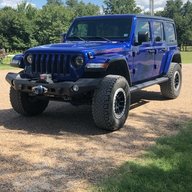
You should take a drive with my lawnmower engine. I have a 2-door, so the weight advantage already makes a difference. However, there is, surprisingly, virtually 0 turbo lag on that gas pedal. I am pacing myself every time I start rolling from a stop because of how violently I get slammed in the seat if I don’t. Now of course I have some performance upgrades on there and run about 320hp instead of the stock 270hp. But even in stock form the sensation from a stop always surprised me. By the way, as much as we complain about Stella engineering and reliability:I’m laughing at all the race engine and dyno talk. Face the facts here people. If you have a 3.6 minivan motor or Singer sewing machine size 2.0 with a turbo, then you got a Jeep engine designed for doing Jeep things. Or maybe I just can’t feel all that raw power and the additional power from my 3.6 with etorque because my Placebo Dyno is broken.
That tiny 2.0 Turbo pushes more horsepower per cylinder and per litre than a BMW B58 Inline-6 Twin-Turbo.
mwilk012
Well-Known Member
Sort of. It was a de facto requirement of the drive cycle that establishes mpg ratings.The mind control is working exceptionally well. Just keep repeating that there's an ESS mandate.
And by the way: there isn't an ESS mandate.
Sponsored
Tr4ckD4ys
Well-Known Member
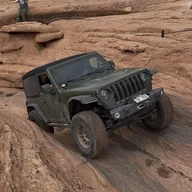
Actually I find the Hurricane I-6, reliability aside, to be an incredible piece of engineering. Compare it to the direct comparison BMW B58 and it’s a stunner. More efficient, higher output and better torque management. That engine is really impressive!The truth. This is not the place for HP and power curve comparisons. To anyone not in the Jeep world looking in, we look like those kids from the early 00's with 120hp Civics and "fart can" exhausts thinking we're fast. Both of our main engine options are pretty embarrassing when compared with competitor's offerings. Jeeps have great attributes that place them head and shoulders above competitors...however engines are not one of them.
yokramer
Well-Known Member
No its how the manufacturers decided to try to hit those numbers rather than making a more efficient engine or cutting weight. The other end they made the trucks and large suvs bigger to try to get them further and further out of the higher mpg brackets.Sort of. It was a de facto requirement of the drive cycle that establishes mpg ratings.
Terrymo
Well-Known Member
Warning old man reminiscing to follow. Long ago for “production class” track cars like 74 and earlier 911s with a 2.7l motor people were striving for a power to weight ratio of 1 horsepower for every 10 pounds by stripping out and lightening everything possible. Not fast in a straight line but very responsive and nimble.Unless you start comparing those dynos and 0-60 times vs 90s "muscle" cars. The "HO" 5.0L fox body had all of 205hp and was slower than our 5k pound Jeeps powered by the minivan v6 or the sewing machine despite being 1500lbs lighter. Numbers don't lie.
Zandcwhite
Well-Known Member
- First Name
- Zach
- Joined
- Sep 4, 2019
- Threads
- 11
- Messages
- 8,307
- Reaction score
- 14,199
- Location
- Patterson, ca
- Vehicle(s)
- 2019 jlur
A 392 with a tune gets there. 505hp and 5050lbs give or take. No it won't handle like a 911, but how's the 911 look after a trip through the Rubicon trail? I'm old enough to remember how terrible the vast majority of vehicles were. This is the hey day of Jeeps and performance vehicles for that matter. You can buy production cars with sub-2s 0-60s and even production trucks under 3s. I appreciate the style and sound of the classics... but they were all pretty unimpressive in the performance category.Warning old man reminiscing to follow. Long ago for “production class” track cars like 74 and earlier 911s with a 2.7l motor people were striving for a power to weight ratio of 1 horsepower for every 10 pounds by stripping out and lightening everything possible. Not fast in a straight line but very responsive and nimble.
Terrymo
Well-Known Member
That was my point, a Jl with an 3.6 or 2.0 and its weight is neither fast nor amazing in its handling. It’s built to go offroad. Trying to make it otherwise makes no sense to me, But to each his own.A 392 with a tune gets there. 505hp and 5050lbs give or take. No it won't handle like a 911, but how's the 911 look after a trip through the Rubicon trail? I'm old enough to remember how terrible the vast majority of vehicles were. This is the hey day of Jeeps and performance vehicles for that matter. You can buy production cars with sub-2s 0-60s and even production trucks under 3s. I appreciate the style and sound of the classics... but they were all pretty unimpressive in the performance category.
Sponsored
Similar threads


- Replies
- 14
- Views
- 3,726
