
Sponsored

Winch Wiring Question

OP
OP
Aussicon

Aussicon

Well-Known Member
Joined
Jan 7, 2024
Threads
16
Messages
307
Reaction score
633
Location
Cape Cod via Australia & N.Z
Vehicle(s)
2021 JL Rubicon Unlimited
I’ll start a new thread: how to convert your solenoid to an arc welder.
Sponsored
 

YBABRAT

Well-Known Member
Joined
May 12, 2024
Threads
55
Messages
1,409
Reaction score
1,355
Location
VIRGINIA
Vehicle(s)
2019 2 Door Rubicon X Wannabe
Occupation
None... but it pays well.
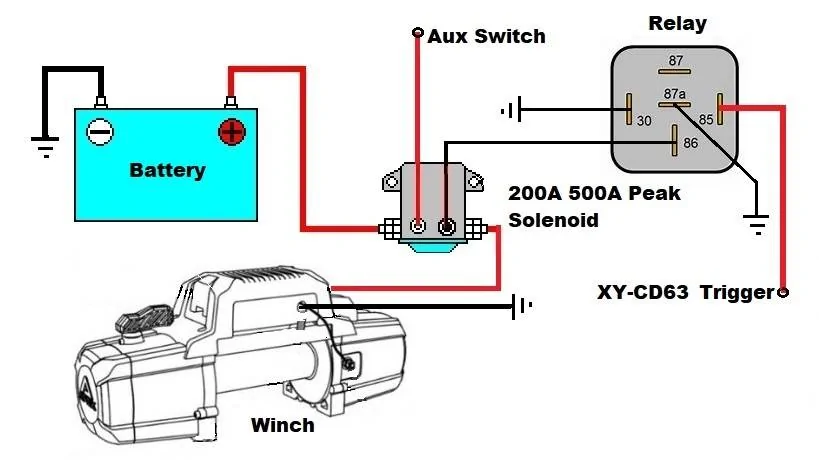
Here is what I plan on doing... chassis ground with secondary battery ground to chassis. Having more grounds the better.

Everyone is so worried about battery not being directly connected. Well the battery is not isolated unless you make it so. You have the charging system interconnected and nobody seems to care but me.

The XY-CD63 is a voltage monitoring device for charging batteries. It will not trigger without a simple mod. It is the simplest and effective device to protect your charging system and investment.

I plan on a full write up on its function and implementation. Note the solenoid is to be active by Aux switch until triggered at a programmed low voltage.

Jeep Wrangler JL Winch Wiring Question 1000039366
 

Mguy

Well-Known Member
Joined
Nov 29, 2023
Threads
6
Messages
400
Reaction score
382
Location
Far Away
Vehicle(s)
2020 JLUR 6spd MT
I meant what I typed.

Frame/Chassis ground is all dependent on that one cable. Even engine to frame is dependent on it.

Even if the two cables are touching each other on that stud, you're still introducing an extra connection where corrosion or a loose stud nut would cause issues with the winch draw.

There shouldn't be any extra connections on the ground side for the winch. You can run a solenoid for power cut off on the power side, that's no problem. Corrosion on this side will just end up with extra heat on the solenoid and not on the winch motor. No extra connections on the ground side to protect the motor and to keep the motor from searching for a ground in case of a cable issue.

The TJ was famous for these issues since it had a chassis/frame ground about a foot below the main battery. This won't become apparent in the JL until they get some age and start rusting, but it can all be prevented by just following the instructions. They're written for a direct connection for this reason.
We are in agreement that a winch negative load cable should go directly to the battery and avoid unnecessary connections. For many posters and readers there is nothing else to discuss, but for those electrically inclined:

We are also in agreement regarding the importance of the negative cable connecting battery and frame. Fortunately in JLs, both of the terminals for making this critical connection are equally and readily observable, and equally and readily available for maintenance and corrosion avoidance.

Regarding corrosion, perhaps our experience is different. In many decades of dealing with high amperage DC equipment in hostile environments, including salt water, I have not seen or heard of corrosion forming or reaching inside a well made lug/terminal connection of similar metal that is physically compressed on a stud with a lock washer/nut. Corrosion on the outside of such connection does of course present problems, but current will still flow to the load as it's resistance demands. While corrosion and it's effects can be unpredictable, and assuming wire capacity, I don't see how introducing a very high load to the already very high load battery-frame stud connection makes any measurable difference for equipment or safety. And this is especially true when the new high load is infrequently used.

So given the very visible and accessible JL battery frame stud, I think a lug to lug winch negative connection at that location is acceptable. As I said above though, it's not the preferred method. But we're in the JL world of owner-modifiers, so I think those who have the need for an option do have it.

A final point worth mentioning, I also agree that the winch positive load cable should be on-off switched at the battery. This high load positive path has just too much location risk to be hot during ordinary driving where a front end collision is always a foreseeable event. In my previous post I mentioned "direct" connections without differentiating electrical and physical. Electrically speaking, a connection with an on off switch is still direct. Context and meaning wasn't clear, sorry I didn't make it so.
 

Mguy

Well-Known Member
Joined
Nov 29, 2023
Threads
6
Messages
400
Reaction score
382
Location
Far Away
Vehicle(s)
2020 JLUR 6spd MT
Here is what I plan on doing... chassis ground with secondary battery ground to chassis. Having more grounds the better.

Everyone is so worried about battery not being directly connected. Well the battery is not isolated unless you make it so. You have the charging system interconnected and nobody seems to care but me.

The XY-CD63 is a voltage monitoring device for charging batteries. It will not trigger without a simple mod. It is the simplest and effective device to protect your charging system and investment.

I plan on a full write up on its function and implementation. Note the solenoid is to be active by Aux switch until triggered at a programmed low voltage.

1000039366.jpg
Sorry YBABRAT, I'm not totally clear on what you're saying. Are you planning on running a winch with engine charging off, and so want a cut-off before the battery is discharged beyond engine starting capacity? Are you planning on winching with engine charging and concerned about system/equipment damage from voltage drop? Can you clarify please.
 

chevymitchell

Well-Known Member
First Name
Shawn
Joined
Feb 18, 2018
Threads
112
Messages
5,017
Reaction score
12,147
Location
Pueblo West, CO
Vehicle(s)
2022 392XR, 2025 Wagoneer S, 2006 LJ 6-spd
Occupation
Avi Engineer
We are in agreement that a winch negative load cable should go directly to the battery and avoid unnecessary connections. For many posters and readers there is nothing else to discuss, but for those electrically inclined:

We are also in agreement regarding the importance of the negative cable connecting battery and frame. Fortunately in JLs, both of the terminals for making this critical connection are equally and readily observable, and equally and readily available for maintenance and corrosion avoidance. [SM] The connections you're referring to are much smaller than the winch cable lugs. The one stud that may be appropriately sized cannot handle the torque required to keep to ground lugs torqued together. I'm not sure it's long enough to hold two lugs of the appropriate size, anyway., and still have a 2 thread protrusion. The nut for the stud is not large enough to provide the clamping force needed for reliability. These studs are not intended to be used for this purpose which is why there are extra studs available on the battery connections. Besides, the battery is literally 12" away from these studs...You'd have to run a separate 12", 2 gauge cable with 2 additional crimps to fail for essentially no reason. It just doesn't make sense to use these studs. Even rear bumper remote winch mount kits come with enough cable to reach the battery. The idea behind being connected directly to the battery with nothing in the middle is the same approach to welding and finding a suitable ground for the welder. Anything in between the ground connection and the positive terminal is susceptible to damage. All you would need is a high resistance short at that connection and all of the winch draw will go through the next lowest resistance source (fuse box, for example) and it will melt whatever it's using. Same with welding. Your ground needs to be near your weld. Otherwise, it will find the next lowest resistance ground source and arc it. Like bearing rollers.

Regarding corrosion, perhaps our experience is different. In many decades of dealing with high amperage DC equipment in hostile environments, including salt water, I have not seen or heard of corrosion forming or reaching inside a well made lug/terminal connection of similar metal that is physically compressed on a stud with a lock washer/nut. Corrosion on the outside of such connection does of course present problems, but current will still flow to the load as it's resistance demands. While corrosion and it's effects can be unpredictable, and assuming wire capacity, I don't see how introducing a very high load to the already very high load battery-frame stud connection makes any measurable difference for equipment or safety. And this is especially true when the new high load is infrequently used. [SM] Corrosion on the outside makes its way inside. How well something is mated doesn't matter. Rust forms under paint, for example. It's just something people don't think about and, for some reason, the auto industry is looked at as "less than" when it comes to these types of standards. ISO standards require coating for certain fasteners, for example, to prevent what we're talking about here. In my industry, every ground leading to the ground plane must be 2.5mOhms or less and must be coated with epoxy primer to prevent water intrusion and corrosion.

So given the very visible and accessible JL battery frame stud, I think a lug to lug winch negative connection at that location is acceptable. As I said above though, it's not the preferred method. But we're in the JL world of owner-modifiers, so I think those who have the need for an option do have it.

A final point worth mentioning, I also agree that the winch positive load cable should be on-off switched at the battery. This high load positive path has just too much location risk to be hot during ordinary driving where a front end collision is always a foreseeable event. In my previous post I mentioned "direct" connections without differentiating electrical and physical. Electrically speaking, a connection with an on off switch is still direct. Context and meaning wasn't clear, sorry I didn't make it so.

[SM] It just needs connected directly to the battery with the shortest cable lengths possible that allow for proper routing without rubbing.

Fun fact for those who are still reading. Lol. Power doesn't flow to ground. Electrons flow to the positive terminal.

Good conversation. Thank you.
Edit: Comments in BLUE above.
 

Sponsored

Mguy

Well-Known Member
Joined
Nov 29, 2023
Threads
6
Messages
400
Reaction score
382
Location
Far Away
Vehicle(s)
2020 JLUR 6spd MT
Fun fact for those who are still reading. Lol. Power doesn't flow to ground. Electrons flow to the positive terminal.
And you just had to add actual facts, what is the internet coming to?

There are too many products and installations out there with hardware that is physically not up to the electrical task. I'll have to look at my JL ground studs more carefully--I've yet to use them for anything non-stock. There's always the extra nut on a long stud trick for added torque, but the JL hardware may just be too small.

The original poster thinks of electricity as witchcraft. I'm not sure he's right, but let's agree corrosion in the electrical world is simply devilish and to be fought as best we mere mortals can manage.
 

PT's19Rubi

Well-Known Member
First Name
Paul
Joined
Apr 5, 2024
Threads
9
Messages
220
Reaction score
230
Location
NC - Just across river from Uwharrie trails
Vehicle(s)
2019 Rubicon 2D, 3.6, 8A
Occupation
Retired Electrical Design Engineer
I have one suggestion to add to all of the above:

Put a fuse or circuit breaker rated at 1.25 to 1.5 times the current capacity of the winch directly off the Positive Battery terminal. Should the winch motor short, or the positive motor lead short to chassis, the breaker will trip. A 100 amp short has the ability to fry the battery and/or burn the vehicle to the ground.

My 8000 lb winch can draw a little over 300 amps under absolute full load. Unable to find a small 450 amp circuit breaker, I have two 300 amp breakers, in parallel, sitting on top of the battery. Two breakers in parallel is not recommended, but even with some mismatch in trip level, I hope to have 450 amps total capacity.

Also, rather than use an Aux switch and solenoid, I use the circuit breakers as "Winch Enable". Turn breakers On before going off road, and back Off afterward.
 

chevymitchell

Well-Known Member
First Name
Shawn
Joined
Feb 18, 2018
Threads
112
Messages
5,017
Reaction score
12,147
Location
Pueblo West, CO
Vehicle(s)
2022 392XR, 2025 Wagoneer S, 2006 LJ 6-spd
Occupation
Avi Engineer
I have one suggestion to add to all of the above:

Put a fuse or circuit breaker rated at 1.25 to 1.5 times the current capacity of the winch directly off the Positive Battery terminal. Should the winch motor short, or the positive motor lead short to chassis, the breaker will trip. A 100 amp short has the ability to fry the battery and/or burn the vehicle to the ground.

My 8000 lb winch can draw a little over 300 amps under absolute full load. Unable to find a small 450 amp circuit breaker, I have two 300 amp breakers, in parallel, sitting on top of the battery. Two breakers in parallel is not recommended, but even with some mismatch in trip level, I hope to have 450 amps total capacity.

Also, rather than use an Aux switch and solenoid, I use the circuit breakers as "Winch Enable". Turn breakers On before going off road, and back Off afterward.
A lot of people have this same suggestion. I'm not sure where the fusing of winch cabling came from other than fear. Lol. The starter is wired the same way as the winch. Straight cable from battery to component, yet, no fuse.

You can add the protection and certainly won't hurt anything. 1.5 times rated current seems alright to not blow with in-rush current. (Always higher than operating current.)

But a fuse is not needed but they serve a purpose.

On/off solenoids aren't needed, but they serve a purpose, as well. These Bluetooth winches that refuse to go to sleep will drain the battery overnight. If your winch is a basic DC motor winch, you won't need anything other than 2 cables and a remote. Everything else is extra based on whatever your comfort level of protection is.

For reference, the PowerWagon, with a Warn Zeon 12-S from the factory, has no fuse.
 

Jtphoto

Well-Known Member
First Name
Jeff
Joined
Dec 10, 2017
Threads
23
Messages
3,007
Reaction score
3,497
Location
Thunder Bay ON
Vehicle(s)
2022 Rubicon Xtreme Recon Granite Crystal
I am about to install a 500amp Stinger Solenoid. Will use one of the AUX switches for a trigger.
Do I attach the winch ground cable to the battery negative post (like the instructions say) or to the spare ground terminal near the AUX wires?
Yes winch negative to battery negative.
 

Jtphoto

Well-Known Member
First Name
Jeff
Joined
Dec 10, 2017
Threads
23
Messages
3,007
Reaction score
3,497
Location
Thunder Bay ON
Vehicle(s)
2022 Rubicon Xtreme Recon Granite Crystal
A lot of people have this same suggestion. I'm not sure where the fusing of winch cabling came from other than fear. Lol. The starter is wired the same way as the winch. Straight cable from battery to component, yet, no fuse.

You can add the protection and certainly won't hurt anything. 1.5 times rated current seems alright to not blow with in-rush current. (Always higher than operating current.)

But a fuse is not needed but they serve a purpose.

On/off solenoids aren't needed, but they serve a purpose, as well. These Bluetooth winches that refuse to go to sleep will drain the battery overnight. If your winch is a basic DC motor winch, you won't need anything other than 2 cables and a remote. Everything else is extra based on whatever your comfort level of protection is.

For reference, the PowerWagon, with a Warn Zeon 12-S from the factory, has no fuse.
The difference with the starter is the starter relay is controlled by the computer not direct cable battery power to starter like direct winch wiring. Having a solenoid or master power switch for the winch close to the battery greatly reduces the chances of a chaffed battery cable short or stuck solenoid in the winch itself. I’ve seen water in the winch solenoid activate and short out a winch that had direct power.
The Aux switches are also on relays and fuses.
 

Sponsored

chevymitchell

Well-Known Member
First Name
Shawn
Joined
Feb 18, 2018
Threads
112
Messages
5,017
Reaction score
12,147
Location
Pueblo West, CO
Vehicle(s)
2022 392XR, 2025 Wagoneer S, 2006 LJ 6-spd
Occupation
Avi Engineer
The difference with the starter is the starter relay is controlled by the computer not direct cable battery power to starter like direct winch wiring. Having a solenoid or master power switch for the winch close to the battery greatly reduces the chances of a chaffed battery cable short or stuck solenoid in the winch itself. I’ve seen water in the winch solenoid activate and short out a winch that had direct power.
The Aux switches are also on relays and fuses.
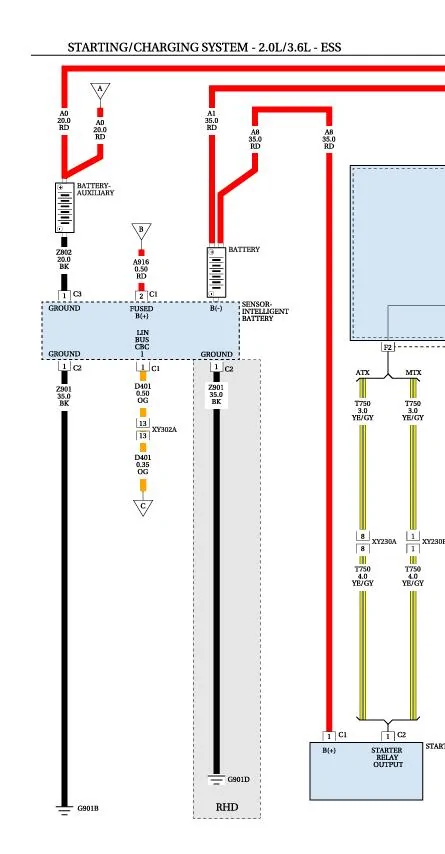
It is direct - battery to starter.

Jeep Wrangler JL Winch Wiring Question 1726085217430-f5
 

Jtphoto

Well-Known Member
First Name
Jeff
Joined
Dec 10, 2017
Threads
23
Messages
3,007
Reaction score
3,497
Location
Thunder Bay ON
Vehicle(s)
2022 Rubicon Xtreme Recon Granite Crystal
That diagram is deceiving, the battery power goes to that starter relay (protected in the Jeep and controlled by computer) or you wouldn’t have a break in power to start / stop the starter motor.
 

Zandcwhite

Well-Known Member
First Name
Zach
Joined
Sep 4, 2019
Threads
11
Messages
8,284
Reaction score
14,178
Location
Patterson, ca
Vehicle(s)
2019 jlur
It is direct - battery to starter.

1726085217430-f5.webp
Stop with the facts, the internet told me to be afraid of everything and wiring winches the way the manufacturers recommend as well as the oems and pretty much every winch for the last 50 years is wrong. We need switches, relays, breakers, and fuses to be safe.
 

chevymitchell

Well-Known Member
First Name
Shawn
Joined
Feb 18, 2018
Threads
112
Messages
5,017
Reaction score
12,147
Location
Pueblo West, CO
Vehicle(s)
2022 392XR, 2025 Wagoneer S, 2006 LJ 6-spd
Occupation
Avi Engineer
That diagram is deceiving, the battery power goes to that starter relay (protected in the Jeep and controlled by computer) or you wouldn’t have a break in power to start / stop the starter motor.
It's not deceiving man.

That red wire is a cable straight from the battery to the starter post.

The starter relay output you see there is coming from the fuse box which is where the relay lives.

Nearly every vehicle made has its starter motor cabled straight to the battery.

Here's the full diagram:

https://www.jlwranglerforums.com/JL-Wiring-Diagrams/STARTING_CHARGING-SYSTEM---2.0L_3.6L---ESS.pdf
 
Last edited:

chevymitchell

Well-Known Member
First Name
Shawn
Joined
Feb 18, 2018
Threads
112
Messages
5,017
Reaction score
12,147
Location
Pueblo West, CO
Vehicle(s)
2022 392XR, 2025 Wagoneer S, 2006 LJ 6-spd
Occupation
Avi Engineer
Stop with the facts, the internet told me to be afraid of everything and wiring winches the way the manufacturers recommend as well as the oems and pretty much every winch for the last 50 years is wrong. We need switches, relays, breakers, and fuses to be safe.
I'm trying to keep it real on here. Lol.
Sponsored


Top