Sponsored

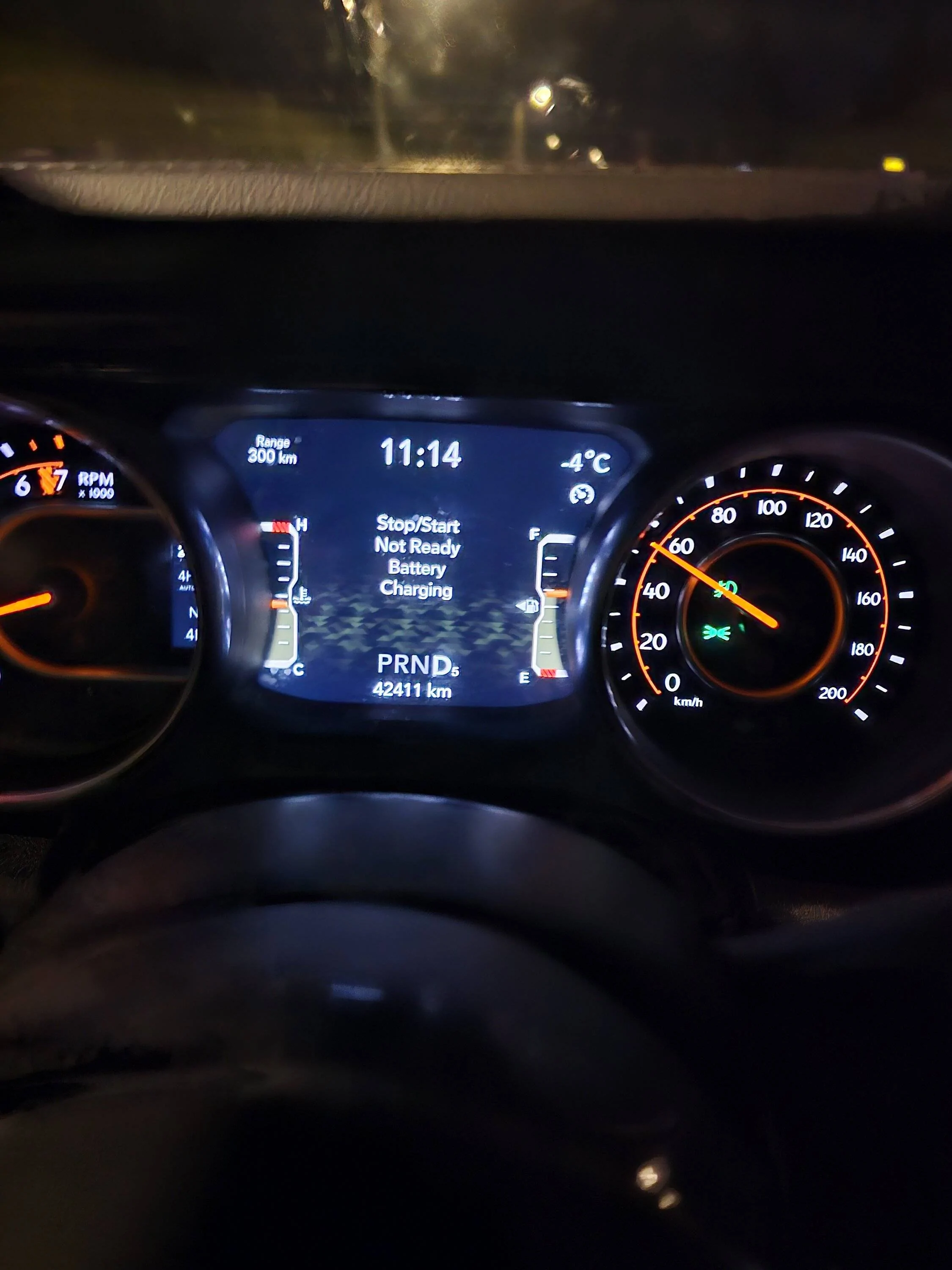
Stop/Start Not Ready-Battery Charging

Austin23

Well-Known Member
First Name
Michael
Joined
Jul 21, 2020
Threads
8
Messages
211
Reaction score
552
Location
Austin, TX
Vehicle(s)
2020 Jeep Wrangler Rubicon
@Austin23

You risk costly damage pulling the PDC in order to access the Aux battery below the PDC.

Best way to access the Aux battery is by doing a fender liner peel or to pull the flare. Read here:
https://www.jlwranglerforums.com/fo...ent-the-easy-way-pull-the-fender-flare.56807/
Excellent video. Thank you. Didn't realize that pulling the liner off the fender would be an issue. This guy always has informative videos and cracks me up in the process. "These clips WILL not break.. They might break". LOL. He does mention that replacement clips could not be purchased separately from the fender, but fortunately that is no longer the case. I was able to order an 8 pack of them on-line.
Sponsored


mwilk012

Well-Known Member
Joined
Mar 10, 2018
Threads
14
Messages
11,002
Reaction score
11,335
Location
Oklahoma
Vehicle(s)
2018 Ocean Blue JLU Rubicon
Occupation
Service
The best way is to follow the oem procedure to remove the liner and just replace the rivets with easily removable push clips. The slowest part is having to jack up the front axle and removing the wheel. A 15 minute job at most.
 

Fuel Fire Desire

Well-Known Member
Joined
Feb 17, 2018
Threads
33
Messages
543
Reaction score
583
Location
Michigan
Vehicle(s)
2018 JLU Sport S, 2020 JT Sport
The best way is to follow the oem procedure to remove the liner and just replace the rivets with easily removable push clips. The slowest part is having to jack up the front axle and removing the wheel. A 15 minute job at most.

I didn’t even pull my tire, I was able to get at it by turning all the way to the drivers side.
 

JeepingJohn

New Member
Joined
Jul 9, 2023
Threads
0
Messages
1
Reaction score
1
Location
Haymarket, VA
Vehicle(s)
2018 Jeep Grand Cherokee Trailhawk
Hello sorry to sneak in on this long aging Wrangler thread to post my findings about a 2018 Jeep Grand Cherokee but the information and user posts on this thread have been the best information I could find on the internet regarding ESS “Stop/Start Not Ready Battery Charging” with Jeep products. Thank you to all the posters sharing here!!!

My summary is if you see this message one of two things are likely going on. One you are not driving the Jeep long enough, possibly only one or two trips per day less than 20min each trip. Second your main and \ or aux batteries are failing. One battery is draining the other one down when the Jeep is off and then when running the alternator is forced to constantly run at full power trying to charge one or both failing batteries.

In my case it was both batteries that failed. Biggest symptom was the alternator voltage while driving the Jeep was always pegged at 14.2 volts constant. With the JGC this is supposed to be a “smart alternator”. It may run at 14.2 level after starting up to put a charge back on the battery but should drop to 12.6 ish – 13.6 ish after 15-30min of driving with a healthy battery system. As soon as I had both batteries changed for new ones, the system voltage was back to following the pattern of 14.2 volts high at start up, charge up the battery, after the battery was topped off then system voltage fluctuates between 12.6 – 13.6 while driving.

One other clue for me that I had a bad battery issue, is after driving an hour or more on the bad battery, shutting off the Jeep and checking batter voltage it would only be at 12.5 V and fall to 11.9 V after a couple hours of rest. Best I understand this, both batteries were failing / expired, or one of the batteries that was failing was pulling the charge out of the other battery.


Unfortunately for me my Jeep was under a Pre-owned certified warranty and the battery issues and ESS issues started day one after I purchased the Jeep. It took four trips to the dealer, with three “electrical system inspections” required to determine a bad battery. I was even told they could not service my vehicle on my appointment day as they had to wait for their A+ senior technician to be available to look at the ESS issues. I am wondering why it took four trips to diagnose a bad battery and why their B or C level technicians are not capable of completing a battery test as part of diagnostics?

Worse part is the same dealer that sold me the Jeep with a pre-owned warranty, refused to cover the battery replacement cost. They stated that Jeep corporate would not cover the two-battery replacements required to fix this certified pre-owned issue. After a lot of dancing with the dealer I understand that the local dealer provides the certified pre-owned inspections, but then under an agreement with Mopar / Jeep, any parts / equipment failure is covered (or not) by Jeep, the labor for repair is covered by the dealer. The dealer claimed they asked for Jeep’s help on the part replacement, but no luck, that cost was owner’s wear and tear responsibility. My pre-owned warranty explicitly states that “all electrical systems” are covered, and has notes for excluding tires, breaks, pads, drums and even hoses and belts as wear and tear items. There is no exclusion for batteries. If the batteries had failed one day, one mile past my pre-owned warranty, I would see this used car battery replacement as my own responsibility. The fact that I could not even get 3000 miles of my warranty before a battery failure, and then putting that cost on the owner is ridiculous gross fleecing by the dealership and Jeep. Neither the sales manager nor service manager at the Jeep dealership would return calls or emails. I may have been able to force a face-to-face discussion with the dealership management after getting the batteries replaced (at my cost) but I decided to pay my Dealer Stupid Tax and get the heck out of that place and if possible, never return. Hopefully I can move my Jeep servicing and warranty work to another Jeep dealer and have no cause for ever returning to Safford of Warrenton. I decided to play nice till my pre-owned warranty is expired. I am looking at some BBB, MVDB, and legal court claim options against this dealers’ failure to perform on warranty. Lastly, the dealership deliberately held up my service visit over three days for a battery replacement… and then choose to park the Jeep in the dirtiest spot under pine trees to fowl up paint with pine sap droppings… a deliberate choice to kick the owner one last time.


I kept trying to reach out to the @JeepCares contact on this forum, and while they engaged with me, they provide no owner support while you are working with the dealership. They opened a support case with Jeep corporate customer service and kept stating that my Jeep case agent would be contacting me. JeepCares urged me to set up a dealer visit and kept pushing me back to the dealership to solve the issues with my ESS and batteries. The Jeep agent never called, never email me about any part of my customer support case. I repeatedly called the Jeep corporate customer support line and the operators confirmed I had an open active case number but would only transfer me to my agent’s voice mail. I left several voice mails, none were returned. I called the customer support hotline again and again asking to have a new case officer assigned, or to be transferred to a supervisor, and the operator actually said, “sorry I can’t help you; you have to talk to your agent first, that is all there is”. My assigned agents voice mail greeting was a mumbled gargled first name that I still cannot understand with a TV show and kids screaming in the background during the voice mail prompt. I can only imagine a customer service agent who is “quiet quitting” a work from home customer support hotline job, dodging any responsibility to actually provide any Jeep Cares customer support, while still collecting a paycheck.


In summary:

Have the battery health pre checked before signing on a certified pre-owned Jeep. If the ESS Stop\Start system is not working when you test drive the Jeep, you are most likely looking at a set of failing batteries. The dealership and Jeep will not honor their certified pre-owned warranty on a battery.

Don’t expect any support from JeepCares or the Jeep customer support hotline. The FCA USA dealer network is a powerful brotherhood and Jeep customer support is designed to protect these dealerships first. Look around and find a good dealership for your Jeep service needs. Be kind and expect good customer service and if you cannot find it, take your business to another dealer.

@JeepCares
 

Sponsored

Altitude2020

Well-Known Member
First Name
Chris
Joined
Oct 29, 2020
Threads
14
Messages
324
Reaction score
62
Location
Canada
Vehicle(s)
2020 Jeep Wrangler JLU Altitude
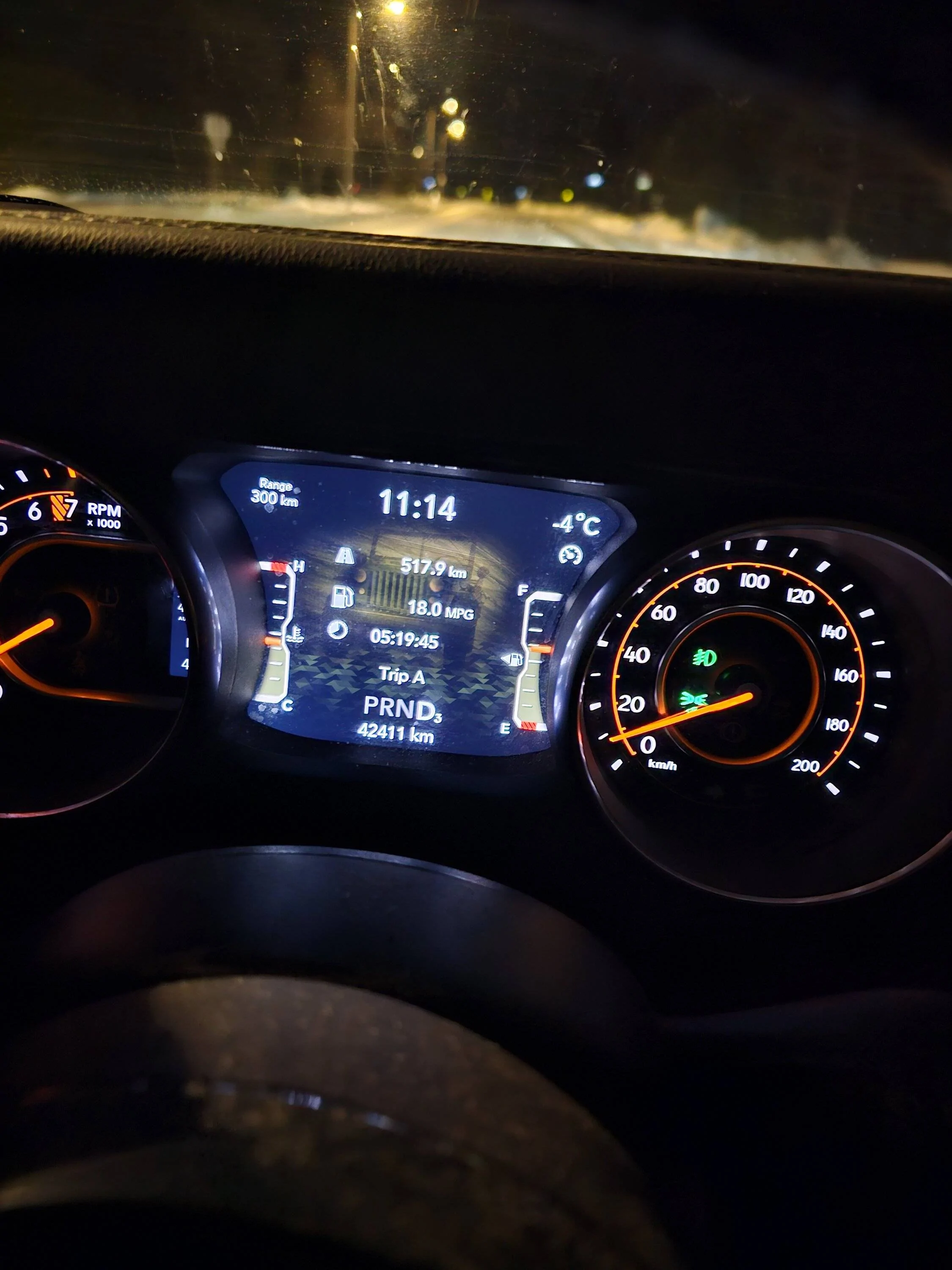
Well 4 times at the dealer with no resolve. Drive the Jeep a good distance I was told. Well 519km later at a speed of over 80kmh I still have a charging battery message. Well 2 years and this is my last Jeep. To many issues that I have never experienced in 20 cars and a few Jeeps in that mix. $70k piece of crap Hopefully, sales will decline like the quality has

Jeep Wrangler JL Stop/Start Not Ready-Battery Charging 20240202_231453


Jeep Wrangler JL Stop/Start Not Ready-Battery Charging 20240202_231440
 

rohdawg

Well-Known Member
First Name
Matt
Joined
Sep 18, 2018
Threads
6
Messages
2,318
Reaction score
7,475
Location
Long Island, New York
Vehicle(s)
2024 JLUR Anvil / 2021 JLUR Hydro Blue
Occupation
Merchant Marine
Well 4 times at the dealer with no resolve. Drive the Jeep a good distance I was told.
Besides telling you to drive it, what else did the dealership do?
If your Jeep is a 2020 and the batteries are the originals… I’d start with replacing those..
 

mwilk012

Well-Known Member
Joined
Mar 10, 2018
Threads
14
Messages
11,002
Reaction score
11,335
Location
Oklahoma
Vehicle(s)
2018 Ocean Blue JLU Rubicon
Occupation
Service
Well 4 times at the dealer with no resolve. Drive the Jeep a good distance I was told. Well 519km later at a speed of over 80kmh I still have a charging battery message. Well 2 years and this is my last Jeep. To many issues that I have never experienced in 20 cars and a few Jeeps in that mix. $70k piece of crap Hopefully, sales will decline like the quality has

20240202_231453.jpg


20240202_231440.jpg
"70k" but you can't just put a couple of batteries in it?
 

Sponsored

Altitude2020

Well-Known Member
First Name
Chris
Joined
Oct 29, 2020
Threads
14
Messages
324
Reaction score
62
Location
Canada
Vehicle(s)
2020 Jeep Wrangler JLU Altitude
Besides telling you to drive it, what else did the dealership do?
If your Jeep is a 2020 and the batteries are the originals… I’d start with replacing those..
It's a 2020 with 40,000km or 25 000 miles. Not the only issue that had to be fixed. The dealership said that it would
Yep 70k piece of crap
 

jeepoch

Well-Known Member
First Name
Jay
Joined
Nov 13, 2019
Threads
1
Messages
1,052
Reaction score
2,941
Location
Longmont, CO
Vehicle(s)
2019 JL Wrangler Sport S 3.6L Auto 2 door, 2.5" lift, 35s
Chris,

I currently have 70K miles on my 2019 Sport and been struggling with this same "Battery Charging" and "Battery Protection Mode" issue almost the entire time I've owned it. Here is my experience, if it helps in any way.

The ONLY time ESS works reliably is with brand new batteries and very low frequency stop start events. If the batteries degrade or you let the ESS function during normal city driving, the "Battery Charging" condition is the rule (not the exception).

I find that if I let the ESS stop the engine more than just a few times in a typical city trip; traffic lights, stop signs and/or some stop and go congestion, then there is ABSOLUTELY insufficient alternator output to recharge the batts during that trip. My alternator output remains at (or above) 14.5v continuously.

If I drive outside the city for more than several tens of minutes (with no stops) then the alternator output falls to the low 14v range. The longer I drive at speed, such as on the freeway, the lower the alternator's output drops. I can routinely see mid 13v or even high 12v ranges when the batteries have sufficient time to charge.

Recall the "Battery Voltage" indicator on the Cluster's EVIC is a misnomer. It does not show instantaneous battery voltage on the terminals, it really shows the alternator's output 'effort'. The units should be in work, not potential. But hey, this is easier to visualize just based on a simple metric than actual physics. Dumb down the presentation for us simple minded consumers.

So, what is your "Battery Voltage" reading? Is it in the 14.5v (or higher) range the majority of the time?

If so, then the issue is that there is not enough input energy being applied to keep the batteries sufficiently charged per trip.

This previous sentence is the Holy Grail of understanding the entire ESS experience (period). If the total accumulated out flow of the number of electrons (Coulomb's) is greater than the input during any trip, the batteries will just not sufficiently charge. Dah...

There are only a few 'true' fixes:
1. Install a much larger alternator. A properly spec'd device that can deliver more energy in unit's of work effort per time than the vehicle's system demands.

2. Externally charge your batts when not driving. Plug in a Battery Tender in order to increase the number of Coulomb input. However a good maintainer is crucial. Batteries are very complicated in how they like to be charged. Both voltage and current demands are very dynamic based on many factors such as temperature, condition and battery technology.

3. Disable ESS. Don't allow the batteries to discharge at any rate faster than the batteries can recharge (or hold their charge). This is why newer batts work better than aged ones and why most people tend to spend a lot of denero on permanent disable mechanisms.

I find that pushing the ESS disable button is by far the most appropriate (painless and least expensive way) to keep my batteries in good working order. However, I really do enjoy allowing ESS to function as intended as much as possible. I really do like the silence when stopped. And yes you can call me the oddball nerd.

So my solution has been the combination of both 2 and 3 above.

In summary it's the moron's that mandate (bureaucrats), develop (engineers), manage (bean counters), maintain (technicians) and the myriad of market influencers (lawyers) which all have zero clue that input energy must be greater than output demand.

This insanely implemented, dual dissimilar sized battery design, is beyond idiotic. It's probably the WORST feature ever put into any vehicle production (EVER)!

Yet, the vehicle they put this god awful ESS crap into is still the best vehicle I've ever owned by far. Go figure...

I'm coping with my ESS and battery insufficiencies by ensuring I monitor the physics of the overall equation.

input > output

A typical city commute violates that ESS condition every time. Blame the morons who forced this down our throats, not the vehicle itself.

Jay
 

TheBirdie72

Well-Known Member
First Name
Steve
Joined
Dec 16, 2021
Threads
25
Messages
5,389
Reaction score
25,733
Location
Rhode Island
Vehicle(s)
2021 Jeep Wrangler Freedom Edition 2 Door
Have the 2.0 with ESS. I actually haven’t seen my ESS come on in over a year. Can’t even remember the last time I had to push the “turn ESS off” button. It just doesn’t work and the dash always says “start stop not ready.” In my opinion, ESS is dumb and annoying, I don’t miss it, and I didn’t buy a Jeep for the fuel economy… but I digress…

Well, yesterday, I took a longer than normal highway trip (about 45 mins) and when I got near my destination, the little “A!” appeared on my dash with the message “Start stop unavailable/ service start stop system”. uh oh…

So I got to where I was going. Was there for a couple hours. Got back in and started the Jeep to come home and no error. Drove all the way back home with no issues / Jeep ran fine.

Took it to local dealership on way home, though, since they were still open to get it checked out. Service guy plugged in his ECRI code reader, didn’t read a code, and basically told me to bring it back running with the error live so they can pull the code. Said “Stellantis won’t let them do any warranty work on it or replace batteries without going through the process.” He acknowledged that it was a “common issue they see a lot” but that they can’t take shortcuts and Stellantis requires them to do everything by the book. No surprise there…

Yeah, I could just do any one of the workarounds like aux bypass or delete, but I am still 15k miles & 4 months from hitting the 36,000 mile / 3 year warranty threshold…. So yup. Now I play the waiting game driving around in cold New England in February until the error code pops up again so I can immediately stop driving wherever I am heading, and instead divert to the nearest dealer to show them a code that we all know is going to reappear at some point, or just leave me crapped out on the side of the road.

This ESS BS is giving me IBS. And yes, I have AAA. ?
 
Last edited:

Altitude2020

Well-Known Member
First Name
Chris
Joined
Oct 29, 2020
Threads
14
Messages
324
Reaction score
62
Location
Canada
Vehicle(s)
2020 Jeep Wrangler JLU Altitude
Chris,

I currently have 70K miles on my 2019 Sport and been struggling with this same "Battery Charging" and "Battery Protection Mode" issue almost the entire time I've owned it. Here is my experience, if it helps in any way.

The ONLY time ESS works reliably is with brand new batteries and very low frequency stop start events. If the batteries degrade or you let the ESS function during normal city driving, the "Battery Charging" condition is the rule (not the exception).

I find that if I let the ESS stop the engine more than just a few times in a typical city trip; traffic lights, stop signs and/or some stop and go congestion, then there is ABSOLUTELY insufficient alternator output to recharge the batts during that trip. My alternator output remains at (or above) 14.5v continuously.

If I drive outside the city for more than several tens of minutes (with no stops) then the alternator output falls to the low 14v range. The longer I drive at speed, such as on the freeway, the lower the alternator's output drops. I can routinely see mid 13v or even high 12v ranges when the batteries have sufficient time to charge.

Recall the "Battery Voltage" indicator on the Cluster's EVIC is a misnomer. It does not show instantaneous battery voltage on the terminals, it really shows the alternator's output 'effort'. The units should be in work, not potential. But hey, this is easier to visualize just based on a simple metric than actual physics. Dumb down the presentation for us simple minded consumers.

So, what is your "Battery Voltage" reading? Is it in the 14.5v (or higher) range the majority of the time?

If so, then the issue is that there is not enough input energy being applied to keep the batteries sufficiently charged per trip.

This previous sentence is the Holy Grail of understanding the entire ESS experience (period). If the total accumulated out flow of the number of electrons (Coulomb's) is greater than the input during any trip, the batteries will just not sufficiently charge. Dah...

There are only a few 'true' fixes:
1. Install a much larger alternator. A properly spec'd device that can deliver more energy in unit's of work effort per time than the vehicle's system demands.

2. Externally charge your batts when not driving. Plug in a Battery Tender in order to increase the number of Coulomb input. However a good maintainer is crucial. Batteries are very complicated in how they like to be charged. Both voltage and current demands are very dynamic based on many factors such as temperature, condition and battery technology.

3. Disable ESS. Don't allow the batteries to discharge at any rate faster than the batteries can recharge (or hold their charge). This is why newer batts work better than aged ones and why most people tend to spend a lot of denero on permanent disable mechanisms.

I find that pushing the ESS disable button is by far the most appropriate (painless and least expensive way) to keep my batteries in good working order. However, I really do enjoy allowing ESS to function as intended as much as possible. I really do like the silence when stopped. And yes you can call me the oddball nerd.

So my solution has been the combination of both 2 and 3 above.

In summary it's the moron's that mandate (bureaucrats), develop (engineers), manage (bean counters), maintain (technicians) and the myriad of market influencers (lawyers) which all have zero clue that input energy must be greater than output demand.

This insanely implemented, dual dissimilar sized battery design, is beyond idiotic. It's probably the WORST feature ever put into any vehicle production (EVER)!

Yet, the vehicle they put this god awful ESS crap into is still the best vehicle I've ever owned by far. Go figure...

I'm coping with my ESS and battery insufficiencies by ensuring I monitor the physics of the overall equation.

input > output

A typical city commute violates that ESS condition every time. Blame the morons who forced this down our throats, not the vehicle itself.

Jay
Thanks, I'm going to get the Service Manager to read and check these items.

"The batteries can go bad independently, but they will run down (or drain) together. Except when a bad battery relay (PCR) or or a blown PCR (ESS) fuse separates them, which will also prevent the Aux battery from charging."

If these items are fine. I will replace both batteries with Motomaster Eliminators. The company that sells Odyssey here leave me with no confidence in the after sales process.
Sponsored


Top