Sponsored

Need advice for winch setup / wiring

xj2jk2jlu

Well-Known Member
First Name
Joe
Joined
Jan 14, 2025
Threads
15
Messages
84
Reaction score
41
Location
NY
Vehicle(s)
2023 JLURXR 3.6 eTorque
Jeep Wrangler JL Need advice for winch setup / wiring 5878BBD1-35A1-4E9E-BAD3-A4C37EF2E26D


Hello Everyone,

I have a few questions about this winch. It’s a Warn Zeon 10 which has a steel cable. I was talking to a few guys, supposedly very knowledgeable, about installing a synthetic rope. The winch calls for a 3/8“ 85’, I think, but they said to go with 50’ because the longer the line is the more strength or lbs. it degrades. Also, because in the NE, where we are, you’re probably only 20-30 feet away from what you’re recovering and can always add an extension.

Also, they suggest a solenoid to place in between the winch and the battery to reduce risk of fire for short. Can someone explain this?

If I decided to use my existing steel cable, can it be used with a cast iron fairlead? Or do I need to use the steel roller it came with?

Thanks in advance!
Sponsored
 

UTME

Well-Known Member
First Name
T
Joined
May 22, 2023
Threads
3
Messages
602
Reaction score
1,245
Location
Texas
Vehicle(s)
2024 Rubicon-X Unlimited
I used the warn solenoid so the winch is not powered until ready to use it. This is recommended as a safety measure so if you get in a wreck it doesn’t short out and burn up. Mine is connected to an aux switch. Others just have a switch somewhere.
 

Reinen

Well-Known Member
Joined
Jan 10, 2021
Threads
19
Messages
3,189
Reaction score
7,517
Location
Utah
Vehicle(s)
2021 Jeep Wrangler JL Rubicon
Also, they suggest a solenoid to place in between the winch and the battery to reduce risk of fire for short. Can someone explain this?
The winch requires thick high capacity cables direct to the battery. The solenoid is a simple relay switch that cuts power to these cables near the battery when the winch is not in use (which is the vast majority of the time).

The idea is if the cables are not routed securely they can chafe against metal, wear through the insulation and cause a short. If you don't have a solenoid the cables will always be powered. The short will likely occur while you are driving and you will not have a way to quickly stop the short. Likely resulting in a vehicle fire.

If you have a solenoid and this happens, the cables will be unpowered while you're driving so there won't be a short. When you turn on the solenoid to use the winch you will immediately notice the short and you will already have a finger on the solenoid switch to immediately cut power. Likely avoiding a vehicle fire.

The other situation is a front end collision that damages or severs the cables. With a solenoid, the cables won't be powered and there won't be a short. Without a solenoid, you now have a severe electrical fire on top of crashing into something.

You will see people here saying that they haven't used a solenoid on their winch for years and never had a problem. Well, I'm sure that's true. Until it's not and you have a very bad day.
 

YBABRAT

Well-Known Member
Joined
May 12, 2024
Threads
55
Messages
1,409
Reaction score
1,355
Location
VIRGINIA
Vehicle(s)
2019 2 Door Rubicon X Wannabe
Occupation
None... but it pays well.
My thread Project Overkill is on a winch install. It may take some reading through but it will give ideas and some insight.
 

jadmt

Well-Known Member
First Name
jeff
Joined
May 19, 2020
Threads
78
Messages
5,092
Reaction score
9,693
Location
montana
Vehicle(s)
2024 wrangler rubicon w/AEV 2.5 dualsport lift
5878BBD1-35A1-4E9E-BAD3-A4C37EF2E26D.jpeg


Hello Everyone,

I have a few questions about this winch. It’s a Warn Zeon 10 which has a steel cable. I was talking to a few guys, supposedly very knowledgeable, about installing a synthetic rope. The winch calls for a 3/8“ 85’, I think, but they said to go with 50’ because the longer the line is the more strength or lbs. it degrades. Also, because in the NE, where we are, you’re probably only 20-30 feet away from what you’re recovering and can always add an extension.

Also, they suggest a solenoid to place in between the winch and the battery to reduce risk of fire for short. Can someone explain this?

If I decided to use my existing steel cable, can it be used with a cast iron fairlead? Or do I need to use the steel roller it came with?

Thanks in advance!
I ran the shorter 50' warn synthetic line in the past and liked the shorter line simply for that reason and easier to get spooled in. On my last VR series with steel cable it came with the cast hawse fairlead not the roller fairlead and the only issue is once you use a cast fairlead with steel you can't switch it out to synthetic but other than that there is no problem. I was actually surprised how well it held up. I am in the camp straight to the battery..the factory winch option does not use a solenoid on either jeep or power wagon...Warn instructions say straight to the battery..
 
Last edited:

Sponsored

Martial Fartist

Well-Known Member
First Name
Christopher
Joined
May 8, 2021
Threads
56
Messages
414
Reaction score
578
Location
Spring Hill, Florida
Vehicle(s)
2021 Wrangler Unlimited Rubicon
Vehicle Showcase
1
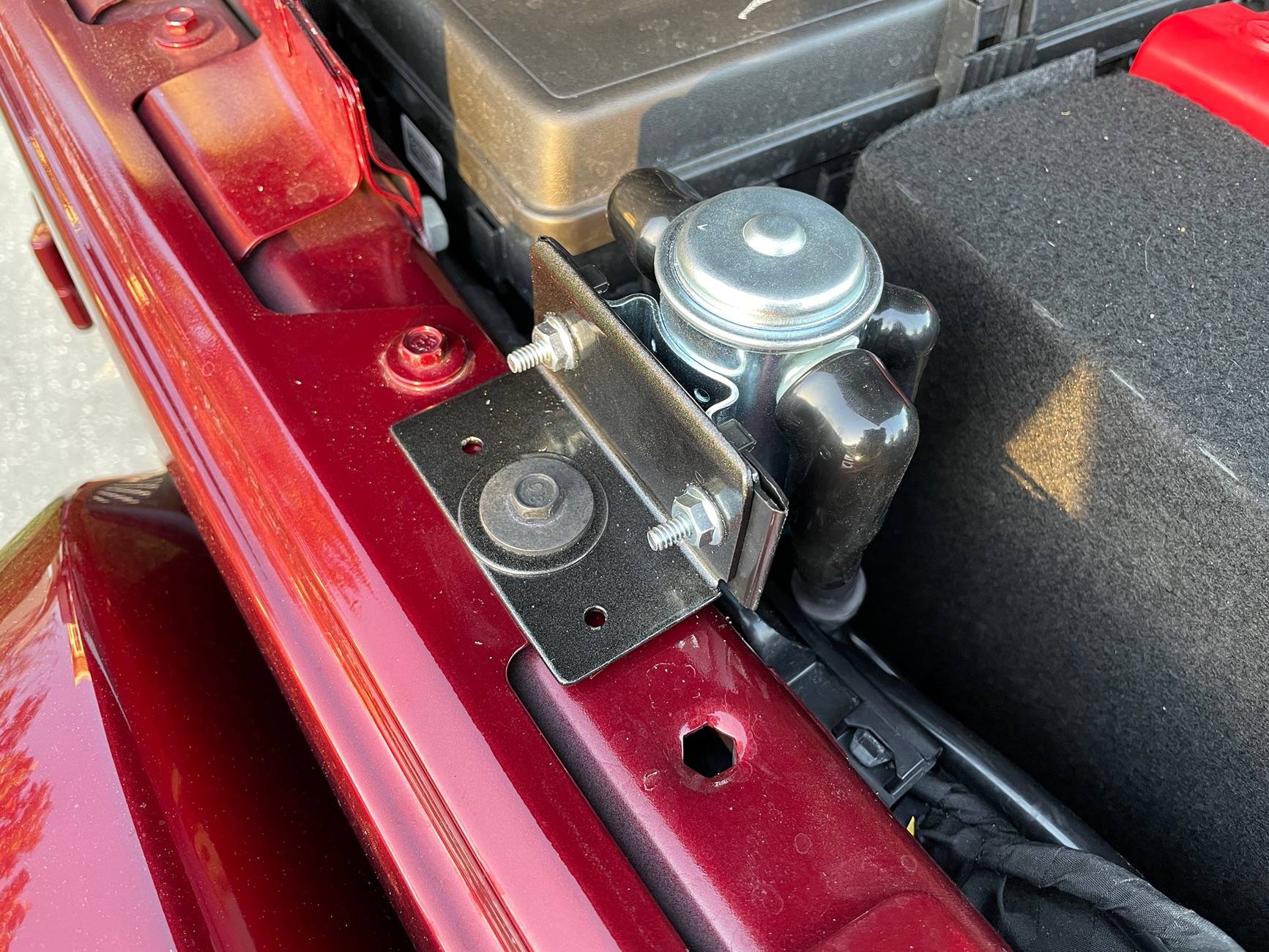
I can’t comment on the cable / synth swap but as others have stated the solenoid or switch is a good idea if only for peace of mind.

I opted for the warn solenoid. It’s wired to aux 4. Install was easy. I just had to fabricate a mounting bracket.

One thing I like about having the winch switched is that some random jackass can’t run my winch with their own cable or remote since the power is almost exclusively off.
Prolly doesn’t happen often but for me, just more peace of mind.

Jeep Wrangler JL Need advice for winch setup / wiring IMG_3061
 

WannFly

Well-Known Member
First Name
Priyo
Joined
Jul 30, 2021
Threads
40
Messages
857
Reaction score
1,221
Location
Atlanta
Vehicle(s)
2021 Rubicon 4Xe, 2026 MOAB
Build Thread
Link
Occupation
Cyber security
A solenoid is in my list of things to do, now finding a place close to the battery to mount is whole 'nother story in a already overcrowded 4Xe which I have overcrowded even more with a lot of junk
 

LAM

Well-Known Member
First Name
Larry
Joined
Jun 25, 2024
Threads
8
Messages
486
Reaction score
842
Location
Bay Area California
Vehicle(s)
2022 Sahara 4XE
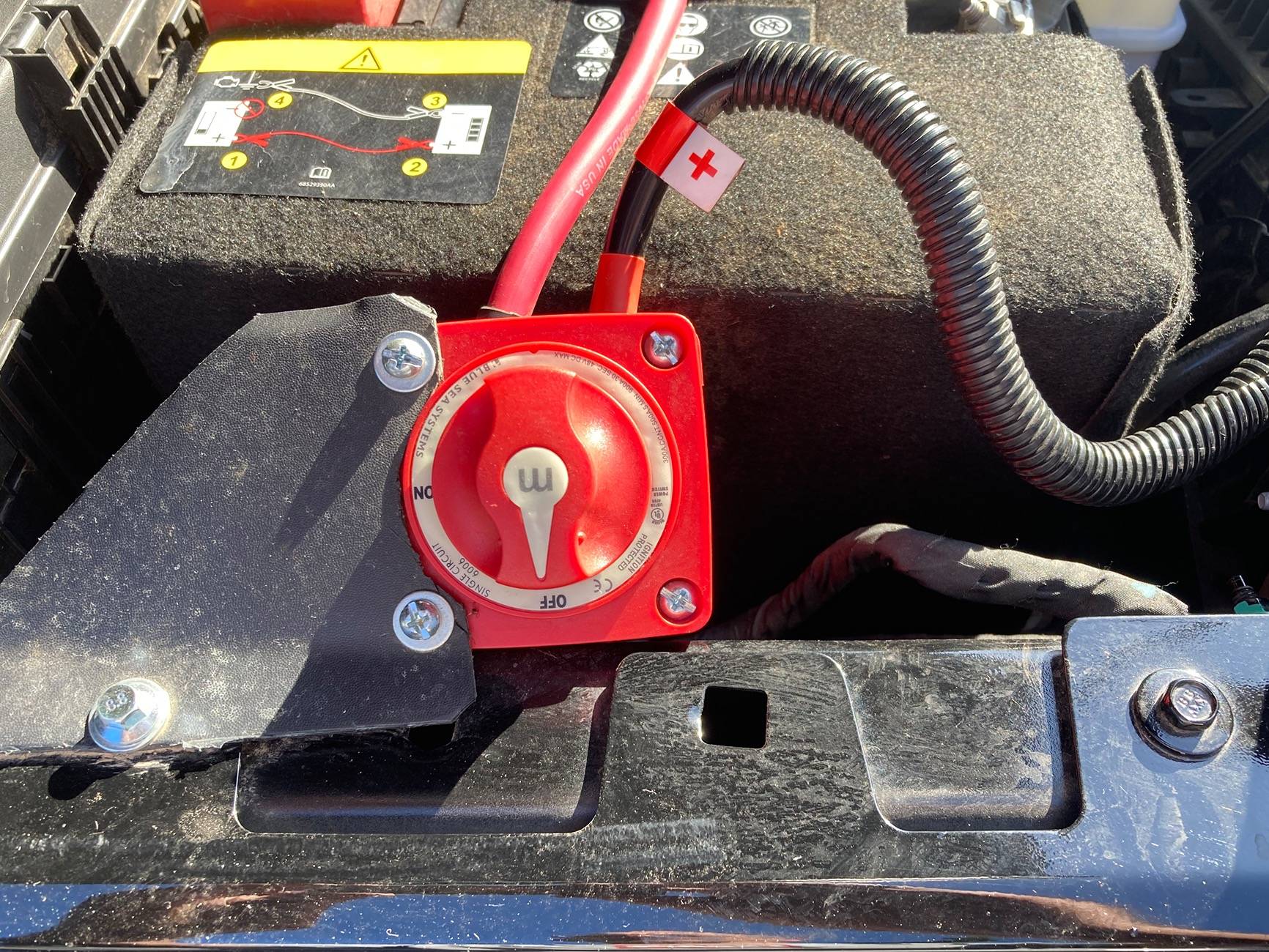
A high current switch is a cheaper, less complicated solution,
Jeep Wrangler JL Need advice for winch setup / wiring 20250428-IMG_1904-C1

If I had had a longer red lead to the battery I could have rotated and packed the switch into this space a bit better. To reduce chafing damage you can get the split plastic flex tubing to snap on the cables, even after installation.
 

WannFly

Well-Known Member
First Name
Priyo
Joined
Jul 30, 2021
Threads
40
Messages
857
Reaction score
1,221
Location
Atlanta
Vehicle(s)
2021 Rubicon 4Xe, 2026 MOAB
Build Thread
Link
Occupation
Cyber security
I am obsessed with Tesa tape, when I install something, all the wires are Tesa tapped, needed or not lol. that should help a little with chaffing as well. or not.
 

Sponsored

beachbumm78

Well-Known Member
First Name
Kristy
Joined
Apr 21, 2018
Threads
31
Messages
1,482
Reaction score
2,919
Location
Phoenix, AZ
Vehicle(s)
2020 bikini blue Rubicon
Occupation
Athletic trainer & Massage therapist
Vehicle Showcase
1
The winch requires thick high capacity cables direct to the battery. The solenoid is a simple relay switch that cuts power to these cables near the battery when the winch is not in use (which is the vast majority of the time).

The idea is if the cables are not routed securely they can chafe against metal, wear through the insulation and cause a short. If you don't have a solenoid the cables will always be powered. The short will likely occur while you are driving and you will not have a way to quickly stop the short. Likely resulting in a vehicle fire.

If you have a solenoid and this happens, the cables will be unpowered while you're driving so there won't be a short. When you turn on the solenoid to use the winch you will immediately notice the short and you will already have a finger on the solenoid switch to immediately cut power. Likely avoiding a vehicle fire.

The other situation is a front end collision that damages or severs the cables. With a solenoid, the cables won't be powered and there won't be a short. Without a solenoid, you now have a severe electrical fire on top of crashing into something.

You will see people here saying that they haven't used a solenoid on their winch for years and never had a problem. Well, I'm sure that's true. Until it's not and you have a very bad day.
I actually met a jeeper a few years ago and she had that happen to her Jeep actually. Winch connected directly to battery, wiring shorted out they figure, and it caught fire and burnt her Jeep to a crisp.
 

dapipp

Well-Known Member
First Name
David
Joined
Nov 6, 2018
Threads
2
Messages
226
Reaction score
312
Location
NW Idaho
Vehicle(s)
2006 TJ, 2006 LJ, 2019 JLR, 2024 JLUR
I will try to take your questions in order.

Fist let's talk about converting from steel rope to synthetic rope. You need to inspect your winch drum very carefully. Any bump, scratch, imperfection will need to be sanded down smoothly so nothing can snag your synthetic rope. Otherwise you can possibly shorten the life of your new synthetic rope.

As far as the amount of line, your buddies are correct that a 50' line will probably be more advantages based on where and how you wheel. Just keep in mind to always keep at least 5 wraps of line on your drum at a minimum when running out your line.

Here is a link to a Warn site that explains power loss.
https://www.warn.com/warn-winch-performance-specifications-pulling-capacity-by-layer

The use of a solenoid or switch is a better choice than running straight to the battery. Just make sure the solenoid or switch is rated high enough for your winch, the terminals are covered/protected. You should also know how to get around a solenoid or switch if they fail on the trail.

When it comes to fairleads there are not as many options, though tons of vendors, as you would think. While I have seen a cast iron fairlead for wire rope one should never be used for synthetic rope. The same goes for a steel roller fairlead, only for wire. Fairleads for synthetic rope are generally made out of aluminum, or some version of an aluminum alloy. The fairlead has the same issues as the drum. Any imperfections will potentially damage your synthetic rope.

So back to your last question if you stay with steel you should use a steel roller fairlead.
 

LazyJL

Well-Known Member
First Name
Larry
Joined
Sep 13, 2020
Threads
4
Messages
305
Reaction score
394
Location
SoCal
Vehicle(s)
2020 Rubicon, 2001 built XJ
Occupation
Retired fabricator and mechanic
Clubs
 
A few decades ago, I watched my uncle try to pull a tree stump with his Jeep’s winch’s steel cable.
The hook snapped off, and the cable came flying back at the Jeep, punching through the windshield and exiting through the rear window. It missed my uncle's head by inches.
Not wanting to die this way, I will never use a steel cable since they stretch under load. Synthetic line does not stretch the way steel does.

I use a solenoid to send power to the winch to prevent vandals from shorting the remote plug and powering up the winch. A hood lock prevents access to the solenoid.
 
Last edited:

C.Sco

Well-Known Member
Joined
Mar 19, 2023
Threads
13
Messages
1,264
Reaction score
2,698
Location
California
Vehicle(s)
2023 4xe Rubicon
Build Thread
Link
Vehicle Showcase
1
I use a winch solenoid because my Winch 12V+ wire is routed between my steel bumper and grill, so a front end collision could easily result in a hot short.

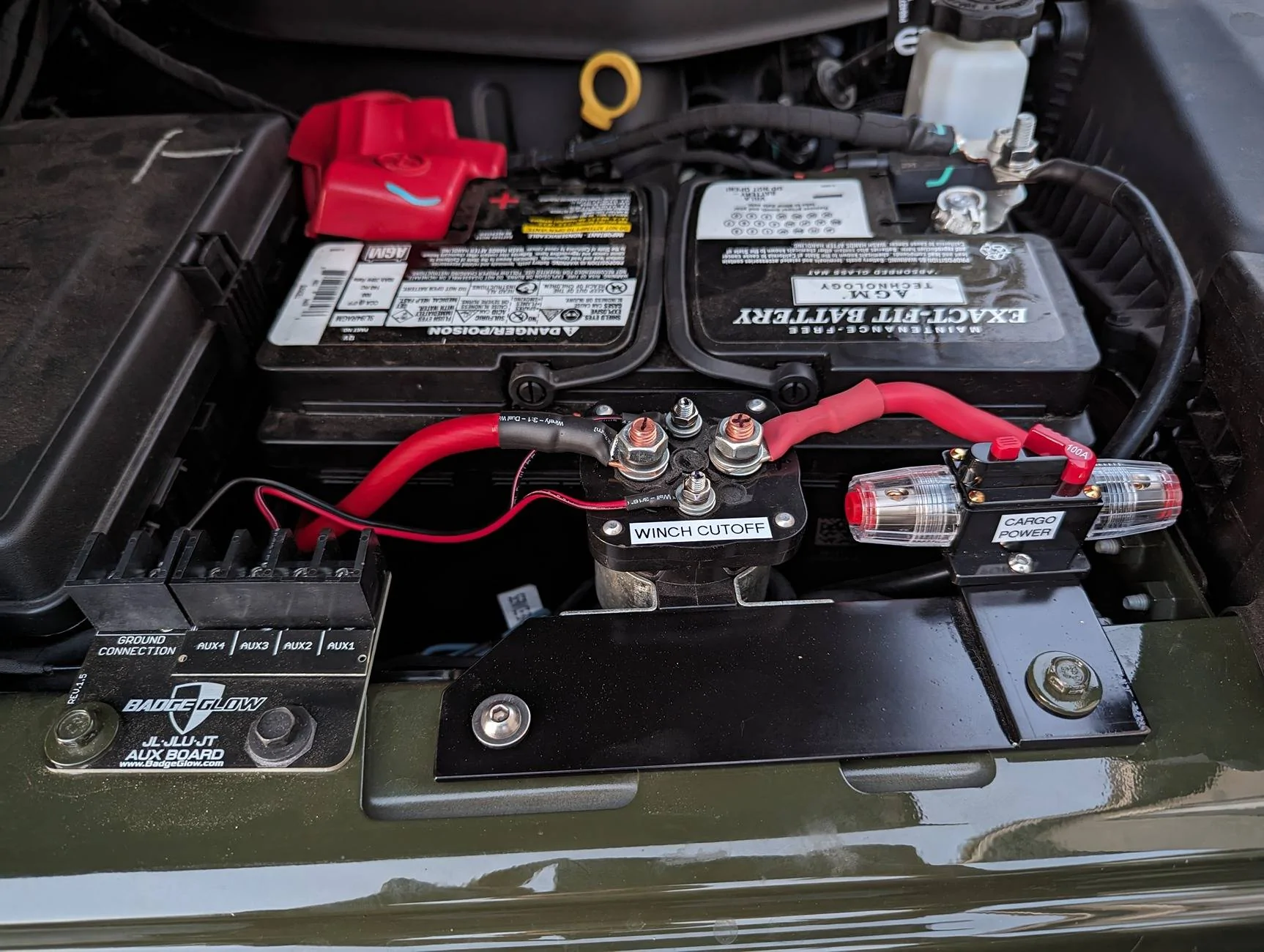
This is the setup I did. Made this bracket out of aluminum L extrusion. Used a BadgeGlow aux board (just makes it easier to attach stuff to my Mopar aux buttons), and then ran the + and - control wires from the solenoid straight to that board, just using 16awg wire.

(ignore the circuit breaker on the right, that's unrelated to the winch)

Jeep Wrangler JL Need advice for winch setup / wiring 2023-06-16 20.46.30
 

RudeJeepin

Well-Known Member
First Name
Carl
Joined
Jul 31, 2021
Threads
2
Messages
797
Reaction score
1,379
Location
Washington
Vehicle(s)
2021 JLURD
5878BBD1-35A1-4E9E-BAD3-A4C37EF2E26D.jpeg


Hello Everyone,

I have a few questions about this winch. It’s a Warn Zeon 10 which has a steel cable. I was talking to a few guys, supposedly very knowledgeable, about installing a synthetic rope. The winch calls for a 3/8“ 85’, I think, but they said to go with 50’ because the longer the line is the more strength or lbs. it degrades. Also, because in the NE, where we are, you’re probably only 20-30 feet away from what you’re recovering and can always add an extension.

Also, they suggest a solenoid to place in between the winch and the battery to reduce risk of fire for short. Can someone explain this?

If I decided to use my existing steel cable, can it be used with a cast iron fairlead? Or do I need to use the steel roller it came with?

Thanks in advance!
This past weekend I used my winch in the snow. My choice was a tree at 20ft but about 40degrees to the side or a tree almost straight ahead, but at 80 plus feet away.
I choose the closer, only needed to pull myself out of the holes I dug. So the angle wasn't really an issue.
Jeep Wrangler JL Need advice for winch setup / wiring 20250426_135550

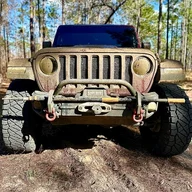
Look close, that is an original Warn cast iron hawse fairlead from my old XD9000 winch. That bought before synthetic was even a thing. Back in the day Warn used to sell every winch with either a roller or hawse style fairlead. I passed the winch down to my boy, but kept the hawse fairlead. Bought a VR EVO 10, I liked the profile better for my JLURD that I originally put it on, before swapping it over to my Gladiator. I like the slim profile better. The tow hooks stick out the furthest and I like it that way.

As far as synthetic vs steel, or 50 vs 80ft, or the solenoid, I'll let that be for others to discuss.
But mine is 90ft of steel and no solenoid. Although, I do have a solenoid if I ever get around to adding it.
Sponsored


Top