Sponsored

3.6 power loss at elevation

Zandcwhite

Well-Known Member
First Name
Zach
Joined
Sep 4, 2019
Threads
11
Messages
8,305
Reaction score
14,199
Location
Patterson, ca
Vehicle(s)
2019 jlur
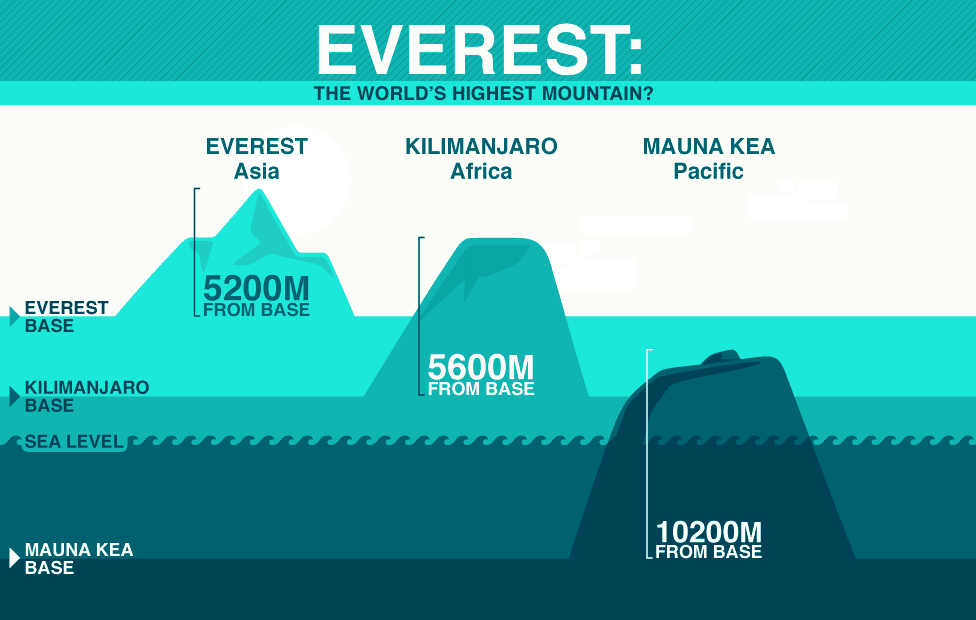
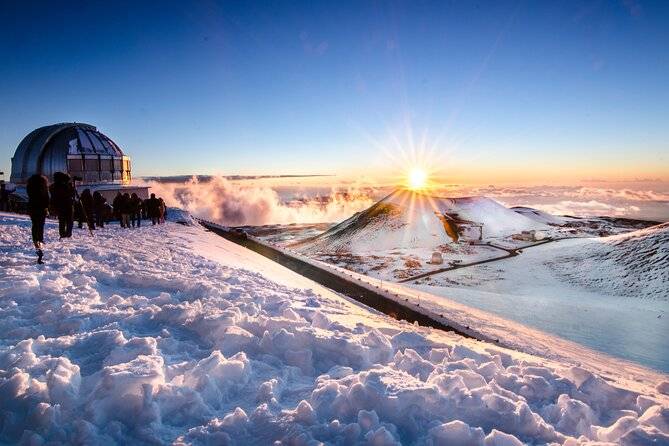
Mauna Kea (on the Big Island) is considered to be the largest mountain in the world when measured from its base (which is underwater) at 33,500'. It's under 44 miles to climb over 13,800'. https://maps.app.goo.gl/GMA5znc9S6ddERjK9

Unfortunately we'll never be able to test the power output there since the roads aren't open to the public...

24.jpg
I still think that claim is silly, all other mountains are measured from sea level no matter how tall the land mass around them is, why would we measure this one from some depth below sea level? Don't all land masses extend to well below sea level or are they floating? I guess I'm 7' tall if we measure from 13" under whatever surface I'm standing on...
Sponsored


AnnDee4444

Well-Known Member
Joined
Jan 14, 2019
Threads
54
Messages
5,529
Reaction score
7,948
Location
Vehicle(s)
'18 JLR 2.0
I still think that claim is silly, all other mountains are measured from sea level no matter how tall the land mass around them is, why would we measure this one from some depth below sea level? Don't all land masses extend to well below sea level or are they floating? I guess I'm 7' tall if we measure from 13" under whatever surface I'm standing on...
You're still 5'11" when standing in a full bathtub.

So global warming causes the sea levels to rise after all the glaciers melt. But what happens if it gets really hot... evaporation? Sea levels would drop... 🤔


Jeep Wrangler JL 3.6 power loss at elevation t+Everest+is+NOT+The+Tallest+Mountain+in+The+World
 

Zandcwhite

Well-Known Member
First Name
Zach
Joined
Sep 4, 2019
Threads
11
Messages
8,305
Reaction score
14,199
Location
Patterson, ca
Vehicle(s)
2019 jlur
You're still 5'11" when standing in a full bathtub.

So global warming causes the sea levels to rise after all the glaciers melt. But what happens if it gets really hot... evaporation? Sea levels would drop... 🤔


t+Everest+is+NOT+The+Tallest+Mountain+in+The+World.png
And everest would still be taller, which was my point. Everest is standing in the same bathtub even if it's farther away from the surrounding water. If we measured everything from the center of the earth, everest still wins. Sea level is the benchmark. If you measured the rockies from the surrounding land mass they'd only measure ~10k.
 

JeepinJason33

Well-Known Member
Joined
Oct 3, 2020
Threads
43
Messages
1,308
Reaction score
1,553
Location
Denver
Vehicle(s)
2021 JLUR, 2021 GCL, 1997 TJ, 1983 Chief FSJ
Clubs
 
Typical CO resident, forgets that the Sierra Nevada's exist🤣 I live at 102' above sea level and I'm frequently at 9k ft+ within 5 hours of home. All while still in California. Yes climbing from a few hundred feet to 10k feet in a few hours is normal for me and the performance loss is glaring with the 3.6L. It wasn't nearly as noticeable with the 2.0t. Fortunately the JL and the 8 speed are good enough I don't end up in the slow lane climbing grades at 40mph like the old 4.0L but it's still obvious.

I was born in Sacramento and grew up in Fresno so very familiar with the Sierra Nevada Range, not the same at all as driving daily above 5,500-6,000'. There are very few people living and commuting above 5,500' in California compared to the 3 million people in Denver metro area alone. I believe Lake Tahoe is one of the biggest population cities at elevation in California with 55,000 people living there. So, the vast majority of US Drivers live and commute below 1,000'. Your trips, frequent or not are still coming from a much lower elevation and will hit you and your ECU differently. The ECU will be trying to adjust the same time you are going up the pass, potentially causing the feeling of power loss. Which brings us back to the OP question,

Will the 3.6 re-learn the O2 loss if I lived there? Self adjusting or need a recalibration.
Just wondering....


The answer is YES, the ECU will adjust on its own.
 

AnnDee4444

Well-Known Member
Joined
Jan 14, 2019
Threads
54
Messages
5,529
Reaction score
7,948
Location
Vehicle(s)
'18 JLR 2.0
I'm somewhat familiar with long term fuel trims, but always thought these adjusted in a matter of minutes... for those times when go up in elevation. If it took longer the tune would be massively rich (or lean if going downhill). Also good for other types of density changes (like a change in air temperature).

Is there some other learned parameter that only people in Colorado know about? Because it sounds like they are filling up with 85 octane and complaining that their motor runs like shit at lower elevation until it "learns" (a.k.a. fill-up with 87).
 

Sponsored

Zandcwhite

Well-Known Member
First Name
Zach
Joined
Sep 4, 2019
Threads
11
Messages
8,305
Reaction score
14,199
Location
Patterson, ca
Vehicle(s)
2019 jlur
I was born in Sacramento and grew up in Fresno so very familiar with the Sierra Nevada Range, not the same at all as driving daily above 5,500-6,000'. There are very few people living and commuting above 5,500' in California compared to the 3 million people in Denver metro area alone. I believe Lake Tahoe is one of the biggest population cities at elevation in California with 55,000 people living there. So, the vast majority of US Drivers live and commute below 1,000'. Your trips, frequent or not are still coming from a much lower elevation and will hit you and your ECU differently. The ECU will be trying to adjust the same time you are going up the pass, potentially causing the feeling of power loss. Which brings us back to the OP question,

Will the 3.6 re-learn the O2 loss if I lived there? Self adjusting or need a recalibration.
Just wondering....


The answer is YES, the ECU will adjust on its own.
I responded because you said folks outside of UT and CO rarely see high elevations. What if I told you nearly 2x as many people visit lake Tahoe every year as live in those 2 states combined? And that's just Tahoe, another 4 million a year visit Yosemite. As you're well aware there are hundreds of other locations across the Sierras where people travel and see 7k+ feet daily. I'd be willing to bet more people see those elevations in CA everyday than anywhere else in the country by a large margin.
 

JeepinJason33

Well-Known Member
Joined
Oct 3, 2020
Threads
43
Messages
1,308
Reaction score
1,553
Location
Denver
Vehicle(s)
2021 JLUR, 2021 GCL, 1997 TJ, 1983 Chief FSJ
Clubs
 
I'm somewhat familiar with long term fuel trims, but always thought these adjusted in a matter of minutes... for those times when go up in elevation. If it took longer the tune would be massively rich (or lean if going downhill). Also good for other types of density changes (like a change in air temperature).

Is there some other learned parameter that only people in Colorado know about? Because it sounds like they are filling up with 85 octane and complaining that their motor runs like shit at lower elevation until it "learns" (a.k.a. fill-up with 87).
Nobody I see that lives here is complaining, that was my point earlier. 85 is our regular and basically the same as 87 here because the air is less dense giving a slightly richer air-fuel ratio. When you purchase a car at elevation, everything else you test drive is also at elevation so it is an even playing field. Few know or care enough to look for a turbo to offset the difference when they go from 6,000' to 10,000' because most don't drive that on a daily basis. Many turbo's require/run better on premium which costs more per gallon. On the Jeep specifically, the question is then does the higher operating cost offset the 3% per 1,000' reduction in performance for the occassional trip up the mountain? With the diesel, it is a higher startup cost due to the upcharge for the engine and higher fuel cost as Diesel is still priced above regular.
 

TheRaven

Well-Known Member
Joined
Oct 22, 2020
Threads
6
Messages
2,844
Reaction score
4,176
Location
Reading, Pennsylvania
Vehicle(s)
Sold
Only if Burning Man is held under 5000' elevation
Unless you've got the 2.0l...then you're all good BECAUSE TURBO BABY YEAH!!!!

I'm screwed though with my 3.6l. I can't even climb speed bumps. Too much power loss.

I responded because you said folks outside of UT and CO rarely see high elevations. What if I told you nearly 2x as many people visit lake Tahoe every year as live in those 2 states combined? And that's just Tahoe, another 4 million a year visit Yosemite. As you're well aware there are hundreds of other locations across the Sierras where people travel and see 7k+ feet daily. I'd be willing to bet more people see those elevations in CA everyday than anywhere else in the country by a large margin.
This is still a drop in the bucket though...I mean i'm sure you're aware there's like 330M people in this country...but there's also over 50M cars sold every year. We already established that you and I disagree on what is significant power loss, but even if we go with the claim that over 5000ft the loss is bad, it's pretty accurate to say that the vast majority of the population rarely see that altitude.

EDIT: I just did a little googling and found this:

"17 states have NO real estate above 3,000'.
To a first approximation, nobody east of the 100th meridian lives above 3,000'. (E.g., the Berkshires hit 3500', but the towns at their base are at 700'.)

So, to a first approximation, "residents over 3000 feet " is pretty much is limited to the US Mountain States: the residents of Colorado, New Mexico, Utah, Montana, and Wyoming.
You're talking mostly these five states - 12 or 13 million people - plus some loose change.

http://en.wikipedia.org/wiki/Mountain_States

So it's

Colorado 5m,
Utah 3m,
New Mexico 2m;
Idaho 1.5m (and metro Boise isn't over 3000', that removes 0.5m, so really, ~1m in Idaho),
Montana 1m
Wyoming 0.5m,

with
some of Arizona (metro Phoenix is half the population of the state, and under 3,000') ,
and Nevada (metro Las Vegas is half the state, and under; Reno is up there, but only 1/4 of a million people)
and bits of Texas (el Paso, 3/4 million), Wash, Oregon (town of Bend etc), California (Tahoe).
Maybe a handful of folks on the west edge of Nebraska, Kansas, the Dakotas.
Maybe a few more people in southern Cal.
Now you're down to "residents of mountaintop observatories and fire-watch towers"
in places like New Hampshire and Hawaii.

Total: say 16-18 million, tops.
That's about 5-6% of the US."
 
Last edited:

AnnDee4444

Well-Known Member
Joined
Jan 14, 2019
Threads
54
Messages
5,529
Reaction score
7,948
Location
Vehicle(s)
'18 JLR 2.0
Nobody I see that lives here is complaining, that was my point earlier. 85 is our regular and basically the same as 87 here because the air is less dense giving a slightly richer air-fuel ratio.
Ok, but I was questioning the tuning aspects of all engines and how they "learn", not 2.0 vs. 3.6.

What happens when you go down in elevation with 85 octane (in any engine)? Lean & ping. I guess excessive pinging could be considered ECU "learning"...
 

CarbonSteel

Well-Known Member
Joined
Jul 21, 2019
Threads
305
Messages
5,795
Reaction score
8,215
Location
Colorado
Vehicle(s)
2001 Cherokee; 2023 Bronco Wildtrak; 2024 Grand Cherokee 4xe
Vehicle Showcase
1
I was born in Sacramento and grew up in Fresno so very familiar with the Sierra Nevada Range, not the same at all as driving daily above 5,500-6,000'. There are very few people living and commuting above 5,500' in California compared to the 3 million people in Denver metro area alone. I believe Lake Tahoe is one of the biggest population cities at elevation in California with 55,000 people living there. So, the vast majority of US Drivers live and commute below 1,000'. Your trips, frequent or not are still coming from a much lower elevation and will hit you and your ECU differently. The ECU will be trying to adjust the same time you are going up the pass, potentially causing the feeling of power loss. Which brings us back to the OP question,

Will the 3.6 re-learn the O2 loss if I lived there? Self adjusting or need a recalibration.
Just wondering....


The answer is YES, the ECU will adjust on its own.
But it will not generate oxygen, so the power loss will still happen...
 

Sponsored

JeepinJason33

Well-Known Member
Joined
Oct 3, 2020
Threads
43
Messages
1,308
Reaction score
1,553
Location
Denver
Vehicle(s)
2021 JLUR, 2021 GCL, 1997 TJ, 1983 Chief FSJ
Clubs
 
ECU learning times depend on the parameters and the car. You will get different answers on this one and until an actual Jeep engineer jumps in, I would take any answer with a grain of salt. As far as running 85 at a lower elevation, the ECU most likely can't adjust enough to offset the difference in air density and the vehicle could ping. This is a problem with the Octane more than a problem with ECU pinging due to re-learning. Most people would not notice or or it would be short lived before you refilled your tank at lower elevation. I have never noticed it with my 3.6L and have filled up in Denver, hooked the Jeep to the RV and then ran a full tank of 85 at sea level without pinging. Other engines may act differently. I would not mess with the twin turbo in my M5 as it is much more finicky, so it gets premium no matter what.
 

Tncdrew

Well-Known Member
First Name
Tom
Joined
May 3, 2022
Threads
24
Messages
1,781
Reaction score
3,496
Location
East Tennessee
Vehicle(s)
2022 JL Willys, 3.6L - 8spd
People wheeled and still do the TJs with the anemic 2.5L, but to me it is a big deal. I would not even try to roadtrip a 4.0L TJ up to telluride to go wheeling let alone a 2.5L. Unless you like climbing grades at half the speed limit with the flashers on? The JL is good enough that it gets the job done, but it's still a big deal to anyone who wants performance.
I'd still take that 4.0L equipped with a 90:1 4-low crawl ratio over that 4-cyl any day. 😉
 

Zandcwhite

Well-Known Member
First Name
Zach
Joined
Sep 4, 2019
Threads
11
Messages
8,305
Reaction score
14,199
Location
Patterson, ca
Vehicle(s)
2019 jlur
But it will not generate oxygen, so the power loss will still happen...
People don't seem to understand that the only thing that makes FI better than a carb is constantly adjusting for optimal air/fuel RATIO. If there's less air it will add less fuel no matter what, and thereby make less power. A perfectly tuned carb will make the same power as the FI, the problem is changing conditions make keeping a carb perfectly tuned impossible. FI doesn't adjust for altitude by adding anything, it subtracts fuel and power to match the air available.
 

Zandcwhite

Well-Known Member
First Name
Zach
Joined
Sep 4, 2019
Threads
11
Messages
8,305
Reaction score
14,199
Location
Patterson, ca
Vehicle(s)
2019 jlur
I'd still take that 4.0L equipped with a 90:1 4-low crawl ratio over that 4-cyl any day. 😉
I'll rave you through any trail in moab, but the catch is we have to drive there from my house. Odds are I'll l be half way home by the time you get there. And my JL came with an 86-1 crawl rato and the ability to climb any pass at 80mph, the TJ came with neither.
 

Tncdrew

Well-Known Member
First Name
Tom
Joined
May 3, 2022
Threads
24
Messages
1,781
Reaction score
3,496
Location
East Tennessee
Vehicle(s)
2022 JL Willys, 3.6L - 8spd
I'll rave you through any trail in moab, but the catch is we have to drive there from my house. Odds are ill be half way home by the time you get there.
I'll give you that! But the controllable (down low) torque of a 7 main bearing looong crankshaft inline 6, combined with ultra low gearing, on the rocks.... well, if you've never had it, you wouldn't understand. 🙂
Sponsored


Top