
Moto_21
Well-Known Member
i feel like everyone is skipping this lol. Im so curious too.Please measure the angle of the axle at the hole near the pumpkin please .
Sponsored
i feel like everyone is skipping this lol. Im so curious too.Please measure the angle of the axle at the hole near the pumpkin please .
Right at 90 degreesi feel like everyone is skipping this lol. Im so curious too.
Correct 6 is a flat pinion.so just to confirm. Caster and pinion angles are not independently adjustable? If you run more than 6deg Caster you will go negative on pinion?
thanks!
90 degrees at the pinion flange or diff cover surface.do you have an angle finder and are willing to take measurements on your front diff near the cover / upper ball joint / flat side next to upper ball joint / bottom of inner c?
Trying to see if any of those measurements reflect your alignment
Thanks much man! So its same as jk good to know.Right at 90 degrees

I’m not so sure this is true or I’ve just always had bad luck. The larger the tire the more caster I’ve always needed. 5.0-6.0 has always been the magic number for me with JKs and 37s-42sAs you go up in tire size, you can get by with less caster.
Basically meaning you will need less caster with 37s than 33s.
Pretty much yes sir.Thanks much man! So its same as jk good to know.
It's all about geometry.....Long-winded and suspension nerd-ism ahead.....I’m not so sure this is true or I’ve just always had bad luck. The larger the tire the more caster I’ve always needed. 5.0-6.0 has always been the magic number for me with JKs and 37s-42s
In theory it sounds great. In real life Scenario doesn’t seem to work that way.It's all about geometry.....Long-winded and suspension nerd-ism ahead.....
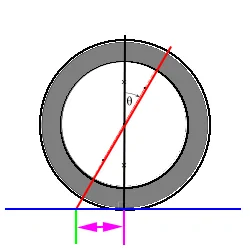
When we measure caster, we're measuring the angle on the ball joint centerline from the side, but that is only because it is the simple way to measure it.
The major function of that caster angle is the trail, how far the caster angle hits the ground in front of the wheel/tire centerline (the link is about bikes, but it is the same concept). A shorter trail will cause the steering to be quick and feel twitchy, a larger trail will make the steering feel lazy (think of an old Cadillac).
Cheesy drawing for visual reference:

Take a JL with 35"s and bolt a set of 37"s on it, it will have a larger "trail", so in effect you can back off the caster a little until you have the same trail the 33"s did and the vehicle will handle the same.
The big caveat that affects most would be the scrub. As people move up to a larger tire, they often change the wheels and the new wheels will have a different backspace which often results in a larger scrub radius. That larger scrub will need more caster to counteract it.
There is a lot more to it, but if all things are the same, you can run a smaller caster angle with a larger diameter tire.
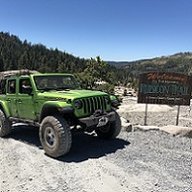
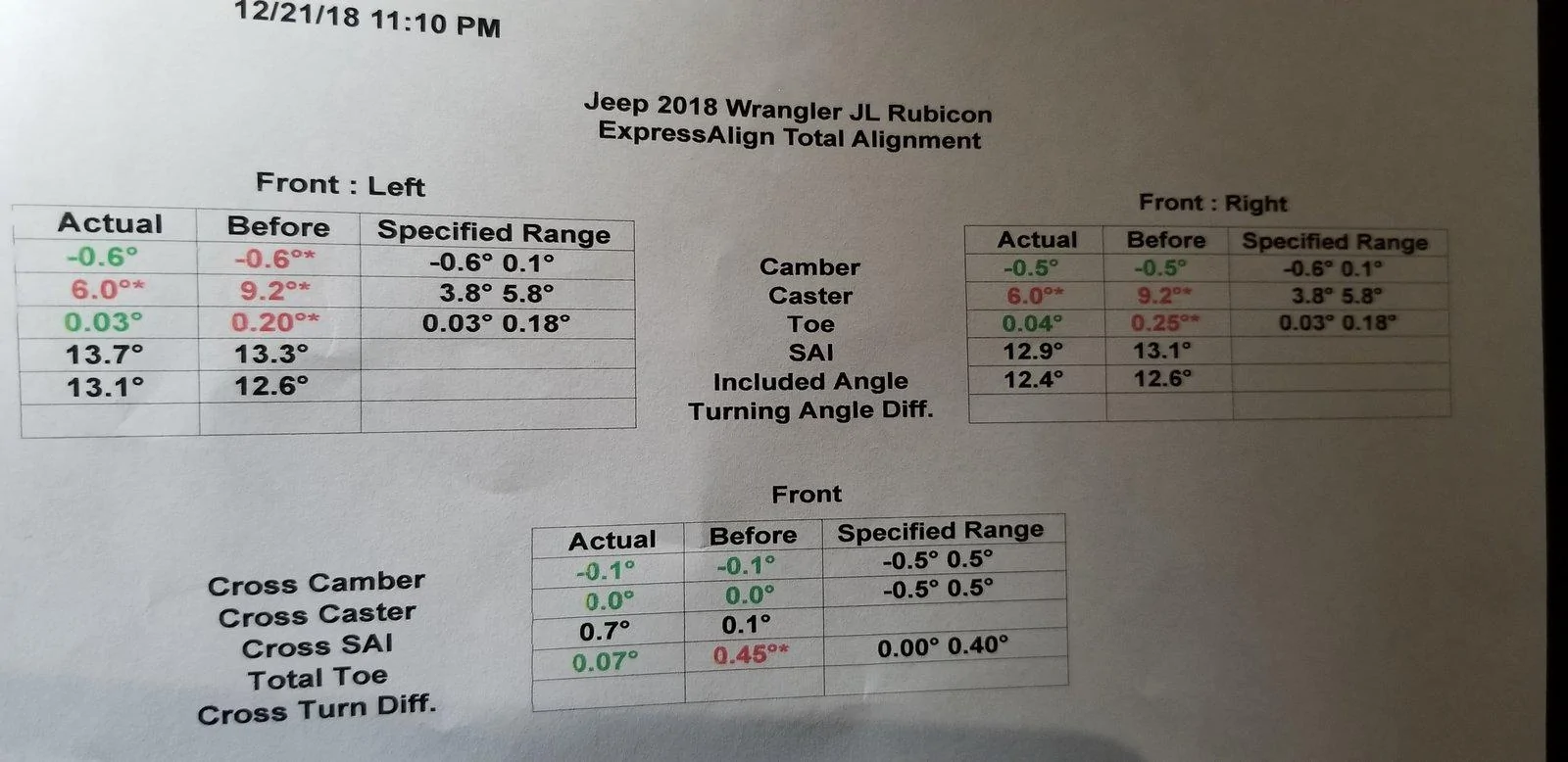
What setup are you running that allowed you to get that much caster?Sorry, didn't get the message in time to measure the angle of the axle for you before I left the shop. I have attached my measurements and changing my caster from a 9 to a 6 made a huge difference for me. Driving over the same potholes that i usually do and the steering wheel wobble is gone.

Metalcloak 3.5 Gamechanger.What setup are you running that allowed you to get that much caster?
did you follow their control arm numbers or did you crank it some more afterwards?Metalcloak 3.5 Gamechanger.
I had a shop do my install so I couldn't tell you what specs they followed. But I was having steering wheel wobble and floaty steering shortly afterwards. I was told it was aligned when I picked it up, and for the most part, it handled just fine. But my symptoms got worse so I brought it to another shop to get the alignment checked. Those were the numbers you saw on my previous attachment. I also added a Falcon 2.2 steering stabilizer and tossed the Mopar one.....Wobble gone and steering feels tighter now.did you follow their control arm numbers or did you crank it some more afterwards?


