
Sponsored

TrailRecon- Engine Failure

TheRaven

Well-Known Member
Joined
Oct 22, 2020
Threads
6
Messages
2,844
Reaction score
4,176
Location
Reading, Pennsylvania
Vehicle(s)
Sold
So when something isn't performing as well as you would like it to, you alter it to perform better.
No. Not it at all. In fact, i'm trying to think of a mod that i've done on any of my current vehicles that fits that description...none do. Both my Silverado and JLU have a small lift, 35's and steel bumpers because they look so much better that way. They looked great from the factory...no "deficiency", I just prefer the look with those changes. Other mods - like light bars, rock lights, on-board air, winches...all things I have in order to add a capability. None of them needed...in fact some of them I literally did just because I got an incredible deal.

So why is it such a leap of logic that if the engine isn't performing as you would like it to, to alter something to make it perform better?
Absolutely nothing wrong with that. The problem is that in the case of octane and oil, we are making "leaps" based on no proof whatsoever. It's all just supposition and despite having time to see the results, we haven't seen any. Yet many of us still claim we are "improving the design".

Engineers are human. Not everything can be foreseen either.
Absolutely true - engineers are human. But they are humans that know far more about the subject at hand than us humans. Again - it's not sacrilege to deviate from the prescribed plan, the problem is these threads that turn into "you must do this or you are destroying your vehicle". This is exactly the same as the fear mongering that modern media outlets rely on...it gets everyone all stressed out over things they have no ability to change.
Sponsored


jeepingib

Well-Known Member
First Name
Dusty
Joined
Jun 26, 2018
Threads
25
Messages
10,222
Reaction score
40,023
Location
College Station, TX
Vehicle(s)
18' JLUR Punk'n
Occupation
BBQ prophet
No. Not it at all. In fact, i'm trying to think of a mod that i've done on any of my current vehicles that fits that description...none do. Both my Silverado and JLU have a small lift, 35's and steel bumpers because they look so much better that way. They looked great from the factory...no "deficiency", I just prefer the look with those changes. Other mods - like light bars, rock lights, on-board air, winches...all things I have in order to add a capability. None of them needed...in fact some of them I literally did just because I got an incredible deal.
So for your lift and tires, did you stick solely with the Mopar offerings of lift, wheels, and tires? Or did you note that there was something else that worked better for your needs?

Absolutely nothing wrong with that. The problem is that in the case of octane and oil, we are making "leaps" based on no proof whatsoever. It's all just supposition and despite having time to see the results, we haven't seen any. Yet many of us still claim we are "improving the design".
It's not a tremendous leap. Higher octane fuels resist pre-detonation knock. That's their whole point in existing. That knock causes a higher load on the engine because you are getting combustion before TDC. There are knock sensors to alter the delivery of fuel and spark to mitigate, but fuel can do this before there is anything for the sensor to sense.

Also an oil that maintains a SLIGHTLY better hydrodynamic film strength at temperature, while still operating within the range of viscosity that the engine was designed for, adds a little bit more safety factor to keep parts from going into boundary zone of lubrication. And we know metal on metal is bad.

Absolutely true - engineers are human. But they are humans that know far more about the subject at hand than us humans. Again - it's not sacrilege to deviate from the prescribed plan, the problem is these threads that turn into "you must do this or you are destroying your vehicle". This is exactly the same as the fear mongering that modern media outlets rely on...it gets everyone all stressed out over things they have no ability to change.
Isn't it also fear mongering to say that you must do only what the engineers tell you? We have already discussed several time where they were not correct. And there are things that people can do to try to mitigate some of those issues. Telling everyone that they are not capable of looking into issues reasonably and finding a solution because the Jeep engineers didn't give that answer is just as bad. Especially when we have some engineers from other fields in this forum...
 

TheRaven

Well-Known Member
Joined
Oct 22, 2020
Threads
6
Messages
2,844
Reaction score
4,176
Location
Reading, Pennsylvania
Vehicle(s)
Sold
So for your lift and tires, did you stick solely with the Mopar offerings of lift, wheels, and tires? Or did you note that there was something else that worked better for your needs?
Both lifts are OEM, yes. Wheels and tires are whatever I got the best deal on at the time. I will freely admit that it's entirely possible that the OEM tires and wheels could be better than what I chose.

It's not a tremendous leap. Higher octane fuels resist pre-detonation knock. That's their whole point in existing. That knock causes a higher load on the engine because you are getting combustion before TDC. There are knock sensors to alter the delivery of fuel and spark to mitigate, but fuel can do this before there is anything for the sensor to sense.

Also an oil that maintains a SLIGHTLY better hydrodynamic film strength at temperature, while still operating within the range of viscosity that the engine was designed for, adds a little bit more safety factor to keep parts from going into boundary zone of lubrication. And we know metal on metal is bad.
It's a big leap. What you have laid out above is all true - but it's a big leap to take that and then say "this is why you must use premium fuel and 5w-30 to save your engine".

Isn't it also fear mongering to say that you must do only what the engineers tell you?
But that's not what we're saying. There are several examples of threads essentially saying "you must use higher octane/higher viscosity oil or you will destroy your engine"...but the response is not "no you must do exactly what's in the manual or you will destroy your engine". The actual response is "nah, what's in the manual is fine". Myself and several others you call out are on record multiple times in these threads saying "premium fuel/5w-30 won't hurt anything, but neither will regular/0w-20".
 

jeepingib

Well-Known Member
First Name
Dusty
Joined
Jun 26, 2018
Threads
25
Messages
10,222
Reaction score
40,023
Location
College Station, TX
Vehicle(s)
18' JLUR Punk'n
Occupation
BBQ prophet
...As for relying "on the engineering from the factory as the gospel truth" - that's also hyperbole. It's more like we simply aren't so self-absorbed that we believe we know better than people that design vehicles for a living.
...But that's not what we're saying. There are several examples of threads essentially saying "you must use higher octane/higher viscosity oil or you will destroy your engine"...but the response is not "no you must do exactly what's in the manual or you will destroy your engine". The actual response is "nah, what's in the manual is fine". Myself and several others you call out are on record multiple times in these threads saying "premium fuel/5w-30 won't hurt anything, but neither will regular/0w-20".
Is it not a bit of hypocrisy to say that you aren't sensationalizing the situation with your previous statement. That anyone who decides to do something different than what the manual says, must be self-absorbed to believe they know better?

Two wrongs don't make a right.
 

TheRaven

Well-Known Member
Joined
Oct 22, 2020
Threads
6
Messages
2,844
Reaction score
4,176
Location
Reading, Pennsylvania
Vehicle(s)
Sold
Is it not a bit of hypocrisy to say that you aren't sensationalizing the situation with your previous statement.
No, it's not. I'm not sensationalizing anything...in fact my argument is precisely AGAINST sensationalizing. That's been my stance the entire time...because the differences we are talking about re: octane and oil viscosity are so minute that even if there is an actual difference, it would be difficult to justify the admittedly reasonable cost increase. That's the overall point. In fact, that's what seemingly every single pervasive debate on this site always boils down to - 2.0 vs 3.6, 87 vs 93, 20w vs 30w...the list goes on and on. Endless debates over TINY differences that we claim create huge results when none of them do.
 

Sponsored

jeepingib

Well-Known Member
First Name
Dusty
Joined
Jun 26, 2018
Threads
25
Messages
10,222
Reaction score
40,023
Location
College Station, TX
Vehicle(s)
18' JLUR Punk'n
Occupation
BBQ prophet
No, it's not. I'm not sensationalizing anything...in fact my argument is precisely AGAINST sensationalizing. That's been my stance the entire time...because the differences we are talking about re: octane and oil viscosity are so minute that even if there is an actual difference, it would be difficult to justify the admittedly reasonable cost increase. That's the overall point. In fact, that's what seemingly every single pervasive debate on this site always boils down to - 2.0 vs 3.6, 87 vs 93, 20w vs 30w...the list goes on and on. Endless debates over TINY differences that we claim create huge results when none of them do.
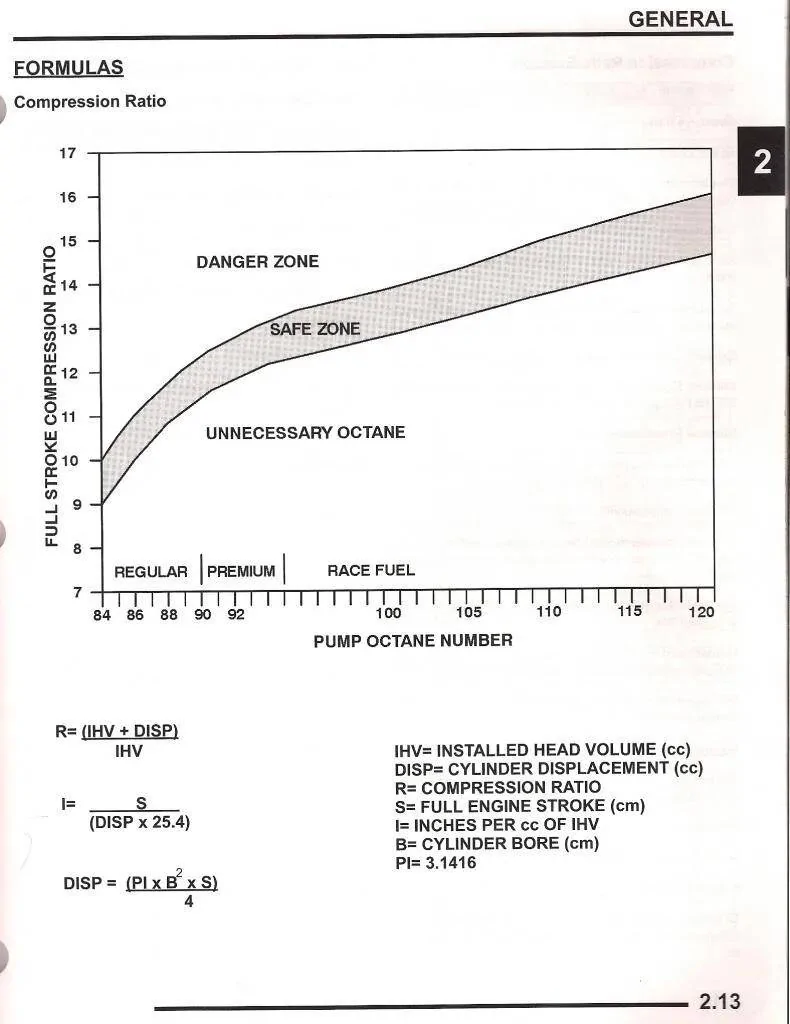
Well lets rationalize this a bit. Octane has a definitive reason for existing. There are many engines that require higher octane in order to deter pre-detonation. Below is a chart that offers a look into why that is.
Jeep Wrangler JL TrailRecon- Engine Failure 1748533251280-8

This is an older chart from an old textbook, but the information is still relevant. The 3.6 in the JL has a 11.3 to 1 CR. 87 octane is on the boundary between safe and danger. I believe that especially when hot out, one should err on the side of caution and run 89 when available. That's not sensationalizing anything, or insulting anyone's intelligence and ability to make critical decisions. Just showing facts, and offering my opinion based on those facts.

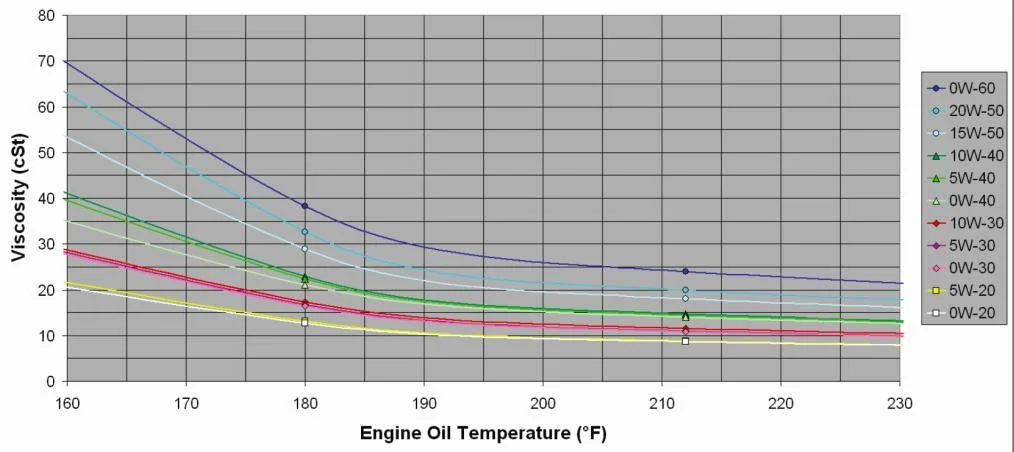
With oil, that horse has been beaten to death ad nauseum here before. It doesn't cost anything more to run a slightly thicker oil. And it again, adds a slight advantage to helping oil maintain the hydrodynamic layer of fluid between surfaces. This can be seen on the chart below.
Jeep Wrangler JL TrailRecon- Engine Failure 1748533927037-lr

0w-20 is very thin at operating temperature. Below 10cSt above 200F which all our engines operate at. Switching to a 0w-30, 5w-30, or 0w-40 is still within the specified range of viscosity for the engine at operating temperatures, while maintaining a better fluid layer at temperatures above 220, where the oil runs at frequently when in hot environments. This is why many, many manufacturers have different recommendations for viscosity based on where the machine was going to be operated at.

I'm not misrepresenting anything here, or sensationalizing things. Just asking people to think critically.
 

TheRaven

Well-Known Member
Joined
Oct 22, 2020
Threads
6
Messages
2,844
Reaction score
4,176
Location
Reading, Pennsylvania
Vehicle(s)
Sold
I'm not misrepresenting anything here, or sensationalizing things. Just asking people to think critically.
Again, not debating the facts...we are in agreement on the legitimacy of higher octane and oil viscosity.

The problem still remains - none of what you posted above helps the ACTUAL discussion because there's no path from those facts that you posted to any difference in the rocker failure issue, or any proven gains of any kind.
 

Terrymo

Well-Known Member
First Name
Terry
Joined
Jun 17, 2022
Threads
48
Messages
10,677
Reaction score
32,985
Location
SoCal
Vehicle(s)
2023 JLURXR 3.6 ET
Clubs
 
Engineers are restricted by the decision makers above them and the budget constraints they are required to meet. That leaves room for better solutions than OEM, not because anyone is smarter or dumber, just as a reality of running a business. Many people (myself included) tend to defend out choices either by saying, if there was something better, Jeep engineers would have done it. Or Jeep engineers are dumb they should have done thus and so.

If only Jeep engineers had free rein and no financial restrictions…wishful thinking
 

jeepingib

Well-Known Member
First Name
Dusty
Joined
Jun 26, 2018
Threads
25
Messages
10,222
Reaction score
40,023
Location
College Station, TX
Vehicle(s)
18' JLUR Punk'n
Occupation
BBQ prophet
There is a design issue, we agree on that. Where we disagree is that you believe that the price of switching to 89 octane, and slightly thicker oil, is an insurmountable fee in trying to prevent the inevitability of the death of the engine. I consider it cheap enough to be worth the effort.
 

jeepingib

Well-Known Member
First Name
Dusty
Joined
Jun 26, 2018
Threads
25
Messages
10,222
Reaction score
40,023
Location
College Station, TX
Vehicle(s)
18' JLUR Punk'n
Occupation
BBQ prophet
Also, pre-detonation can be one of the issues causing the valvetrain to become damaged. The force created can cause valve to snap shut fast enough to put extra load on the followers and cams. It's not something that is normally caused by pre-detonation, but it's also not entirely impossible. There are many cases on engines with excessive detonation issues where bent push-rods, and damaged lifters, have been noted.
 

Sponsored

TheRaven

Well-Known Member
Joined
Oct 22, 2020
Threads
6
Messages
2,844
Reaction score
4,176
Location
Reading, Pennsylvania
Vehicle(s)
Sold
if youre out there, in 90-100 degree summer weather, crawling on rocks, you dont think the higher octane and thicker oil will help the motor at all, over 0w20 and 87 octane? (either one).
I've been off-road in 90+ degree heat on 87 octane and experienced no issues. Now i'm not saying that that fact is definitive proof that there is absolutely no advantage - and if I were going to be pushing a JL really hard like that (I would never dare do that with a Stellantis product), I might consider running premium for that instance. That doesn't make it necessary though - I could very well be wasting my money and time.

On the oil side, there's no reason to expect that something thicker than 0w-20 would make a difference. First, the difference between 0-20 and 0-40 is very small, and second, any gains in residual lubrication facilitated by a heavier oil would be more than offset by the flow rate making it take longer for fresh oil to circulate.

on a separate note, is the RPM fan controller helpful? or did the jeep engineers nail it when they designed the cooling system?
Dunno.
 

Jeep Junkie

Well-Known Member
First Name
Muhammad
Joined
Dec 7, 2024
Threads
256
Messages
3,476
Reaction score
3,088
Location
Seattle, WA
Vehicle(s)
2024 JL Wrangler Willys
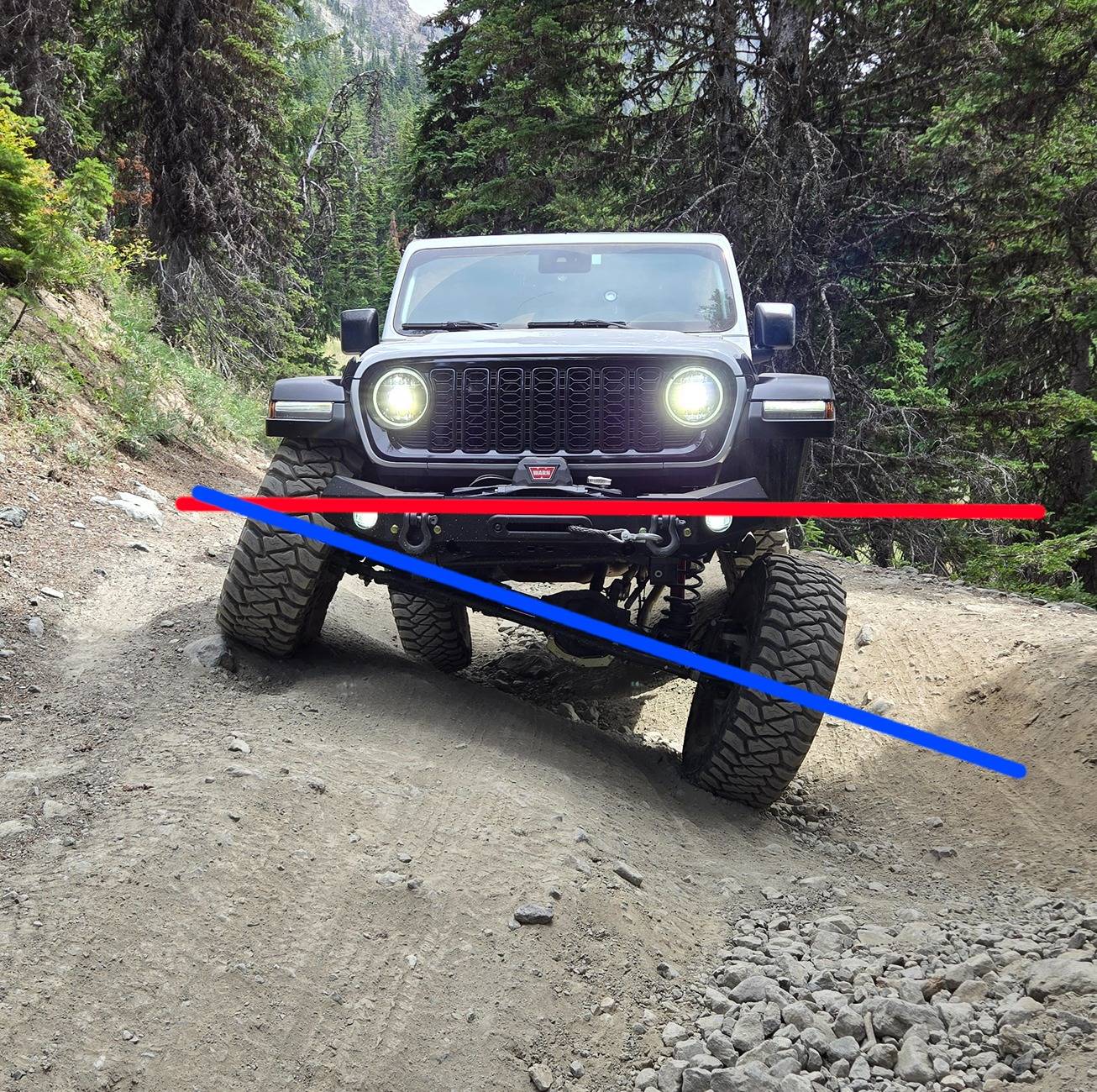
Guys, keep fixing your Jeep, there is nothing like it. I felt like I was on an even road there until I came out to take a picture and saw Jeep going crazy 😃👍

Jeep Wrangler JL TrailRecon- Engine Failure 20240803_185449(1)
 

TheRaven

Well-Known Member
Joined
Oct 22, 2020
Threads
6
Messages
2,844
Reaction score
4,176
Location
Reading, Pennsylvania
Vehicle(s)
Sold
Engineers are restricted by the decision makers above them and the budget constraints they are required to meet. That leaves room for better solutions than OEM, not because anyone is smarter or dumber, just as a reality of running a business. Many people (myself included) tend to defend out choices either by saying, if there was something better, Jeep engineers would have done it. Or Jeep engineers are dumb they should have done thus and so.

If only Jeep engineers had free rein and no financial restrictions…wishful thinking
But we need to have a real reason to say something is better before we start making claims of engine apocalypse. There are lots of mods/changes we do just because we like them better, or they help us sleep at night. But lets just be honest and admit that's all it is, instead of trying to use said mods to elevate ourselves over others and preach to them.

There is a design issue, we agree on that. Where we disagree is that you believe that the price of switching to 89 octane, and slightly thicker oil, is an insurmountable fee in trying to prevent the inevitability of the death of the engine. I consider it cheap enough to be worth the effort.
Never said that. I've always said that if it helps you sleep at night, it's worth it. Just remember that in those instances, the issue is you and not the machine. There are lots of things I pay more for, or go out of my way for, most likely for no other reason than my own sanity. But I freely admit that. As for things that I recommend to others - I prefer to have proof that they actually do anything before bothering others.

Also, pre-detonation can be one of the issues causing the valvetrain to become damaged. The force created can cause valve to snap shut fast enough to put extra load on the followers and cams. It's not something that is normally caused by pre-detonation, but it's also not entirely impossible. There are many cases on engines with excessive detonation issues where bent push-rods, and damaged lifters, have been noted.
Agreed - but this is not anywhere near good enough reason for everyone to switch to higher octane. If your engine management network is functioning properly, this will never be an issue. I've said it eleventy-billion times (approximately) on this site - if you are experiencing recurring audible knock that is not quickly stopped by the computer, you either have a bigger issue that higher octane fuel would only mask, or you are pushing your vehicle too hard and need to stop.
 

ASSFROW

Well-Known Member
First Name
Gary
Joined
Jul 7, 2024
Threads
15
Messages
2,061
Reaction score
3,027
Location
Mt. Airy, MD
Vehicle(s)
2024 Rubi X
This is all down to the Teflon coating on the rockers. I'm not a powertrain engineer, but that just sounds like the dumbest idea ever. What is wrong with good old fashioned rollers? They work great.

Cost cutting exercise? Teflon isn't going to hold up anywhere near as well as a roller rocker.
Lots of engines don't have roller rockers. A great example is motorcycle engines. High compression, high revving, high horsepower to displacement engines that don't use rollers and last forever under extreme use.

If the part is the problem, why don't both cams and all rocker arms in affected engines experience the same problem?

This is either a heat or lubrication problem or both a heat and lubrication problem.

Lets not forget there are over 10,000,000 of these engines on the road, so you are going to see more problems, but not necessarily a higher percentage of problems.
 

Ratbert

Well-Known Member
First Name
John
Joined
Jun 20, 2020
Threads
158
Messages
15,983
Reaction score
24,907
Location
PNW
Vehicle(s)
2022 AEV JL370 JLURD
Build Thread
Link
Occupation
Software Engineer
Clubs
 
Guys, keep fixing your Jeep, there is nothing like it. I felt like I was on an even road there until I came out to take a picture and saw Jeep going crazy 😃👍

20240803_185449(1).jpg
Do you sometimes feel like the child trying to get their parents to stop arguing by doing something questionable with your "thingy"?
Sponsored


Top