
Sponsored
plastrd
Member
A loose/corroded connection would have a similar effect as a bad battery as the high resistance would drop voltage during crank or other high drain situations.
I haven't had the issue myself but found one of the cables from negative to chassis ground next to the battery was barely attached and tightened it back down.
I haven't had the issue myself but found one of the cables from negative to chassis ground next to the battery was barely attached and tightened it back down.

alphawolff
Well-Known Member
- Joined
- Jul 31, 2023
- Threads
- 1
- Messages
- 3,446
- Reaction score
- 5,800
- Location
- california
- Vehicle(s)
- 2021 JLU
Replace both batteries. That warning directly indicates your batteries are under 65% state of charge. I do not care if they re-charge and "test" good. Replace them.Thanks, fully aware of your suggestions. I did try with nothing on etc….. always falls on battery protection mode after the first successful stop/start

UncleJimmy
Well-Known Member
ESS works in one battery too FYI. I deleted the lawn mower battery and put in new Odyssey H7. Everything works flawlessly. Having two batteries just complicates overtly unless you are doing a proper dual batt system which factory is not.
One good battery will keep everything working and if the voltage gets to low it will protect it and charge it at a higher rate.
One good battery will keep everything working and if the voltage gets to low it will protect it and charge it at a higher rate.
OP
OP

Steph1
Well-Known Member
- First Name
- Steph
- Joined
- Jul 21, 2021
- Threads
- 30
- Messages
- 1,739
- Reaction score
- 2,390
- Location
- Quebec, Canada
- Vehicle(s)
- Jeep JLU , Audi Q5
- Thread starter
- #20
Was thinking that too, not arguing, but brainstorming….Where changing the batteries defy my logic is if the batteries are due to be changed, then why would ESS work on the first stop of a commute before “automatically” falling in “battery protection” mode and then when I re-enter the Jeep to go back home, ESS fires as it should on the first stop, and falls in “battery protection” mode again…. If I have 3-4-5 errands to run, it’s the same scenario everytime.Replace both batteries. That warning directly indicates your batteries are under 65% state of charge. I do not care if they re-charge and "test" good. Replace them.
Batteries not being cheap, I don’t want to start throwing unnecessary money on parts that aren’t confirmed to be needing to be changed. I’d probably go with a bigger battery and cancel the secondary carppy one.
Sponsored

mwilk012
Well-Known Member
Because you’re maintaining a pathetically weak surface charge on the old worn out batteries with your charger, then it’s gone as soon as a minute load is put on them. Replace your batteries.Was thinking that too, not arguing, but brainstorming….Where changing the batteries defy my logic is if the batteries are due to be changed, then why would ESS work on the first stop of a commute before “automatically” falling in “battery protection” mode and then when I re-enter the Jeep to go back home, ESS fires as it should on the first stop, and falls in “battery protection” mode again…. If I have 3-4-5 errands to run, it’s the same scenario everytime.
Batteries not being cheap, I don’t want to start throwing unnecessary money on parts that aren’t confirmed to be needing to be changed. I’d probably go with a bigger battery and cancel the secondary carppy one.

Terrymo
Well-Known Member
I tried this with a diehard platinum battery that had aged out and sat in my garage for two years. I attached a high end charger and put it on the “repair cycle” for a couple of days. Took it off the charger and hooked up my multimeter and surface charge voltage showed the “repair” was “successful“. My trusty Foxwell battery tester (falsely) showed the battery was “good“. Was it? Nope, sure as shit wasn’t.Because you’re maintaining a pathetically weak surface charge on the old worn out batteries with your charger, then it’s gone as soon as a minute load is put on them. Replace your batteries.

ArcadeTracks
Well-Known Member
- First Name
- PJ
- Joined
- Jan 30, 2023
- Threads
- 98
- Messages
- 1,249
- Reaction score
- 2,148
- Location
- Pittsburgh, PA, USA
- Vehicle(s)
- '23 Rubicon. 2dr Soft Top. 2.0L Turbo, Auto, Stock
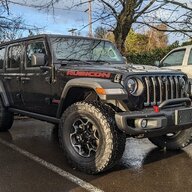
Isn't that a 2024 JLU?
Terrymo
Well-Known Member
The grill is but the first sentence from the OP implies otherwise…unless you’re being sarcastic, then just ignore me.Isn't that a 2024 JLU?
OP
OP
Steph1
Well-Known Member
- First Name
- Steph
- Joined
- Jul 21, 2021
- Threads
- 30
- Messages
- 1,739
- Reaction score
- 2,390
- Location
- Quebec, Canada
- Vehicle(s)
- Jeep JLU , Audi Q5
- Thread starter
- #25
2018 with 2024 grillIsn't that a 2024 JLU?
Sponsored
OP
OP
Steph1
Well-Known Member
- First Name
- Steph
- Joined
- Jul 21, 2021
- Threads
- 30
- Messages
- 1,739
- Reaction score
- 2,390
- Location
- Quebec, Canada
- Vehicle(s)
- Jeep JLU , Audi Q5
- Thread starter
- #26
I wish, but unfortunately not. ThanksI plead ignorance. I was just hoping the OP would see something on the list that made sense in his scenario.

- Joined
- Nov 29, 2023
- Threads
- 7
- Messages
- 3,199
- Reaction score
- 6,516
- Location
- the cornbelt
- Vehicle(s)
- '21 JLR 6MT
- Banned
- #27
Just replace the batteries and be done with it. It'll solve your problem.Was thinking that too, not arguing, but brainstorming….Where changing the batteries defy my logic is if the batteries are due to be changed, then why would ESS work on the first stop of a commute before “automatically” falling in “battery protection” mode and then when I re-enter the Jeep to go back home, ESS fires as it should on the first stop, and falls in “battery protection” mode again…. If I have 3-4-5 errands to run, it’s the same scenario everytime.
Batteries not being cheap, I don’t want to start throwing unnecessary money on parts that aren’t confirmed to be needing to be changed. I’d probably go with a bigger battery and cancel the secondary carppy one.
Bonus points if you aux delete the stupid thing and put a nice battery in it then you can have your ESS and not worry about the small battery depleting your main anymore too.
When you have two batteries in parallel then weaker battery will damage the stronger battery over time no matter what. It's advised never to run two different capacity batteries like Jeep does so why did Jeep do it? We may never know but it is always going to fail faster than one good battery.
ArcadeTracks
Well-Known Member
- First Name
- PJ
- Joined
- Jan 30, 2023
- Threads
- 98
- Messages
- 1,249
- Reaction score
- 2,148
- Location
- Pittsburgh, PA, USA
- Vehicle(s)
- '23 Rubicon. 2dr Soft Top. 2.0L Turbo, Auto, Stock
Ahh.2018 with 2024 grill
 Sorry I'm no help for the problem, though :-/
OP
OP
Steph1
Well-Known Member
- First Name
- Steph
- Joined
- Jul 21, 2021
- Threads
- 30
- Messages
- 1,739
- Reaction score
- 2,390
- Location
- Quebec, Canada
- Vehicle(s)
- Jeep JLU , Audi Q5
- Thread starter
- #29
Thanks, that’s what I’ll do in the spring.Just replace the batteries and be done with it. It'll solve your problem.
Bonus points if you aux delete the stupid thing and put a nice battery in it then you can have your ESS and not worry about the small battery depleting your main anymore too.
When you have two batteries in parallel then weaker battery will damage the stronger battery over time no matter what. It's advised never to run two different capacity batteries like Jeep does so why did Jeep do it? We may never know but it is always going to fail faster than one good battery.
THAW
Well-Known Member
- First Name
- Foster
- Joined
- Oct 28, 2022
- Threads
- 4
- Messages
- 2,286
- Reaction score
- 3,152
- Location
- PNW - prefer Middle of Nowhere
- Vehicle(s)
- 23 JL4DrRubicon
Does your Foxwell show CCA, SOC, SOH and resistance? If so, do you recall roughly what it reported?I tried this with a diehard platinum battery that had aged out and sat in my garage for two years. I attached a high end charger and put it on the “repair cycle” for a couple of days. Took it off the charger and hooked up my multimeter and surface charge voltage showed the “repair” was “successful“. My trusty Foxwell battery tester (falsely) showed the battery was “good“. Was it? Nope, sure as shit wasn’t.
I ask because I have a Foxwell that does and am wondering if I should be more skeptical of it.
Sponsored


