Sponsored

Is battery IBS needed?

TheRealChad

Well-Known Member
First Name
Chad
Joined
Jun 14, 2021
Threads
21
Messages
88
Reaction score
32
Location
Los Angeles
Vehicle(s)
2021 Rubi 4xe
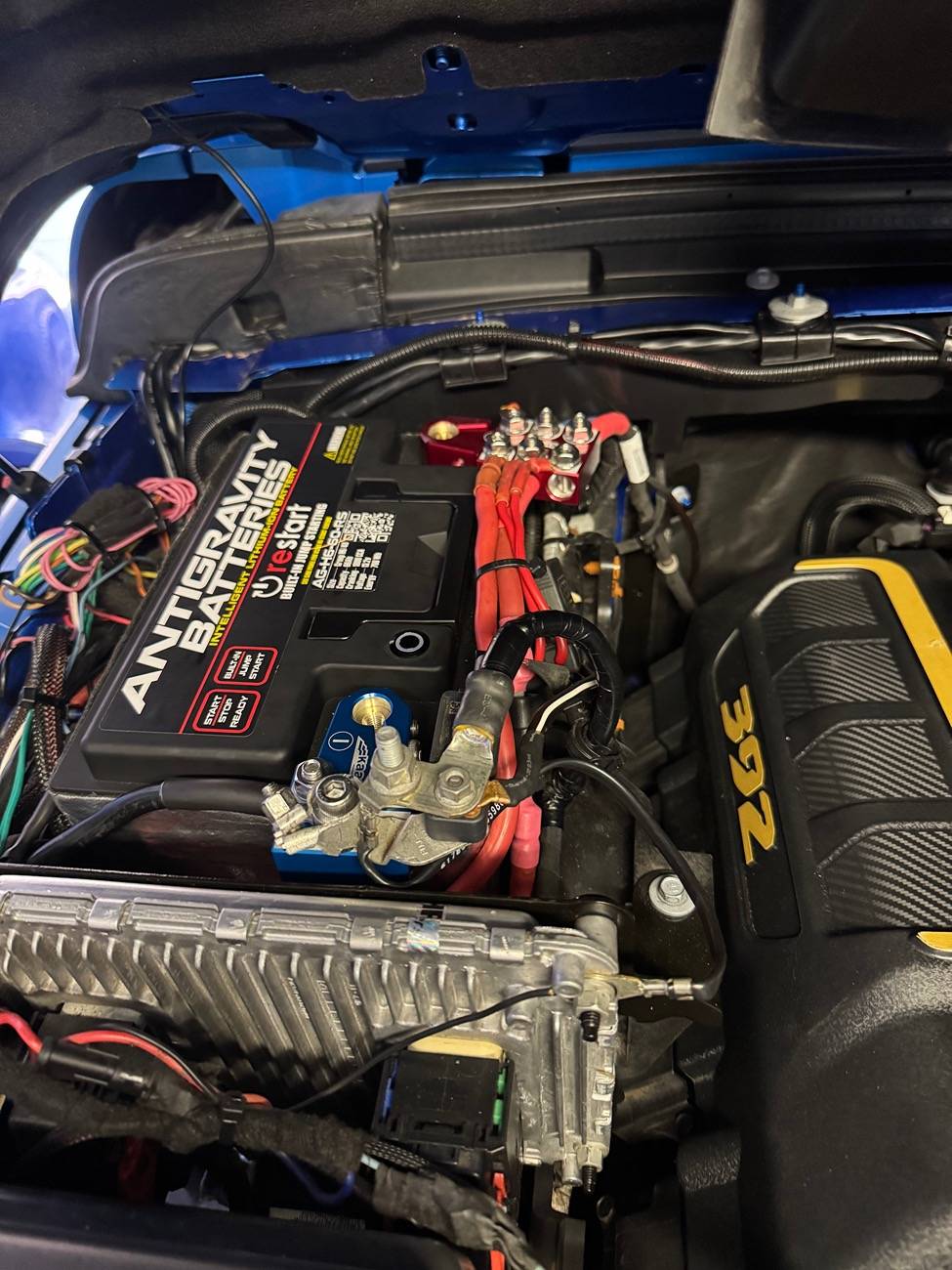
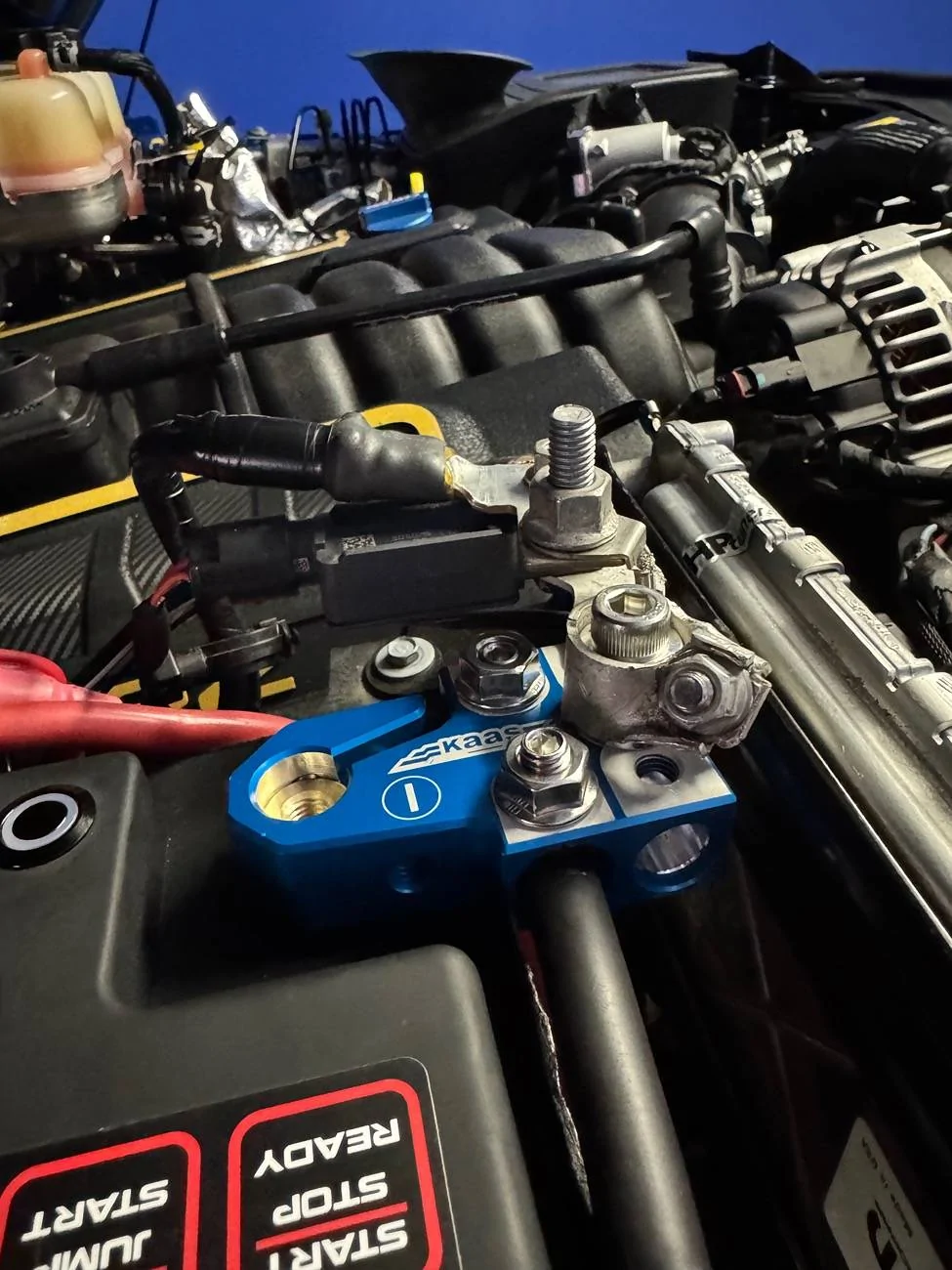
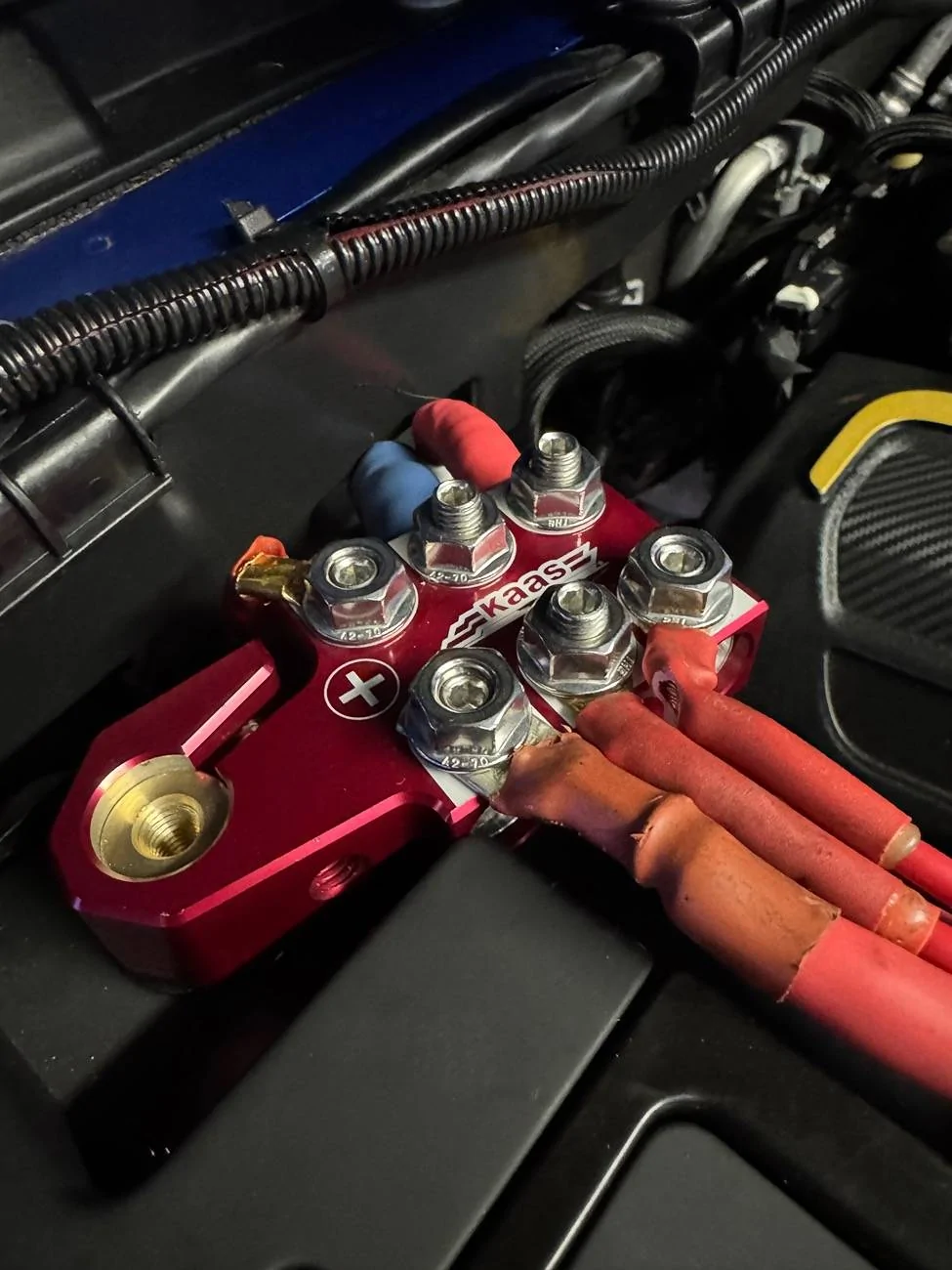
Not irritable bowel, certainly not needed! I am trying to clean up my battery wiring and curious if anyone has real world experience eliminating the IBS from the negative battery terminal? I believe jscan can turn it off perhaps? Can I eliminate this and not throw codes / cause havoc / regret my life decisions?

Thanks in advance!!!
Sponsored
 

Mguy

Well-Known Member
Joined
Nov 29, 2023
Threads
6
Messages
400
Reaction score
382
Location
Far Away
Vehicle(s)
2020 JLUR 6spd MT
Not irritable bowel, certainly not needed! I am trying to clean up my battery wiring and curious if anyone has real world experience eliminating the IBS from the negative battery terminal? I believe jscan can turn it off perhaps? Can I eliminate this and not throw codes / cause havoc / regret my life decisions?

Thanks in advance!!!
Good questions, I can sort of answer the first. I have, for testing whether and how the Jeep would start and run with the Aux battery alone, idled the engine/alternator/Aux battery without the main battery and IBS in the system. The Jeep's computer brain appeared to set the voltage at 14.5. I have only run this test for a few minutes at a time. There may be a different resulting voltage with models that have non-alternator systems running without an IBS.
 

alphawolff

Well-Known Member
Joined
Jul 31, 2023
Threads
1
Messages
3,335
Reaction score
5,577
Location
california
Vehicle(s)
2021 JLU
Just leave the IBS. It harms nothing. Even our non S/S vehicles have been equipped with it for over a decade at this point.
 
OP
OP
TheRealChad

TheRealChad

Well-Known Member
First Name
Chad
Joined
Jun 14, 2021
Threads
21
Messages
88
Reaction score
32
Location
Los Angeles
Vehicle(s)
2021 Rubi 4xe
But does it help anything? I do not have the aux battery (2023 392), but do have a lithium battery. Without it I can ditch that oem terminal post attachment and go to a cleaner solution. I suspect it would also keep the state of charge full right?

Jeep Wrangler JL Is battery IBS needed? IMG_4815


Jeep Wrangler JL Is battery IBS needed? IMG_4816


Jeep Wrangler JL Is battery IBS needed? IMG_4817
 

Mguy

Well-Known Member
Joined
Nov 29, 2023
Threads
6
Messages
400
Reaction score
382
Location
Far Away
Vehicle(s)
2020 JLUR 6spd MT
But does it help anything?
Among other things, the IBS provides amp readings to the Jeep's computer brain, which regulates system voltage. Amperage, along with voltage, is a critical parameter for accurate battery charging. All batteries benefit (typically greatly) from accurate charging.

Note, I haven't a clue what device/mechanism is presently involved in charging your lithium battery.
 

Sponsored

OP
OP
TheRealChad

TheRealChad

Well-Known Member
First Name
Chad
Joined
Jun 14, 2021
Threads
21
Messages
88
Reaction score
32
Location
Los Angeles
Vehicle(s)
2021 Rubi 4xe
It’s compatible with the stock alternator / charging system. I did have to allow the IBS to reset but then it seemed perfectly happy. Thanks!!!
 

WranglerMan

Well-Known Member
First Name
Will
Joined
May 8, 2018
Threads
104
Messages
3,560
Reaction score
2,885
Location
Greenfield Indiana
Vehicle(s)
2018 Wrangler JLU Sahara
Occupation
Retired
Vehicle Showcase
1
I run JSCAN on my 2018 and a Genesis Gen 2 system and have turned off the IBS thru JSCAN and disconnected it and get an EVIC error message.
 

VKSheridan

Well-Known Member
First Name
Vince
Joined
Dec 21, 2019
Threads
9
Messages
1,031
Reaction score
1,654
Location
Broken Arrow, OK
Vehicle(s)
2020 2 Dr Rubicon JL Hardtop
Build Thread
Link
Occupation
Retired from the heavy equipment industry
Vehicle Showcase
1
Pulling the IBS is like taking the spring off your old school voltage regulator.

The IBS provides the inputs for the PCM to regulate the field windings in your alternator. Strengthening the windings increases alternator output, weakening decreases the output.

With loss of signal, the PCM will go with a default value to ensure there’s *some* alternator output BUT under heavy load (winch, lights, boom box, etc.), your alternator might not keep up since the load won’t be sensed and output increased.

Yeah, it congests things but not as much as the other components installed to reduce emissions and improve mileage. I’d say leave ‘er there mate.
 

Mguy

Well-Known Member
Joined
Nov 29, 2023
Threads
6
Messages
400
Reaction score
382
Location
Far Away
Vehicle(s)
2020 JLUR 6spd MT
Pulling the IBS is like taking the spring off your old school voltage regulator.

The IBS provides the inputs for the PCM to regulate the field windings in your alternator. Strengthening the windings increases alternator output, weakening decreases the output.

With loss of signal, the PCM will go with a default value to ensure there’s *some* alternator output BUT under heavy load (winch, lights, boom box, etc.), your alternator might not keep up since the load won’t be sensed and output increased.

Yeah, it congests things but not as much as the other components installed to reduce emissions and improve mileage. I’d say leave ‘er there mate.
I agree with much of your post, but maybe not all.

First, the JL is able to read system voltage without the IBS. "The PCM can determine the SOC of each battery during a cranking event when the batteries are isolated for a brief period during initial starter engagement. During this period, the battery voltage provided to the PCM is coming from only the auxiliary battery, and the battery voltage reported from the IBS will only be reporting the main battery voltage." See this thread, page 2 of the PDF referenced. It's a guess, but it seems that's why I see an apparent steady 14.5V during aux battery testing without the main and IBS. See my post #2 above, and if you're really interested, see this thread. And I'm further guessing that when there is a system voltage drop from a heavy load kicking in the PCM will respond, like any voltage regulation device, with an increase to the field regardless how voltage is sensed. But whether the system is quick enough without the IBS is another question, which you posed, and which I agree is an issue.

It's also important to note that whatever battery (or batteries) is in the system will serve as a buffer to transients from loads. Absent simultaneous use of things like a winch, refrigerator, and sound amplification, I think most JL operation without the IBS will be fine on a healthy H7, with or without the aux battery. Charging of course, is another story, and there is little, if any, reason to delete the IBS. But the original poster is apparently using the stock system as a power supply for his lithium sub-system, so his situation could be different.

Thanks for the interesting post. By the way, I'm proudly not old enough to have ever seen a mechanical regulator. I think they were first introduced for vehicles with electrics that produced enough for ignition but not for a starter, and still had to be hand cranked. As a generational point of reference, my grandfather had a motorcycle that not only had no starter, it had no clutch and had to be shut off when not moving. He also told me about, in connection with keeping his car battery healthy, watching the dash voltmeter while turning the rheostat's dial.
 
Last edited:

Terrymo

Well-Known Member
First Name
Terry
Joined
Jun 17, 2022
Threads
48
Messages
10,655
Reaction score
32,864
Location
SoCal
Vehicle(s)
2023 JLURXR 3.6 ET
Clubs
 
Cleaner visually? You could fabricate an abs cover to hide the battery and wiring if you just want a visually simpler engine bay like on a street rod.
 

Sponsored

AzCoronaDog

Well-Known Member
First Name
Jeff
Joined
Mar 2, 2025
Threads
0
Messages
66
Reaction score
67
Location
Scottsdale, AZ
Vehicle(s)
2024 Rubicon
Occupation
Retired
Instead of connecting all those cables at the battery post, have you considered terminal blocks instead? Seems like a lot of stress on the battery posts with your setup.

I have a big cutoff switch for my winch that I used as a connecting point for a couple of accessories, and also used the N2 terminal on the fuse box for a couple of others. There are plenty of great grounding studs near the battery on my '24, so I used those too. Distributing the cables to multiple places leaves a very neat appearance in my opinion.
 

AzCoronaDog

Well-Known Member
First Name
Jeff
Joined
Mar 2, 2025
Threads
0
Messages
66
Reaction score
67
Location
Scottsdale, AZ
Vehicle(s)
2024 Rubicon
Occupation
Retired
As for the IBS, I would assume there is a good reason the computers want to be able to read total amperage draw.
Voltage can be read from many places, but amperage can only be accurately read by an induction coil surrounding a wire carrying all the power, like the negative terminal in this case.
 

Mguy

Well-Known Member
Joined
Nov 29, 2023
Threads
6
Messages
400
Reaction score
382
Location
Far Away
Vehicle(s)
2020 JLUR 6spd MT
As for the IBS, I would assume there is a good reason the computers want to be able to read total amperage draw.
Voltage can be read from many places, but amperage can only be accurately read by an induction coil surrounding a wire carrying all the power, like the negative terminal in this case.
I can think of only two good reasons for having amp readings in a vehicle 12v system. Troubleshooting (often to check loads) and battery charging. Typically an external ammeter is available, and typically more useful, for troubleshooting. For vehicle 12v battery charging, where continuous monitoring is desirable, a resistive shunt in series with the chassis ground at the negative post of the battery (or bank) is most optimal for sensing current and measuring amps (in or out). In JLs, the shunt is inside the IBS. Shunts are typically used in low voltage DC systems.

But the OP apparently doesn't have a battery that relies upon the JL for charging. His Lithium battery has it's own internal charging device--the JL is simply a power supply for the load. The Lithium device is almost certainly measuring amps on it's own for it's unique charging routine.

So, without a battery charging directly on the JL 12v system, I can't think of how the IBS amp readings will be missed. Perhaps the JL monitors amps for a purpose other than battery charging, but that purpose is not apparent to me.

Still, I don't think I would remove the IBS just for visual satisfaction. Now, if there was a history of IBS failures . . . .
 

VKSheridan

Well-Known Member
First Name
Vince
Joined
Dec 21, 2019
Threads
9
Messages
1,031
Reaction score
1,654
Location
Broken Arrow, OK
Vehicle(s)
2020 2 Dr Rubicon JL Hardtop
Build Thread
Link
Occupation
Retired from the heavy equipment industry
Vehicle Showcase
1
Thanks for the interesting post. By the way, I'm proudly not old enough to have ever seen a mechanical regulator. I think they were first introduced for vehicles with electrics that produced enough for ignition but not for a starter, and still had to be hand cranked. As a generational point of reference, my grandfather had a motorcycle that not only had no starter, it had no clutch and had to be shut off when not moving. He also told me about, in connection with keeping his car battery healthy, watching the dash voltmeter while turning the rheostat's dial.
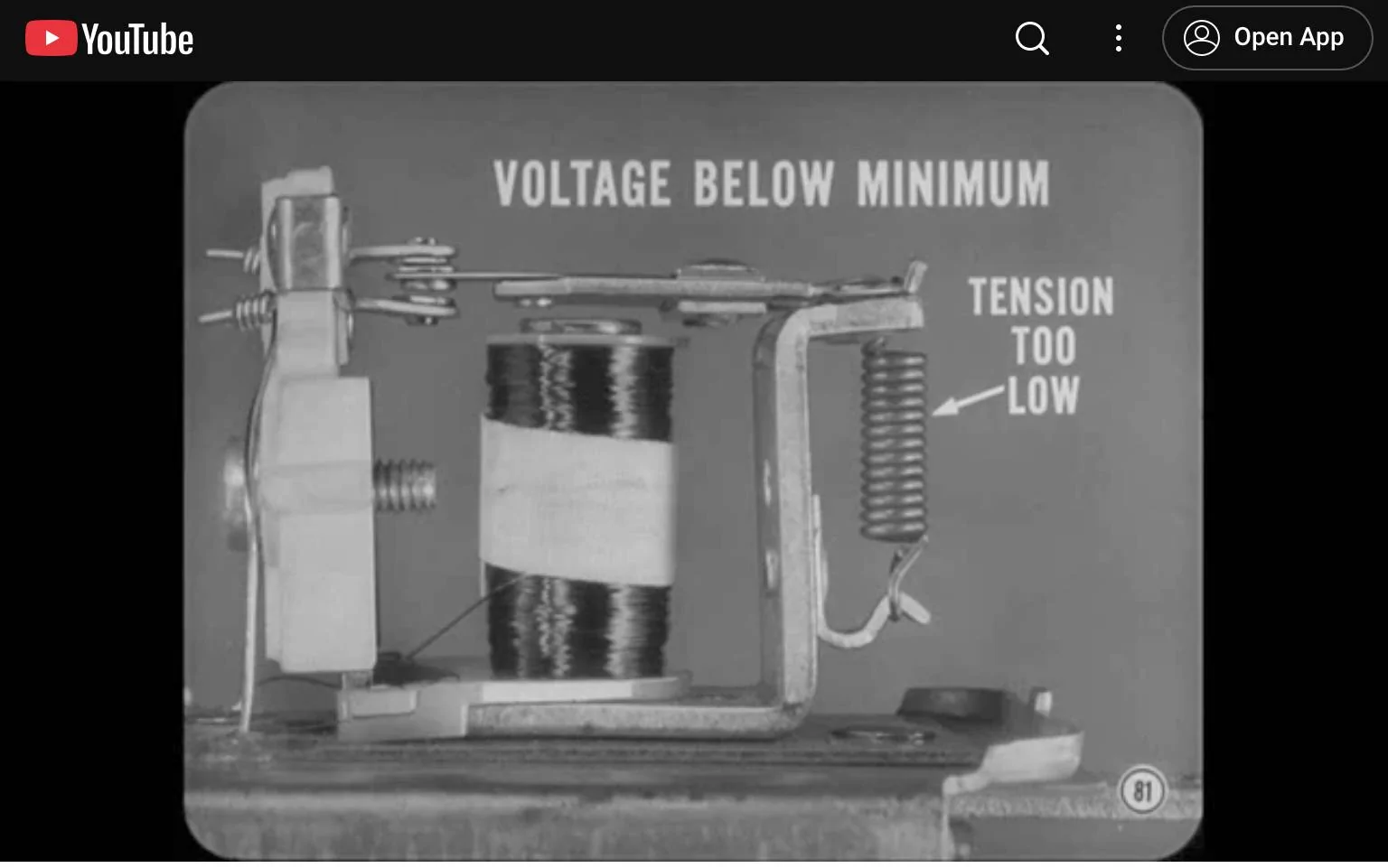
Heh heh, check out this video to see how a regulator spring worked in a mechanical regulator. I had a ‘69 Coronet that educated me on the contact gap and spring tension. The way the PCM strengthens the field in smart alternators is akin to how the mechanical regulator energized (excited) the rotor in the less smart ones.

Keep watching the video regarding the ammeter to consider how the field current flow through the alternator is similar to how the IBS measures the amperage at the negative post of the battery. Not the exact same but it shows how amperage (flow) is indicative of SOC since voltage is only potential (Pressure) but not flow (load).

1966 Chrysler Master Tech Video
 

Mguy

Well-Known Member
Joined
Nov 29, 2023
Threads
6
Messages
400
Reaction score
382
Location
Far Away
Vehicle(s)
2020 JLUR 6spd MT
Heh heh, check out this video to see how a regulator spring worked in a mechanical regulator. I had a ‘69 Coronet that educated me on the contact gap and spring tension. The way the PCM strengthens the field in smart alternators is akin to how the mechanical regulator energized (excited) the rotor in the less smart ones.

Keep watching the video regarding the ammeter to consider how the field current flow through the alternator is similar to how the IBS measures the amperage at the negative post of the battery. Not the exact same but it shows how amperage (flow) is indicative of SOC since voltage is only potential (Pressure) but not flow (load).

1966 Chrysler Master Tech Video
The first thing interesting about that video is that it survived from the 1960's and somebody converted it for YouTube. Also, for some reason, the voice of the tech puppet reminded me of Ronald Reagan. I think the video predated his win as California governor, when he was hard up for money and working for various industries, but I don't think it was him. The dress and style is stereotypical of the 1950's and 1960's.

The actual device looks like an Edison invention--
Jeep Wrangler JL Is battery IBS needed? A48FF5A9-F08B-4E04-AF78-BE6A0978F7C3


But to bring things up to date, you are absolutely right about the significance of current versus voltage when considering battery charging. For those interested, when monitoring current reduction during charging, flow into an AGM battery approximating .01/hours of its capacity, measured in amp-hours, is generally what to expect when charging is complete. If charging were to continue (unnecessarily) at that point, the amp reading will not be further reduced no matter how long the charging source is applied.
Sponsored


Top