Sponsored

Cold Air Intake hogwash

Do you believe installing a “Cold Air Intake” OR aftermarket air filter makes sense?

  • Yes

  • No

  • Still not sure


Results are only viewable after voting.

Guv

Well-Known Member
First Name
Steve
Joined
Nov 28, 2024
Threads
2
Messages
495
Reaction score
470
Location
Texas
Vehicle(s)
2018 Wrangler Sport 2.0 E-Torque 2 Door
The Mishimoto drops a much larger filter area filter into the OEM lower with a new lid that seals the filter at the filter outlet. It's using the OEM inlets. It has a nice, silenced tube for the inlet that mounts at the factory locations but has a better turn into the throttle without the accordion pleated boot that disrupts airflow. Is it worth it? It's a nice filter and good layout, if you can get it on a good sale, I see nothing wrong with it. Could a drop in dry filter work well? If it gives just a bit more flow than stock it will probably pick up those few HP on the top end and you'll be happy.

Much, much more important is the tune. Night and day for overall pleasure of driving and crawling around. The ability to crawl at low RPM in 2nd near idle, then apply a little throttle to smoothly speed up a little, then let off to slow down for more rocks WITHOUT SHIFTING BACK AND FORTH makes a HUGE difference when we're poking around offroad. The resistance to stalling cannot be overemphasized and the ability to poke around like you're driving an old 4.0 is worth it. Not to mention fuel mileage gain.

Spend the money on a tune, drop in a filter, then go run around offroad for a weekend. You will notice a difference. If you have the manual, this is a major improvement. Having been through this process I would do the tune before anything else. Drop in a dry flow filter in the stock box, try that out afterwards.
How much air flow do you have under these conditions? Going from idle to smoothly applying throttle is not going to surpass the flow capability of the stock airbox setup. It’s the tune that’s affecting your engines performance.
Sponsored


Traveller128

Well-Known Member
First Name
Robert
Joined
Dec 18, 2021
Threads
2
Messages
929
Reaction score
1,617
Location
Oasis Idaho
Vehicle(s)
2022 Willys 2 Door 6 speed
Occupation
Volvo Master Technician
How much air flow do you have under these conditions? Going from idle to smoothly applying throttle is not going to surpass the flow capability of the stock airbox setup. It’s the tune that’s affecting your engines performance.
Quality over quantity. It's an air column issue, the reason I changed the inlet is because of what I learned about the nature of how air moves through a system. I've got a lot of time with a flow bench and high performance powertrains. The stock inlet tube is not a good design, I'll just say that. Getting the largest cross section of air column through a throttle body is the issue and that DOES affect part throttle.
 

Guv

Well-Known Member
First Name
Steve
Joined
Nov 28, 2024
Threads
2
Messages
495
Reaction score
470
Location
Texas
Vehicle(s)
2018 Wrangler Sport 2.0 E-Torque 2 Door
Quality over quantity. It's an air column issue, the reason I changed the inlet is because of what I learned about the nature of how air moves through a system . I've got a lot of time with a flow bench and high performance powertrains. The stock inlet tube is not a good design, I'll just say that. Getting the largest cross section of air column through a throttle body is the issue and that DOES affect part throttle.
So what kind of “air column “ do you think you have over a partially open throttle plate? Maybe on a 2.0 transitioning from manifold vacuum to boost but even then you are going to have a surplus of clean air available at this speed and load. I really don’t think that the engine cares. Now on a carbureted engine you might have something because of airflow effecting fuel delivery.
 
Last edited:

zouch

Well-Known Member
Joined
Sep 17, 2020
Threads
39
Messages
3,726
Reaction score
3,811
Location
Berkeley, CA
Vehicle(s)
XJ, JLUWD
thanks for sharing this old test again.

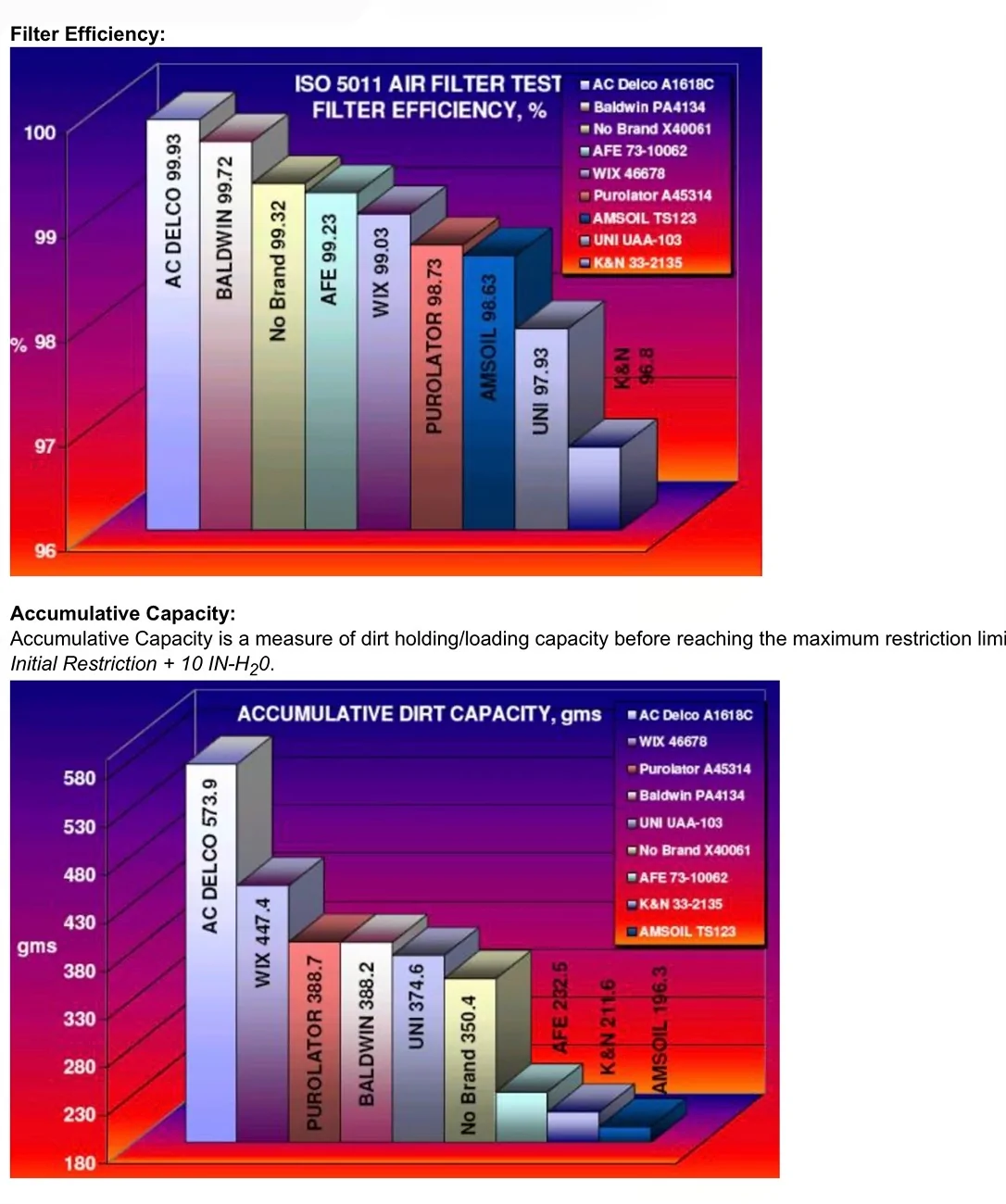
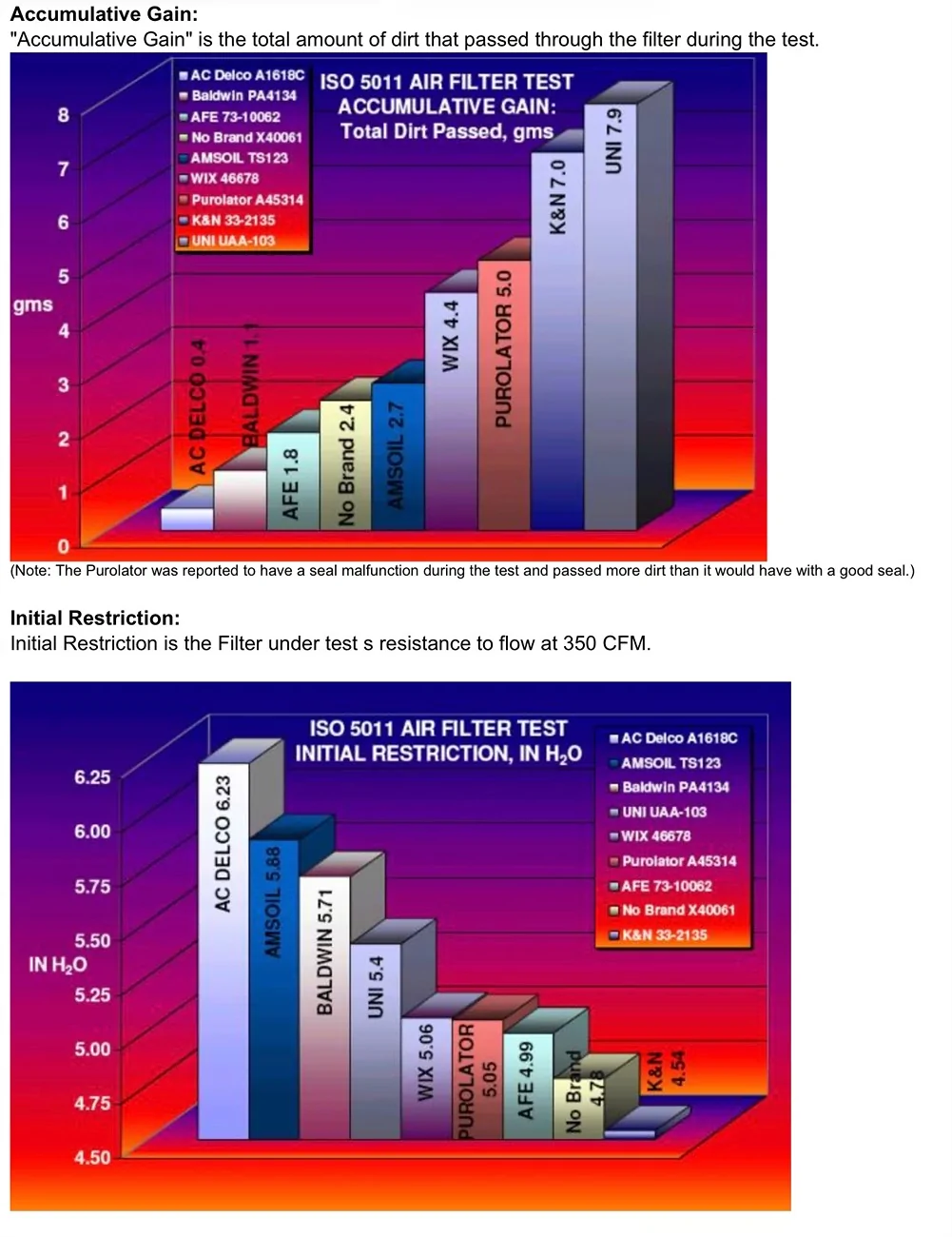
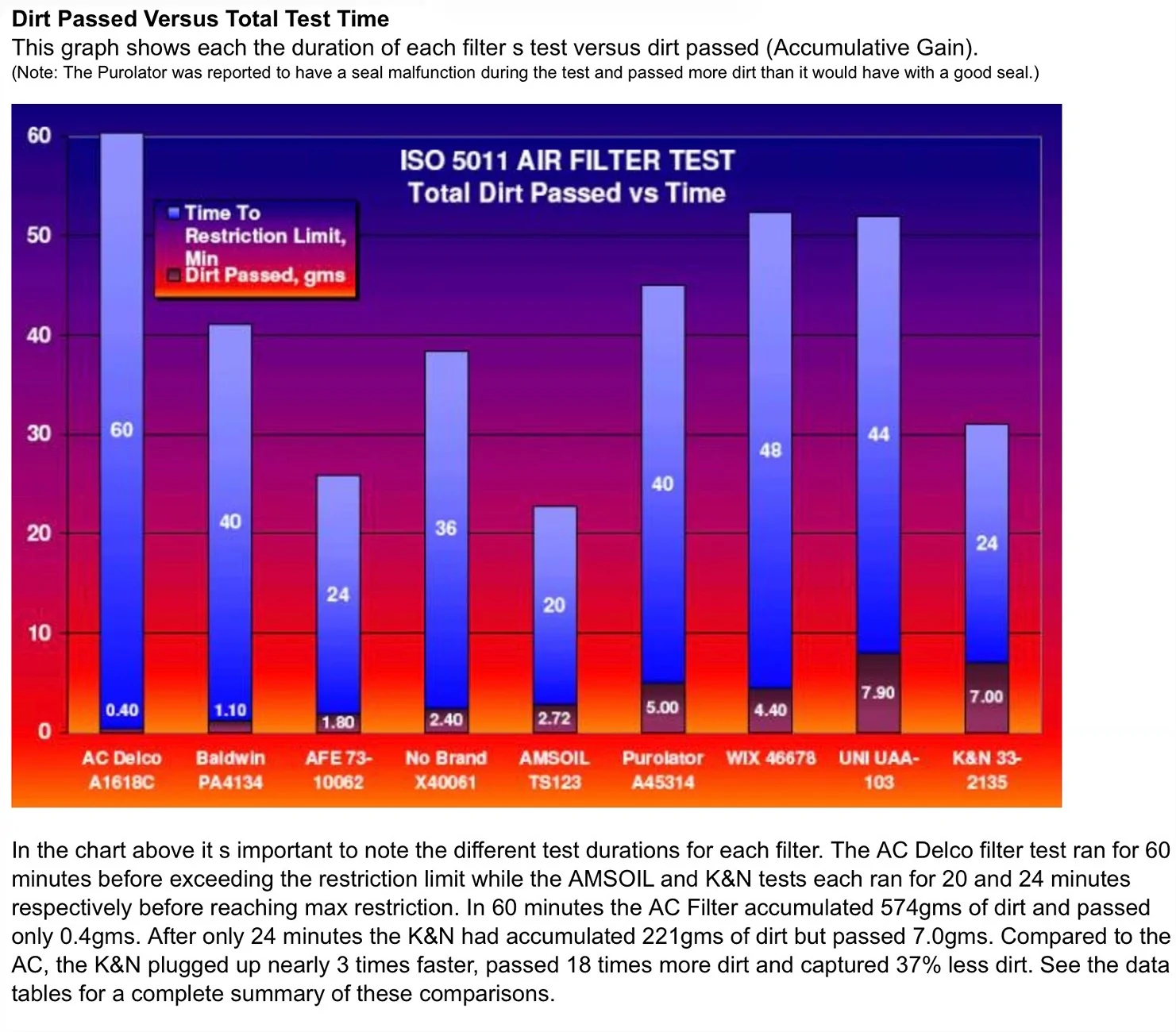
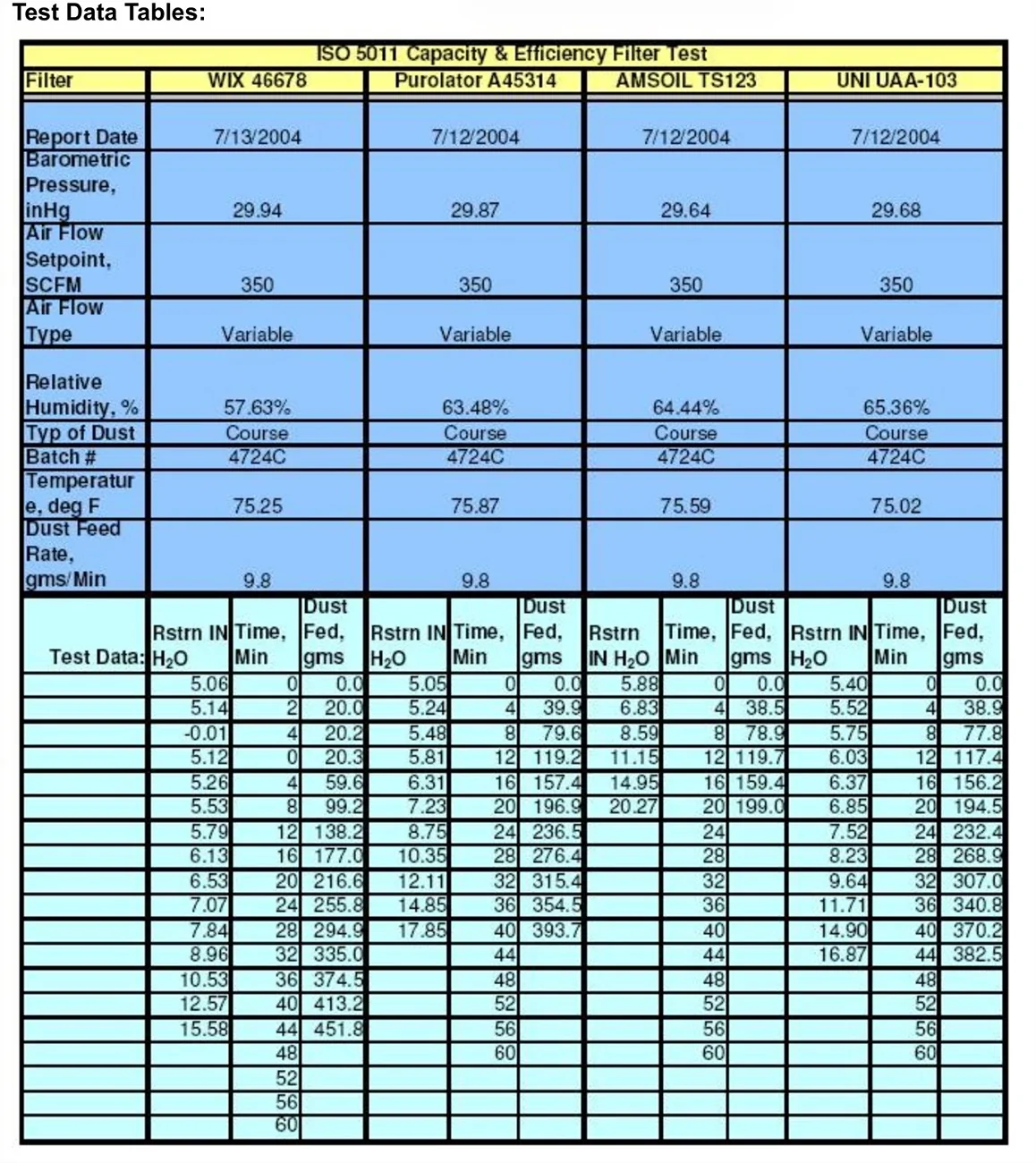
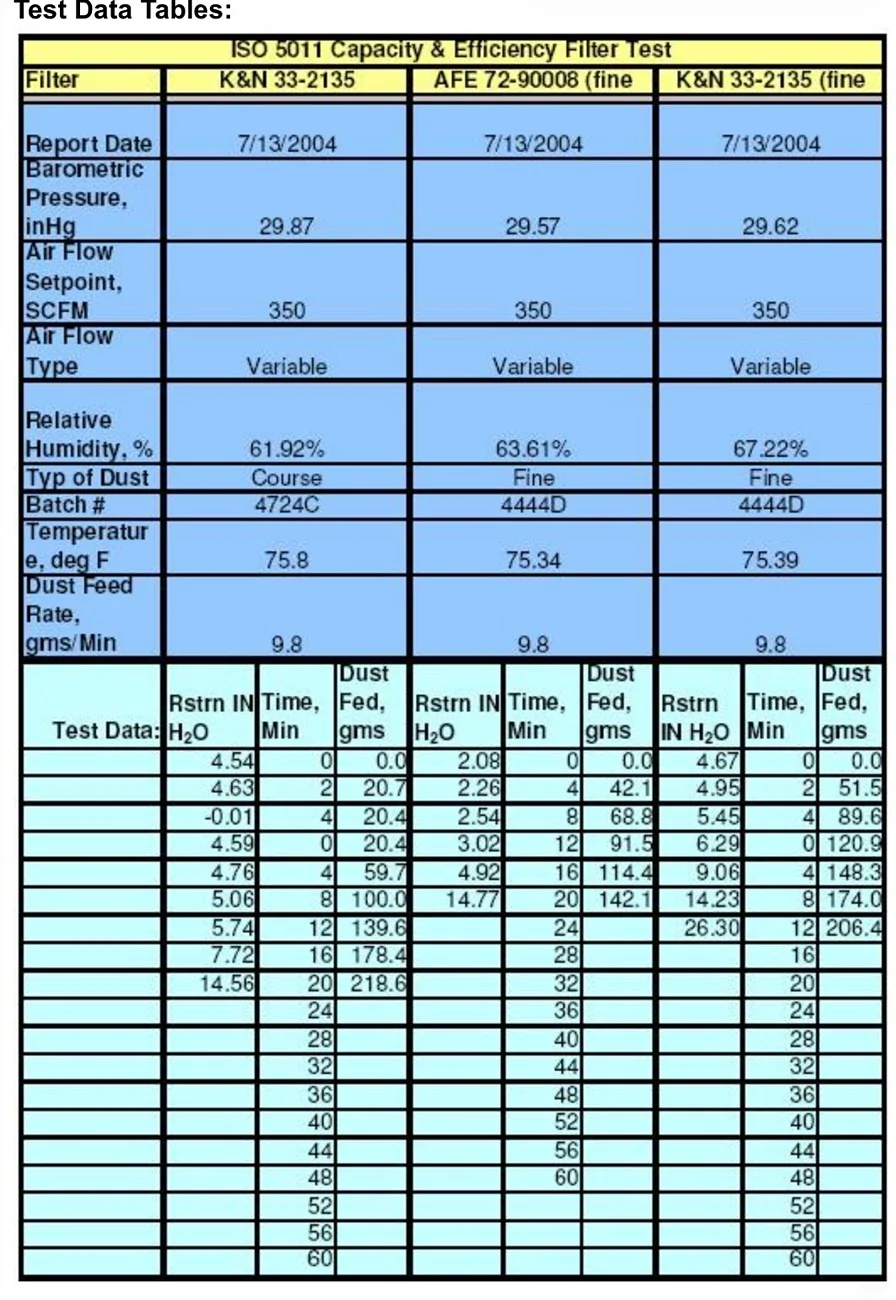
demonstrates very clearly that K&N filters have sucked badly (no pun intended) for many years.
i never saw so much Silica in my Used Oil Analysis results as when i tried using a K&N in my old J**p.

(i can't answer your initial question directly because of the way it's worded, but will say) i think keeping a good quality clean air filter in your rig will do huge amounts for helping your rig have a good long happy life.


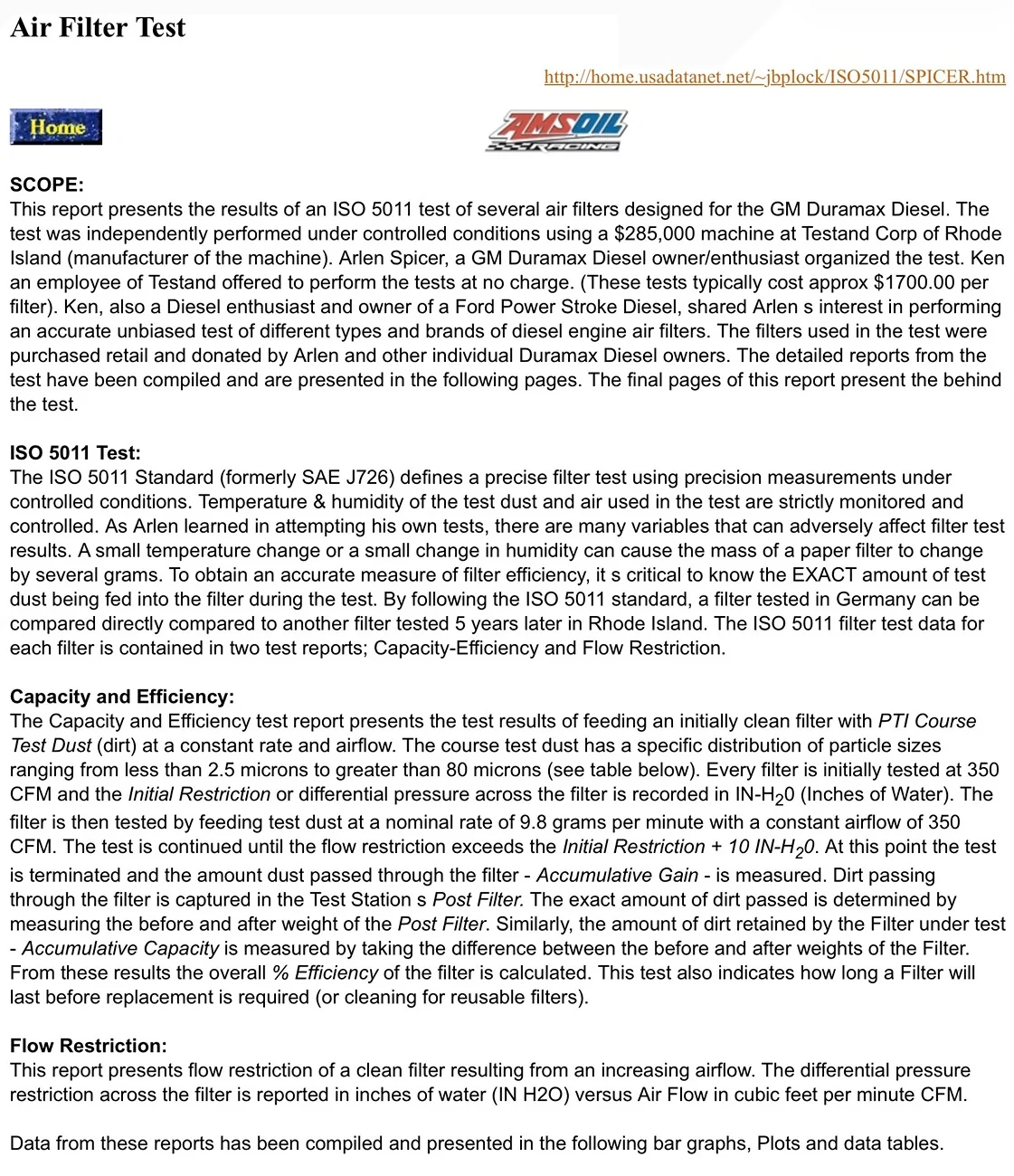
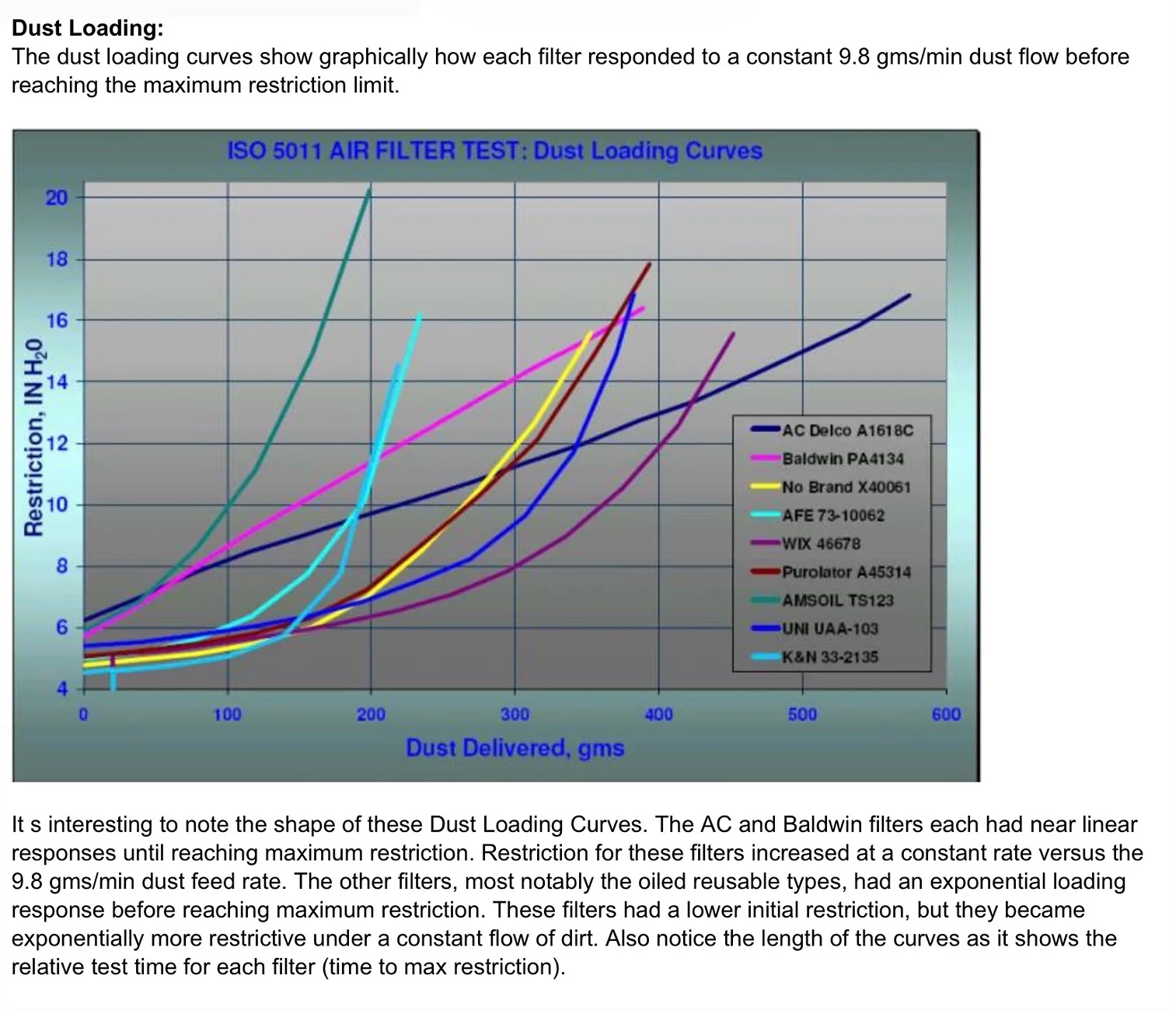
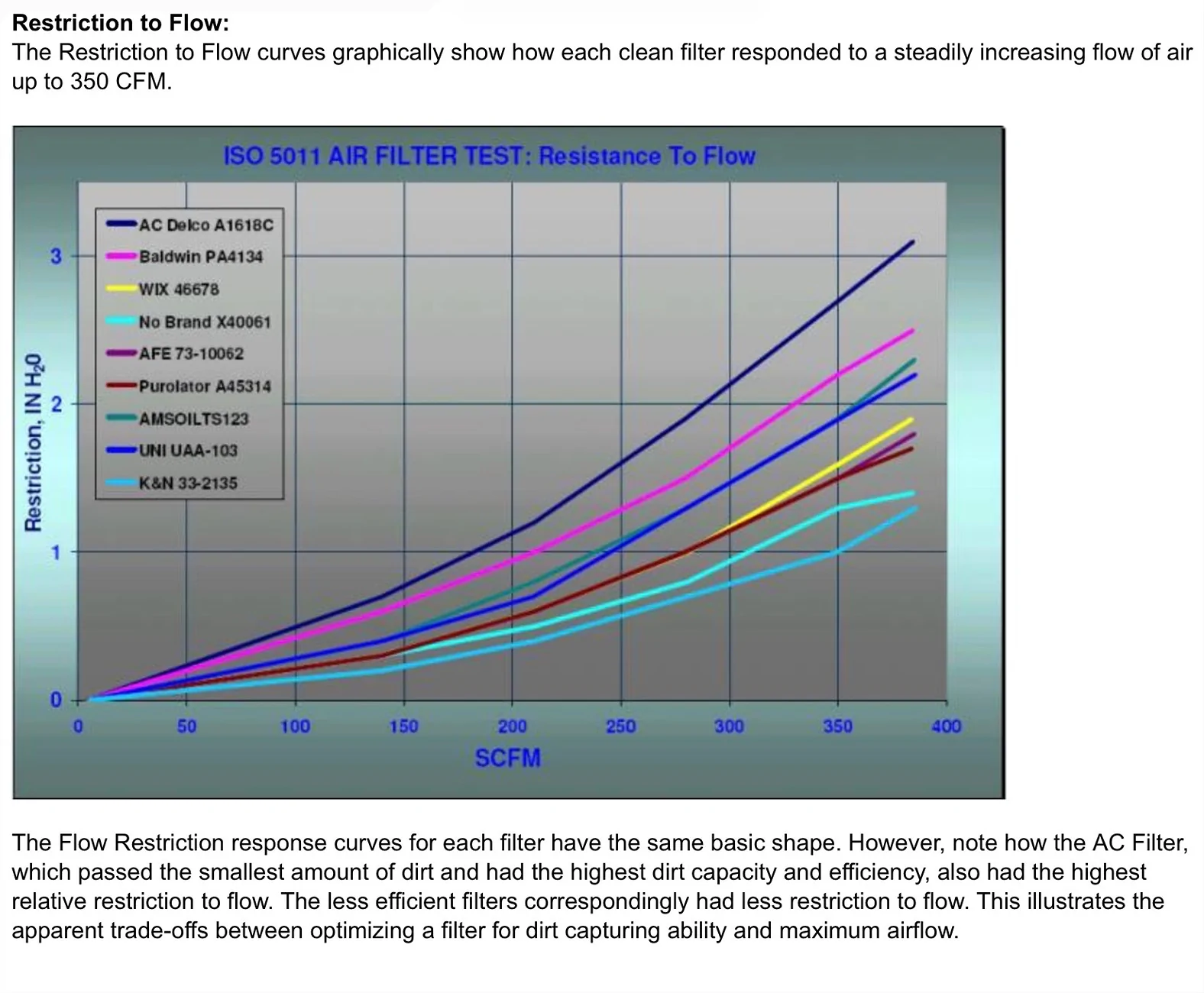
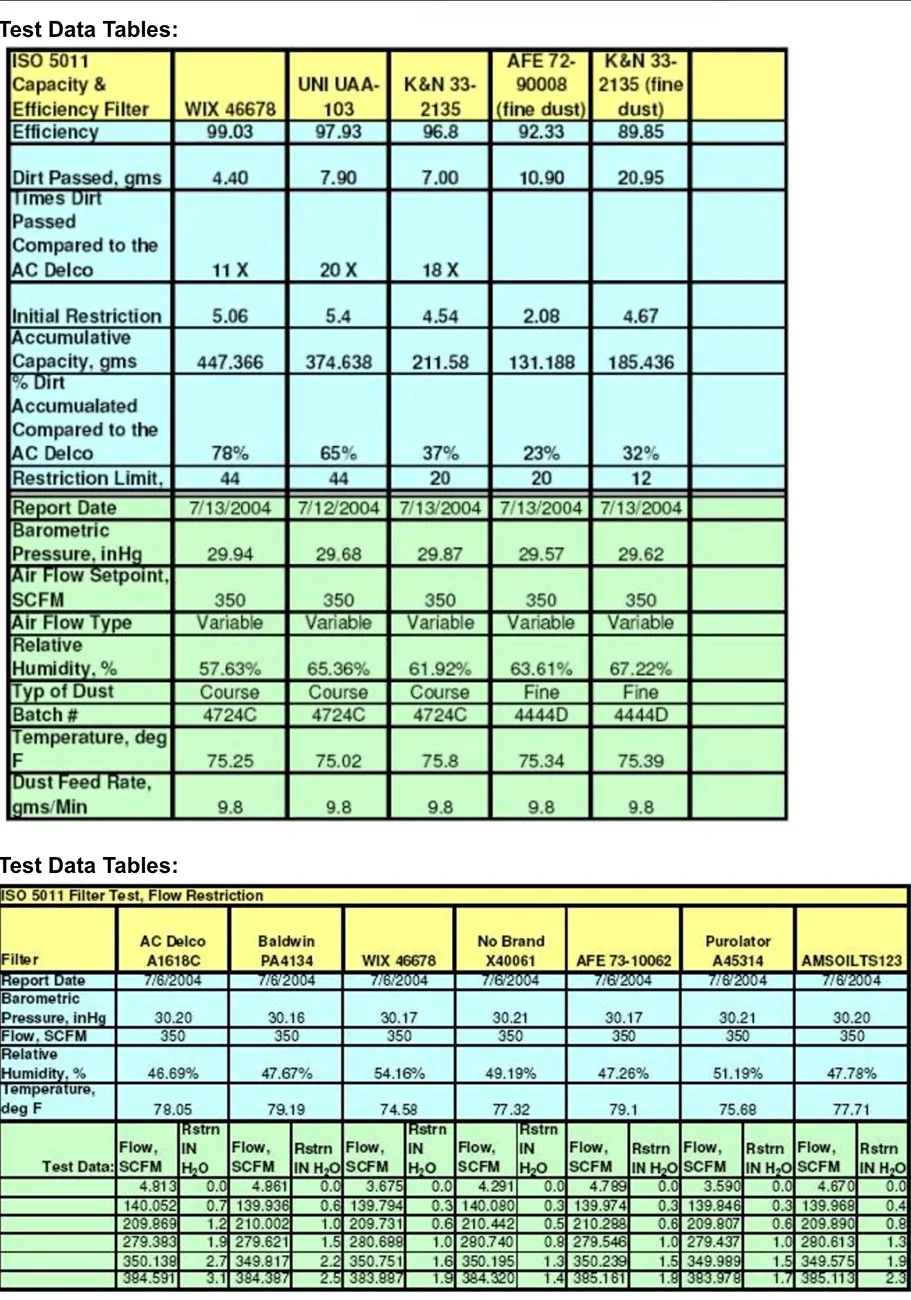
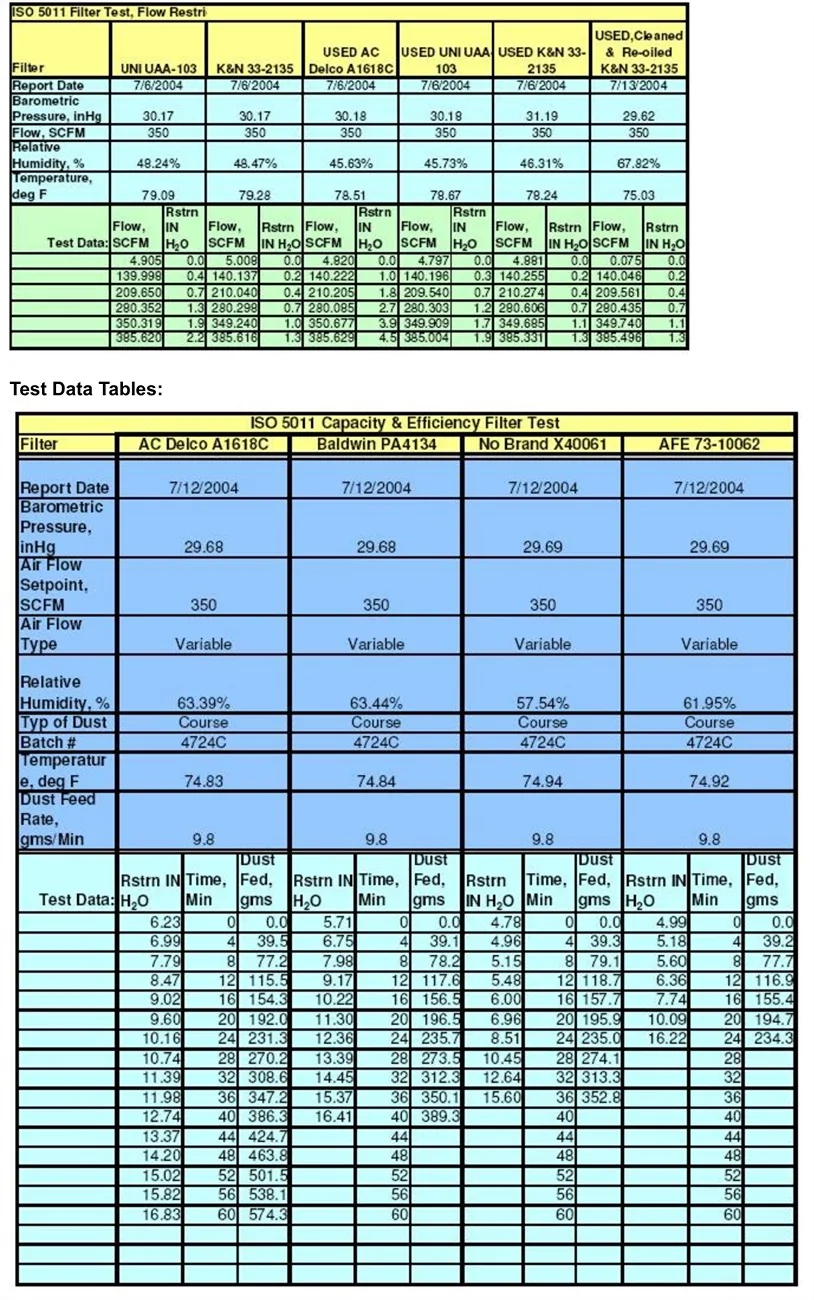
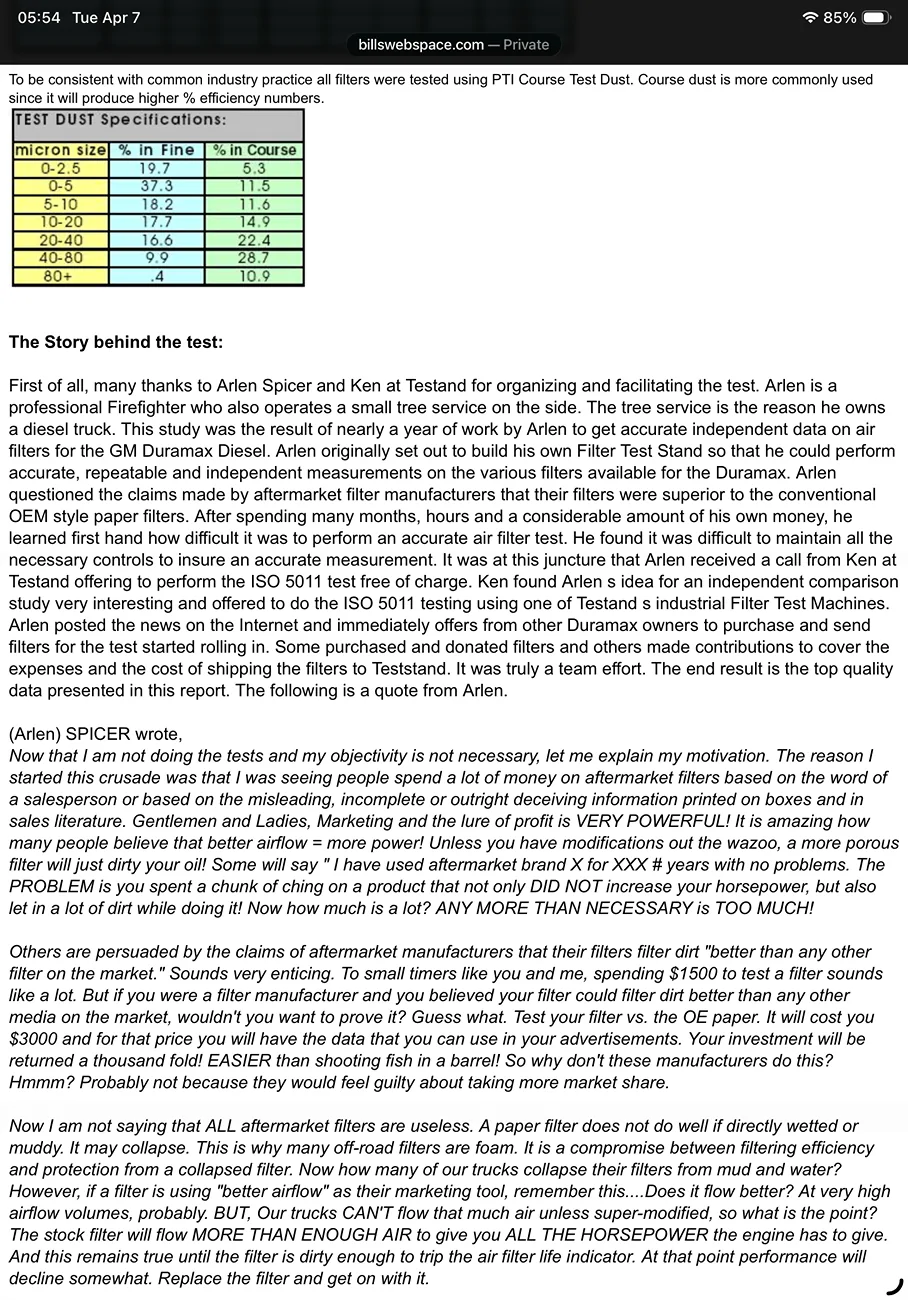
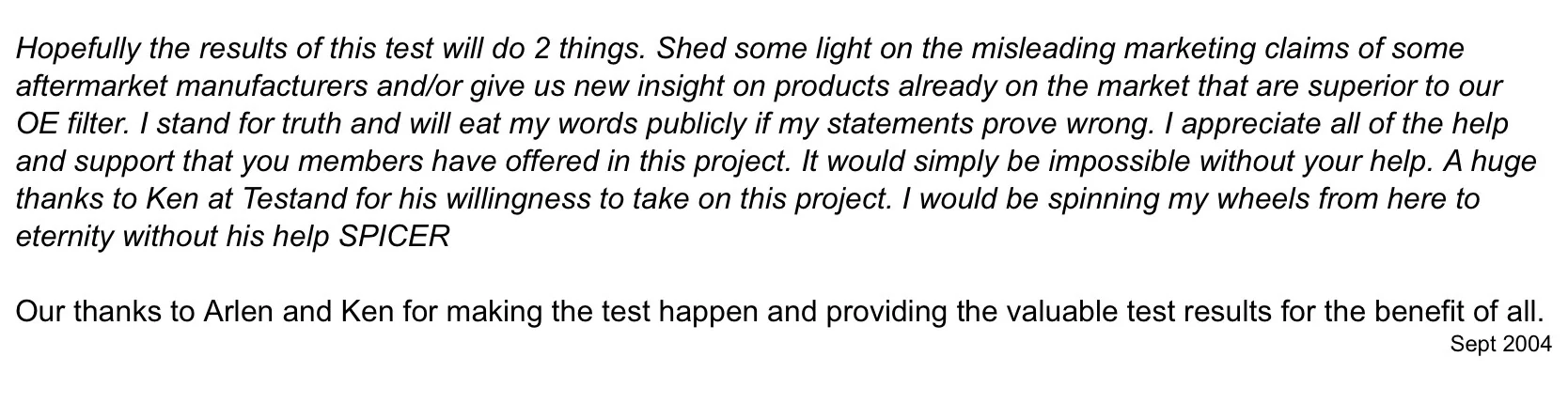
The ”cold air intake“ claims have been discussed a lot over the years. During one of those debates I tried unsuccessfully to find a diesel forum thread that described very extensive testing that measured resistance, filter efficiency, load resistance, and other filter characteristics. Today I stumbled upon the test results which had been copied into another hosted site. Since I don’t want to lose it again, and I think folks here would be interested in the data, I’ve pasted it in below.

The study was done by Arlen “Spicer” looking at Duramax options. Those turbo diesels move a lot of air. I think the data developed during these tests is useful across brands and engine types.

For those who want the quick summary: Factory air filters probably do a better job of protecting your engine. Any resistance they provide has little or no adverse impact on performance.

IMG_3368.webp


IMG_3369.webp


IMG_3370.webp


IMG_3371.webp


IMG_3372.webp


IMG_3373.webp


IMG_3374.webp


IMG_3375.webp


IMG_3376.webp


IMG_3377.webp


IMG_3378.webp


IMG_3379.webp


IMG_3380.webp
 

TOTL Innovations

Well-Known Member
Rock Sponsor (Level 1)
Joined
May 12, 2019
Threads
11
Messages
340
Reaction score
400
Location
Colorado
Website
www.totlinnovations.com
Vehicle(s)
2008 JK
Speculation, but I think part of the reason the Ram trucks with the v6 have a higher HP rating is because under hood temps are managed better and they heat soak less since the intake inlet is so much farther back from the radiator. Unlike these that basically rest on the radiator. There are no mechanical differences in the engine and very little differences in the tuning.

It really truly is about heat management, and a high flow filter in the factory air box is in my opinion the best option.

Well said! Getting cool air to the intake while getting heat out is key

https://totlinnovations.com/h-e-r-o-hood-performance-testing/
 

Sponsored

OP
OP
Whaler27

Whaler27

Well-Known Member
First Name
Alex
Joined
Jul 1, 2020
Threads
60
Messages
2,673
Reaction score
5,346
Location
Oregon
Vehicle(s)
2019 JL, 2016 Jeep Grand Cherokee Altitude Ecodiesel, 2005 Mustang GT, 2018 Ford Raptor, 2018 BMW R1200GSA, 2020 Honda Monkeybikes (2), 1972 Honda CT-70, 1980 Honda CT-70,
Occupation
Saving the world :-)
@LSJKU i was actually going to comment on this thread and throw my thoughts in even though I think this may reference the diesel crowd. But A few of my 3.6 customers I’ve tuned for do in fact have cold air intakes. The data in the datalogs won’t lie.

On every one, the aircharge (measured in milligrams) that the engine is taking in is marginally better on the makes with cold air intakes. And by marginally better, I mean maybe 20-40 MG better. For reference, at high load or WOT, air charge will hover around 600-720 MG depending on atmospheric conditions.

That said, intake air temperatures are usually higher. These pull timing dramatically once’s air intake temps go above about 80-90 degrees. There is a spark timing modifier within the tuning that pulls timing as intake air temps go up and it can pull as much as 10 degrees of timing. For reference, you gain or lose about 3-5 horsepower for every degree of timing.

Speculation, but I think part of the reason the Ram trucks with the v6 have a higher HP rating is because under hood temps are managed better and they heat soak less since the intake inlet is so much farther back from the radiator. Unlike these that basically rest on the radiator. There are no mechanical differences in the engine and very little differences in the tuning.

It really truly is about heat management, and a high flow filter in the factory air box is in my opinion the best option.
I know there’s no practical way to measure this, but for those who are finding very small power gains near redline on the dyno, it would be interesting to see how those gains are experienced in real-world use of a jeep.

My jeep spends zero time near redline, so that contributes to my personal conclusion of zero value for an intake & filter, but the bigger influence is the observed loading characteristics of the filters reporting the least restrictive flow when new. Many of them quickly load with particulates to the point where they are significantly more restrictive than the OEM filters carrying the same or higher particulate loads. (It seems odd that aftermarket filters can allow so much more crap into the engine, AND load to the point of restriction more quickly, but they do.)

I’m very good about vehicle maintenance, but I don’t pull and clean or replace my air filter after every drive through the desert. This time of year the pollen load in our air is so heavy our vehicles take on a yellow hue after just two days in the driveway. That sticky stuff gradually yellows an air filter, and it must have some adverse impact on airflow, but the OEM filters will look “fine” for 10,000+ miles. Do most folks who buy the aftermarket filters clean or replace them after every couple thousand miles? I doubt it — but I’m definitely not signing up for that.

In retrospect, I doubt I ever experienced the promised few HP gains from my aftermarket filters when they were new, even when I was a speed-hungry kid who liked the redline. If I did, they weren’t enough to matter, and I suspect any gains eroded quickly as the filters loaded.
 
OP
OP
Whaler27

Whaler27

Well-Known Member
First Name
Alex
Joined
Jul 1, 2020
Threads
60
Messages
2,673
Reaction score
5,346
Location
Oregon
Vehicle(s)
2019 JL, 2016 Jeep Grand Cherokee Altitude Ecodiesel, 2005 Mustang GT, 2018 Ford Raptor, 2018 BMW R1200GSA, 2020 Honda Monkeybikes (2), 1972 Honda CT-70, 1980 Honda CT-70,
Occupation
Saving the world :-)
How much air flow do you have under these conditions? Going from idle to smoothly applying throttle is not going to surpass the flow capability of the stock airbox setup. It’s the tune that’s affecting your engines performance.
Exactly. It’s the tune that makes a difference — and a tune can make a small difference in power with or without an aftermarket filter, because the factory filters easily flow more air. Whether a tune makes any sense on a Wrangler is a debate for another day.

Even the most flattering aftermarket filter claims aren’t supported by independent dyno-testing until near redline, and most of the alleged “high-flow” filters don’t remain high-flow in real world use because they quickly load to the point of greater-than-OEM airflow restriction.

If I was a bazillionaire and I cared more about this, I’d run dyno test comparisons on jeeps with various filters after they’d spent 2,000 miles ingesting our pollen saturated spring air, or L.A. smog, or high desert dust. I’d expect there to be zero improvement in power at any RPM level (or worse).

I’ll add that I don’t think a 5hp or 7hp improvement near redline on a dyno has ANY noticeable effect on the performance of a 5,000 pound shoe box. Lots of people hear more noise with the aftermarket filter and, like the silly cans teens put on rice-burners, it makes them feel faster. Does it get up the trail or across town any better? Nope.
 

Guv

Well-Known Member
First Name
Steve
Joined
Nov 28, 2024
Threads
2
Messages
495
Reaction score
470
Location
Texas
Vehicle(s)
2018 Wrangler Sport 2.0 E-Torque 2 Door
Well said! Getting cool air to the intake while getting heat out is key

https://totlinnovations.com/h-e-r-o-hood-performance-testing/
Except,
Advertised power ratings are measured at the flywheel after the engine has been installed in a test cell with specific temperature and humidity requirements.
The engine doesn’t know what vehicle platform its going to be used in.
Edit: exhaust back pressure, fuel composition, oil, fuel, coolant, intake air pressures, temperatures, flow rates etc are strictly controlled to specific test standards. Manufacturers have had to pay fines and revise their advertised hp and tq ratings in the past because of exaggerated power numbers. Misreporting an engines performance numbers are very frowned upon.
 
Last edited:

Guv

Well-Known Member
First Name
Steve
Joined
Nov 28, 2024
Threads
2
Messages
495
Reaction score
470
Location
Texas
Vehicle(s)
2018 Wrangler Sport 2.0 E-Torque 2 Door
Now, if a particular vehicle application uses an intake air filter setup or exhaust system that has more restriction these parameters will be set in the test cell which could account for a different power rating.
Maybe the RAM uses the same intake setup for the 3.6 and 5.7? This could result in the 3.6 having a better power rating in the RAM than the JEEP.
Might have a less restrictive exhaust system too?
 
Last edited:

mwilk012

Well-Known Member
Joined
Mar 10, 2018
Threads
14
Messages
10,962
Reaction score
11,293
Location
Oklahoma
Vehicle(s)
2018 Ocean Blue JLU Rubicon
Occupation
Service
I usually just go get a K&N and throw it in where the stock filter is. Done! No need for extra pipes spending like $300/$400. Waste of $.
K&N has terrible filtration on their drop in filters. The oiling required is another major downside.
 

Sponsored

rickinAZ

Well-Known Member
First Name
Rick
Joined
Jan 2, 2020
Threads
304
Messages
4,117
Reaction score
6,086
Location
Phoenix
Vehicle(s)
2026 MOAB 392
Occupation
Retired CFO. Mayo Clinic volunteer.
In 1972 I bought an aftermarket air filter from a JC Whitney catalog for my Ford Pinto. What I saved in fuel mileage it cost me in having to replace the rear tires so often. Then...I got rear-ended and all my fun went up in flames.
 

2nd 392

Well-Known Member
First Name
Mike
Joined
Jun 20, 2021
Threads
15
Messages
9,970
Reaction score
16,686
Location
Ca
Vehicle(s)
Grand Cherokee srt.V10 Dodge 4x
In 1972 I bought an aftermarket air filter from a JC Whitney catalog for my Ford Pinto. What I saved in fuel mileage it cost me in having to replace the rear tires so often. Then...I got rear-ended and all my fun went up in flames.
You should’ve traded it in for a Ford Explorer eliminating the tire issues. 😁
Jeep Wrangler JL Cold Air Intake hogwash D43775F5-5065-4C6E-A71F-A0EE222F45C3

Ohh, never mind 😉
 

Dave M

Member
First Name
Dave
Joined
Mar 28, 2026
Threads
0
Messages
16
Reaction score
46
Location
NE TN US
Vehicle(s)
2025 Jeep Wrangler Willys 2Dr V6 MT
Occupation
Retired
...I tried unsuccessfully to find a diesel forum thread that described very extensive testing that measured resistance, filter efficiency, load resistance, and other filter characteristics. Today I stumbled upon the test results which had been copied into another hosted site...
So glad you found this site. I also found it many years ago but have been unable to find it since, til now.

Over the years I've tried to talk people out of K&N oiled gauze air filters with limited success. I would be less likely to buy a used vehicle with a K&N air filter on it.
 

Dave M

Member
First Name
Dave
Joined
Mar 28, 2026
Threads
0
Messages
16
Reaction score
46
Location
NE TN US
Vehicle(s)
2025 Jeep Wrangler Willys 2Dr V6 MT
Occupation
Retired
I run a Corsa Air Intake (with Donaldson Powercore Dry Filter for 99.99% filtration efficiency), Corsa Sport Axle-Back Exhaust, and Brad's BMP Calibrations Tune. I put everything on at once so can't say how the components perform separately but as a package they ROCK!

I recommend Brad's tune and the Corsa axle-back exhaust without reservation. However I have reservations about the Corsa intake. See pics. Unlike the stock airbox, the Corsa leaves a one inch gap between itself and the fender wall, and the air intake openings are down in the engine compartment where they can potentially take in hotter air and more dirt & water.

Do you think I should return the Corsa intake to stock, or put insulation between the intake and the engine compartment?

Jeep Wrangler JL Cold Air Intake hogwash Corsa Intake 1


Jeep Wrangler JL Cold Air Intake hogwash Corsa Intake 2


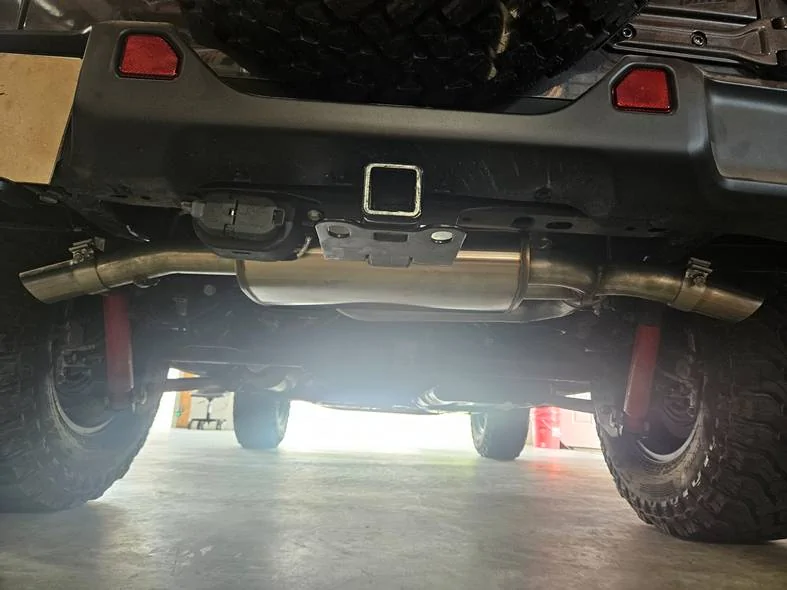
Jeep Wrangler JL Cold Air Intake hogwash Corsa Exhaust 1
 
Last edited:

WillysMeow

Well-Known Member
Joined
Aug 4, 2025
Threads
24
Messages
821
Reaction score
689
Location
Corruptifornia
Vehicle(s)
Bought my first new Jerp! :)
Occupation
Bit wrassler
@DaveM, I would put intake back to stock and wrap the tube with some reflective insulation.

K&N or any other oiled gauze air filters are garbage on DD vehicles, lets' in way too much debris which wears out the engine IME.
Sponsored


Top