Sponsored

Which Battery Tester?

AndySpill

Well-Known Member
First Name
Andy
Joined
Oct 24, 2023
Threads
71
Messages
1,654
Reaction score
1,270
Location
Pittsburgh
Vehicle(s)
2018 JL Sahara
Why don't you take your questions back to where you got them. IIRC, Shadowpapa is one of the members who has identified the actions cause by identical voltages for 6 straight shutoffs.
That's what I though I did when I tagged @flanders, I presume the same one from the JT board, maybe not.

I don't see benefit in rhetorically asking the people you reference, who (I think) you claim themselves saying ESS turns off from 6 identical voltages, "what factor it is (i.e. these identical voltages) that causes this shutdown" or why Stellantis chose "6" as their metric.

I do see benefit in understanding, if the batteries are in parallel in ESS events as @flanders claims (as is his right), which means their voltages are likely to stay very close, why ESS doesn't shut off after 6 ESS cycles.

Does it? Is this 6 ESS cycle claim not true? Is there some other factor that's causing this 6 cycle shutdown other than similar voltages in the two batteries? Do @flanders observations not apply to the entire 3.6L/2.0L dual AGM JL/JT power plant across model years?

I don't belong to the JT board (I think). Maybe I should join.
Sponsored

 

andy29847

Well-Known Member
First Name
Andy
Joined
Oct 22, 2022
Threads
15
Messages
440
Reaction score
714
Location
Trenton, SC
Vehicle(s)
2020 JLUR
That's what I though I did when I tagged @flanders, I presume the same one from the JT board, maybe not.

I don't see benefit in rhetorically asking the people you reference, who (I think) you claim themselves saying ESS turns off from 6 identical voltages, "what factor it is (i.e. these identical voltages) that causes this shutdown" or why Stellantis chose "6" as their metric.

I do see benefit in understanding, if the batteries are in parallel in ESS events as @flanders claims (as is his right), which means their voltages are likely to stay very close, why ESS doesn't shut off after 6 ESS cycles.

Does it? Is this 6 ESS cycle claim not true? Is there some other factor that's causing this 6 cycle shutdown other than similar voltages in the two batteries? Do @flanders observations not apply to the entire 3.6L/2.0L dual AGM JL/JT power plant across model years?

I don't belong to the JT board (I think). Maybe I should join.

The point is that earlier in this thread (asking about battery testers) a member asked that we not flood the thread with off-topic post.
 

azjl#3

Well-Known Member
First Name
Scott
Joined
Sep 24, 2022
Threads
17
Messages
3,046
Reaction score
3,688
Location
North AZ
Vehicle(s)
2024 silver zenith or atomic silver. JLUR Extreme Recon-ish
Occupation
retired, grumpy, yet, friendly
Test in the morning after it sits all night, check voltage against the chart in previous post, anything above 70% is good to go.

Do that a few days in a row.

Anything more is money wasted.

I do have a battery conditioner from auto zone, supposed to reduce sulfate.

I know it saved my new jeeps batteries as they were reading 12.3 in morning. It had sat on lot for 9 months so I know it was never driven. I used conditioner over a few days period, I'm now after 2 years, showing 12.7 in morning.
 

Pape

Well-Known Member
Joined
Jul 4, 2023
Threads
16
Messages
1,905
Reaction score
2,031
Location
Quebec
Vehicle(s)
JLU Sahara
LOL. The thread was intended to get advice on battery and load testers. Somehow if the word battery is written or implied, a couple of people will answer and then all the battery talk regulars will show up, and things devolve into arguing about ESS events. I guess it’s no different than the 100 page oil threads.
And nobody said "oil" yet. On S#!t
They will only show up if you say OIL 3 times. oups I guess ware doom now 🤪

Test in the morning after it sits all night, check voltage against the chart in previous post, anything above 70% is good to go.

Do that a few days in a row.

Anything more is money wasted.

I do have a battery conditioner from auto zone, supposed to reduce sulfate.

I know it saved my new jeeps batteries as they were reading 12.3 in morning. It had sat on lot for 9 months so I know it was never driven. I used conditioner over a few days period, I'm now after 2 years, showing 12.7 in morning.
Every good project start with the battery on boil ! :LOL:
 

Jebiruph

Well-Known Member
First Name
Jerry
Joined
Feb 18, 2018
Threads
57
Messages
2,400
Reaction score
2,996
Location
Iowa
Vehicle(s)
2018 JLU, 2020 JT, 2024 WL
That's what I though I did when I tagged @flanders, I presume the same one from the JT board, maybe not.

I don't see benefit in rhetorically asking the people you reference, who (I think) you claim themselves saying ESS turns off from 6 identical voltages, "what factor it is (i.e. these identical voltages) that causes this shutdown" or why Stellantis chose "6" as their metric.

I do see benefit in understanding, if the batteries are in parallel in ESS events as @flanders claims (as is his right), which means their voltages are likely to stay very close, why ESS doesn't shut off after 6 ESS cycles.

Does it? Is this 6 ESS cycle claim not true? Is there some other factor that's causing this 6 cycle shutdown other than similar voltages in the two batteries? Do @flanders observations not apply to the entire 3.6L/2.0L dual AGM JL/JT power plant across model years?

I don't belong to the JT board (I think). Maybe I should join.
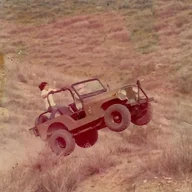
This question is answered in the thread, the batteries are separated for the restart. Also provide by ShadowsPapa (aka @Yawnie'sPapa) is documentation that the status of the aux battery is assessed during the restart separation and a P00FD error is generated if the aux battery fails.

Jeep Wrangler JL Which Battery Tester? 1761847103046-q


So maybe running a few ESS events is all that's needed for testing the batteries.
 

Sponsored

Terrymo

Well-Known Member
First Name
Terry
Joined
Jun 17, 2022
Threads
48
Messages
10,688
Reaction score
33,013
Location
SoCal
Vehicle(s)
2023 JLURXR 3.6 ET
Clubs
 
The point is that earlier in this thread (asking about battery testers) a member asked that we not flood the thread with off-topic post.
Nobody listens to me 😂 You’re free to do as you choose obviously. I was just hoping to hear some good advice on the battery tester and load tester topic. There’s ESS and oil threads here ad nauseam with no conclusion in sight. I was trying to learn something new is all. I guess I was feeling optimistic.

 
OP
OP
roaniecowpony

roaniecowpony

Well-Known Member
Joined
Dec 4, 2018
Threads
194
Messages
12,910
Reaction score
20,417
Location
SoCal
Vehicle(s)
2018 JLUR, 14 GMC 1500 CC All TERRAIN
Occupation
Retired Engineer

Jebiruph

Well-Known Member
First Name
Jerry
Joined
Feb 18, 2018
Threads
57
Messages
2,400
Reaction score
2,996
Location
Iowa
Vehicle(s)
2018 JLU, 2020 JT, 2024 WL
So, just a question: Is the Harbor Fright carbon pile battery tester
So, just a question: Is the Harbor Fright carbon pile battery tester simple enough that it's likely to be a good tool/tester?

1000 Amp DC, 6/12/24V Carbon Pile Battery and System Load Tester
I can't answer this directly, but I have the cheaper $18 Harbor Freight load tester and I have a used aux battery that was removed before it failed and I have an aux battery that failed in use with the P00FD error code. After charging the batteries overnight and testing with the load tester, the failed tests as bad and the used battery tests as weak. I think $18 load tester works.
 

BRuby

Well-Known Member
Joined
Nov 28, 2019
Threads
5
Messages
754
Reaction score
897
Location
Chilling or working out at 60+
Vehicle(s)
JLUR Benz Porsche-M Subie-M
We also use the cheap tester and it works good enough. Dead or alive under load? You get your answer. Forget the digital - go analog all the way. Our 12V batteries typically last 10-15 years before they need replacement. None of this 2-4 year nonsense that is mostly reported here.

Even daily drivers left outdoors 24/7 without smart charging last over 10 years easy.

So if you care for your batteries by keeping each one smart charged - they should last a very long time. If you let them drain down - expect to replace them quickly and frequently. YMMV.

Note: Our 2018 still has both OEM sh!t batteries in it. Haha!
 

THAW

Well-Known Member
First Name
Foster
Joined
Oct 28, 2022
Threads
4
Messages
2,184
Reaction score
3,014
Location
PNW - prefer Middle of Nowhere
Vehicle(s)
23 JL4DrRubicon
Load testers should be used on a charged battery, and are highly dependant on temperature (generally, they don't account well for either condition). They're a pretty crude method for predicting battery failure; they're better at confirming it after obvious signs appear. However, the one linked in the opening post looks like a well featured one, especially because of the adjustable load.

An electronic/conductance tester can detect condition/degradation of internal battery components. They're most effectively used for tracking a per battery aging trendline.

As mentioned earlier in the thread, I went with an electronic tester, but also see value in load testers. In a way, having both seems like the pro move. But then all battery testers are imperfect, and I wouldn't buy either type without first owning a multimeter and modern charger.
 

Sponsored

OP
OP
roaniecowpony

roaniecowpony

Well-Known Member
Joined
Dec 4, 2018
Threads
194
Messages
12,910
Reaction score
20,417
Location
SoCal
Vehicle(s)
2018 JLUR, 14 GMC 1500 CC All TERRAIN
Occupation
Retired Engineer
Load testers should be used on a charged battery, and are highly dependant on temperature (generally, they don't account well for either condition). They're a pretty crude method for predicting battery failure; they're better at confirming it after obvious signs appear. However, the one linked in the opening post looks like a well featured one, especially because of the adjustable load.

An electronic/conductance tester can detect condition/degradation of internal battery components. They're most effectively used for tracking a per battery aging trendline.

As mentioned earlier in the thread, I went with an electronic tester, but also see value in load testers. In a way, having both seems like the pro move. But then all battery testers are imperfect, and I wouldn't buy either type without first owning a multimeter and modern charger.
Thanks for that insight. I was also thinking along those lines of the two pieces, the load tester and conductance tester. One giving you a performance test and the other giving you a condition test. I have a couple meters and a Victron Energy Blue Smart 15A smart charger.
 
OP
OP
roaniecowpony

roaniecowpony

Well-Known Member
Joined
Dec 4, 2018
Threads
194
Messages
12,910
Reaction score
20,417
Location
SoCal
Vehicle(s)
2018 JLUR, 14 GMC 1500 CC All TERRAIN
Occupation
Retired Engineer
For the record, I have a Genesis dual battery system with Odyssey batteries. What is driving my inclination to be able to better understand the condition of batteries is that I had to find one and replace the primary last year, in a panic, the day before I left for the Rubicon. Fortunately, I found possibly the only Odyssey AGM 25 in southern CA. If I had half the brains god gave a frog, I would have ordered one it a week or two or month earlier, when I was finishing up the engine replacement and it showed weakness in holding a charge while troubleshooting a bad PCM and repeatedly cranking the engine. At that time, I performed a parasitic load test and it was an extremely low draw.

So, now I have a one year old battery and a 3 year old battery. The newer battery in the primary position is starting to give my stomach the gurgles. I've had to bridge the secondary battery in to start it a few times over the past year after having either letting it set for weeks or having left a fridge plugged in. I thought the fridge logic would protect the main battery even with my older version Genesis system. Evidently, it's still abusive to them. I do have a new Gen 3 Genesis top plate in the garage, but want to find out the battery conditions before installing it.
 

Pape

Well-Known Member
Joined
Jul 4, 2023
Threads
16
Messages
1,905
Reaction score
2,031
Location
Quebec
Vehicle(s)
JLU Sahara
For the record, I have a Genesis dual battery system with Odyssey batteries. What is driving my inclination to be able to better understand the condition of batteries is that I had to find one and replace the primary last year, in a panic, the day before I left for the Rubicon. Fortunately, I found possibly the only Odyssey AGM 25 in southern CA. If I had half the brains god gave a frog, I would have ordered one it a week or two or month earlier, when I was finishing up the engine replacement and it showed weakness in holding a charge while troubleshooting a bad PCM and repeatedly cranking the engine. At that time, I performed a parasitic load test and it was an extremely low draw.

So, now I have a one year old battery and a 3 year old battery. The newer battery in the primary position is starting to give my stomach the gurgles. I've had to bridge the secondary battery in to start it a few times over the past year after having either letting it set for weeks or having left a fridge plugged in. I thought the fridge logic would protect the main battery even with my older version Genesis system. Evidently, it's still abusive to them. I do have a new Gen 3 Genesis top plate in the garage, but want to find out the battery conditions before installing it.
What is the main risk you are trying to address by getting the dual battery setup ?
 
OP
OP
roaniecowpony

roaniecowpony

Well-Known Member
Joined
Dec 4, 2018
Threads
194
Messages
12,910
Reaction score
20,417
Location
SoCal
Vehicle(s)
2018 JLUR, 14 GMC 1500 CC All TERRAIN
Occupation
Retired Engineer
What is the main risk you are trying to address by getting the dual battery setup ?
Reduce the probability of a single point failure in the battery system, which disables the vehicle. Especially at an inopportune time/location.
 

Mguy

Well-Known Member
Joined
Nov 29, 2023
Threads
6
Messages
400
Reaction score
382
Location
Far Away
Vehicle(s)
2020 JLUR 6spd MT
Load testers should be used on a charged battery, and are highly dependant on temperature (generally, they don't account well for either condition). They're a pretty crude method for predicting battery failure; they're better at confirming it after obvious signs appear. However, the one linked in the opening post looks like a well featured one, especially because of the adjustable load.

An electronic/conductance tester can detect condition/degradation of internal battery components. They're most effectively used for tracking a per battery aging trendline.

As mentioned earlier in the thread, I went with an electronic tester, but also see value in load testers. In a way, having both seems like the pro move. But then all battery testers are imperfect, and I wouldn't buy either type without first owning a multimeter and modern charger.
All said without a single reference to the multitude of JScan data available? You're sounding like a recent convert.

This, "all battery testers are imperfect, and I wouldn't buy either type without first owning a multimeter and modern charger," and that it is critical to promptly and full charge AGMs, is what most JL owners need to know.
Sponsored


Top