Sponsored

Which Battery Tester?

roaniecowpony

Well-Known Member
Joined
Dec 4, 2018
Threads
193
Messages
12,897
Reaction score
20,374
Location
SoCal
Vehicle(s)
2018 JLUR, 14 GMC 1500 CC All TERRAIN
Occupation
Retired Engineer
I'm at the point where I'm ready to buy a battery tester that will tell me, before I go on a long road trip, that my battery is in good condition or it's hanging on by its fingernails. I'm tired to SWAG'ing it. Sometimes that hasn't worked out logistically well.

Not long ago, I was ready to buy what looks like an "old tech" large clunky carbon pile battery tester with an analog meter. Now, I'm not so sure that's the best route. There are many small, digital devices that seem to provide many more parameters.

I know we have some very knowledgeable people in our membership here, that can educate me/us on some of these devices. Thanks in advance of sharing your knowledge.

Some random selections of what I've seen out there.
1000 Amp DC, 6/12/24V Carbon Pile Battery and System Load Tester

12V Digital Battery and System Tester

Amazon.com: Car Battery Tester, TOPDON BT600 12V, 12V/24V Cranking Tests and Charging Alternator Load 100-2000CCA Digital Battery Voltage Tester, 3.5" Screen with Built-in Printer : Automotive

Amazon.com: FOXWELL BT705 Car Battery Tester 12V 24V, Automotive 100-2000CCA Battery Load Tester Analyzer, Digital Cold Cranking Charging System Alternator Tester for Heavy Duty Truck Boat Marine SUV ATV : Automotive
Sponsored

 

Terrymo

Well-Known Member
First Name
Terry
Joined
Jun 17, 2022
Threads
48
Messages
10,656
Reaction score
32,874
Location
SoCal
Vehicle(s)
2023 JLURXR 3.6 ET
Clubs
 
I have a less expensive Foxwell battery analyzer but have always wondered about the value and accuracy of the analyzer without an actual load tester. @THAW your thoughts?
 

THAW

Well-Known Member
First Name
Foster
Joined
Oct 28, 2022
Threads
4
Messages
2,181
Reaction score
3,010
Location
PNW - prefer Middle of Nowhere
Vehicle(s)
23 JL4DrRubicon
I have a less expensive Foxwell battery analyzer but have always wondered about the value and accuracy of the analyzer without an actual load tester. @THAW your thoughts?
Hmm.

I bought the Foxwell in the 4th link about 18 months ago. When I got it, I used it to test a bunch of batteries, including a couple batteries I'd replaced proactively and still had lying around, plus a couple in relatives' cars (one in obvious need of replacement). I even charged the older batteries and re-tested them. The Foxwell seemed fairly accurate as far as I could tell; the test results roughly matched my predictions for each battery I tested, and appeared to differentiate between their various states of health pretty well. But, I'm still not sure I fully trust the Foxwell.

Honestly, I've used the Foxwell maybe once since that initial round of tests. For my Jeep, over the last year or so, I regularly check a few IBS parameters using JScan while commuting. I figure it's better to try to stay in tune with the lifecycle of the battery than spot check it when I start to suspect it might be prone to failure. But, I'm also a nerd who likes fiddling with JScan. Anyway, so far, I feel very confident about the health of my ~2 year-old Odyssey crank battery (especially since I have an accessory battery on-board to jump from if I'm in a jam).
 
OP
OP
roaniecowpony

roaniecowpony

Well-Known Member
Joined
Dec 4, 2018
Threads
193
Messages
12,897
Reaction score
20,374
Location
SoCal
Vehicle(s)
2018 JLUR, 14 GMC 1500 CC All TERRAIN
Occupation
Retired Engineer
Hmm.

I bought the Foxwell in the 4th link about 18 months ago. When I got it, I used it to test a bunch of batteries, including a couple batteries I'd replaced proactively and still had lying around, plus a couple in relatives' cars (one in obvious need of replacement). I even charged the older batteries and re-tested them. The Foxwell seemed fairly accurate as far as I could tell; the test results roughly matched my predictions for each battery I tested, and appeared to differentiate between their various states of health pretty well. But, I'm still not sure I fully trust the Foxwell.

Honestly, I've used the Foxwell maybe once since that initial round of tests. For my Jeep, over the last year or so, I regularly check a few IBS parameters using JScan while commuting. I figure it's better to try to stay in tune with the lifecycle of the battery than spot check it when I start to suspect it might be prone to failure. But, I'm also a nerd who likes fiddling with JScan. Anyway, so far, I feel very confident about the health of my ~2 year-old Odyssey crank battery (especially since I have an accessory battery on-board to jump from if I'm in a jam).
Watched a bunch of videos and read some articles. Would it be fair to say that these types of devices are using other less direct data to determine what a carbon pile tester does in a more direct manner?
 

patternman

Well-Known Member
First Name
George
Joined
Sep 24, 2018
Threads
3
Messages
396
Reaction score
450
Location
Phoenix AZ
Vehicle(s)
2019 JLUS, 2014 & 2001 Indian
Watched a bunch of videos and read some articles. Would it be fair to say that these types of devices are using other less direct data to determine what a carbon pile tester does in a more direct manner?
What I understand? They test with small load and interpolate for large load.
If wrong someone please school me.
 

Sponsored

andy29847

Well-Known Member
First Name
Andy
Joined
Oct 22, 2022
Threads
15
Messages
440
Reaction score
714
Location
Trenton, SC
Vehicle(s)
2020 JLUR
I've been driving for more than 50 years and batteries still surprise me. Many times I have had a battery that tests good but couldn't do the job shortly after the test. Owning a modern Jeep added a whole new area of mystery to battery science. A few years ago, I took my 2020 JLU to the dealer 4 times in a few months (under warranty) with battery problems. Heck, if the dealer can't figure it out, how can I be expected to do so. One of the issues with the Jeep battery system is that features quit working even when the battery is at normally good levels. For example, the stop/start quits when the batteries get to ~12.4vDC.

Jeep Wrangler JL Which Battery Tester? 1761593688005-9o


My current answer has been to delete the aux battery, install a larger/better main battery, and disable the stop/start. This means that my Jeep's battery system is operating in similar manner to all the cars and trucks I have been driving in my lifetime. In addition, I will add the date of my battery change to my maintenance list to remind me when the battery is getting near the end of it's expected useful life. Also, even with the stop/start disabled, the Jeep system test the batteries when starting. This mean that if the single battery drops to a level that is below Jeep's programed thresholds, I get a warning. e.g., the Avenger light. The Avenger light will be one of my queues to the fact that I am approaching end of life for the battery.

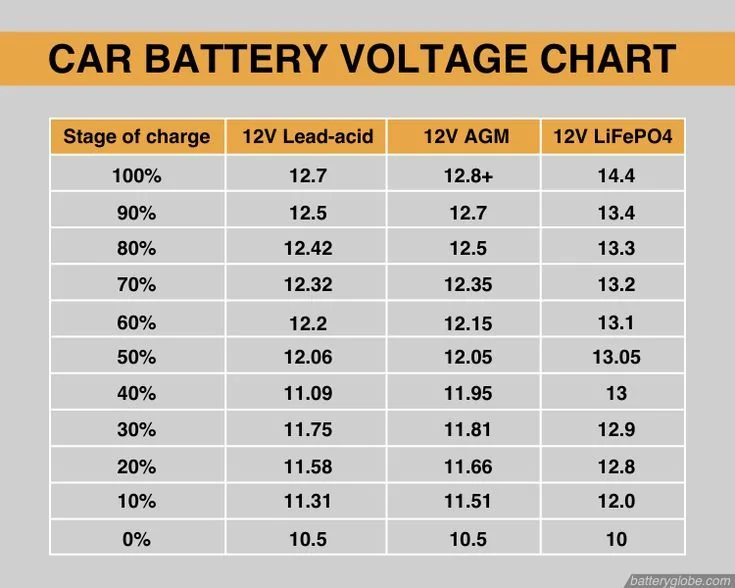
As info, when my Jeep was running with 2 Mopar batteries and stop/start disabled, I started seeing the Avenger light at 28 months after new battery install. The light would come on after the first morning crank up and then go out after a short drive. I would not get a warning light the rest of the day. I pulled the batteries out, charged them, let them sit for 12 hours, and tested them with a voltmeter. The main tested 12.8vDC, the aux tested 12.7vDC. Rather than re-installing the old batteries and waiting for another warning light, I replaced them with one battery. Since I installed the new battery, I do not get a warning light in the morning.

Peace of mind at last! Replaced main battery with a premium H7/Group 94 battery | Jeep Gladiator (JT) News, Forum, Community - JeepGladiatorForum.com
 
Last edited:

andy29847

Well-Known Member
First Name
Andy
Joined
Oct 22, 2022
Threads
15
Messages
440
Reaction score
714
Location
Trenton, SC
Vehicle(s)
2020 JLUR
The Jeep battery system design is sucky. No other auto forums I visit have a section devoted to battery issues (like ours). My Jeep was still under warranty when I started having stop/start system warnings. It took 4 visits to the dealer before the problem was resolved. In the end, they did what I told them to do the first time - replaced both batteries. Since I experienced the trouble with my Jeep, I have been following the battery threads here and on the Gladiator forum. Incredible to me is that every time I believe that I have the system figured out, something new rears it's head. The latest is covered in a thread on the Gladiator forum. The people who participate are members I've seen on this forum too. Several of them are guru level techs. The question is regarding how the batteries work together in the Jeep system. The conclusion was new info for me.

Are the batteries really isolated during ESS stops? | Jeep Gladiator (JT) News, Forum, Community - JeepGladiatorForum.com
 

THAW

Well-Known Member
First Name
Foster
Joined
Oct 28, 2022
Threads
4
Messages
2,181
Reaction score
3,010
Location
PNW - prefer Middle of Nowhere
Vehicle(s)
23 JL4DrRubicon
Watched a bunch of videos and read some articles. Would it be fair to say that these types of devices are using other less direct data to determine what a carbon pile tester does in a more direct manner?
I believe that's correct. As I understand it, electronic battery testers are conductance testers.

A lot of them (including my Foxwell) have modes that test an engine start, which does allow the device to assess the battery under a typical, relevant load; but that's not quite the same as testing the battery against a large load for a longer duration.
 

Mguy

Well-Known Member
Joined
Nov 29, 2023
Threads
6
Messages
400
Reaction score
382
Location
Far Away
Vehicle(s)
2020 JLUR 6spd MT
Congratulations! You reached the right conclusion while the EEs in the cited thread are still debating (10 pages worth) how the stock dual system actually handles loads.

Hint: the stock dual system stinks because it doesn't keep dissimilar batteries separated in two situations: when there are no loads (engine off), and when charging takes place. Those EE guys might as well resolve the dancing angels-pin question.

But more on topic, traditional load testers can be effective at taking out a loser, but they generate too many false positives (battery good) for my taste. A bad AGM can hold a fresh full charge well enough for a few hours, and then crap out the next day.

Until the newer electronic testers with fancy algorithms develop a history of accurate service, I'm sticking with the tried and true traditional method--a good battery shows a 12.6V or above resting voltage, then holds steady for a few days.
 
Last edited:

andy29847

Well-Known Member
First Name
Andy
Joined
Oct 22, 2022
Threads
15
Messages
440
Reaction score
714
Location
Trenton, SC
Vehicle(s)
2020 JLUR
Hint: the stock dual system stinks because it doesn't keep dissimilar batteries separated when there are no loads and when charging takes place. Those EE guys might as well resolve the dancing angels-pin question.

``````

Until the newer electronic testers with fancy algorithms develop a history of accurate service, I'm sticking with the tried and true traditional method--a good battery shows a 12.6V or above resting voltage, then holds steady for a few days.
no load + charging = all the time :) You want to take another shot at that statement?

"Holds steady for a few days" is probably the most conclusive way to finish a battery test. Only problem is few of us have that kind of time.


FWIW, I don't believe that the 3 or 4 guys on the previously mentioned thread that I think of as Gurus are EEs. I'd guess that they have worked in the auto industry before. They also seem to have the knowledge, equipment, and curiosity to dig deeper than most of the rest of us and the willingness to share. I'm glad they are here!
 
  • Like
Reactions: X35

Sponsored

Mguy

Well-Known Member
Joined
Nov 29, 2023
Threads
6
Messages
400
Reaction score
382
Location
Far Away
Vehicle(s)
2020 JLUR 6spd MT
no load + charging = all the time :) You want to take another shot at that statement?

"Holds steady for a few days" is probably the most conclusive way to finish a battery test. Only problem is few of us have that kind of time.


FWIW, I don't believe that the 3 or 4 guys on the previously mentioned thread that I think of as Gurus are EEs. I'd guess that they have worked in the auto industry before. They also seem to have the knowledge, equipment, and curiosity to dig deeper than most of the rest of us and the willingness to share. I'm glad they are here!
Good point on my poor sentence structure in the original, correction made. In a well engineered system, dissimilar batteries are not in parallel most of the time. That's why it is unusual to see parallel dissimilar batteries in any application.

For comparison, dissimilar batteries are often used where there is a start battery and a larger "house" battery or bank. Paralleling is not often done, but the option may be present when there are starting issues. This is not the right setup for typical motor vehicles, including Jeeps.

As to the other thread, those guys are behaving like the EEs. Often overly cautious, EEs construct a test or protocol for everything, no matter how insignificant the problem may be, simply because they can. On occasion they miss the big picture, and that seems to be the case here. There is no benefit in analyzing or debating what the Jeep EEs tried to accomplish with the stock dual system, it's simply an irredeemable design.
 
Last edited:

Heimkehr

Well-Known Member
First Name
James
Joined
Sep 3, 2020
Threads
48
Messages
11,072
Reaction score
22,431
Location
Pennsylvania
Vehicle(s)
2021 JLU 2.0T
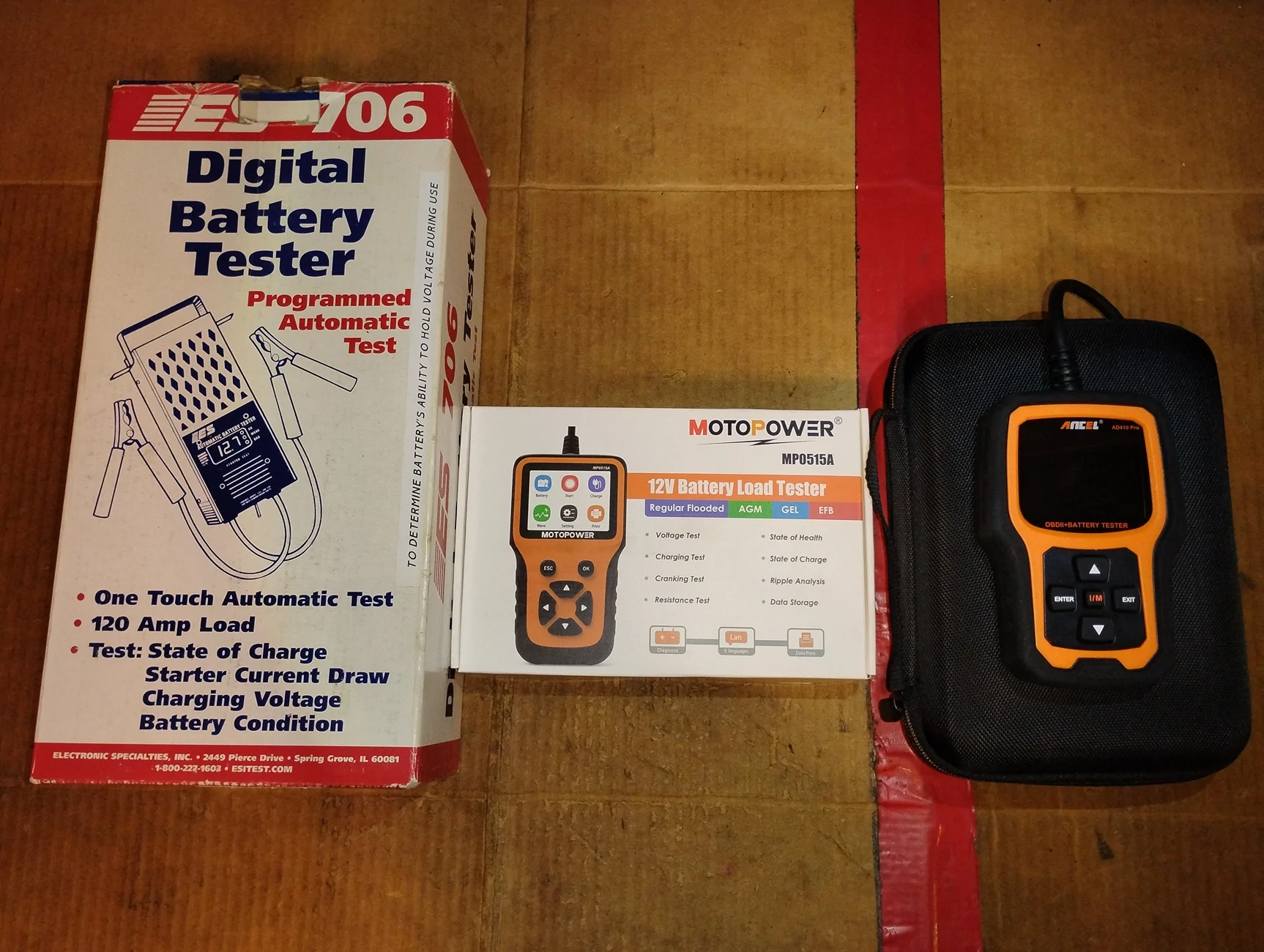
I've the three pictured devices.

The one on the left is the only real tester, relative to its actual functioning. The other two are tarted-up voltmeters. That's not to say that they don't have their place (the one on the right doubles as an OBD-II code reader.) Rather, each serves a distinct and useful purpose.

Jeep Wrangler JL Which Battery Tester? IMG_20251027_203857220
 

andy29847

Well-Known Member
First Name
Andy
Joined
Oct 22, 2022
Threads
15
Messages
440
Reaction score
714
Location
Trenton, SC
Vehicle(s)
2020 JLUR
Good point on my poor sentence structure in the original, correction made. In a well engineered system, dissimilar batteries are not in parallel most of the time. That's why it is unusual to see parallel dissimilar batteries in any application.

For comparison, dissimilar batteries are often used where there is a start battery and a larger "house" battery or bank. Paralleling is not often done, but the option may be present when there are starting issues. This is not the right setup for typical motor vehicles, including Jeeps.
I've railed against the design since I started studying the Jeep system (I am NOT an Engineer). Science says that it is acceptable for batteries of similar voltage and different capacity (amps) to be connected in parallel. The caveats are that the 2 batteries need to have the same volt output and be the same type (in the case of Jeeps, AGM). Even if science says it is OK, the problems that the system has generated say the design is bad.

If you accept the science that it is OK to put dissimilar batteries together in the Jeep situation, and you agree with the gurus that say the 2 batteries work together almost all the time, then you can understand why the aux battery didn't need to be as big as the main battery. The only thing the aux battery does by itself is carry the cabin load for milliseconds on startup.

The problems start when either of the 2 batteries starts losing life faster than the other battery in the pair. The bad battery sucks off power from the good battery, and the service life of the 2 batteries is shortened.
 

THAW

Well-Known Member
First Name
Foster
Joined
Oct 28, 2022
Threads
4
Messages
2,181
Reaction score
3,010
Location
PNW - prefer Middle of Nowhere
Vehicle(s)
23 JL4DrRubicon
I've the three pictured devices.

The one on the left is the only real tester, relative to its actual functioning. The other two are tarted-up voltmeters. That's not to say that they don't have their place (the one on the right doubles as an OBD-II code reader.) Rather, each serves a distinct and useful purpose.

IMG_20251027_203857220.webp
Having/using both a load tester and an electronic tester seems like an excellent strategy.
 

Heimkehr

Well-Known Member
First Name
James
Joined
Sep 3, 2020
Threads
48
Messages
11,072
Reaction score
22,431
Location
Pennsylvania
Vehicle(s)
2021 JLU 2.0T
Having/using both a load tester and an electronic tester seems like an excellent strategy.
For 20+ years, I owned and used just the tester on the left. The two orange e-devices were gifted to me just in the past 12 months.
Sponsored


Top