Sponsored

Tail pipe submerge question

jameslavis

Well-Known Member
First Name
James
Joined
Jun 18, 2019
Threads
30
Messages
159
Reaction score
68
Location
toronto, ontario
Vehicle(s)
Jeep JL Unlimited Sport S
when launch the jetski, is there any concern with the tailpipe submerging? I remember old days where it was an issue on certain vehicles.

The launch is angled so the engine isn’t under. Just the angle dips the pipe and it starts bubbling.
Sponsored
 

Arterius2

Well-Known Member
First Name
Jerry
Joined
Dec 29, 2018
Threads
42
Messages
3,527
Reaction score
4,857
Location
Vancouver, BC
Vehicle(s)
2018 JLU Sahara 2.0L
when launch the jetski, is there any concern with the tailpipe submerging? I remember old days where it was an issue on certain vehicles.

The launch is angled so the engine isn’t under. Just the angle dips the pipe and it starts bubbling.
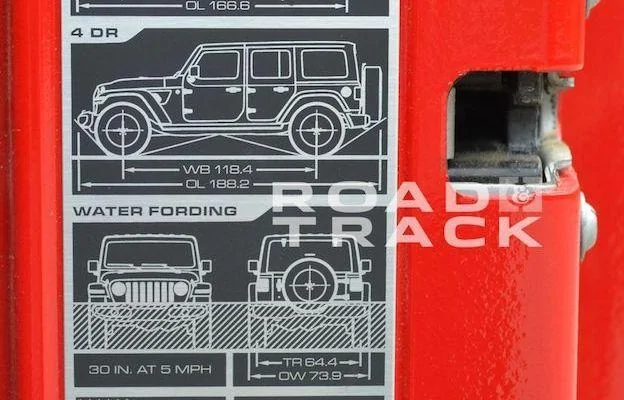
as long as you have engine running there is exhaust gas coming out creating positive pressure so water won’t be able to get in. The JL is also rated for 30” (+whatever your lift is) of water fording depth.
 

Bee-Rad

Well-Known Member
First Name
Brad
Joined
Mar 7, 2019
Threads
3
Messages
82
Reaction score
180
Location
Austin, TX
Vehicle(s)
2019 JL Sport
when launch the jetski, is there any concern with the tailpipe submerging? I remember old days where it was an issue on certain vehicles.

The launch is angled so the engine isn’t under. Just the angle dips the pipe and it starts bubbling.
Like Arterius2 said, just keep the engine running and you'll be fine.
 

javelina

Well-Known Member
Joined
Apr 25, 2019
Threads
6
Messages
230
Reaction score
299
Location
WAFB, Arizona
Vehicle(s)
2019 MOAB "Saharacon", 2006 Wrangler TJ, 2018 F-150 RCSB 4x4
That's not how that works
would be helpful if you expand your post, with what you're challenging. I'm curious to what "works". I understand that positive pressure from the exhaust will help from that perspective.
 
OP
OP

jameslavis

Well-Known Member
First Name
James
Joined
Jun 18, 2019
Threads
30
Messages
159
Reaction score
68
Location
toronto, ontario
Vehicle(s)
Jeep JL Unlimited Sport S
Appreciate the answers. It’s a common thing on boat ramps. Always heard you never shut the engine down but always wondered if it caused issues if you dip it. No real way around it but also remember the 30inch sticker on the tailgate.
 

Sponsored

OldBird

Well-Known Member
First Name
Timothy
Joined
Oct 9, 2018
Threads
26
Messages
265
Reaction score
336
Location
Washington State
Vehicle(s)
2019 Mojito! JLUR
As long as your engine is running and you don't back in fast enough for the water pressure to push the water back up the exhaust you're fine. If you go in deep enough for the rear differential to be fully submerged you should check for water in the diff, but that probably won't be a problem launching a jet ski. If it is you can extend the differential breather, look for a thread on this board that walks you through that.
 

Sorbs

Well-Known Member
First Name
Brian & Sunny
Joined
Aug 3, 2018
Threads
12
Messages
573
Reaction score
1,066
Location
Colorado Springs
Vehicle(s)
21' Ram TRX, 20' Gladiator LE
It is when your air cleaner is under water is when you need to worry!
 

mgroeger

Well-Known Member
First Name
Mike
Joined
Feb 1, 2018
Threads
162
Messages
6,203
Reaction score
9,259
Location
Southern UT
Vehicle(s)
2021 JLUR 2.0T
Vehicle Showcase
1
That's not how that works
No, you are incorrect... that is how it works. The JL can ford 30" so if you put a 2" lift on it (i.e. your entire Jeep goes up) you can now ford 32" of water. Actually a little more since you most likely put bigger tires on it.
Do tell how you think it remains at 30".
 

Crusifix

Well-Known Member
First Name
Jeff
Joined
Mar 8, 2019
Threads
20
Messages
727
Reaction score
1,318
Location
West Virginia
Vehicle(s)
2019 JLU Rubicon 2.0T Hurricane
@Arterius2 did not mention tire size, only lift. If you add a 5 inch lift but only 2 inch bigger tires, unless you've done more you're only getting about 1 inch more fording depth. When you added your lift, did you extend the diff vent tubes? Did your lift require that you lower the transfer case? My point is you can't just say "30 inches plus lift size" there is more to it than that.
Not how that works. The only concern he would have would be the diffs, as the engine/intake and exhaust system will all be 5" higher with a lift. Now, if he is talking about a body lift, then you are correct. And as long as the engine is higher than the water level, then water should not come up the exhaust pipe and into the exhaust ports. In short, just keep your engine running as insurance.
 

Sponsored

mgroeger

Well-Known Member
First Name
Mike
Joined
Feb 1, 2018
Threads
162
Messages
6,203
Reaction score
9,259
Location
Southern UT
Vehicle(s)
2021 JLUR 2.0T
Vehicle Showcase
1
@Arterius2 did not mention tire size, only lift. If you add a 5 inch lift but only 2 inch bigger tires, unless you've done more you're only getting about 1 inch more fording depth. When you added your lift, did you extend the diff vent tubes? Did your lift require that you lower the transfer case? My point is you can't just say "30 inches plus lift size" there is more to it than that.
I still disagree...
Adding a 5" true suspension lift even if you don't change the tire size will allow for 35" of fording. This is because (assuming you extended your vent tubes and didn't drop your t-case) everything has gone up 5". The only thing at factory height at that point would be the axles.
Going up to a 3" lift you don't need to do anything else and you will gain 3" of water fording. I agree it may be incorrect to say 30" plus lift height but I was speaking in the "normal" range of lifts.
 

Arterius2

Well-Known Member
First Name
Jerry
Joined
Dec 29, 2018
Threads
42
Messages
3,527
Reaction score
4,857
Location
Vancouver, BC
Vehicle(s)
2018 JLU Sahara 2.0L
My issue is with Arterius2 saying you take 30 inches plus your lift size to get your fording depth. There is more to it than that. In general you're right... back into the water with your exhaust pipe the water doesn't add enough back pressure to cause an issue for the engine. Now if you shut your engine off or if you're in a current that is directing water into your exhaust pipe or if you're backing with substantial speed, you may have issues.
Right, I actually thought I was being slightly more informative for the topic of discussion at hand vs what most people who would have just said (30" as per factory spec and just left it at that), but yes, since now we're nitpicking and threading into very technical territory, I'm aware tires also contribute fording depth but I thought that was well understood and can also be categorized as a "lift" in general. As for rear breather tube, it's not a "must" but definitely on the safer side to extend it, if you are doing a massive lift, you would have already extended it anyways, I've heard the valve on the JLs are better designed than the older models so for most fording instances they will not take on water even if submerged for extended periods.

If you look at the rated fording depth, waterline it is actually higher than where the rear axle breather tube valve sits, so I'm sure the engineers at Jeep is well aware of this and have designed the breather tubes to function as such.

Jeep Wrangler JL Tail pipe submerge question 111
 
Last edited:

mgroeger

Well-Known Member
First Name
Mike
Joined
Feb 1, 2018
Threads
162
Messages
6,203
Reaction score
9,259
Location
Southern UT
Vehicle(s)
2021 JLUR 2.0T
Vehicle Showcase
1
Right, I actually thought I was being slightly more informative for the topic of discussion at hand vs what most people who would have just said (30" as per factory spec and just left it at that), but yes, since now we're nitpicking and threading into very technical territory, I'm aware tires also contribute fording depth but I thought that was well understood and can also be categorized as a "lift" in general. As for rear breather tube, it's not a "must" but definitely on the safer side to extend it, if you are doing a massive lift, you would have already extended it anyways, I've heard the valve on the JLs are better designed than the older models so for most fording instances they will not take on water even if submerged.

If you look at the rated fording depth, waterline it is actually higher than where the rear axle breather tube valve sits, so I'm sure the engineers at Jeep is well aware of this and have designed the breather tubes to function as such.

111.webp
Yes, those valves are designed to close when submerged but taking on water through the valve is a misunderstanding of how that system works. When that valve is closed water can still come into the axle. That valve is designed to breathe, i.e. as the axle heats up during normal operation it needs to vent. Yes the vent is also designed that if submerged it will be pushed shut from the pressure of the water on it so as water can not go down that tube. That's where most people stop and say I'm good as long as I don't submerge that vent and that is where they are wrong.

The danger is when the axle is hot (at operating temp from being driven), and as noted, it is venting. When the axle is suddenly plunged into water or mud and allowed to stay submerged it will cool rapidly. When it cools like that it forms a vacuum and pulls that valve shut and that is when the problem occurs. Now you have a vacuum and since it can't suck in air through that vent it's going to start pulling in through the seals and what's on the other side of the seals? Water. That is the real danger of submerging an axle that is at operating temp.
The solution to this is to run ALL (both diffs, tranny, t-case) to a common point up in the engine compartment as high as possible but DON'T put a closable vent on it. You typically tie them to a manifold that has a filter on it, ARB makes one for around $75. This way you keep out debris and it can breathe in/out without causing a vacuum. And if you are worried about sucking water in through them when they are way up in the engine compartment you've got bigger problems, like a hydro locked engine, to deal with :)

A friend of mine had the exact opposite thing happen to him. His breather valve was caked SHUT with mud. As his axle heated up it still needed to vent so it vented itself right out the pinion seal and he was leaking gear oil there. Time for a new pinion seal
 

mgroeger

Well-Known Member
First Name
Mike
Joined
Feb 1, 2018
Threads
162
Messages
6,203
Reaction score
9,259
Location
Southern UT
Vehicle(s)
2021 JLUR 2.0T
Vehicle Showcase
1
Really the diffs should be fine as well, as they have a positive pressure relief valve that should no allow water into them.
That's not entirely how those valves work. See my post above.
 

mgroeger

Well-Known Member
First Name
Mike
Joined
Feb 1, 2018
Threads
162
Messages
6,203
Reaction score
9,259
Location
Southern UT
Vehicle(s)
2021 JLUR 2.0T
Vehicle Showcase
1
Side note: I just changed my diff fluid yesterday and the front had a tiny bit of milky color to it. My wife is very fond of fording water while we are off roading and it looks like we sucked a little water in there.
Sponsored


Top