
Sponsored

Splain fender static charge

JHTS

Well-Known Member
First Name
John & Holly
Joined
Jun 12, 2020
Threads
8
Messages
307
Reaction score
612
Location
Hope Mills NC
Vehicle(s)
21 Gecko JLU Freedom, 20 Punk'n JL Sport S, 91 Mustang GT, 25 Ranger XL
Occupation
John - US Army Ret/DA Civilian
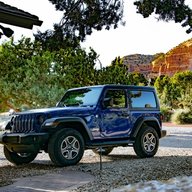
So I was in the garage walking close past the Jeeps and the hair on my arms stood up and pulled towards the plastic fenders. Tested it on the other Jeep same thing when you wave your arm an inch or so but don’t touch the fender the hairs pull straight to the fender. Can someone explain that, just curious I’m obviously not that smart.
Sponsored


 

Sparty

Well-Known Member
Joined
Apr 14, 2021
Threads
15
Messages
945
Reaction score
3,173
Location
SW Michigan
Vehicle(s)
04 TJ, 21 JTR, 21 JLR
So I was in the garage walking close past the Jeeps and the hair on my arms stood up and pulled towards the plastic fenders. Tested it on the other Jeep same thing when you wave your arm an inch or so but don’t touch the fender the hairs pull straight to the fender. Can someone explain that, just curious I’m obviously not that smart.

Static electricity
Environmental conditions

Tends to happen more in the dryer months.

Stop rubbing on your fenders
 

ArcadeTracks

Well-Known Member
First Name
PJ
Joined
Jan 30, 2023
Threads
98
Messages
1,249
Reaction score
2,147
Location
Pittsburgh, PA, USA
Vehicle(s)
'23 Rubicon. 2dr Soft Top. 2.0L Turbo, Auto, Stock
So I was in the garage walking close past the Jeeps and the hair on my arms stood up and pulled towards the plastic fenders. Tested it on the other Jeep same thing when you wave your arm an inch or so but don’t touch the fender the hairs pull straight to the fender. Can someone explain that, just curious I’m obviously not that smart.
It's so you can say you had a hair-raising adventure with your Jeep, even if you never left the garage! ?
 

TheBirdie72

Well-Known Member
First Name
Steve
Joined
Dec 16, 2021
Threads
25
Messages
5,389
Reaction score
25,732
Location
Rhode Island
Vehicle(s)
2021 Jeep Wrangler Freedom Edition 2 Door
I am shocked by some folks’ static responses to this thread. This guy asks a serious Jeep question, and all he gets is verbal discharge from people. If I were him, this would make my hair stand on end, and I would bolt out of here. ⚡?
 

Sponsored

Speed331

Well-Known Member
First Name
Sean
Joined
Jun 19, 2020
Threads
28
Messages
714
Reaction score
2,122
Location
Las Vegas, NV
Vehicle(s)
2008 Jetta, 2018 Discovery Sport, 2020 Wrangler Sport S (on order)
Jeep Wrangler JL Splain fender static charge QB44N1iwGN53hAQ46L

Static electricity is defined as an imbalance of electric charges in a body, especially the negative and positive charges. In other words, the discharge of an electrical pulse is known as static electricity. Physical techniques are used to create the charge imbalance. Contact between solid things is one of the most prominent sources of static electricity. The static electricity generates a force during its creation which is directly proportional to the charges of both the bodies in contact and inversely proportional to the square of the distance between them. It is known as electrostatic force and is denoted by the symbol F. Its standard unit of measurement is Newtons (N), and the dimensional formula is given by [M1L1T-2].

Static Electricity Formula
F = 1/4πε0 (q1q2 / r2)

Where,

F is the electrostatic force,
1/4πε0 = k0 is the Coulomb’s constant with a value of 9 × 10⁹ Nm2C-2,
q1, q2 are the charge values,
r is the distance between the bodies.
Derivation
Consider a system of two bodies of charges q1 and q2 such that they are separated by a distance r. It is known that the static electricity force between these two bodies is directly proportional to the product of the charges of the bodies.

F ∝ q1q2 ⇢ (1)

Also, the force is indirectly proportional to the square of the distance between the two bodies. So we get,
F ∝ 1/r2 ⇢ (2)

From (1) and (2),

F ∝ q1q2/r2

Replacing the proportionality sign with a constant, we get,

F = k0q1q2/r2

Here, k0 is known as the Coulomb’s constant.
This derives the formula for static electricity force between two charged bodies.
 

ArcadeTracks

Well-Known Member
First Name
PJ
Joined
Jan 30, 2023
Threads
98
Messages
1,249
Reaction score
2,147
Location
Pittsburgh, PA, USA
Vehicle(s)
'23 Rubicon. 2dr Soft Top. 2.0L Turbo, Auto, Stock
So I was in the garage walking close past the Jeeps and the hair on my arms stood up and pulled towards the plastic fenders. Tested it on the other Jeep same thing when you wave your arm an inch or so but don’t touch the fender the hairs pull straight to the fender. Can someone explain that, just curious I’m obviously not that smart.
You could probably make balloons stick to the fenders if you first rub the balloons on your shirt! :)

But, it is most likely static electricity, not some random electrical pull, or something else -- which would be ... concerning.
 
OP
OP
JHTS

JHTS

Well-Known Member
First Name
John & Holly
Joined
Jun 12, 2020
Threads
8
Messages
307
Reaction score
612
Location
Hope Mills NC
Vehicle(s)
21 Gecko JLU Freedom, 20 Punk'n JL Sport S, 91 Mustang GT, 25 Ranger XL
Occupation
John - US Army Ret/DA Civilian
Static electricity
Environmental conditions

Tends to happen more in the dryer months.

Stop rubbing on your fenders
My fenders like to be rubbed but i wasn't just surprised that plastic held a static charge,
 
OP
OP
JHTS

JHTS

Well-Known Member
First Name
John & Holly
Joined
Jun 12, 2020
Threads
8
Messages
307
Reaction score
612
Location
Hope Mills NC
Vehicle(s)
21 Gecko JLU Freedom, 20 Punk'n JL Sport S, 91 Mustang GT, 25 Ranger XL
Occupation
John - US Army Ret/DA Civilian
It's so you can say you had a hair-raising adventure with your Jeep, even if you never left the garage! ?
Are not Jeeps always a hair raising adventures?
 
OP
OP
JHTS

JHTS

Well-Known Member
First Name
John & Holly
Joined
Jun 12, 2020
Threads
8
Messages
307
Reaction score
612
Location
Hope Mills NC
Vehicle(s)
21 Gecko JLU Freedom, 20 Punk'n JL Sport S, 91 Mustang GT, 25 Ranger XL
Occupation
John - US Army Ret/DA Civilian
If you stopped caressing, and loving on your Wrangler so much, there wouldn't be so much electricity between you two.
Then my Jeeps would be unhappy.
 

Sponsored

OP
OP
JHTS

JHTS

Well-Known Member
First Name
John & Holly
Joined
Jun 12, 2020
Threads
8
Messages
307
Reaction score
612
Location
Hope Mills NC
Vehicle(s)
21 Gecko JLU Freedom, 20 Punk'n JL Sport S, 91 Mustang GT, 25 Ranger XL
Occupation
John - US Army Ret/DA Civilian
I am shocked by some folks’ static responses to this thread. This guy asks a serious Jeep question, and all he gets is verbal discharge from people. If I were him, this would make my hair stand on end, and I would bolt out of here. ⚡?
I dont have a 4XE so I had to drive out.
 

brennaman

Well-Known Member
First Name
Phil
Joined
Jul 5, 2021
Threads
23
Messages
304
Reaction score
474
Location
MO
Vehicle(s)
2009 WK 2014 JK, 2021 JLR snazzberry
Occupation
damn near retired
QB44N1iwGN53hAQ46L.gif

Static electricity is defined as an imbalance of electric charges in a body, especially the negative and positive charges. In other words, the discharge of an electrical pulse is known as static electricity. Physical techniques are used to create the charge imbalance. Contact between solid things is one of the most prominent sources of static electricity. The static electricity generates a force during its creation which is directly proportional to the charges of both the bodies in contact and inversely proportional to the square of the distance between them. It is known as electrostatic force and is denoted by the symbol F. Its standard unit of measurement is Newtons (N), and the dimensional formula is given by [M1L1T-2].

Static Electricity Formula
F = 1/4πε0 (q1q2 / r2)

Where,

F is the electrostatic force,
1/4πε0 = k0 is the Coulomb’s constant with a value of 9 × 10⁹ Nm2C-2,
q1, q2 are the charge values,
r is the distance between the bodies.
Derivation
Consider a system of two bodies of charges q1 and q2 such that they are separated by a distance r. It is known that the static electricity force between these two bodies is directly proportional to the product of the charges of the bodies.

F ∝ q1q2 ⇢ (1)

Also, the force is indirectly proportional to the square of the distance between the two bodies. So we get,
F ∝ 1/r2 ⇢ (2)

From (1) and (2),

F ∝ q1q2/r2

Replacing the proportionality sign with a constant, we get,

F = k0q1q2/r2

Here, k0 is known as the Coulomb’s constant.
This derives the formula for static electricity force between two charged bodies.

Nerd. :giggle:
 
OP
OP
JHTS

JHTS

Well-Known Member
First Name
John & Holly
Joined
Jun 12, 2020
Threads
8
Messages
307
Reaction score
612
Location
Hope Mills NC
Vehicle(s)
21 Gecko JLU Freedom, 20 Punk'n JL Sport S, 91 Mustang GT, 25 Ranger XL
Occupation
John - US Army Ret/DA Civilian
QB44N1iwGN53hAQ46L.gif

Static electricity is defined as an imbalance of electric charges in a body, especially the negative and positive charges. In other words, the discharge of an electrical pulse is known as static electricity. Physical techniques are used to create the charge imbalance. Contact between solid things is one of the most prominent sources of static electricity. The static electricity generates a force during its creation which is directly proportional to the charges of both the bodies in contact and inversely proportional to the square of the distance between them. It is known as electrostatic force and is denoted by the symbol F. Its standard unit of measurement is Newtons (N), and the dimensional formula is given by [M1L1T-2].

Static Electricity Formula
F = 1/4πε0 (q1q2 / r2)

Where,

F is the electrostatic force,
1/4πε0 = k0 is the Coulomb’s constant with a value of 9 × 10⁹ Nm2C-2,
q1, q2 are the charge values,
r is the distance between the bodies.
Derivation
Consider a system of two bodies of charges q1 and q2 such that they are separated by a distance r. It is known that the static electricity force between these two bodies is directly proportional to the product of the charges of the bodies.

F ∝ q1q2 ⇢ (1)

Also, the force is indirectly proportional to the square of the distance between the two bodies. So we get,
F ∝ 1/r2 ⇢ (2)

From (1) and (2),

F ∝ q1q2/r2

Replacing the proportionality sign with a constant, we get,

F = k0q1q2/r2

Here, k0 is known as the Coulomb’s constant.
This derives the formula for static electricity force between two charged bodies.
Thanks for the detailed explaition. There was not contact the fenders had a static charge, both Jeeps we in the garage without being driven for over 24 hours. Just wondering why the fenders had a static charge.
 
OP
OP
JHTS

JHTS

Well-Known Member
First Name
John & Holly
Joined
Jun 12, 2020
Threads
8
Messages
307
Reaction score
612
Location
Hope Mills NC
Vehicle(s)
21 Gecko JLU Freedom, 20 Punk'n JL Sport S, 91 Mustang GT, 25 Ranger XL
Occupation
John - US Army Ret/DA Civilian
You could probably make balloons stick to the fenders if you first rub the balloons on your shirt! :)

But, it is most likely static electricity, not some random electrical pull, or something else -- which would be ... concerning.
I sure it would but then i would be generating the static charge, the fenders had one for some reason.
 

Speed331

Well-Known Member
First Name
Sean
Joined
Jun 19, 2020
Threads
28
Messages
714
Reaction score
2,122
Location
Las Vegas, NV
Vehicle(s)
2008 Jetta, 2018 Discovery Sport, 2020 Wrangler Sport S (on order)
Thanks for the detailed explaition. There was not contact the fenders had a static charge, both Jeeps we in the garage without being driven for over 24 hours. Just wondering why the fenders had a static charge.
I was just giving you the formula. How the charge originated, I leave as an execise for the student.... perhaps the differential lies in you - do you wear lots of wool? ?
Sponsored


Top