
Sponsored

Question about increased PSI while driving

Wabujitsu

Well-Known Member
First Name
Jeff
Joined
Jul 26, 2019
Threads
157
Messages
3,972
Reaction score
8,177
Location
Sarasota, FL
Vehicle(s)
2021 JLUR, 2020 JLU Sahara
Build Thread
Link
Occupation
Retired US Army
Vehicle Showcase
1
On my normal routes here in FL, I am used to seeing a 4 or 5 PSI increase in my tires while driving, per TPMS. However, last week I purchased new tires, the same size as the old ones, and the PSI, on the same roads, same speed and duration, I am only having a 1-2 PSI increase. The TPMS sensors were not replaced.

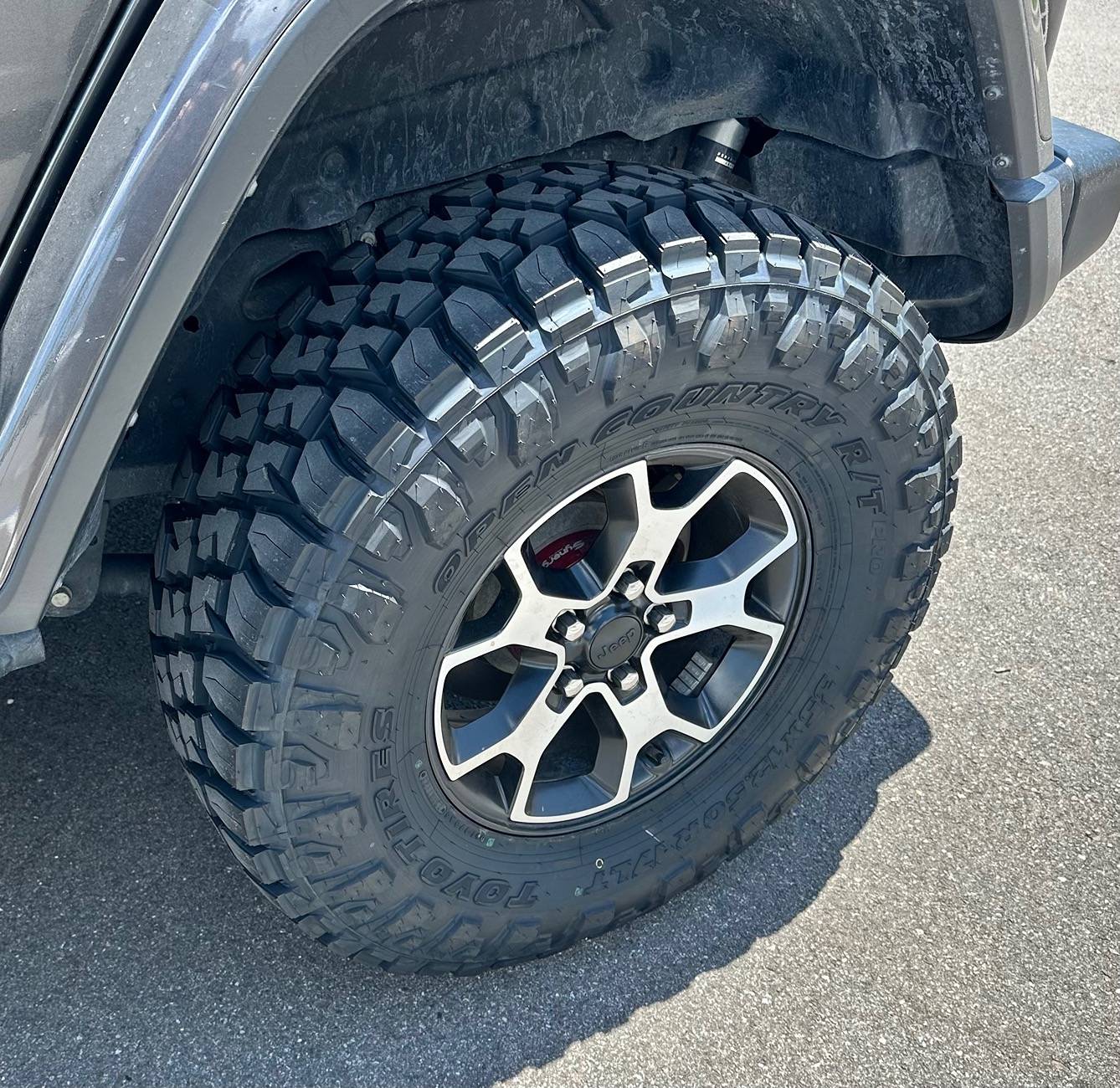
This baffles me, and I am curious why there is a difference. I went from a 35x12.50R17E Falken Wildpeak MT to the same size and load rated Toyo Open Country R/T Pro (a very new model, a hybrid MT). Any ideas?
Sponsored
 

azwjowner

Well-Known Member
Joined
Oct 8, 2020
Threads
11
Messages
2,275
Reaction score
3,966
Location
Phoenix
Vehicle(s)
2022 JL; 2004 WJ (sold but never forgotten)
The same reason why Falken tires are extremely heavy and mostly made in Thailand -- they aren't exactly using the latest and greatest tire technology. I've read that they use an older steel belt technology that is very heavy.

The Falkens clearly heat up more, resulting in increased pressure. What is the temperature rating on the tires? Tires are rated A, B, C, etc. The A rated tires heat up the least, B more, C even more.

My KO2s also heat up only 1-2 PSI. I'm not surprised that Toyos, which are quality tires, are likewise.
 
Last edited:

dstevens

Well-Known Member
Joined
Apr 13, 2023
Threads
8
Messages
946
Reaction score
1,601
Location
CA
Vehicle(s)
2024 JLURX
Might depend on how dry the air was that went into the tire, but almost certainly the difference is from the layup of the tire resulting in a difference in hysteresis (essentially rolling resistance). In that case you should see a difference in fuel economy too.

BTW the tire temperature rating is how resistant to temperature a tire is, which may not be the same thing as to how much the tire heats up.
 

calemasters

Well-Known Member
First Name
Allen
Joined
Sep 14, 2020
Threads
74
Messages
1,436
Reaction score
2,097
Location
Springfield, Mo.
Vehicle(s)
2026 Moab 392 w/27X package & Escalade
Occupation
Retired Mechanical Engineer
Maybe the sidewalls are stiffer and less sidewall/tread flex so less heat is generated.
 

Jeffy56

Well-Known Member
First Name
Jeff
Joined
Feb 15, 2023
Threads
9
Messages
614
Reaction score
686
Location
Payson, AZ
Vehicle(s)
2018 Wrangler Unlimited Sport
Sure, tread design, carcass weight, ambient and inflated air temp, asphalt temp, speed all play a part. One week is usually not enough. There my be tire "break in" as well.
 

Sponsored

ijp4fun

Well-Known Member
Joined
Oct 28, 2017
Threads
4
Messages
106
Reaction score
272
Location
Northern Ca
Vehicle(s)
05LJ 2015 Cherokee 2024 JLURX
On my normal routes here in FL, I am used to seeing a 4 or 5 PSI increase in my tires while driving, per TPMS. However, last week I purchased new tires, the same size as the old ones, and the PSI, on the same roads, same speed and duration, I am only having a 1-2 PSI increase. The TPMS sensors were not replaced.

This baffles me, and I am curious why there is a difference. I went from a 35x12.50R17E Falken Wildpeak MT to the same size and load rated Toyo Open Country R/T Pro (a very new model, a hybrid MT). Any ideas?

I run two different sets of the same size tires you run, with identical rims on my Jeep and have noticed the same thing.
My Toyo AT3's load C weigh 61 pounds and increase 2 psi.
My Mickey Thompson BBMT's load D weigh 76.5 pounds and increase 4 psi.

I loose about 3 mpg with the Mickey Thompson tires pushing the extra 62 pounds and more aggressive tread pattern.

I assume the extra weight and tread pattern is retaining more heat causing the increased psi.
 

jadmt

Well-Known Member
First Name
jeff
Joined
May 19, 2020
Threads
78
Messages
5,087
Reaction score
9,679
Location
montana
Vehicle(s)
2024 wrangler rubicon w/AEV 2.5 dualsport lift
10% rule at play. Your cold psi is too high. Lower it until you go up 10% when fully warmed up ie if cols psi is 30 when fully warm should be 33 psi.
 

2nd 392

Well-Known Member
First Name
Mike
Joined
Jun 20, 2021
Threads
15
Messages
9,945
Reaction score
16,651
Location
Ca
Vehicle(s)
Grand Cherokee srt.V10 Dodge 4x
It’s that lead infused rubber Falken uses. …
Only half kidding, not a complete shit post. 🏋🏼‍♂️
 

Jeep Wick

Well-Known Member
First Name
Wick
Joined
Dec 7, 2021
Threads
17
Messages
1,755
Reaction score
2,051
Location
America
Vehicle(s)
2022 High Tide XR
Occupation
Mechanic
On my normal routes here in FL, I am used to seeing a 4 or 5 PSI increase in my tires while driving, per TPMS. However, last week I purchased new tires, the same size as the old ones, and the PSI, on the same roads, same speed and duration, I am only having a 1-2 PSI increase. The TPMS sensors were not replaced.

This baffles me, and I am curious why there is a difference. I went from a 35x12.50R17E Falken Wildpeak MT to the same size and load rated Toyo Open Country R/T Pro (a very new model, a hybrid MT). Any ideas?
Taller tread blocks of the new tires are dissipating more heat, acting as cooling fins. If the old tread was really low, there was more surface area and more friction.
 

Sponsored

Nokones

Well-Known Member
First Name
Kenny
Joined
Dec 31, 2023
Threads
19
Messages
1,030
Reaction score
1,119
Location
Sun City West, AZ
Vehicle(s)
23 Rubi, 21 Silverado, 13 Grand Sport, Cayman GTS,
Occupation
Unemployed For The Rest Of My Life from a career of spreading love, cheer, and joy to lots of special individuals that were asking for attention..
Clubs
 
The increase in the pressure is related to both the tire/wheel temperature heating up and the amount of water molecules in the air in your tires. The amount of water molecules in the tires will be dependent on the ambient humidity at the time when you fill the tires with air from the compressor.

If you want to eliminate the tires from growing when they heat up, use nitrogen which has no water molecules. That is what most racers use.
 

Aonarch

Well-Known Member
First Name
Mike Hawk
Joined
Oct 20, 2021
Threads
10
Messages
903
Reaction score
1,590
Location
North GA / MT
Vehicle(s)
'25 JLUR '41, '24 F-150 V8 4x4, '22 Mach 1 6MT
Occupation
Motorsports Engineer
The increase in the pressure is related to both the tire/wheel temperature heating up and the amount of water molecules in the air in your tires. The amount of water molecules in the tires will be dependent on the ambient humidity at the time when you fill the tires with air from the compressor.

If you want to eliminate the tires from growing when they heat up, use nitrogen which has no water molecules. That is what most racers use.
The problem with nitrogen is, it is mostly a scam. Most shops that sell you "nitro-fill" don't actually have the proper equipment to do so.

Those machines are expensive and require proper maintenance.

Plus most techs are probably too lazy to pull up to the machine and fill the tires even if the shop does have a machine.
 
OP
OP
Wabujitsu

Wabujitsu

Well-Known Member
First Name
Jeff
Joined
Jul 26, 2019
Threads
157
Messages
3,972
Reaction score
8,177
Location
Sarasota, FL
Vehicle(s)
2021 JLUR, 2020 JLU Sahara
Build Thread
Link
Occupation
Retired US Army
Vehicle Showcase
1
Taller tread blocks of the new tires are dissipating more heat, acting as cooling fins. If the old tread was really low, there was more surface area and more friction.
Wick, thanks. When the Falkens were new, they still heated up 4-5 PSI.
 

Nokones

Well-Known Member
First Name
Kenny
Joined
Dec 31, 2023
Threads
19
Messages
1,030
Reaction score
1,119
Location
Sun City West, AZ
Vehicle(s)
23 Rubi, 21 Silverado, 13 Grand Sport, Cayman GTS,
Occupation
Unemployed For The Rest Of My Life from a career of spreading love, cheer, and joy to lots of special individuals that were asking for attention..
Clubs
 
The problem with nitrogen is, it is mostly a scam. Most shops that sell you "nitro-fill" don't actually have the proper equipment to do so.

Those machines are expensive and require proper maintenance.

Plus most techs are probably too lazy to pull up to the machine and fill the tires even if the shop does have a machine.
What expensive machines or equipment are you talking about. Other than the pressure regulator having the proper fitting to connect to the nitrogen supply tank, what other special machine and equipment is needed?

I have been using nitrogen for well over 30 years, mainly for my race shocks, besides the regulator having the appropriate fitting, the shocks require a special shock tool, there is no other special equipment. If you are thinking about a machine that will evacuate the old air out of the tires in order to benefit from pure nitrogen in the tires, that is way unnecessary and the difference is non-measureable.

Insofar as if nitrogen is a scam, it is not a scam. There is no scam providing you're getting the nitrogen and not compressed air, and the nitrogen will prevent the tires from growing so how is that a scam? The nitrogen does do what it is intended to do. The bullshit sales pitch as to if it is needed for your grocery getter tires is what is bullshit.

You just need to ask yourself, do you need nitrogen service for your tires for a passenger car on a public highway and what are the benefits? There are not any and so what if your tires grow by 2-4 pounds when driving to get your groceries.

There are no direct or measureable/substantiated benefits for a grocery getter vehicle having nitrogen in the tires for use on a public highway.
 
OP
OP
Wabujitsu

Wabujitsu

Well-Known Member
First Name
Jeff
Joined
Jul 26, 2019
Threads
157
Messages
3,972
Reaction score
8,177
Location
Sarasota, FL
Vehicle(s)
2021 JLUR, 2020 JLU Sahara
Build Thread
Link
Occupation
Retired US Army
Vehicle Showcase
1
10% rule at play. Your cold psi is too high. Lower it until you go up 10% when fully warmed up ie if cols psi is 30 when fully warm should be 33 psi.
Thanks, Jeff. 30 PSI cold was what I told them to put in the new tires when they mounted them. I have to chalk-test the tires. I’m pretty sure 30 will be the sweet spot, though, as all E-rated tires I’ve run all chalked out to 30.

I have to say, so far I am very impressed with this new Toyo model of tire! They have an extremely aggressive tread, yet handle significantly better on-road.

Jeep Wrangler JL Question about increased PSI while driving IMG_3091
Sponsored


Top