Sponsored

Jumperless Aux Battery Bypass

Deleted User 38384

Banned
Banned
Banned
Joined
Aug 4, 2020
Threads
140
Messages
6,081
Reaction score
10,670
Clubs
 
@Tredsdert was apparently going down a similar path and expressed some similar concerns to one of our sponsors in regards to how much those kits cost. In summary: it's not a great idea to cut corners when building a dual battery system. The start of the relevant conversation: https://www.jlwranglerforums.com/fo...ions-from-genesis-offroad.125338/post-2989237
It just depends what you're going to use it for. I have the Vevor system for under $50, And depending what you want to use it for it's a perfectly good and more than reasonably priced system.

I'm not dumb, I'm not going to sit there and argue with a site sponsor in their own thread and risk getting banned. I told them what they wanted to hear and ended it peacefully, And then I moved on.

I have zero intention of ever purchasing the Genesis off-road dual battery system for $800. My Vevor system will work just fine for what I needed for. However Genesis off-road did make some very good points, and because of that I will in fact be upgrading a few of the cables which came with the system. But in reality their system is not special, it's old technology, and there are other options on the market for significantly less than they are charging. For me, it's mostly just keeping my secondary battery which is currently charging in my garage on hand at all times, and sometime in the next year or two I'll be getting a refrigerator for the back of the Jeep, and this will allow me to power that without any issues, and also add a significant amount of off-road LED lights... Like in obnoxious amount of LED lights. :rock: :CWL:

The Genesis off-road dual battery kit goes above and beyond what majority of people need, and realistically what you're paying for is very versatile and beefy, but the reality is 99% of people buying that system don't need half of what they're purchasing. Genesis made a good point that their system will function as a backup battery for starting the main battery without having to remove it and put it into the engine bay, and that their battery will help in the situation where your winch is pulling crazy amounts of amperage when you're using it. And that's all and good in super rare strange situations that I personally have never seen and that most people will never see. So if you want to spend $800 for something you'll probably never use, cool, you do you. But I personally like to save money and not waste it on stuff I don't need. 🤷‍♂️

Here's the Vevor system which I purchased:
https://a.co/d/3iik7jB

You're not going to power the Sun with this thing, but if you want to attach a refrigerator and a couple of LED lights to it, you'll have zero issues with that. If you need to jump your main battery with it, it's as simple as replacing your main battery with your backup battery. 5 minutes worth of work, and you get to save more than $600. 🤷‍♂️

I personally plan on buying these battery lug attachment points, so that I can equip multiple wires to it:
https://a.co/d/41yUDk8

@Jammer Don't buy into the hype. You need to look at the products that you want to attach to your dual battery system, and then try and figure out a system that will work for you without being extremely excessive of what you need. Why pay for shit you'll never use?
Sponsored


Mguy

Well-Known Member
Joined
Nov 29, 2023
Threads
6
Messages
408
Reaction score
386
Location
Far Away
Vehicle(s)
2020 JLUR 6spd MT
Perhaps you deserve some blame?
Taking quotes out of context is rarely helpful. You left out a lot that came with mine.

Aux battery cabling serves two purposes, enabling connection of the aux battery to the electrical system and, even more importantly, making the positive connection for N1 loads to the electrical system. My prior posts in this thread, quoted by you above, regarded an alternative for posters who wanted to "delete" or "bypass" the aux battery by physically removing it and it's cabling entirely. For them, a new positive connection, sufficient for N1 loads, is required. But recent thread posts concern making this connection for a supposed additional purpose, to avoid purported N1 load problems with voltage drop and high amperage resulting from the starting load. My current post shows that proposed solutions for these concerns are misplaced.

It's disappointing when a poster on this forum seems to be more interested in trolling than informing.
 

ScotM

Well-Known Member
First Name
Scot
Joined
Jan 3, 2023
Threads
38
Messages
1,241
Reaction score
1,902
Location
Southern California
Vehicle(s)
2022 Jeep Willy's JL 2 Door
Clubs
 
Taking quotes out of context is rarely helpful. You left out a lot that came with mine.

Aux battery cabling serves two purposes, enabling connection of the aux battery to the electrical system and, even more importantly, making the positive connection for N1 loads to the electrical system. My prior posts in this thread, quoted by you above, regarded an alternative for posters who wanted to "delete" or "bypass" the aux battery by physically removing it and it's cabling entirely. For them, a new positive connection, sufficient for N1 loads, is required. But recent thread posts concern making this connection for a supposed additional purpose, to avoid purported N1 load problems with voltage drop and high amperage resulting from the starting load. My current post shows that proposed solutions for these concerns are misplaced.

It's disappointing when a poster on this forum seems to be more interested in trolling than informing.
[/QUOTE
Let’s just call evolution of of a thread, which started quite a bit back in this one. There are literally a million threads and videos on removing fuse 42 and taping off the aux ground from the main. I think this thread is providing additional information for those who want to physically remove the aux battery, and provide some recommendations on how to do that.
 

ScotM

Well-Known Member
First Name
Scot
Joined
Jan 3, 2023
Threads
38
Messages
1,241
Reaction score
1,902
Location
Southern California
Vehicle(s)
2022 Jeep Willy's JL 2 Door
Clubs
 
So, a thread titled "Jumperless Aux Battery Bypass" is now focused upon installing a jumper. Aside from the irony, this retro discussion has me confused. Installing a fat cable or conductive strap to prevent damage to N1 electronics or fire from a voltage drop or high amperage during a start?

Sorry, I don't see how paralleling N1 loads with the starter load requires a connection that that meets the specifications necessary for the starter load. The overall system voltage drop is caused by the start so beefing up the N1 connection won't stabilize or increase that circuit's voltage, and the N1 loads will not draw more amps just because the start circuit is drawing more.

Finally, I'm unaware of reports, from anywhere, that electronics have been damaged by a momentary voltage drop, such as that which occurs during a vehicle start. We have reports on this forum of an abnormal noise occurring in some JL sound systems during ESS starts, but even those reports don't include mention of damage.
Just looking for a way to jump N1 and N2 after all the factory cabling has been removed without blowing up the jeep. So if you think a fat cable is overkill, that’s great, maybe you could chime in on what you think the solution would be and why.
 

Mguy

Well-Known Member
Joined
Nov 29, 2023
Threads
6
Messages
408
Reaction score
386
Location
Far Away
Vehicle(s)
2020 JLUR 6spd MT
Let’s just call evolution of of a thread, which started quite a bit back in this one. There are literally a million threads and videos on removing fuse 42 and taping off the aux ground from the main. I think this thread is providing additional information for those who want to physically remove the aux battery, and provide some recommendations on how to do that.

The evolution you mention is a bit like de-evolution. The aux negative/F42 solution made it easy for most owners of alternator equipped JLs to make their Jeeps significantly more electrically reliable. It was offered as a replacement for a prior more difficult solution that required owners to fashion a jumper.

Despite references to "bypassing" and "deleting," the aux negative/F42 does not require actual removal of the aux battery or it's cabling. But those who want to do so can, but then a jumper is required, and it needs to be sized for N1 loads. Sizing it for another purpose is unnecessary. My post #780 sought to prevent a thread drift in a direction that is based upon an unnecessary concern.

Incidentally, the stock aux battery cabling that makes the N1 connection looks to be about 2 gauge. That's fatter than some earlier suggestions. I doubt that anything bigger is necessary for a N1 jumper.
 
Last edited:

Sponsored

ScotM

Well-Known Member
First Name
Scot
Joined
Jan 3, 2023
Threads
38
Messages
1,241
Reaction score
1,902
Location
Southern California
Vehicle(s)
2022 Jeep Willy's JL 2 Door
Clubs
 
Let’s just call evolution of of a thread, which started quite a bit back in this one. There are literally a million threads and videos on removing fuse 42 and taping off the aux ground from the main. I think this thread is providing additional information for those who want to physically remove the aux battery, and provide some recommendations on how to do that.

The evolution you mention is a bit like devolution. The aux negative/F42 solution made it easy for most owners of alternator equipped JLs to become significantly more electrically reliable. It was offered as a replacement for a prior more difficult solution that required owners to fashion a jumper.

Despite references to "bypassing" and "deleting," the aux negative/F42 does not require actual removal of the aux battery or cabling. But those who want do so can, but then a jumper is required, and it needs to be sized for N1 loads. Sizing it for another purpose is unnecessary. My post #780 sought to prevent a thread drift in a direction that is based upon an unnecessary concern.

Incidentally, the stock aux battery cabling that makes the N1 connection looks to be about 2 gauge. I doubt that anything bigger is necessary for a N1 jumper.
Thank you, that’s helpful. I was going to use a 2 awg, but was unsure of the load requirement, so I went with a 2/0. I know it’s overkill, but do you think that’s a problem?
 

Mguy

Well-Known Member
Joined
Nov 29, 2023
Threads
6
Messages
408
Reaction score
386
Location
Far Away
Vehicle(s)
2020 JLUR 6spd MT
Thank you, that’s helpful. I was going to use a 2 awg, but was unsure of the load requirement, so I went with a 2/0. I know it’s overkill, but do you think that’s a problem?
Only in getting the length right so that it bends and fits.
 

Deleted User 38384

Banned
Banned
Banned
Joined
Aug 4, 2020
Threads
140
Messages
6,081
Reaction score
10,670
Clubs
 
It just depends what you're going to use it for. I have the Vevor system for under $50, And depending what you want to use it for it's a perfectly good and more than reasonably priced system.

I'm not dumb, I'm not going to sit there and argue with a site sponsor in their own thread and risk getting banned. I told them what they wanted to hear and ended it peacefully, And then I moved on.

I have zero intention of ever purchasing the Genesis off-road dual battery system for $800. My Vevor system will work just fine for what I needed for. However Genesis off-road did make some very good points, and because of that I will in fact be upgrading a few of the cables which came with the system. But in reality their system is not special, it's old technology, and there are other options on the market for significantly less than they are charging. For me, it's mostly just keeping my secondary battery which is currently charging in my garage on hand at all times, and sometime in the next year or two I'll be getting a refrigerator for the back of the Jeep, and this will allow me to power that without any issues, and also add a significant amount of off-road LED lights... Like in obnoxious amount of LED lights. :rock: :CWL:

The Genesis off-road dual battery kit goes above and beyond what majority of people need, and realistically what you're paying for is very versatile and beefy, but the reality is 99% of people buying that system don't need half of what they're purchasing. Genesis made a good point that their system will function as a backup battery for starting the main battery without having to remove it and put it into the engine bay, and that their battery will help in the situation where your winch is pulling crazy amounts of amperage when you're using it. And that's all and good in super rare strange situations that I personally have never seen and that most people will never see. So if you want to spend $800 for something you'll probably never use, cool, you do you. But I personally like to save money and not waste it on stuff I don't need. 🤷‍♂️

Here's the Vevor system which I purchased:
https://a.co/d/3iik7jB

You're not going to power the Sun with this thing, but if you want to attach a refrigerator and a couple of LED lights to it, you'll have zero issues with that. If you need to jump your main battery with it, it's as simple as replacing your main battery with your backup battery. 5 minutes worth of work, and you get to save more than $600. 🤷‍♂️

I personally plan on buying these battery lug attachment points, so that I can equip multiple wires to it:
https://a.co/d/41yUDk8

@Jammer Don't buy into the hype. You need to look at the products that you want to attach to your dual battery system, and then try and figure out a system that will work for you without being extremely excessive of what you need. Why pay for shit you'll never use?
@Jammer
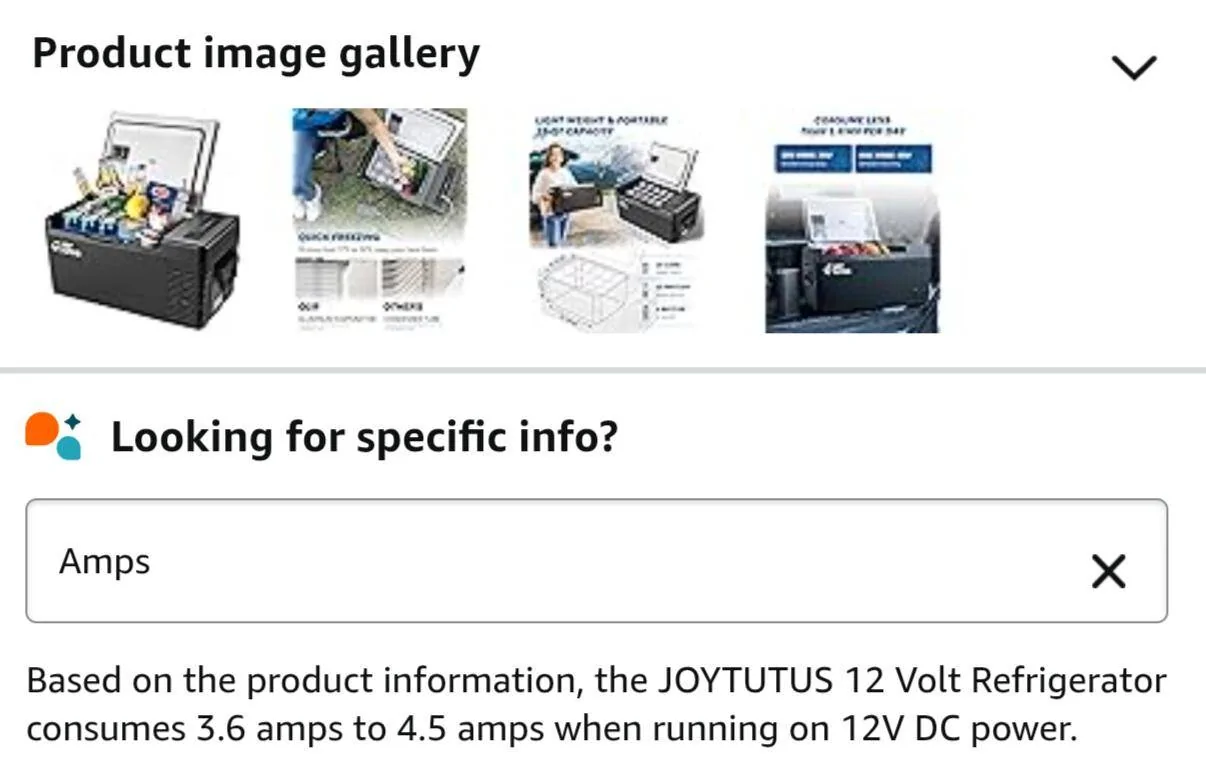
Prime example, the Vevor dual battery system can transfer over a max current of 140 amps, but the 12 volt refrigerator I want to get for my Jeep at some point only uses 3-5 amps...

Jeep Wrangler JL Jumperless Aux Battery Bypass 1000008310


... So why the hell would I spend $800 on a system when I don't even need that much power draw, you know?
 

Ratbert

Well-Known Member
First Name
John
Joined
Jun 20, 2020
Threads
159
Messages
16,154
Reaction score
25,215
Location
PNW
Vehicle(s)
2022 AEV JL370 JLURD
Build Thread
Link
Occupation
Software Engineer
Clubs
 
@Jammer
Prime example, the Vevor dual battery system can transfer over a max current of 140 amps, but the 12 volt refrigerator I want to get for my Jeep at some point only uses 3-5 amps...

1000008310.jpg


... So why the hell would I spend $800 on a system when I don't even need that much power draw, you know?
It won't be in the loop when running your winch?
 

Deleted User 38384

Banned
Banned
Banned
Joined
Aug 4, 2020
Threads
140
Messages
6,081
Reaction score
10,670
Clubs
 
It won't be in the loop when running your winch?
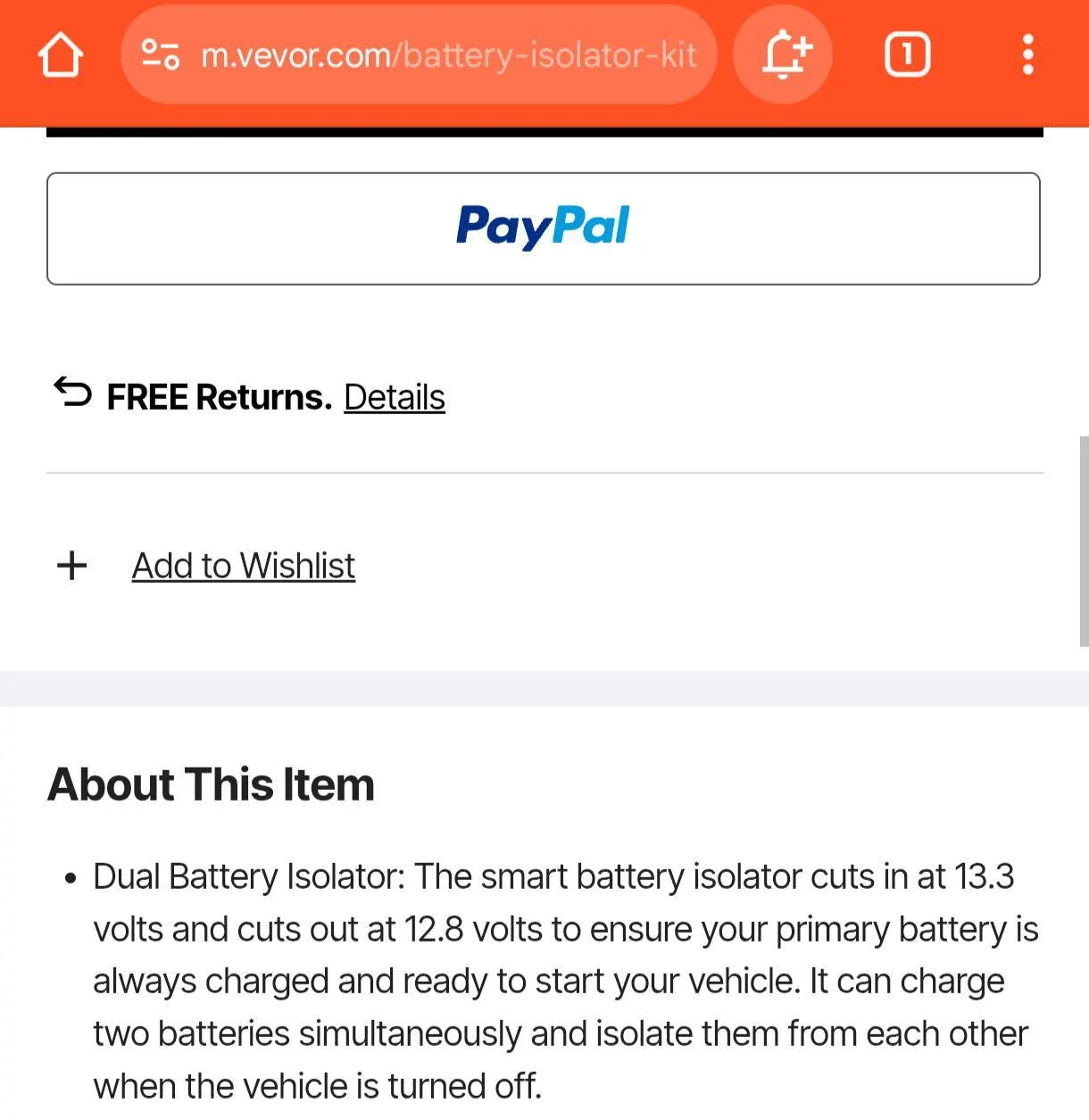
EDIT: I take that back, after looking at the specifications on the website, with the kind of power draw that a winch will need, The Vevor isolator will cut in and separate the two batteries.

Jeep Wrangler JL Jumperless Aux Battery Bypass 1000008313


If it's worth anything, I wouldn't pull a F-350 up a ravine anyways, even though my winch is rated for 13000 lb, I'm not trying to max that thing out. However I would be a good friend and help you call a off-road tow truck! :LOL: ;)
 
Last edited:

Sponsored

Ratbert

Well-Known Member
First Name
John
Joined
Jun 20, 2020
Threads
159
Messages
16,154
Reaction score
25,215
Location
PNW
Vehicle(s)
2022 AEV JL370 JLURD
Build Thread
Link
Occupation
Software Engineer
Clubs
 
EDIT: I take that back, after looking at the specifications on the website, with the kind of power draw that a winch will need, The Vevor isolator will cut in and separate the two batteries.

1000008313.webp


If it's worth anything, I wouldn't pull a F-350 up a ravine anyways, even though my winch is rated for 13000 lb, I'm not trying to max that thing out. However I would be a good friend and help you call a off-road tow truck! :LOL: ;)
It separates them at specific voltage ranges, not amps.
 

Deleted User 38384

Banned
Banned
Banned
Joined
Aug 4, 2020
Threads
140
Messages
6,081
Reaction score
10,670
Clubs
 
It separates them at specific voltage ranges, not amps.
Apples to oranges, man.
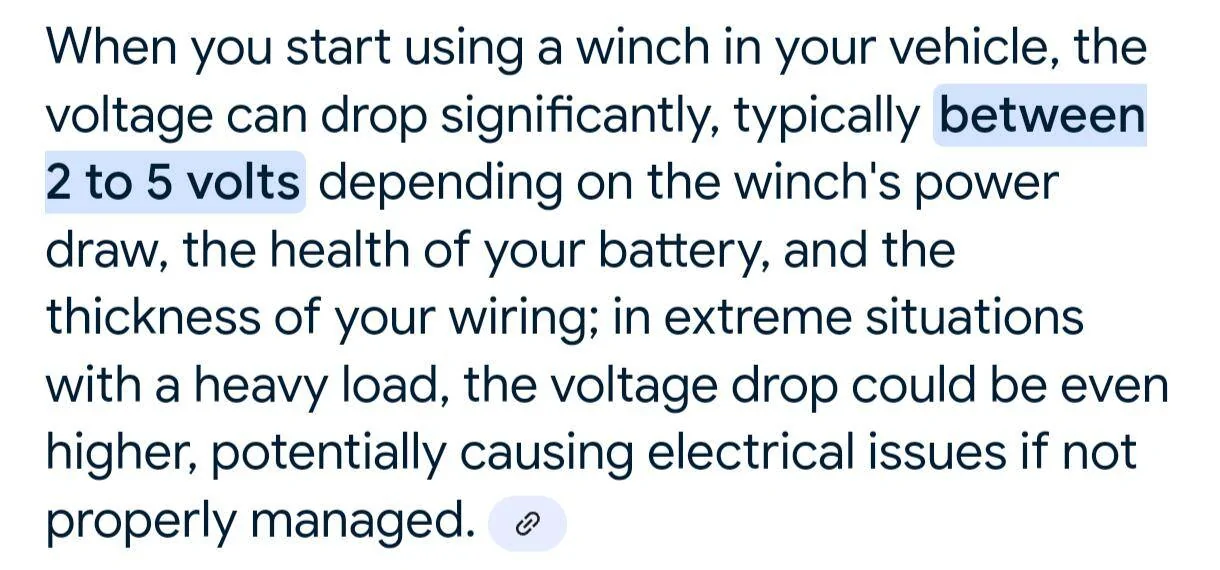
What do you think happens to your voltage when you start using 200 amps? :idea:

Edit: I'll save you from having to answer that. ;) :handsinair:

Jeep Wrangler JL Jumperless Aux Battery Bypass 1000008315


EDIT-EDIT: Amps are not a direct measurement into volts. That being said, you need to ask yourself a system like the Genesis system, how are they measuring the amount of amps being used so that their isolator will cut in and separate the batteries?

I'll save you the trouble yet again: THEY MEASURE THE VOLTS!!!

Like I said, Genesis is selling people old technology that's been around for years for hundreds of dollars more because it comes in a pretty box, and people who don't know any better will fork their money over!
 
Last edited:

Ratbert

Well-Known Member
First Name
John
Joined
Jun 20, 2020
Threads
159
Messages
16,154
Reaction score
25,215
Location
PNW
Vehicle(s)
2022 AEV JL370 JLURD
Build Thread
Link
Occupation
Software Engineer
Clubs
 
Apples to oranges, man.
What do you think happens to your voltage when you start using 200 amps? :idea:

Edit: I'll save you from having to answer that. ;) :handsinair:

1000008315.jpg


EDIT-EDIT: Amps are not a direct measurement into volts. That being said, you need to ask yourself a system like the Genesis system, how are they measuring the amount of amps being used so that their isolator will cut in and separate the batteries?

I'll save you the trouble yet again: THEY MEASURE THE VOLTS!!!

Like I said, Genesis is selling people old technology that's been around for years for hundreds of dollars more because it comes in a pretty box, and people who don't know any better will fork their money over!
I'm not sure how the 240 amp alternator is wired into the circuit. That goes through the batteries, right? If it does, then the battery voltage could remain somewhat normal while the amperage exceeds the 140 amp limit of your system. But, of course, it's been a few years since I studied up on those types of details.
 

Deleted User 38384

Banned
Banned
Banned
Joined
Aug 4, 2020
Threads
140
Messages
6,081
Reaction score
10,670
Clubs
 
I'm not sure how the 240 amp alternator is wired into the circuit. That goes through the batteries, right? If it does, then the battery voltage could remain somewhat normal while the amperage exceeds the 140 amp limit of your system. But, of course, it's been a few years since I studied up on those types of details.
I'll be 100%, I'm still learning a lot about electricity and especially about the electrical systems in vehicles. I did a fair amount of research into other options beyond Genesis' dual battery kit, and the technology in general. And again I bought the low end version. There was $150 version I was kicking around purchasing before I found the Vevor one, and that one was designed to handle two to four large 12v car batteries for RVs.

Yeah I personally don't understand how a vehicle with a 240 amp alternator and a 48 amp battery could possibly handle a 600 amp winch. But then there's also things like cold cranking amps which in both of my batteries that I'll be pairing together have 880 CCA, so 1760 CCA when combined? Again I don't know if the math even works out like that.

I mean realistically, off-roaders have been doing fine with winches and single batteries for decades, I don't think adding a dual battery kit on there is going to cause any issues with that. And even then, the circuitry regulates the flow of electricity, but it's not like you can blow a circuit board by using your winch to its max.

You know strangely enough, that Genesis off-road guy was pretty smart about this stuff. Whether I'd buy his product or not, I got a lot of respect for the guy. He clearly knows what the hell he's doing!

I'd tag him, but I don't want to open up that can of worms again. :LOL:
 

THAW

Well-Known Member
First Name
Foster
Joined
Oct 28, 2022
Threads
4
Messages
2,252
Reaction score
3,112
Location
PNW - prefer Middle of Nowhere
Vehicle(s)
23 JL4DrRubicon
The evolution you mention is a bit like de-evolution.
Everything's gonna be alright. Forum members are allowed to post what they want (non-political), including you. There's no thread-topic purity requirement.

Incidentally, the stock aux battery cabling that makes the N1 connection looks to be about 2 gauge. That's fatter than some earlier suggestions. I doubt that anything bigger is necessary for a N1 jumper.
Consider that the Aux Switch option alone supports 130 Amps (2 x 40A + 2 x 15A + 10A Ign + 10A B+) through N1. The Tow option 7-pin harness is another 30 Amps. That's 160 (optional) Amps without any Jeep electronics (climate, infotainment, USB/12V outlets, various control modules).

Granted, the PCM does have the capability to disable certain electrical components (e.g. Aux Switches) based on some voltage/current conditions, but it wouldn't be wise to rely on guesses about what the PCM might do when making a modification wire sizing decision.

JL alternators are rated at 180/220/240 Amps, so sizing an N2 to N1 connection to that spec seems reasonable. The N3 post is fused at 150 Amps, so sizing an N3 to N1 connection for anything over 150 Amps is overkill.
Sponsored

 
Last edited:


Top