Sponsored

Best performing cold air intake?

shiner61

New Member
First Name
Dave
Joined
Jul 15, 2023
Threads
3
Messages
4
Reaction score
1
Location
Houston, TX
Vehicle(s)
2020 JL EcoDiesel
Why do these guys never post their actual performance gains? Any thoughts on who makes the best intake for the 3.0 dsl?
Sponsored
 

Terpsmandan

Well-Known Member
First Name
Dan
Joined
Sep 17, 2021
Threads
65
Messages
1,935
Reaction score
1,272
Location
Penn Yan
Vehicle(s)
2021 JLUR Diesel, 2022 JLUR Diesel
Because there aren't any?
 

GATORB8

Well-Known Member
First Name
Matt
Joined
May 30, 2021
Threads
29
Messages
8,830
Reaction score
11,726
Location
CLT NC
Vehicle(s)
21 JLURe, 06 LJ, 25 HDZR2
There may be some differences with the diesel, and my experience was with gas turbos (BMWs), so take this with a grain of salt. Basically the only real performance gains were by minimizing the intake run to the turbo and sticking an open filter on it. Cold air doesn't matter, you are superheating it with the turbo anyway, only restriction did.

Obviously sticking a straw on the turbo is a bad idea if you're ever going to risk mainlining water.
 

C.Sco

Well-Known Member
Joined
Mar 19, 2023
Threads
13
Messages
1,264
Reaction score
2,698
Location
California
Vehicle(s)
2023 4xe Rubicon
Build Thread
Link
Vehicle Showcase
1
Cold air intakes are largely useless. Most of the time they actually suck hotter air than the factory intake box does. And those so-called "cleanable" filters are a waste of money - who wants to have to go through the effort of washing and drying and oiling their $150 air filter when they can just replace the $10 factory filter in 2 minutes, like 15 times, for the same cost.

And like Gatorb8 mentions above, in a turbocharged vehicle the intake temperature is irrelevant anyways because no matter what temp the air at the filter is at, it gets heated to like 300 degrees anyways as soon as it goes through the turbo. If you want colder air going into your engine in a turbo vehicle the only solution is intercooler upgrades.

In normally-aspirated vehicles there's potential for a marginal performance increase when you make the intake pipe routing less restrictive, but in turbocharged vehicles the boost pressure is regulated so even if you increase airflow, all it means is the turbo works less hard to achieve the same boost, but the net boost at the intake manifold is the same regardless because the wastegate is just purging any extra pressure you gained.
 

Sponsored

grimmjeeper

Well-Known Member
First Name
Roy
Joined
May 6, 2021
Threads
13
Messages
8,282
Reaction score
41,349
Location
Castle Rock, CO
Website
www.grimmjeeper.com
Vehicle(s)
2021 Wrangler, 1987 Comanche, 1997 F250
Build Thread
Link
Occupation
enginerd
Cold air intakes are largely useless. Most of the time they actually suck hotter air than the factory intake box does. And those so-called "cleanable" filters are a waste of money - who wants to have to go through the effort of washing and drying and oiling their $150 air filter when they can just replace the $10 factory filter in 2 minutes, like 15 times, for the same cost.
Not only that but those washable filters actually let in fine dust that the paper filters catch. And that dust isn't good for the engine. Granted, it's not going to kill the engine super fast but you may have problems at 250K miles that wouldn't show up until 300K or more using paper filters.
 

ALeeL

Well-Known Member
First Name
Anthony
Joined
Dec 20, 2022
Threads
13
Messages
489
Reaction score
786
Location
Texas
Vehicle(s)
2021 JLURD
I have had aftermarket intakes on many of my vehicles which have mostly been diesel. The longest I ran an intake on one of my diesels was over 350k miles on my old 03 Cummins that I sold at 375k. I generally keep cars for a lllooooonnngg time and never had issues on excessive oil consumption or too much silicon or dirt in my oil analysis.

Where the intakes have helped the most is sustained power. I was able to sustain higher power levels for longer periods of time without my EGT's getting to high after installing most performance intakes. This helped out a lot when pulling long grades while towing by allowing me to keep my foot into it all the way up the hill without the need to back off to a slower speed or lower power levels because EGT's would get too high with the stock intake.

One thing about EGT's is that they are largely affected by intake temps and volume/mass of air going into the engine Even though the air gets hot after the turbo, it gets cooled again by the intercooler. The higher the temps going into the turbo, the harder the intercooler has to work to try and cool them which in turn increases EGT's. One degree difference in air going in is multiplied in the temp of the air going out.

Same goes for the volume/mass of air. The more air going in and out of the the engines, the cooler the EGT's will be. If there is restriction in the process or there is not enough air moving through the system to keep up with the combustion temps, then EGT's while rise quickly.

Another area where I noticed a difference is more power at lower rpms both on dyno and on the street. Peak power don't really change that much from what I have seen, but power under the curve will generally increase especially with a diesel that does not have a throttle like gasoline engine do. Unlike gasoline engine that are regulated by air, diesels are regulated by fuel and just use any available are to burn the fuel and make more power and run more efficiently.

Some vehicles, like my BMW diesel, the performance intake didn't make a difference. These vehicles already had a pretty good intake in them from the factory. I can't say the same about the stock intake filter on my Jeep. It is way smaller than even the stock filter on my 2.0L BMW diesel that made almost 100 less hp stock. That thing is tiny when you set them side by side.

I fully understand that not everyone likes performance intakes, but I have had good experience with them and have seen their advantages versus a restrictive factory unit both on the dyno and in the real world.
 

ChuckQue

Well-Known Member
First Name
Charles
Joined
Apr 20, 2022
Threads
79
Messages
1,842
Reaction score
2,498
Location
SoCal
Website
www.stayreadyoutdoors.com
Vehicle(s)
2022 JLURD
Occupation
Owner of Stay Ready Outdoors
Clubs
 
I have had aftermarket intakes on many of my vehicles which have mostly been diesel. The longest I ran an intake on one of my diesels was over 350k miles on my old 03 Cummins that I sold at 375k. I generally keep cars for a lllooooonnngg time and never had issues on excessive oil consumption or too much silicon or dirt in my oil analysis.

Where the intakes have helped the most is sustained power. I was able to sustain higher power levels for longer periods of time without my EGT's getting to high after installing most performance intakes. This helped out a lot when pulling long grades while towing by allowing me to keep my foot into it all the way up the hill without the need to back off to a slower speed or lower power levels because EGT's would get too high with the stock intake.

One thing about EGT's is that they are largely affected by intake temps and volume/mass of air going into the engine Even though the air gets hot after the turbo, it gets cooled again by the intercooler. The higher the temps going into the turbo, the harder the intercooler has to work to try and cool them which in turn increases EGT's. One degree difference in air going in is multiplied in the temp of the air going out.

Same goes for the volume/mass of air. The more air going in and out of the the engines, the cooler the EGT's will be. If there is restriction in the process or there is not enough air moving through the system to keep up with the combustion temps, then EGT's while rise quickly.

Another area where I noticed a difference is more power at lower rpms both on dyno and on the street. Peak power don't really change that much from what I have seen, but power under the curve will generally increase especially with a diesel that does not have a throttle like gasoline engine do. Unlike gasoline engine that are regulated by air, diesels are regulated by fuel and just use any available are to burn the fuel and make more power and run more efficiently.

Some vehicles, like my BMW diesel, the performance intake didn't make a difference. These vehicles already had a pretty good intake in them from the factory. I can't say the same about the stock intake filter on my Jeep. It is way smaller than even the stock filter on my 2.0L BMW diesel that made almost 100 less hp stock. That thing is tiny when you set them side by side.

I fully understand that not everyone likes performance intakes, but I have had good experience with them and have seen their advantages versus a restrictive factory unit both on the dyno and in the real world.
This is the correct answer. The performance gained isn’t what most folks think of when referring to a CAI. As also stated by others is the risk of lesser filtration. The only CAI I’ve seen that claims better than OEM filtration is AFE. I also wouldn’t run an oiled filter on this engine.
 

AC77

Well-Known Member
First Name
AC Abegian
Joined
Jan 9, 2022
Threads
105
Messages
1,239
Reaction score
669
Location
Los Angeles
Vehicle(s)
22 Jeep Wrangler diesel Sahara Altitude , 94 MKIV
Occupation
Autobody , singer-songwriter
an open filter , like K&N and others , make a nice difference in overall air flow, of course if its site behind the radiator or where there is hot air coming in, then it doesn't make much of a difference
and specially if its a focused air channeling through to the large air intake/filter, like an enclosure or snorkel , the aFE intake is a nice and one can do more research and keep the hot air away by using heat wraps around the air box and the pipes , its excellent on turbo applications , and not much on NA's
 

Sponsored

Bill_BCNtoNY

Well-Known Member
First Name
Bill
Joined
Jul 17, 2022
Threads
14
Messages
1,327
Reaction score
2,108
Location
NY
Vehicle(s)
Ocean Blue JLU Sahara 3.6
Occupation
Advisor to Boutique Consulting Firms and Solo Practitioners
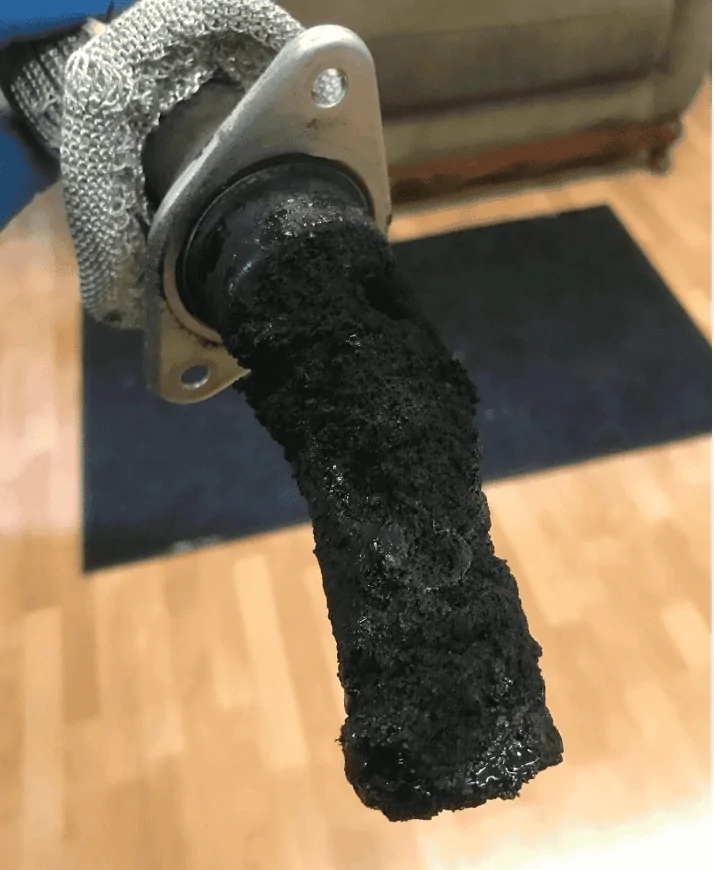
Call me crazy, but think it is a bit ironic that many are concerned that carbon dirt going through aftermarket air filters when this carbon is going into your engine after the air filter.

1694092768104.png
What is this?! is that from a JL diesel?!
 

ALeeL

Well-Known Member
First Name
Anthony
Joined
Dec 20, 2022
Threads
13
Messages
489
Reaction score
786
Location
Texas
Vehicle(s)
2021 JLURD
Anyone with CAI wish to post up their oil analysis reports? I am genuinely curious.

It will be a while for me to do this since I just had the oil changed and I put very few miles on it, but I will if I remember.

Although, it is not the CAI that may cause more dirt, it is the filter and driving conditions. Not all filters are the same between brands just like where everyone drives is the same. For example, AFE has several types of filters. The 5R, Pro guard 7, dry S and now a 10R. They recommend the pro-guard 7 for diesels in dusty conditions and the 5R and 10R for mainly on highway conditions. Other intake manufactures may have different filters and recommendations as well.

I have a Pro-Guard 7 on my truck and Jeep since both see a lot of dusty roads at the farm and deer lease. Others may use the 5R or 10R because their car doesn't see that much dust. Even if you had a factory filter, you will likely see more dust(silicon) in my UOA than one who hardly ever drives on dusty roads.
 

ALeeL

Well-Known Member
First Name
Anthony
Joined
Dec 20, 2022
Threads
13
Messages
489
Reaction score
786
Location
Texas
Vehicle(s)
2021 JLURD
What is this?! is that from a JL diesel?!

That is the EGR pipe that introduces dirty exhaust gas filled with soot and carbon back into the intake system. The Gen 3 in the jeeps has two EGR systems, a low pressure and high pressure. The high pressure pulls in dirty pre-DPF exhaust and the low pressure pulls in cleaner pre-DPF exhaust. Your diesel uses them interchangeably depending on conditions.
Sponsored


Top