
Sponsored

3.6 or 2.0

3.6 or 2.0?


  • Total voters
    275
OP
OP
T800

T800

Well-Known Member
First Name
Rick
Joined
May 10, 2026
Threads
1
Messages
60
Reaction score
70
Location
Southern California
Vehicle(s)
2006 Wrangler LJ
This was very close to 50% early on. Now looks like V6 is pulling ahead a bit.

V6 3.6 - 55.4%
I4 2.0 - 45%

Of course, could be mostly a case of 'lets vote for what I have'. I've been looking at a lot of stickers and it appears that the 3.6 is more common.

Also been looking at the Bronco which has 3 motors.

I4 2.3 Turbo
V6 2.7 Turbo
V6 3.0 Turbo (Raptor only)

So although I prefer the look of the JL vs. the Bronco, the V6 2.7 is appealing. I had a 2.7 V6 in my 2018 F150 and really had no complaints. If it's that same engine tuned for a Bronco, that would be much faster than either of the Jeep engines (eliminating the Raptor in Ford and 392 in the Jeep due to price).

Odd that both of the lower end Jeep motors don't differ much in horsepower.
Sponsored

 

2nd 392

Well-Known Member
First Name
Mike
Joined
Jun 20, 2021
Threads
15
Messages
9,959
Reaction score
16,672
Location
Ca
Vehicle(s)
Grand Cherokee srt.V10 Dodge 4x
Bro. Stellantis/FCA hasn't learned in 20 years how to keep their V engines (Pentastar and Hemi) from eating their valvetrain with single cams per bank, now you want to double the number of cams???!!!

Why can't you just accept that they only know how to make inline engines with the European Fiat/Alfa/Maserati/PSA technology. All the engineers who knew how to make engines in the American side of Stellantis are dead or retired.
Designing the gen 3 with top oiling lifters was indeed brilliant. Aftermarket bottom oiling non MDS available but wouldn’t be cheap.
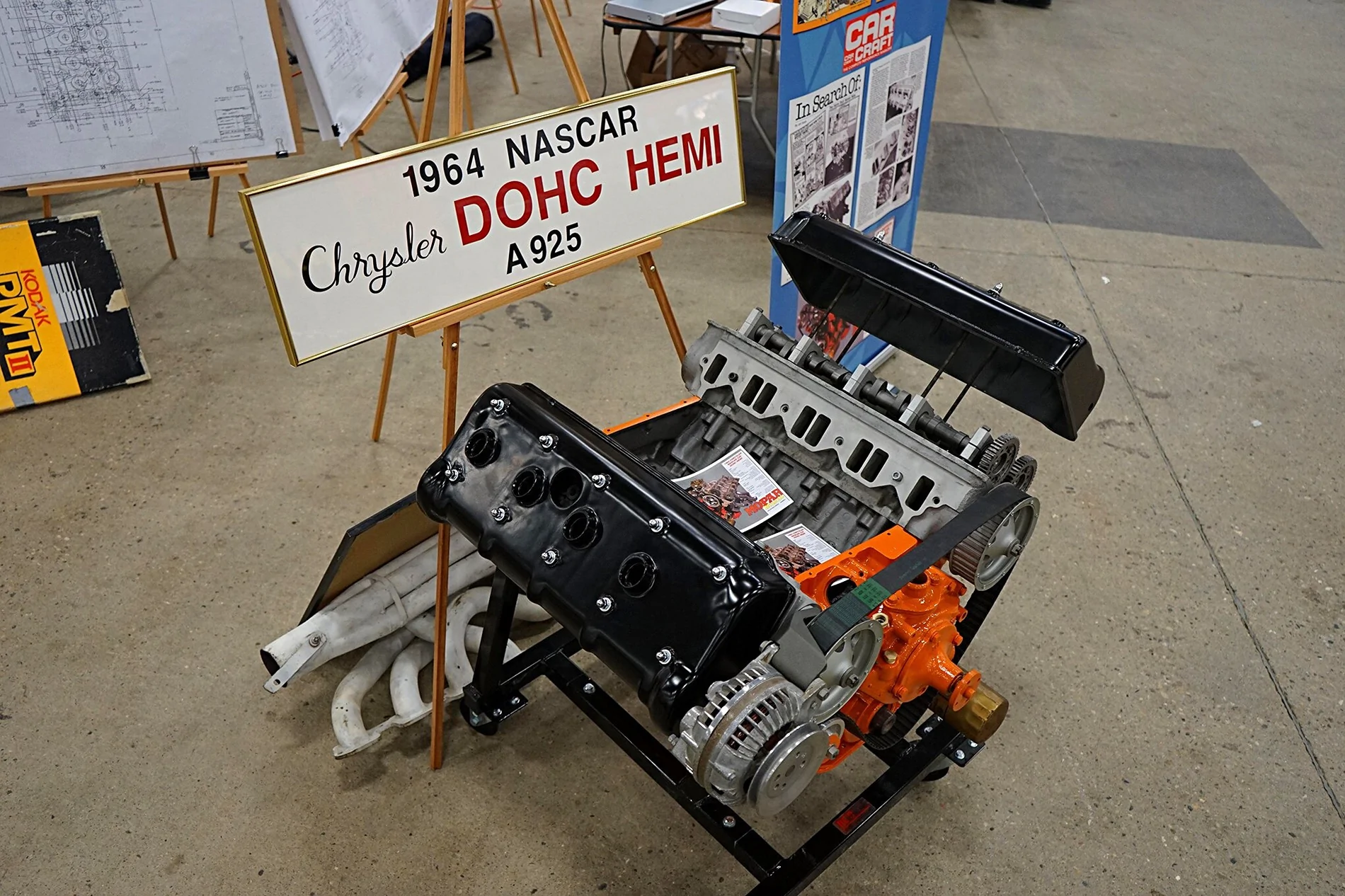
Anyway, bring back the ones that designed this….. 62 years ago.
Jeep Wrangler JL 3.6 or 2.0 4F52402E-E697-47D5-80C7-5ACB8BB13276

Or sell Jeep to Chevy for a modern compact pushrod V8 engine.
 
Last edited:

#diesel

Well-Known Member
First Name
Michael
Joined
Apr 24, 2017
Threads
2
Messages
151
Reaction score
252
Location
Alabama
Vehicle(s)
2019 JLUR
I used to be of your mind, at 46 I got my first auto, '25 Willys 2T. I gotta say I am really loving it, if I need to scratch the itch slap it over into manual mode, not quite the same but close enough!
Oh I hear you loud and clear. I’ve got an old automatic sedan I drive to work. Nothing like a couch on wheels to soak up the potholes.
 

#diesel

Well-Known Member
First Name
Michael
Joined
Apr 24, 2017
Threads
2
Messages
151
Reaction score
252
Location
Alabama
Vehicle(s)
2019 JLUR
I would've gotten that if I could've gotten remote start with it. Our cold winters need cabin warm up time!
Agree 100%. Luckily, I have a garage, but when I’m out and about in the wintertime, the heated seats just can’t get warm fast enough even though the Wrangler has an outstanding heater.
 

Guv

Well-Known Member
First Name
Steve
Joined
Nov 28, 2024
Threads
2
Messages
491
Reaction score
463
Location
Texas
Vehicle(s)
2018 Wrangler Sport 2.0 E-Torque 2 Door
T

The Ram didn’t get the PUG engine until 2019. Your 2018 Ram has the “original” design Pentastar without VVL and EGR. That engine made north of 300 HP in Ram and Challenger/Charger platforms. That is also why oil capacity is different.

The PUG engine in the 19 and up Ram added VVL high lift and EGR, which are mostly for emissions reasons. It retains the higher HP numbers versus our Jeeps due to slight variations in tuning, and by slight, it is extremely slight, but in my testing, the biggest difference is the Ram has way better under hood temperature management. Things get hot on the JL and JT under the hood, which causes timing to get pulled far more aggressively than the Ram. The Ram you can stand between the intake box and the engine. The Jeeps the intake box and intake itself are bumped right up close to the radiator and heat soak a lot easier.

Hope this helps.
There’s one problem with your answer.
Horsepower and torque numbers are derived directly from the engines flywheel using a dynamometer. This is done in a temperature and humidity controlled test cell with strict monitoring of pressures and temperatures.
One thing that could affect power numbers are different intake restrictions and exhaust back pressures. These specs will be set and may be different for the engine specific application which should show in the advertised power numbers.
 

Sponsored

croppz

Well-Known Member
First Name
Zach
Joined
Apr 6, 2026
Threads
8
Messages
338
Reaction score
553
Location
North Carolina
Vehicle(s)
2021 JLU Rubicon 2.0T
This was very close to 50% early on. Now looks like V6 is pulling ahead a bit.

V6 3.6 - 55.4%
I4 2.0 - 45%

Of course, could be mostly a case of 'lets vote for what I have'. I've been looking at a lot of stickers and it appears that the 3.6 is more common.

Also been looking at the Bronco which has 3 motors.

I4 2.3 Turbo
V6 2.7 Turbo
V6 3.0 Turbo (Raptor only)

So although I prefer the look of the JL vs. the Bronco, the V6 2.7 is appealing. I had a 2.7 V6 in my 2018 F150 and really had no complaints. If it's that same engine tuned for a Bronco, that would be much faster than either of the Jeep engines (eliminating the Raptor in Ford and 392 in the Jeep due to price).

Odd that both of the lower end Jeep motors don't differ much in horsepower.
What turns me off to the 2.7 is the belt driven oil pump. Just doesn’t sit right with me. Could be the most bulletproof thing ever and it still wouldn’t sit right with me.
 

bmpcamry09

Well-Known Member
First Name
Brad
Joined
Feb 13, 2026
Threads
7
Messages
490
Reaction score
993
Location
New Athens, IL
Vehicle(s)
2025 JLU Sport S 3.6 8AT
There’s one problem with your answer.
Horsepower and torque numbers are derived directly from the engines flywheel using a dynamometer. This is done in a temperature and humidity controlled test cell with strict monitoring of pressures and temperatures.
One thing that could affect power numbers are different intake restrictions and exhaust back pressures. These specs will be set and may be different for the engine specific application which should show in the advertised power numbers.
What’s the “problem” with my answer? Nothing there was false

There are minor tune differences and that’s about it. The intake and exhaust configuration alone on the Ram is not supplying an extra 20 HP. Plus most in house dynometers used like that aren’t run in the chassis with the as built intake and exhaust anyways.

I was just also adding in that intake temperatures are better managed in that platform as well. Which the every day driver will notice. I could flash the Ram truck tune configuration onto our Jeeps and it won’t make the Ram power simply because the extra heat soak.
 
Last edited:

Guv

Well-Known Member
First Name
Steve
Joined
Nov 28, 2024
Threads
2
Messages
491
Reaction score
463
Location
Texas
Vehicle(s)
2018 Wrangler Sport 2.0 E-Torque 2 Door
What’s the “problem” with my answer? I’ve seen the differences within the software programming directly. Better cam scheduling is where the Ram is getting its power bump. I know this because I apply similar cam scheduling to my tunes.

There are minor tune differences and that’s about it. I am just also adding in that intake temperatures are better managed in that platform as well.
So you’re referring to horsepower at the wheels?
I was referring to the factory rated horsepower at the flywheel.
 

bmpcamry09

Well-Known Member
First Name
Brad
Joined
Feb 13, 2026
Threads
7
Messages
490
Reaction score
993
Location
New Athens, IL
Vehicle(s)
2025 JLU Sport S 3.6 8AT
So you’re referring to horsepower at the wheels?
I was referring to the factory rated horsepower at the flywheel.
I was kinda just talking about everyday driving and the factory ratings. I get the whole flywheel thing. But interesting enough, both the pre-PUG 3.6 in the Ram and the new PUG 3.6 in the DT both have the exact power ratings. Even though they are different engines with different tuning.
 

Guv

Well-Known Member
First Name
Steve
Joined
Nov 28, 2024
Threads
2
Messages
491
Reaction score
463
Location
Texas
Vehicle(s)
2018 Wrangler Sport 2.0 E-Torque 2 Door
I was kinda just talking about everyday driving and the factory ratings. I get the whole flywheel thing. But interesting enough, both the pre-PUG 3.6 in the Ram and the new PUG 3.6 in the DT both have the exact power ratings. Even though they are different engines with different tuning.
Gotcha, kinda like some performance cars with Ram Air over the years. Some claimed a power jump while others did not. I think most would agree that any type of ram air would show some degree of increase in power.
 

Sponsored

2nd 392

Well-Known Member
First Name
Mike
Joined
Jun 20, 2021
Threads
15
Messages
9,959
Reaction score
16,672
Location
Ca
Vehicle(s)
Grand Cherokee srt.V10 Dodge 4x
Gotcha, kinda like some performance cars with Ram Air over the years. Some claimed a power jump while others did not. I think most would agree that any type of ram air would show some degree of increase in power.
At higher speeds they create a boost in air pressure increasing air density. 10-15% increase at very high speed. Otherwise, still a CAI.
No negative, well, except they are also good “Bug Catchers”. 😉
 
Last edited:

gato

Well-Known Member
Joined
Apr 4, 2021
Threads
28
Messages
2,405
Reaction score
3,716
Location
New England
Vehicle(s)
2021 JLUR
Designing the gen 3 with top oiling lifters was indeed brilliant. Aftermarket bottom oiling non MDS available but wouldn’t be cheap.
Anyway, bring back the ones that designed this….. 62 years ago.
4F52402E-E697-47D5-80C7-5ACB8BB13276.webp

Or sell Jeep to Chevy for a modern compact pushrod V8 engine.
Yes. When Dodge/Chrysler did real engineering. No/little computer sims, no finite element analysis, no advanced material science. We just built, tested, fixed what broke, improved, built better, improved.

These days, designing a new engine is minimum $1.5B. Whatever faults GM may have, they have never ever stopped developing their small block engines. The LS6 is a marvel of lightweight, compact power. FCA needs to just license it and be done.
 

grimmjeeper

Well-Known Member
First Name
Roy
Joined
May 6, 2021
Threads
13
Messages
8,282
Reaction score
41,350
Location
Castle Rock, CO
Website
www.grimmjeeper.com
Vehicle(s)
2021 Wrangler, 1987 Comanche, 1997 F250
Build Thread
Link
Occupation
enginerd
There’s one problem with your answer.
Horsepower and torque numbers are derived directly from the engines flywheel using a dynamometer. This is done in a temperature and humidity controlled test cell with strict monitoring of pressures and temperatures.
One thing that could affect power numbers are different intake restrictions and exhaust back pressures. These specs will be set and may be different for the engine specific application which should show in the advertised power numbers.
The whole point of the SAE net numbers was to give people a more realistic expectation of actual power output. The engines are tested using factory air box and exhaust. Also, with a factory tune. And factory accessories like water pump, alternator, etc.

The accessories are probably a wash. But the exhaust, air box, and tune are likely combining together to give the different ratings. And, as was suggested, the Jeep may be slightly detuned for heat management. Even though it's on a test stand, it still uses the factory tune in the computer.
 
  • Like
Reactions: Guv

Guv

Well-Known Member
First Name
Steve
Joined
Nov 28, 2024
Threads
2
Messages
491
Reaction score
463
Location
Texas
Vehicle(s)
2018 Wrangler Sport 2.0 E-Torque 2 Door
When we would get engines for some long term high power testing the manufacturer would provide a Dyno Ecu. These were calibrated to run a little bit richer than the stock vehicle tune. Other wise bad things would happen, broken exhaust valves, scuffed cylinder walls etc…
When turbo engines started becoming popular they were equipped with heavier duty components. Most could be run with the stock ecu settings.
 
Last edited:

Guv

Well-Known Member
First Name
Steve
Joined
Nov 28, 2024
Threads
2
Messages
491
Reaction score
463
Location
Texas
Vehicle(s)
2018 Wrangler Sport 2.0 E-Torque 2 Door
Yes. When Dodge/Chrysler did real engineering. No/little computer sims, no finite element analysis, no advanced material science. We just built, tested, fixed what broke, improved, built better, improved.

These days, designing a new engine is minimum $1.5B. Whatever faults GM may have, they have never ever stopped developing their small block engines. The LS6 is a marvel of lightweight, compact power. FCA needs to just license it and be done.
Except today’s Chevy V8 shares only the names with the original small and big blocks.
LS1 being the first of the new generation, 1999-2000?
Sponsored


Top