Sponsored

Which engine runs hotter? 2.0 or 3.6?

Melchior

Well-Known Member
First Name
Mel
Joined
Aug 6, 2023
Threads
23
Messages
213
Reaction score
163
Location
Los Angeles
Vehicle(s)
Toyota GR Supra
Hey, guys. Just curious. Which engine runs hotter? The larger 3.6 or turbocharged 2.0? In my past experience, I’ve always noticed that my FI motors tend to put out a lot of heat (I even remember seeing turbo chargers glowing red). But then again, the 5.2 voodoo also generated quite a bit of heat, but wasn’t sure if it was because of displacement or the number of cylinders.

Has overheating been an issue on the 3.6 or 2.0?
Sponsored

 

grimmjeeper

Well-Known Member
First Name
Roy
Joined
May 6, 2021
Threads
13
Messages
8,282
Reaction score
41,354
Location
Castle Rock, CO
Website
www.grimmjeeper.com
Vehicle(s)
2021 Wrangler, 1987 Comanche, 1997 F250
Build Thread
Link
Occupation
enginerd
Turbos generally run hotter.

There have been some people who have overheated each of the available engines. I wouldn't guess at the percentages.

I overheated my 3.6 in the JK going up to the Eisenhower tunnel on I70 one time. Long steep grade on a warm day. But I put on aftermarket grill inserts that restricted air flow too much. Took them out and it was fine.
 

Yawnie'sPapa

Well-Known Member
First Name
Bill
Joined
Feb 5, 2023
Threads
12
Messages
779
Reaction score
1,136
Location
Central Iowa
Vehicle(s)
'22 JTO, '23 JLUR, '82 SX4, '73 P. Cardin Javelin
Hey, guys. Just curious. Which engine runs hotter? The larger 3.6 or turbocharged 2.0? In my past experience, I’ve always noticed that my FI motors tend to put out a lot of heat (I even remember seeing turbo chargers glowing red). But then again, the 5.2 voodoo also generated quite a bit of heat, but wasn’t sure if it was because of displacement or the number of cylinders.

Has overheating been an issue on the 3.6 or 2.0?
You can't compare the heat of a turbo to the operating temperature or heat output of an engine.
They all run the same temperatures coolant-wise, and have for decades.
Number of cylinders has nothing to do with operating temperature.
If you want to know about BTU output - heat generated, then it's a matter of fuel consumed, load and so on.
So maybe you need to define what you are looking for -
engine operating temperature (same for almost all gas engines)
or total heat output (based on BTUs - fuel consumed and so on)
or how it feels - and in that case the turbo engines win most of the time.

I can kick out a crazy amount of heat in total from a car I have with dual carbs, headers, high compression and so on - you'd wish the car had AC and don't ride in it bare foot.

A 3.6 will operate at the same temperature under full load as a 4.0 liter (242) or a 6.5 liter (401) but the 401 will shed more heat energy under full load.

Overheating is not an issue with a 3.6 - and shouldn't be - if operated within design criteria (payload, towing capacity and so on). There's no reason for there to be an overheating issue.
I've owned several - and tow with 'em.
 
OP
OP

Melchior

Well-Known Member
First Name
Mel
Joined
Aug 6, 2023
Threads
23
Messages
213
Reaction score
163
Location
Los Angeles
Vehicle(s)
Toyota GR Supra
You can't compare the heat of a turbo to the operating temperature or heat output of an engine.
They all run the same temperatures coolant-wise, and have for decades.
Number of cylinders has nothing to do with operating temperature.
If you want to know about BTU output - heat generated, then it's a matter of fuel consumed, load and so on.
So maybe you need to define what you are looking for -
engine operating temperature (same for almost all gas engines)
or total heat output (based on BTUs - fuel consumed and so on)
or how it feels - and in that case the turbo engines win most of the time.

I can kick out a crazy amount of heat in total from a car I have with dual carbs, headers, high compression and so on - you'd wish the car had AC and don't ride in it bare foot.

A 3.6 will operate at the same temperature under full load as a 4.0 liter (242) or a 6.5 liter (401) but the 401 will shed more heat energy under full load.

Overheating is not an issue with a 3.6 - and shouldn't be - if operated within design criteria (payload, towing capacity and so on). There's no reason for there to be an overheating issue.
I've owned several - and tow with 'em.
I should have been more clear. was curious as to which “under the hood” set up generates more heat. I used to have a twin turbo rx7 that generated sooo much heat to the point that all the rubber hoses and plastic parts suffered from “heat damage”. When checking the engine bay temperatures between a 2.0 and 3.6, will there be any difference (considering identical ambient temperatures and driving habits)
 

grimmjeeper

Well-Known Member
First Name
Roy
Joined
May 6, 2021
Threads
13
Messages
8,282
Reaction score
41,354
Location
Castle Rock, CO
Website
www.grimmjeeper.com
Vehicle(s)
2021 Wrangler, 1987 Comanche, 1997 F250
Build Thread
Link
Occupation
enginerd
I should have been more clear. was curious as to which “under the hood” set up generates more heat. I used to have a twin turbo rx7 that generated sooo much heat to the point that all the rubber hoses and plastic parts suffered from “heat damage”. When checking the engine bay temperatures between a 2.0 and 3.6, will there be any difference (considering identical ambient temperatures and driving habits)
In that case, under hood temps will be hotter with the stock 2.0 vs the 3.6. Turbos shed a lot of heat into the engine bay.

Theoretically, Jeep should have designed everything to withstand that heat without melting.

Modified engines may change all of that somewhat.
 

Sponsored

OP
OP

Melchior

Well-Known Member
First Name
Mel
Joined
Aug 6, 2023
Threads
23
Messages
213
Reaction score
163
Location
Los Angeles
Vehicle(s)
Toyota GR Supra
In that case, under hood temps will be hotter with the stock 2.0 vs the 3.6. Turbos shed a lot of heat into the engine bay.

Theoretically, Jeep should have designed everything to withstand that heat without melting.

Modified engines may change all of that somewhat.
Gotcha. Thanks for the clarification. I’m also assuming the 2.0 and 3.6 don’t suffer the same melting wheel liner that the 392 do? I’m guessing that honking v8 puts out insane heat for a confined space or they just didn’t place enough heat shields?
 

grimmjeeper

Well-Known Member
First Name
Roy
Joined
May 6, 2021
Threads
13
Messages
8,282
Reaction score
41,354
Location
Castle Rock, CO
Website
www.grimmjeeper.com
Vehicle(s)
2021 Wrangler, 1987 Comanche, 1997 F250
Build Thread
Link
Occupation
enginerd
Gotcha. Thanks for the clarification. I’m also assuming the 2.0 and 3.6 don’t suffer the same melting wheel liner that the 392 do? I’m guessing that honking v8 puts out insane heat for a confined space or they just didn’t place enough heat shields?
Yeah, that V8 puts out a ton of heat. My diesel does too. It came with a ton of heat shields.
 

wcjeep

Well-Known Member
Joined
Jan 12, 2019
Threads
3
Messages
301
Reaction score
318
Location
Earth
Vehicle(s)
YJ with stuff. JL 2dr Sport
Completely stock, neither engine should have an issue. Drive both before buying. We have the 3.6. Recently had a 2l rental. Found the turbo lag in bad traffic a bit much.
 

tk1700

Well-Known Member
First Name
Tom
Joined
Nov 21, 2019
Threads
8
Messages
693
Reaction score
1,232
Location
New Mexico
Vehicle(s)
2021 JLUR, 2016 Tundra, 2025 Hyundai Palisade
I have both. Routinely drive from 5500ft to 7000ft with summer temps in the 90s. The 2.0 will be at 215-220deg and the fan running when I reach my exit at the top of the hill. The 3.6 will be a few deg cooler. Thats after a 5 mile uphill climb on the interstate at 75 or faster depending on traffic.
 

Rick4570

Well-Known Member
First Name
Rick
Joined
Jul 8, 2022
Threads
14
Messages
147
Reaction score
170
Location
Virginia
Vehicle(s)
2022 Jeep Wrangler
My 3.6 on a hot summer day going up hills will see temperatures around 229 and even occasionally as high as 235. Used to bother me, but apparently that is normal for these engines.

This is my first Jeep , 2022 JL. I have never seen an engine with such a wide temperature swing as the 3.6 Pentastar. In the summer, it's common for me to see engine temps of 185 going down a hill and then at 239 going up the hill a few minutes later. I live in the Appalachian Mountains, and the temps are all over the place!
 

Sponsored

Willys41

Well-Known Member
First Name
Larry
Joined
Nov 2, 2021
Threads
3
Messages
1,179
Reaction score
1,327
Location
Pleasanton Ca.
Vehicle(s)
2020 Jeep Willys
Here is what I discovered and what I FIXED on my 2020 Willys 3.6
37in. tires 4.88 gears 1200lb mods and gear
This is how the cooling system works or not working
The thermostat opens at 190 degrees
The cooling fans comes on at 1/4 speed at 221 and will only go 75% speed at 231 degrees
I have been trying to get control of the cooling system by adding a pusher fan on the condenser put this is what I found
Most cars including the jeep JK the condenser is mounted 1/4 to 1/2 in. from the radiator
On the Jeep JL the condenser is about 1 1/2 in. away from the radiator
I can get the pusher fan to shoot air though the condenser at 150 MPH put as soon as it hit the radiator the air blows out the large gaps between the condenser and radiator and NO air going through the radiator
Next step was to close the caps between the condenser and radiator to force the air through the radiator
So now with the gaps closed off I have about 15% of the air going through the radiator and the rest of the air is blowing back though the condenser and trans cooler
Two things wrong here. The gap between the condenser is to large and the radiator WILL NOT allow free flowing air to pass through it whether you are pushing air at 150 mph with a fan or diving down the road at 60 /70 mph and that is why you see a 30 to 40 degree swing in the coolant temps. You would thing driving down the road you are getting air passing through the radiator put you are getting very little to none until the fan kicks in and sucking the air through the radiator

And NO. The radiator is not plugged in any way inside or out side. The jeep did this from day one . New in 2020

The Engineers got this one wrong
https://jalopnik.com/the-engineering-behind-the-jeep-gladiators-tow-rating-1833657453


THE ANSWER Rpmextreme JEEP JL PWM FAN CONTROLLER
This is a game changer . Here is how your fan will work with this device


Operation:

When the engine is running the PWM fan will run at a low Idle speed (15%).
When the module reads the engine temp it will command the fan to the desired %.

Fahrenheit

199 degrees = 30%

205 degrees = 50%

212 degrees = 75%

218+ degrees = 100%

Override inputs: These are optional inputs depending on if you ordered them.

These inputs will run the fan as long as the unit is powered up, the engine does not have to be running for these to work. You can use these in various ways.

Example:
When the ( VIOLET ) wire has 12 volts applied the fan will run at MAX speed.

Installed and testing
I have only two days of testing put my temps now run at idle all day long 188 to 192
Normal driving I see 192 to 195 and 199 to 205 under hard acceleration put comes down real
fast
This weekend I will be testing on a long up hill drive put I suspect of 215
I will keep you updated


UPDATE
Just got back from a 60 mile round trip with up and down hills
One hill is about a mile long and fairly steep
Max temps on uphill clime WITH PWM module
Coolant 203
oil temp 206
Trans temp 195

Going down hill after 1 minutes
coolant temps 185
Oil temps 188
Trans temps 188 to 190

freeway driving 70 MPH
coolant temps 188 to 192
oil temps 188 to 190
trans temps 190 ( Note / The trans cooler I believe has a 190 degree thermostat so you will always see about 190 )

BEFORE the PWM module I would see going uphill
Coolants temp rise to 221 fans kick in at bout 15% and on a long hill go to 231 before the fan kicked in at about 75% . I have seen temps as high as 234
Oil temps would get as high as 225
Trans temps would hit 206


UPDATE 9/23/23

Just got back from a trip to Lake Tahoe from the bay aria

Going up high way 80 from Auburn to Truckee at 65-70 mph the coolant topped out at 212 degrees / Trans 206 / oil 221 / 212 degrees is when the fan kicks in at 75% fan speed

As soon as I hit the top of any hill the coolant temp would fall to 188 to 192 within 1 minute followed by the oil and trans temps

I also I spent about 6 hours on the Rubicon trail and the coolant temp never went over 201 and most of the time staying around 195 to 197

The last trip to Tahoe about a month ago my coolant temps would hit 221 on any little hill and hit 231 or higher on the larger hills and on the Rubicon trail it would swing between 215 to 221


Rpmextreme JEEP JL PWM FAN CONTROLLER has made a big difference in keeping air moving though the radiator and keeping my jeep running cooler. Plus it keeps air moving in the engine compartment at high and low speeds

UPDATE 10/1/23

I was supersized when I checked the oil in my UPR oil catch can
The picture on the left is from a trip to Lake Tahoe / Rubicon trail plus a few hundred miles about a month ago
The picture on the right is from a trip to Lake Tahoe / Rubicon trail plus a few hundred miles a week ago after installing the Rpmextreme JEEP JL PWM FAN CONTROLLER
My theory is. Lower coolant and oil temps reduces the oil atomization or oil mist in the crank case and less oil mist being picked up by the PCV system
More testing put this is an amazing difference

Any one with a modified or stock jeep now can take control of there cooling system reducing the stress on the components and fluids

info
Jon Schaefer RpmExtreme
205-631-8225 6774 Old Hwy 31N
Rpmextreme.com Gardendale, AL 35071

Jeep Wrangler JL Which engine runs hotter? 2.0 or 3.6? IMG_1848.JPG
 

Bandit59

Well-Known Member
First Name
Mike
Joined
Apr 3, 2023
Threads
0
Messages
820
Reaction score
412
Location
Tennessee
Vehicle(s)
2021 Jeep Wrangler 4xe
Hey, guys. Just curious. Which engine runs hotter? The larger 3.6 or turbocharged 2.0? In my past experience, I’ve always noticed that my FI motors tend to put out a lot of heat (I even remember seeing turbo chargers glowing red). But then again, the 5.2 voodoo also generated quite a bit of heat, but wasn’t sure if it was because of displacement or the number of cylinders.

Has overheating been an issue on the 3.6 or 2.0?
well I have a 2023 3.6. Absolutely no heating problems
 

storyg

Active Member
First Name
Gene
Joined
May 16, 2023
Threads
0
Messages
42
Reaction score
39
Location
83815
Vehicle(s)
2008 JEEP JK
Turbos - how much power do you want? How hot can you stand?

Crank up the boost.

But keep in mind, the Air:Fuel Ratio (AFR) correct or you'll have a steamy pile of goo in minutes.

BIG power needs a really stout block. Take my RAM truck with its V10. Its horsepower and torque are nearly the same as the current crop of I-4 engines with turbochargers. That is amazing that we can get this kind of power from a smaller engine. And miles per gallon? My V10 averages 10 mpg around town. 15 to 17 average can happen on a highway but thats in very ideal conditions. No wonder it is no longer offered. But --- it runs really cool pulling or not pulling loads. With most of that at some really low RPM's. The big cast iron block used in the truck V10 is incredible for physical strength, and heat dissapation. Sidebar: It takes a loooong time for cabin heating to happen because the V10 takes a long time to heat up.

My truck used to do a lot of heavy duty flat bed hauling with moderate to large Ag tractors over the years of farming within hilly country. ITo this day, it has never had any mechanical issues from the engine, trans, drivelines and differentials. Zero. Zilch. Nada. Nein. These days, this truck is pretty much retired from use. I put maybe 600 miles on it per year now, hauling about 500 pounds of walnuts about 6 times a year as its heaviest load. I'd sell it and get a JT to replace it, except its still a rock of reliability and ohhh so smooth and quiet engine. That it still is a rock of reliability, and $50,000 plus for a new JT doesn't pencil out even with the V10's poor mpg. As long as nothing of significance breaks. Ironically, JT's seem to have a fair amount of mechanical and electronic issues so that makes me hesitant to pull the trigger too.

Going back to your question, I am pretty sure from my days of turbocharging experience, that the 2.0 liter I-4 w/Turbo will run hotter that the 3.6 liter V6. I might imagine the I-4 with its high range of RPM (nice actually but at what cost?) won't have as long of life than the V6 because of higher heat, especially if the I-4 sees a number of situations where it is working harder than just most typical around town street driving.
 

Willys41

Well-Known Member
First Name
Larry
Joined
Nov 2, 2021
Threads
3
Messages
1,179
Reaction score
1,327
Location
Pleasanton Ca.
Vehicle(s)
2020 Jeep Willys
One thing to bring up as far as mentoring temperatures
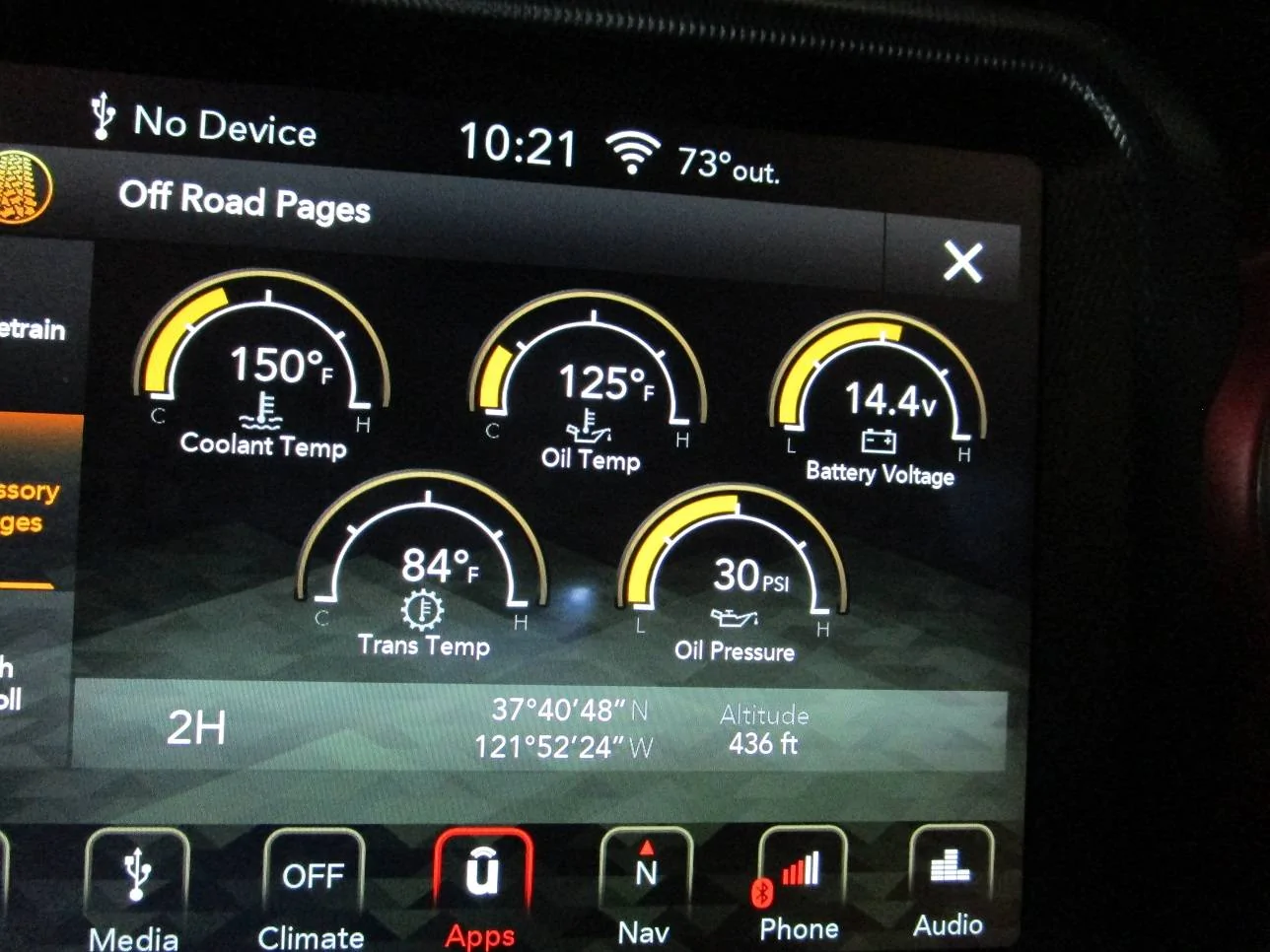
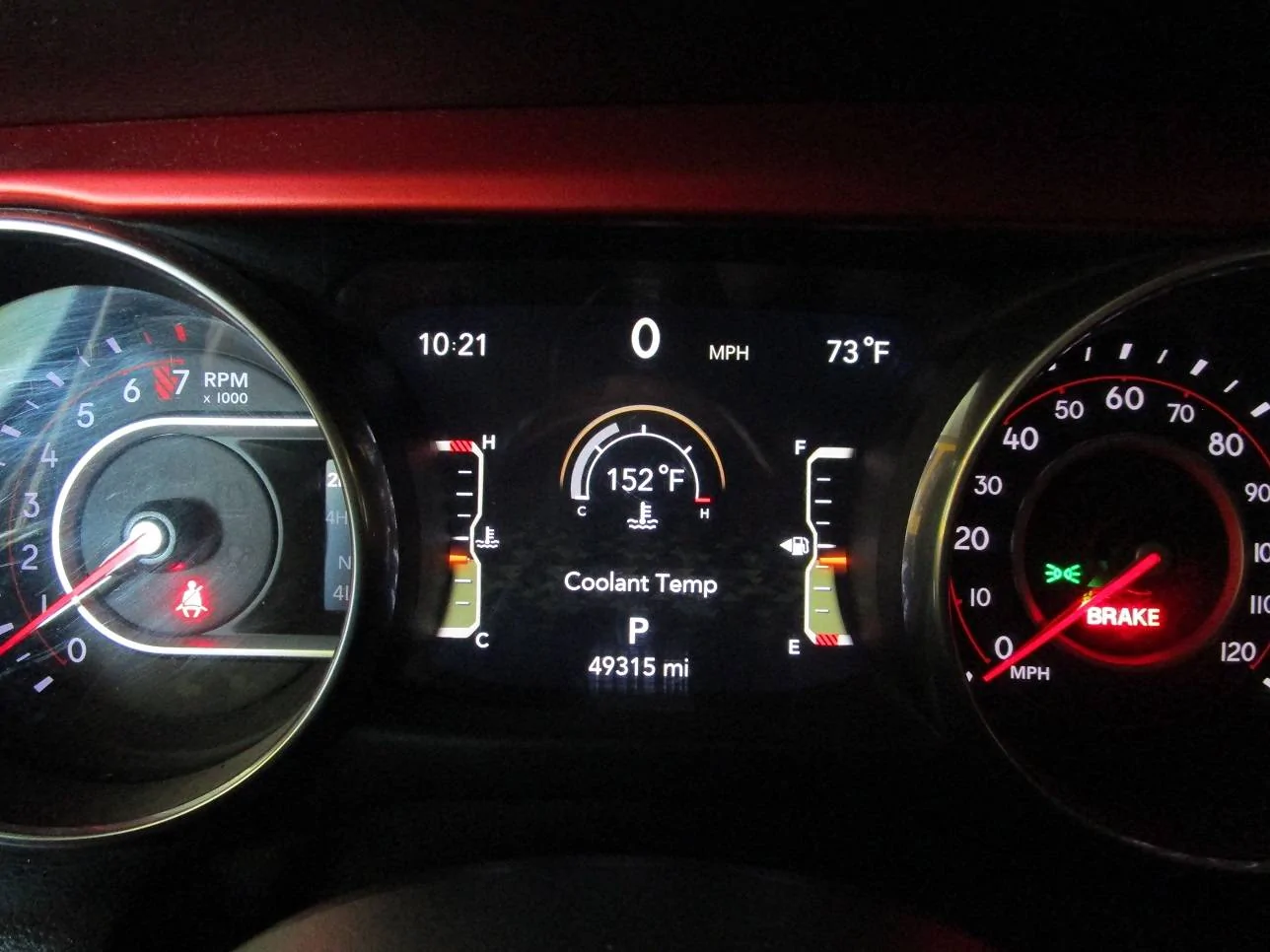
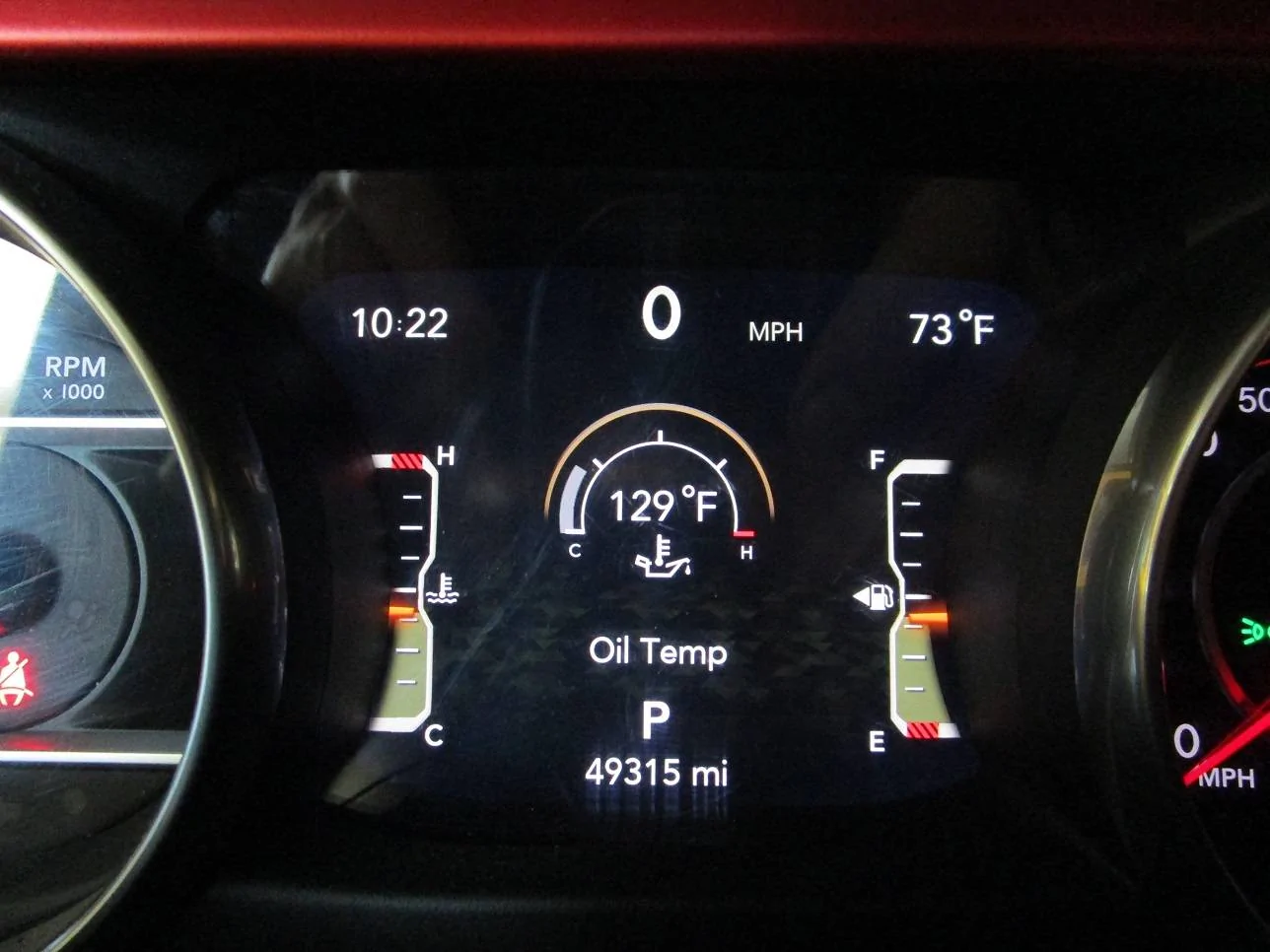
The bar graft on the 7in. Rubicon cluster or temp gauge on the 5in. cluster are just idiot gauges and will not move until the coolant temp is over about 250
The only way to see the real digital temps is on the 8.4 radio in off road page or the 7in. Rubicon cluster (see pictures)
So if you are saying that your jeep is not running hot DO NOT rely on the idiot gauges

Jeep Wrangler JL Which engine runs hotter? 2.0 or 3.6? IMG_1853


Jeep Wrangler JL Which engine runs hotter? 2.0 or 3.6? IMG_1854


Jeep Wrangler JL Which engine runs hotter? 2.0 or 3.6? IMG_1855
 

LKG

Well-Known Member
First Name
Larry
Joined
Jan 6, 2022
Threads
6
Messages
729
Reaction score
1,241
Location
Boise, ID
Vehicle(s)
23 JLUR (soon), Gen 2 Cummins, 22 Sport Alt. R.I.P
Hey, guys. Just curious. Which engine runs hotter? The larger 3.6 or turbocharged 2.0? In my past experience, I’ve always noticed that my FI motors tend to put out a lot of heat (I even remember seeing turbo chargers glowing red). But then again, the 5.2 voodoo also generated quite a bit of heat, but wasn’t sure if it was because of displacement or the number of cylinders.

Has overheating been an issue on the 3.6 or 2.0?
The hardest I've ever worked my 23 JLUR 3.6 manual the temp only climbed about 5-6 degrees to about 204° if memory serves. Taking my daughter to college this summer, the Jeep was completely full (lots of clothes), 109° at 1,800 above sea level up a 7 mile 7%+ grade at 65 MPH. Not too shabby if you ask me.
Sponsored


Top