
Sponsored

Oil catch can or oil separator necessary on the 2.0T?

PunksJL

Well-Known Member
First Name
Paul
Joined
Jun 30, 2022
Threads
37
Messages
277
Reaction score
441
Location
Colorado Springs, Colorado
Vehicle(s)
2025 Rubicon X 2.0T Bright White
Occupation
Retired
I just picked up my new 2025 JLURX 2.0T. I want to implement a maintenance plan and mods that will promote long life for the little direct injected 2.0. I went ahead and performed my first oil change at 1,600 miles and filled the crankcase with 5W-30 Valvoline Restore and Protect which is Valvoline's flagship synthetic oil meeting ILSAC-GF6A and API SN with SN Plus certifications. This oil has shown remarkable results in deposit removal in older engines and after conferring with the Oil Geek, Lake Speed Jr., he confirmed this would be a fantastic oil choice for a new engine; especially to protect the turbo from carbon build-up/coking. For filtration I'm using a Purolator Boss PBL12222 oil filter.

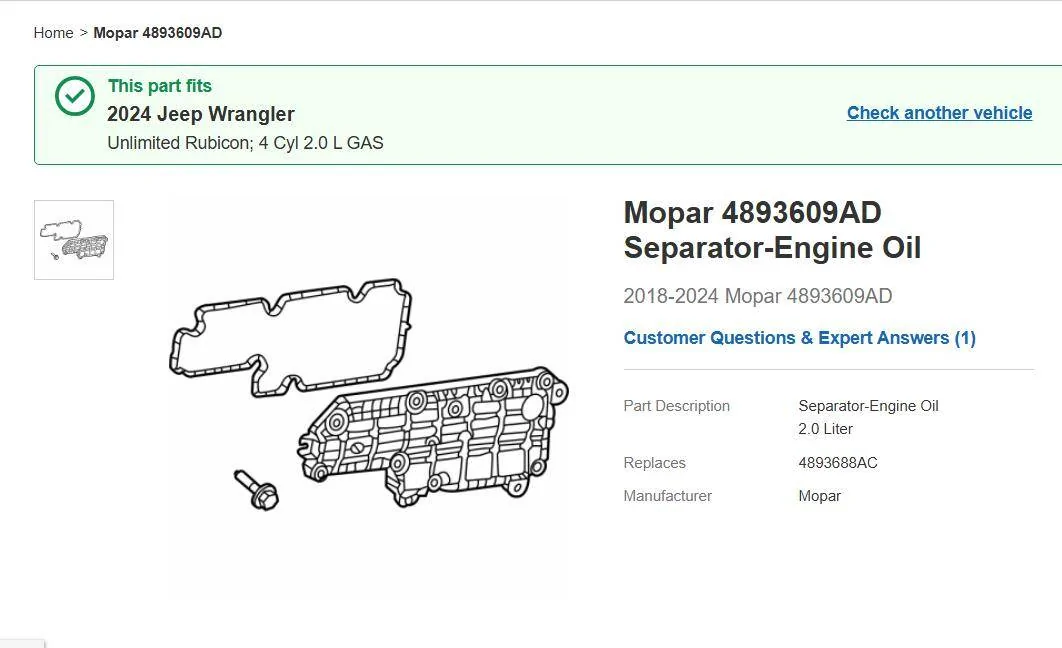
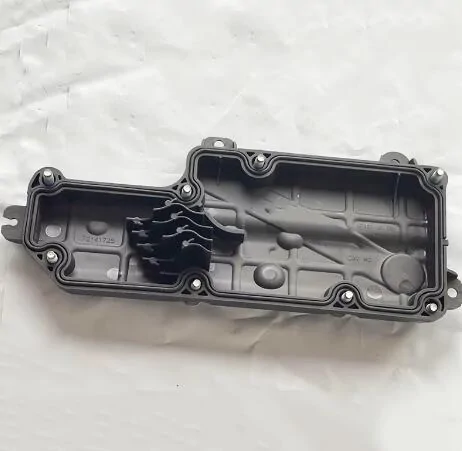
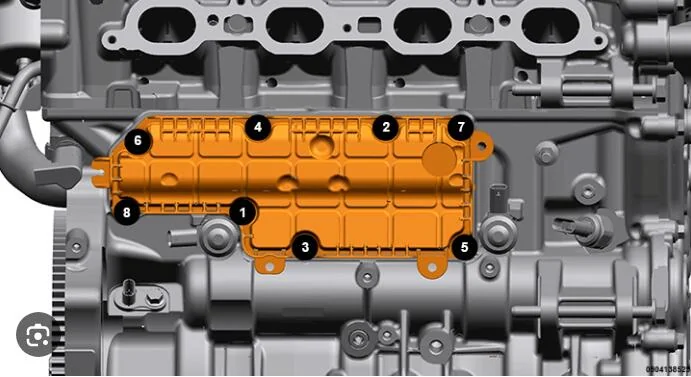
I have been considering installing a J&L Oil Separator, although I'm not sure I really need one. After reading numerous threads on the subject, it seems that the 2.0T PVC system passes very little oil/condensates back into the intake tract compared to the 3.6 which can pass a lot of oil through the PVC system. I'm assuming that this might be due to what appears to be a factory engine mounted oil separator on the 2.0 ( Mopar 4893609AD ). Has anyone installed an aftermarket oil catch can or separator on their 2.0 and what observations have you noted?

My priorities are to prevent deposit build up on the oil control rings to maintain good oil control and eliminate the possibility of LSPI (low speed pre-ignition), minimize carbon build up on the valves/intake ports and minimize oil/condensate entering the turbocharger. I'm very confident the Restore and Protect will keep the engine internals deposit free but it hasn't been proven yet if R&P will also help keep the valves/intake ports carbon free.

The J&L oil separator is not that expensive and if it really catches a lot of nasty oil and condensate it seems like a good investment. I appreciate any input or thoughts on the subject.

Restore & Protect Premium Full Synthetic SAE 5W-30 Motor Oil - Valvolineā„¢ Global

Oil Separator | 2018-2024 Jeep Wrangler JL 2.0L Turbo

4893609AD - Mopar Parts Giant

Jeep Wrangler JL Oil catch can or oil separator necessary on the 2.0T? Mopar Oil Separator
Sponsored


Odyssey USA

Well-Known Member
First Name
Daniel
Joined
Oct 22, 2019
Threads
124
Messages
3,904
Reaction score
3,417
Location
Indiana
Website
www.youtube.com
Vehicle(s)
2021 JLU Rubicon
Build Thread
Link
I just picked up my new 2025 JLURX 2.0T. I want to implement a maintenance plan and mods that will promote long life for the little direct injected 2.0. I went ahead and performed my first oil change at 1,600 miles and filled the crankcase with 5W-30 Valvoline Restore and Protect which is Valvoline's flagship synthetic oil meeting ILSAC-GF6A and API SN with SN Plus certifications. This oil has shown remarkable results in deposit removal in older engines and after conferring with the Oil Geek, Lake Speed Jr., he confirmed this would be a fantastic oil choice for a new engine; especially to protect the turbo from carbon build-up/coking. For filtration I'm using a Purolator Boss PBL12222 oil filter.

I have been considering installing a J&L Oil Separator, although I'm not sure I really need one. After reading numerous threads on the subject, it seems that the 2.0T PVC system passes very little oil/condensates back into the intake tract compared to the 3.6 which can pass a lot of oil through the PVC system. I'm assuming that this might be due to what appears to be a factory engine mounted oil separator on the 2.0 ( Mopar 4893609AD ). Has anyone installed an aftermarket oil catch can or separator on their 2.0 and what observations have you noted?

My priorities are to prevent deposit build up on the oil control rings to maintain good oil control and eliminate the possibility of LSPI (low speed pre-ignition), minimize carbon build up on the valves/intake ports and minimize oil/condensate entering the turbocharger. I'm very confident the Restore and Protect will keep the engine internals deposit free but it hasn't been proven yet if R&P will also help keep the valves/intake ports carbon free.

The J&L oil separator is not that expensive and if it really catches a lot of nasty oil and condensate it seems like a good investment. I appreciate any input or thoughts on the subject.

Restore & Protect Premium Full Synthetic SAE 5W-30 Motor Oil - Valvolineā„¢ Global

Oil Separator | 2018-2024 Jeep Wrangler JL 2.0L Turbo

4893609AD - Mopar Parts Giant
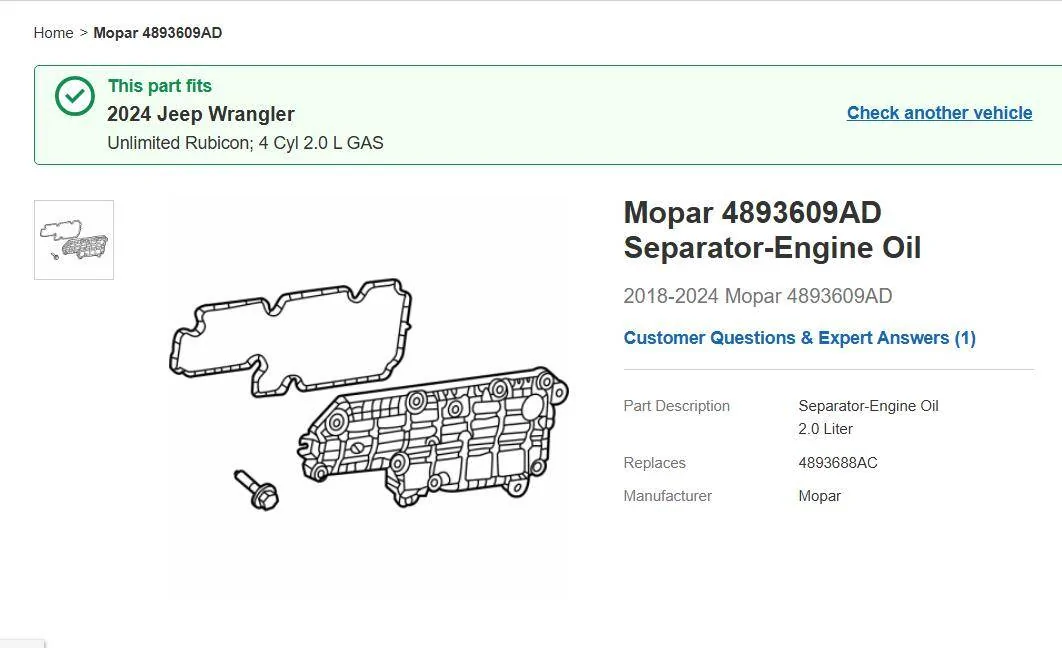
Mopar Oil Separator.jpg
I sold my 80k mile 2.0 out of need in ā€˜23. If I still had it, I’d be running Euro spec FS Mobil 1 5w-40 by now. More timing chain guides protection at full temp. Same/similar flow cold. The Euro spec particularly keeps in mind valvetrain/timing chain wear. It’s also API SP rated so you’d be good to go there too.
 

Tim_JLU

Well-Known Member
First Name
Tim
Joined
Nov 13, 2024
Threads
14
Messages
96
Reaction score
155
Location
47167
Vehicle(s)
2019 JLU Sahara
I doubt you will get a straight answer on this forum.
Now if you mention amsoil they will come running with comments.

I had one on my 2019 F150 5.0. When I first installed it at 15k miles it would fill up fairly quick. I would dump it at a 2k mile interval.
I traded the truck at 55k miles, there would be very little crap in it.
Engine break in?
I think so. I had mild oil consumption up until 35k or so.

So my 2.0 at 60k do I need one? I wonder.......
 

Sponsored

Blue Bear

Well-Known Member
First Name
Matthew
Joined
Aug 9, 2022
Threads
31
Messages
269
Reaction score
343
Location
Seattle
Vehicle(s)
2023 Hydro Blue JLUR
Occupation
Air & Space Museum Curator
Oh I started running 93. I do not care what they say....there is a difference!
Smoother idle and acceleration !
I totally agree with you on that. I recently switched to 93 after running 87 for nearly two years, and the rough idle at start-up stopped within a few trips. To me, it's worth a few cents more per gallon.
 

JLDAVE21

Member
First Name
Dave
Joined
Jan 14, 2025
Threads
0
Messages
7
Reaction score
1
Location
socal395
Vehicle(s)
2021 JLU Rubicon 4xe
Nice write up. Let us all know what you decide on the oil separator; that version is on my to-do list. Also, a fan of R&P for my 96 ZJ 300K. Like you, I have a ā€œnew to meā€ 2.0T (21 JLUR 4xe with 30K) and plan to start out with your line of thinking. FWIW: I’m the original owner of a 19 Cherokee Latitude 2.0T with 70K. Zero issues from day one. Mostly DIY oil changes based solely on oil life % generated by the PCM. Typically 6-7,000 miles.
 

jc1003

Well-Known Member
First Name
Jorge
Joined
Sep 16, 2021
Threads
4
Messages
309
Reaction score
384
Location
Frisco Texas
Vehicle(s)
2022 Sahara, 2025 Ram 1500, 2026 Hyundai Tucson Hybrid, 2023 Hornet
Occupation
IT
I installed the J&L oil separator on my wife's Sahara but she has the e-torque V6. It does collect a lot of oil. Don't know if you would need one on the 2.0.
 

PT's19Rubi

Well-Known Member
First Name
Paul
Joined
Apr 5, 2024
Threads
10
Messages
237
Reaction score
245
Location
NC - Just across river from Uwharrie trails
Vehicle(s)
2019 Rubicon 2D, 3.6, 8A
Occupation
Retired Electrical Design Engineer
I think an oil separator would be required on direct injection, regardless of the efficiency of the PCV system. When I had my Golf R (2.0 T direct injection with a good PCV system) I read a write up on walnut shell blasting the valves. The carbon buildup was horrible at 40K miles.. The procedure was beyond horrible.

Car manufactures should take a page from Ford. Ford is leaning towards Both direct and port injection. It's direct injection And valve washing.
 

Remorseless

Well-Known Member
Joined
May 10, 2022
Threads
4
Messages
34,726
Reaction score
194,311
Location
NC
Vehicle(s)
'22 JLR 2.0T, '24 JTR, '19 Charger R/T
Build Thread
Link
Occupation
Holier Than Thou Internet Bully, Part-Time Online Boy Scout, Full-Time Arson Enthusiast, Napalm Compatible, Guy Who Defines What A Jeep Guy Is
The 2.0 has a decent air-oil separator that bolts to the block. From most accounts it does a good job of keeping the intake free of oil vapor.
 

Sponsored

OP
OP
PunksJL

PunksJL

Well-Known Member
First Name
Paul
Joined
Jun 30, 2022
Threads
37
Messages
277
Reaction score
441
Location
Colorado Springs, Colorado
Vehicle(s)
2025 Rubicon X 2.0T Bright White
Occupation
Retired
The 2.0 has a decent air-oil separator that bolts to the block. From most accounts it does a good job of keeping the intake free of oil vapor.
Yes, I mentioned this part in my original post. Seems to have internal baffles to cause the oil to drop out of the crankcase vapor before it gets to the PCV valve. Makes me think an aftermarket piece isn't that helpful.

Jeep Wrangler JL Oil catch can or oil separator necessary on the 2.0T? Mopar Oil Separator


Jeep Wrangler JL Oil catch can or oil separator necessary on the 2.0T? OS1


Jeep Wrangler JL Oil catch can or oil separator necessary on the 2.0T? OS2
 

Remorseless

Well-Known Member
Joined
May 10, 2022
Threads
4
Messages
34,726
Reaction score
194,311
Location
NC
Vehicle(s)
'22 JLR 2.0T, '24 JTR, '19 Charger R/T
Build Thread
Link
Occupation
Holier Than Thou Internet Bully, Part-Time Online Boy Scout, Full-Time Arson Enthusiast, Napalm Compatible, Guy Who Defines What A Jeep Guy Is
Yes, I mentioned this part in my original post. Seems to have internal baffles to cause the oil to drop out of the crankcase vapor before it gets to the PCV valve. Makes me think an aftermarket piece isn't that helpful.

Mopar Oil Separator.jpg


OS1.jpg


OS2.jpg
Correct, and every indication is it does a good job. Carbon build up hasn't been a noted issue with this engine due to dirty air.
 

cs2k

Well-Known Member
First Name
Clarence
Joined
Apr 20, 2021
Threads
2
Messages
88
Reaction score
215
Location
San Diego, CA
Vehicle(s)
2021 JLUR 2.0
Occupation
Engineer
From the 2.0 tear down video

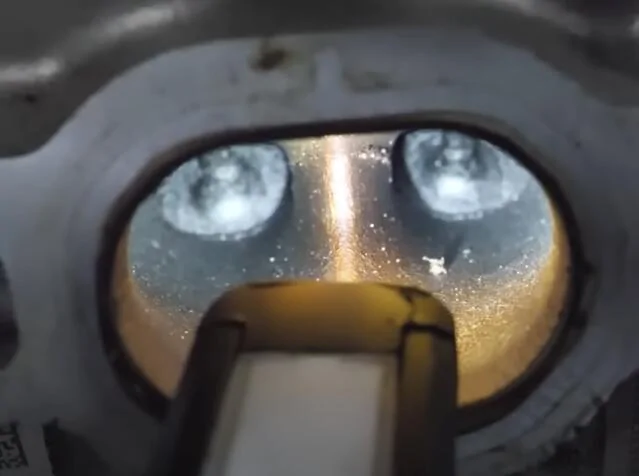
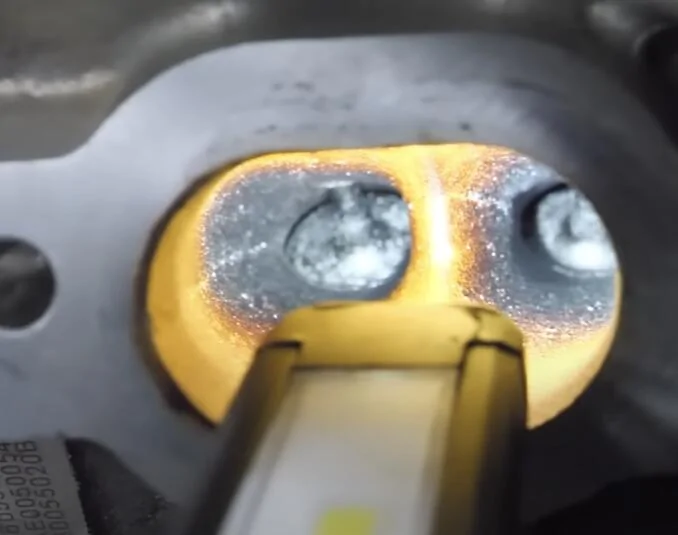
we can see that there's a decent amount of build-up on the valves at 63k

Jeep Wrangler JL Oil catch can or oil separator necessary on the 2.0T? Screenshot 2025-01-31 at 12.53.03 PM
Jeep Wrangler JL Oil catch can or oil separator necessary on the 2.0T? Screenshot 2025-01-31 at 12.52.55 PM


definitely not as bad as the early BMWs or VW but it could be a problem in the long term 100k+. I'm not sure how much a catch can will help since they don't fully prevent this. Only way to prevent this is to run a PCV vent to atmosphere setup. Currently that triggers a code in this engine on the ccv side and its also illegal.
 
OP
OP
PunksJL

PunksJL

Well-Known Member
First Name
Paul
Joined
Jun 30, 2022
Threads
37
Messages
277
Reaction score
441
Location
Colorado Springs, Colorado
Vehicle(s)
2025 Rubicon X 2.0T Bright White
Occupation
Retired
From the 2.0 tear down video

we can see that there's a decent amount of build-up on the valves at 63k

Screenshot 2025-01-31 at 12.53.03 PM.jpg
Screenshot 2025-01-31 at 12.52.55 PM.jpg


definitely not as bad as the early BMWs or VW but it could be a problem in the long term 100k+. I'm not sure how much a catch can will help since they don't fully prevent this. Only way to prevent this is to run a PCV vent to atmosphere setup.
If a catch can traps some of this oil it surely couldn’t hurt anything. It will be interesting if Valvoline’s Restore and Protect additive package also helps keep the top of the valves cleaner. I’m assuming some of those additives are picked up in the oil vapor that passes through the PVC system and back into the intake/turbo. I guess time will tell.
 

roaniecowpony

Well-Known Member
Joined
Dec 4, 2018
Threads
194
Messages
12,969
Reaction score
20,547
Location
SoCal
Vehicle(s)
2018 JLUR, 14 GMC 1500 CC All TERRAIN
Occupation
Retired Engineer
I'm no fan of a simple catch-can. It primarily catches the condensation that your oil absorbs and has to get rid of. If you forget to empty a catch-can, your engine can get a gulp of the accumulated liquid and damage it. If I were to put anything on an engine, it would be a true air-oil separator that drains the liquid to the crankcase.
Sponsored


Top