
Sponsored
Pape
Well-Known Member
Some will say yes, other will say no. If you end up running one make sure you make it a maintenance item to empty it regularly and if you do steep angle off-road before the trail.
WannFly
Well-Known Member
I dont have a 3.6, but I did install J&L oil separator for the MOAB 392. after 1k miles, it had about 1/2 ounce or so of fuel-oil mixture in it. Before I did the install, I did a oil analysis and found fuel % <0.5. Per blackstone, it should be <0.2
I will do another oil analysis in next few weeks and see what it says.
this is a highly debated topic, some says it only catches $$
I will do another oil analysis in next few weeks and see what it says.
this is a highly debated topic, some says it only catches $$

Old Dogger
Well-Known Member
- First Name
- Bill
- Joined
- Nov 15, 2021
- Threads
- 21
- Messages
- 3,278
- Reaction score
- 3,963
- Location
- Cave Creek Arizona
- Vehicle(s)
- 2013 JKR, 2016 JKURHR 2018 JLR, 2025 Gladiator Mojave.
- Occupation
- Retired
We have four (4) 3.6 engines in the family. I service and change the engine oil and air filter in all four of these. I have never seen a need for one of these. Evidently the factory doesn't either, or they would install them. But for those that disagree with this, then go ahead and spend your money..LOL

Eyeball
Well-Known Member
- Joined
- Dec 14, 2022
- Threads
- 35
- Messages
- 569
- Reaction score
- 819
- Location
- California
- Vehicle(s)
- 1997 TJ & 2023 JLUR
While I don’t have an oil separator and I have no plans of adding one, I dont subscribe to the theory of “ I have never seen a need for one of these. Evidently the factory doesn't either, or they would install them.”We have four (4) 3.6 engines in the family. I service and change the engine oil and air filter in all four of these. I have never seen a need for one of these. Evidently the factory doesn't either, or they would install them. But for those that disagree with this, then go ahead and spend your money..LOL
Whether it is cars, toaster ovens, or roller skates, It is my belief that most manufacturers design and manufacture to the bare minimum to make it through the warranty period.
Sponsored
Willys41
Well-Known Member
- First Name
- Larry
- Joined
- Nov 2, 2021
- Threads
- 3
- Messages
- 1,170
- Reaction score
- 1,312
- Location
- Pleasanton Ca.
- Vehicle(s)
- 2020 Jeep Willys
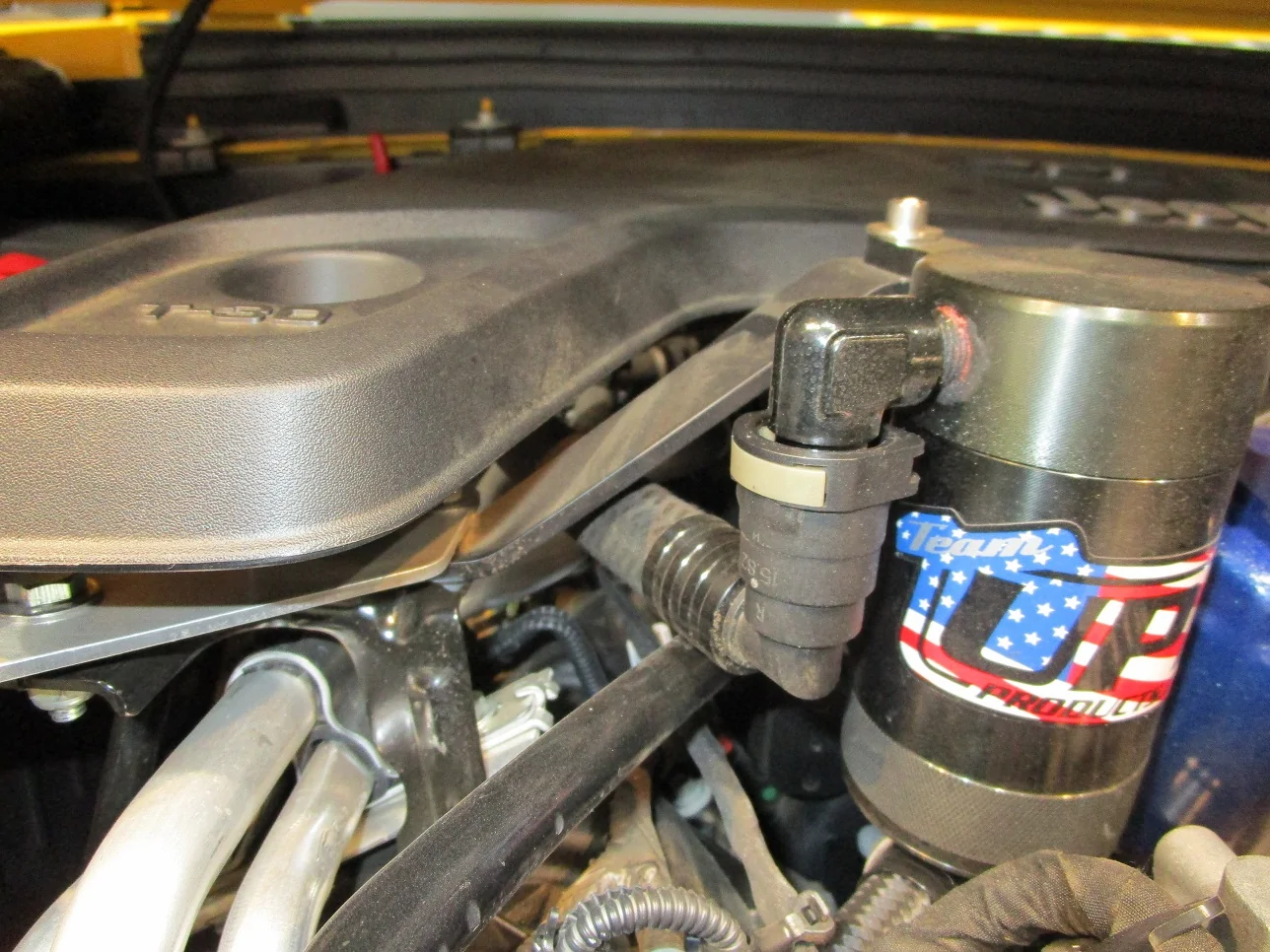
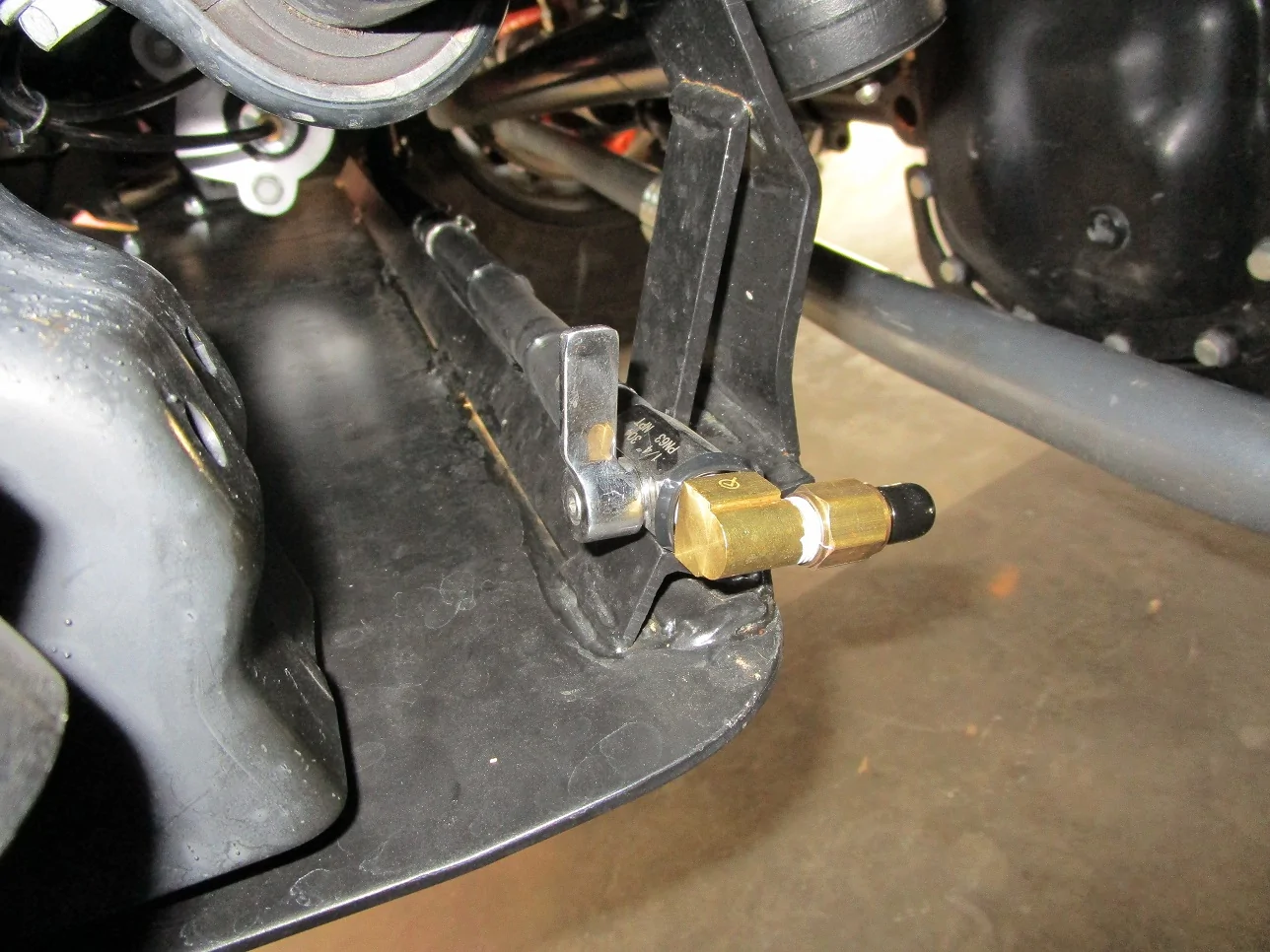
I run a UPR oil catch can and it works great. I did add a 4ft drain hose doubling its capacity and making it very easy to drain.
As far as factory oil catch cans go. Some are built in and other factory ones can be added.
https://www.ford.com/product/201720...-JN74Jtu_gqWLRyPKyysvxluVVfaE91MaAuAtEALw_wcB

As far as factory oil catch cans go. Some are built in and other factory ones can be added.
https://www.ford.com/product/201720...-JN74Jtu_gqWLRyPKyysvxluVVfaE91MaAuAtEALw_wcB
Ratbert
Well-Known Member
There was a long, long thread a while back from a guy that had trashed his engine when he got his rig at an angle while off roading. He claimed he had done "no engine mods", but had put on an oil catch can.
The speculation was that he hadn't drained it beforehand, quickly trashing his engine.
The speculation was that he hadn't drained it beforehand, quickly trashing his engine.
BigRedRidinHood
Well-Known Member
- First Name
- Orson
- Joined
- Jun 24, 2022
- Threads
- 2
- Messages
- 157
- Reaction score
- 130
- Location
- Long Island
- Vehicle(s)
- 2021 Rubicon Unlimited
The 3.6 injection system does not need it to protect the valves from carbon build up but I installed one to give me as clean a combustion process as possible. Most are not expensive and are easy to install . I service it at every oil change. Nasty looking stuff in the can when I empty it and glad I am not running it through my engine.
I am also very wary of all manufacturers these days as my 2015 BMW X5 with 106,000 miles has a “lifetime” transmission fluid but ZF who makes the transmission requires a significant service at 60k.
I am also very wary of all manufacturers these days as my 2015 BMW X5 with 106,000 miles has a “lifetime” transmission fluid but ZF who makes the transmission requires a significant service at 60k.
Blacksport
Well-Known Member
- First Name
- John
- Joined
- May 15, 2025
- Threads
- 2
- Messages
- 151
- Reaction score
- 183
- Location
- Ft Lauderdale
- Vehicle(s)
- '25 Wrangler Sport S, 3.6/manual trans...'23 Corvette C8...'25 Yamaha XMAX
Not really necessary for port injection, great for cylinder injection because there's no fuel mist to wash carbon off the valves. I installed a J&L on my 3.6 (my cylinder-injected C8 has one, and the Wrangler was jealous!), but I'm a little torn; the good is, that oil-misty crankcase smoke doesn't go in the combustion chamber...the bad is that oil-misty crankcase smoke might actually lubricate the upper cylinder walls...
SEW
Member
- First Name
- Steve
- Joined
- May 4, 2026
- Threads
- 0
- Messages
- 7
- Reaction score
- 5
- Location
- Piggott Arkansas
- Vehicle(s)
- 2026 Wrangler Sport S, 3.6L/Manual, 2025 BMW 330i
I agree totally with the previous post. I own and have owned BMWs. I do my own servicing.
For years, BMW stated that transmission, transfer case and differential fluids were lifetime. The transmission manufacturer stated 60 K miles.
BMW now has a different policy that’s hard to really understand. Transmission: inspect fluid at 10yrs or 60K miles . Transfer case and differentials: inspect every 5 years/50K miles. Inspect what? Levels?
Plugs every 100K miles (these are just conventional plugs). At 43K miles on my ‘19 330i, driven gently, the plugs were moderately worn, didn’t do resistance test.
The transmission fluid was solid BLACK, but still had some life left in it
(Blackstone) . On my ‘25 330i & ‘26 X5, I plan on changing diffs and T-case at 10K and then again at 40-50K when I do the transmissions/pans with integral filter.
10K initial oil change (0W-12) on a high performance 4 & 6 with turbo and timing chains! Then 10K after that! Think that’s in the best interest of longevity?
I changed twice by 5 K and 5K ever since. And, with -17 0W20 not 0-12. FWIW 5W-30 will trigger cause a light on the dash. I know a BMW service manager who tried using LL-01 5W-30 on his own B58 engine (2026) . He ended up compromising at 0W-20.
The state of tune on my ‘26 JL Sport/3.6, 6-sp made it very frustrating to drive. After Brad’s tuning, the JL is a totally different vehicle. I’ll change the diffs & T-case before 2 K. Have 1,200 on it now and oil change at 695. Will likely go to 5W-30 Platnum Plus or Valvoline at about 2,000 miles and do the other then.
I do not believe that it’s universally true that vehicles come optimized nor that maintenance schedules are optimal for longevity. CAFE standards, perceived minimal maintenance requirements, emission standards, cost of production and accelerated depreciation (BMW) , part or all, trump vehicle longevity.
For years, BMW stated that transmission, transfer case and differential fluids were lifetime. The transmission manufacturer stated 60 K miles.
BMW now has a different policy that’s hard to really understand. Transmission: inspect fluid at 10yrs or 60K miles
. Transfer case and differentials: inspect every 5 years/50K miles. Inspect what? Levels?Plugs every 100K miles (these are just conventional plugs). At 43K miles on my ‘19 330i, driven gently, the plugs were moderately worn, didn’t do resistance test.
The transmission fluid was solid BLACK, but still had some life left in it
(Blackstone) . On my ‘25 330i & ‘26 X5, I plan on changing diffs and T-case at 10K and then again at 40-50K when I do the transmissions/pans with integral filter.
10K initial oil change (0W-12) on a high performance 4 & 6 with turbo and timing chains! Then 10K after that! Think that’s in the best interest of longevity?
I changed twice by 5 K and 5K ever since. And, with -17 0W20 not 0-12. FWIW 5W-30 will trigger cause a light on the dash. I know a BMW service manager who tried using LL-01 5W-30 on his own B58 engine (2026) . He ended up compromising at 0W-20.
The state of tune on my ‘26 JL Sport/3.6, 6-sp made it very frustrating to drive. After Brad’s tuning, the JL is a totally different vehicle. I’ll change the diffs & T-case before 2 K. Have 1,200 on it now and oil change at 695. Will likely go to 5W-30 Platnum Plus or Valvoline at about 2,000 miles and do the other then.
I do not believe that it’s universally true that vehicles come optimized nor that maintenance schedules are optimal for longevity. CAFE standards, perceived minimal maintenance requirements, emission standards, cost of production and accelerated depreciation (BMW) , part or all, trump vehicle longevity.
Last edited:
Sponsored
Willys41
Well-Known Member
- First Name
- Larry
- Joined
- Nov 2, 2021
- Threads
- 3
- Messages
- 1,170
- Reaction score
- 1,312
- Location
- Pleasanton Ca.
- Vehicle(s)
- 2020 Jeep Willys
Let me explain the reason I even tried an oil catch can and why I an a firm believer in it.
At about 10k miles on my new 2020 willys I took if off road for the first time.
Going up a long steep dirt trail I was getting a massive amount of donation / pining from my 3.6 and could not believe what I was hearing.
I was at about 3k elevation running 91 octane. I thought it may have been bad fuel but mouths later still having donation.
After some research I came across one right up explaining how oil mist entering the intake air stream can and will degrade the octane levels so I decided to give one a try.
From that day forward I have never heard one ping / donation from my engine.
I gain two thing with an oil catch can. Clean intake manifold and clean air intake stream.
At about 10k miles on my new 2020 willys I took if off road for the first time.
Going up a long steep dirt trail I was getting a massive amount of donation / pining from my 3.6 and could not believe what I was hearing.
I was at about 3k elevation running 91 octane. I thought it may have been bad fuel but mouths later still having donation.
After some research I came across one right up explaining how oil mist entering the intake air stream can and will degrade the octane levels so I decided to give one a try.
From that day forward I have never heard one ping / donation from my engine.
I gain two thing with an oil catch can. Clean intake manifold and clean air intake stream.
tony58
Well-Known Member
- Thread starter
- #12
thanks for all the info like anything else [yes or no]Let me explain the reason I even tried an oil catch can and why I an a firm believer in it.
At about 10k miles on my new 2020 willys I took if off road for the first time.
Going up a long steep dirt trail I was getting a massive amount of donation / pining from my 3.6 and could not believe what I was hearing.
I was at about 3k elevation running 91 octane. I thought it may have been bad fuel but mouths later still having donation.
After some research I came across one right up explaining how oil mist entering the intake air stream can and will degrade the octane levels so I decided to give one a try.
From that day forward I have never heard one ping / donation from my engine.
I gain two thing with an oil catch can. Clean intake manifold and clean air intake stream.
BigRedRidinHood
Well-Known Member
- First Name
- Orson
- Joined
- Jun 24, 2022
- Threads
- 2
- Messages
- 157
- Reaction score
- 130
- Location
- Long Island
- Vehicle(s)
- 2021 Rubicon Unlimited
Just bought one for my C8 Stingray Coupe as well yesterday based on your post. Now will be on three of my vehicles.
Not really necessary for port injection, great for cylinder injection because there's no fuel mist to wash carbon off the valves. I installed a J&L on my 3.6 (my cylinder-injected C8 has one, and the Wrangler was jealous!), but I'm a little torn; the good is, that oil-misty crankcase smoke doesn't go in the combustion chamber...the bad is that oil-misty crankcase smoke might actually lubricate the upper cylinder walls...
Sponsored
Similar threads

- Replies
- 8
- Views
- 5,751


- Replies
- 2
- Views
- 2,765
- Replies
- 3
- Views
- 582


