BigMaCro
Well-Known Member
- First Name
- Matt
- Joined
- Mar 7, 2022
- Threads
- 17
- Messages
- 502
- Reaction score
- 885
- Location
- Moved to Iowa from Alaska
- Website
- www.youtube.com
- Vehicle(s)
- 2021 JLU 4xe Rubicon
- Build Thread
- Link
- Occupation
- Carhauler
- Vehicle Showcase
- 1
- Thread starter
- #1
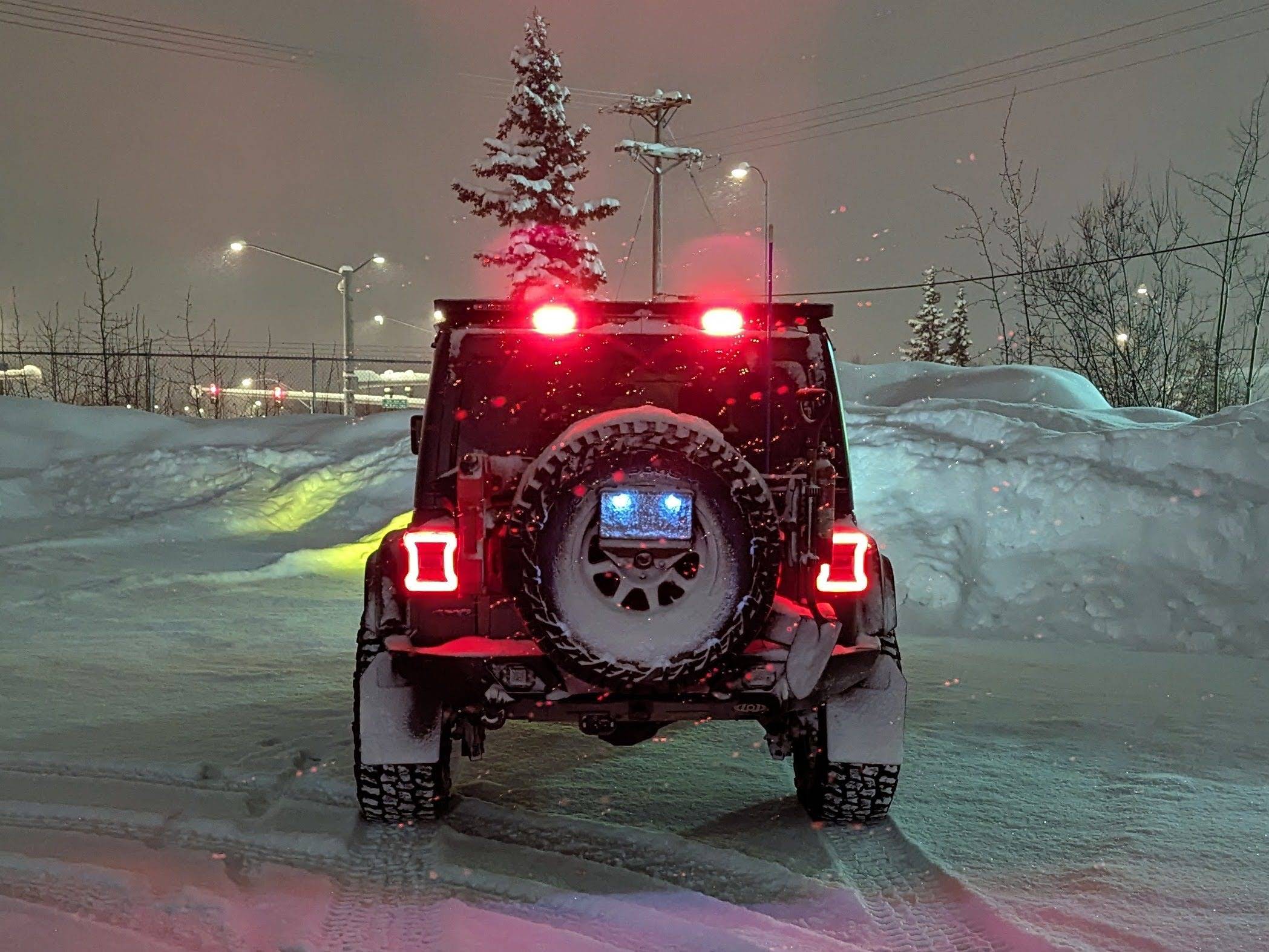
I have wanted roof-mounted rear lights to provide better notice of hazards and my intentions to drivers following me, whether on the trail or highway. It's taken some doing, but I finally have a solution I'm very pleased with.


KC Hilites sells a 28" light bar with 6 LED modules of Red, Amber, and White (the race version includes blue as well, not a good idea for road use). The modules are very bright and capable of strobing, and this makes sense because they are made for emergency vehicles. KC is packaging and re-branding parts from Feniex, a US manufacturer providing lights for public safety. I was initially disappointed when I opened the box and discovered the Feniex logos, but after researching their site and product positioning I think it's the right thing to do. Feniex has many different options and control schemes, and it's more than a little confusing for a layperson. I think it would be possible to build a system with standard parts, but KC has already done the work and it doesn't apparently cost any more.
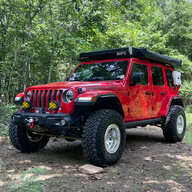
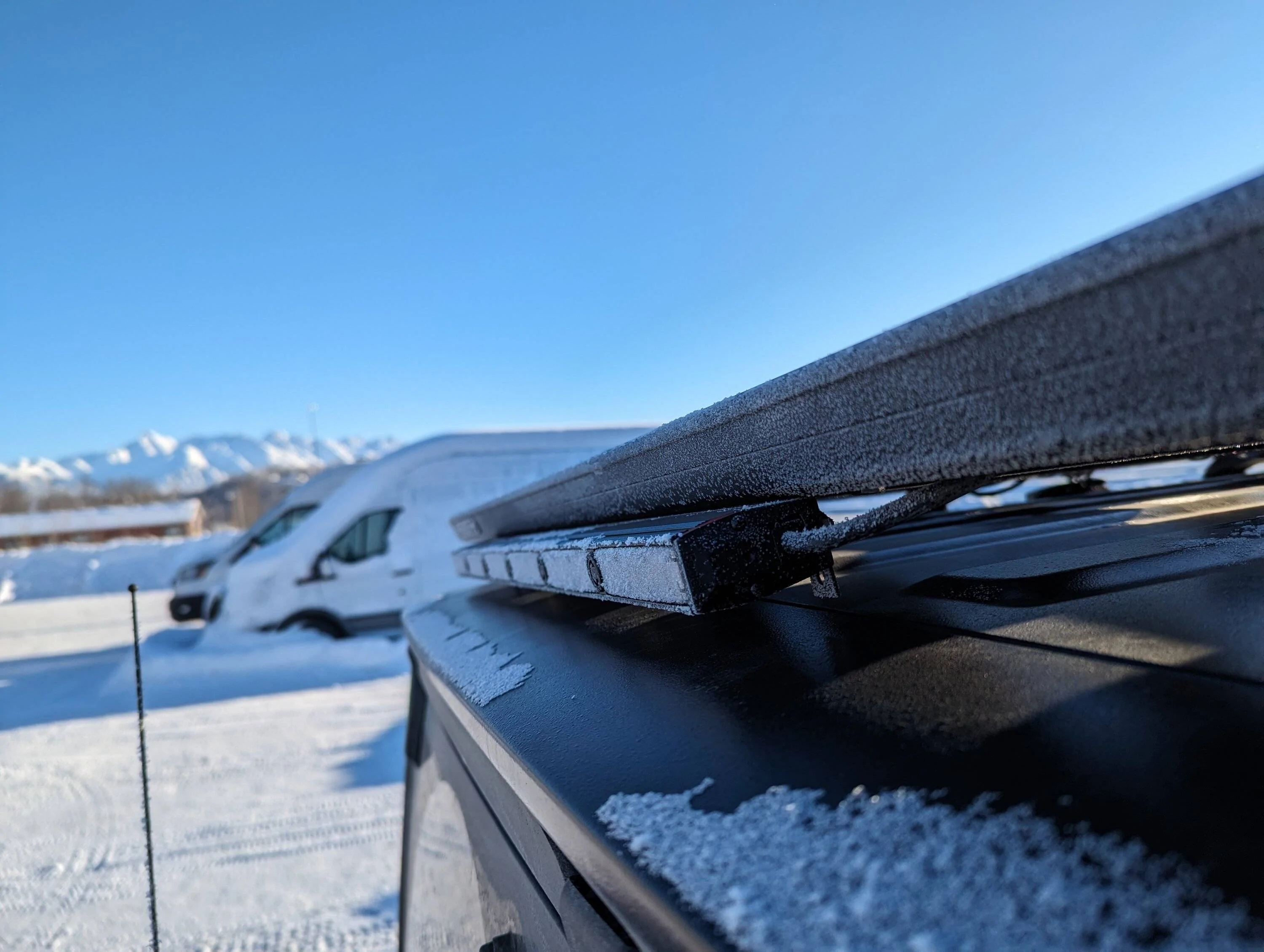
I installed a Rhino Rack Pioneer Platform, in large part to mount lights all around my Jeep. I am trying to keep a low profile, resistant to low-hanging branches on the trail, so the lights are mounted below, or in case of my front light bar, just in front of the platform. Mounting the KC chase bar is a little awkward. M4 holes are threaded in the ends, and there is a T-slot for bolts in the rear, but no brackets were provided. I probably couldn't have used them anyway. I used some 90 degree brackets from the hardware store and attached to the bottom T-slot of the platform. It turned out that it angles down slightly, so I may improve on this solution to get a horizontal beam.
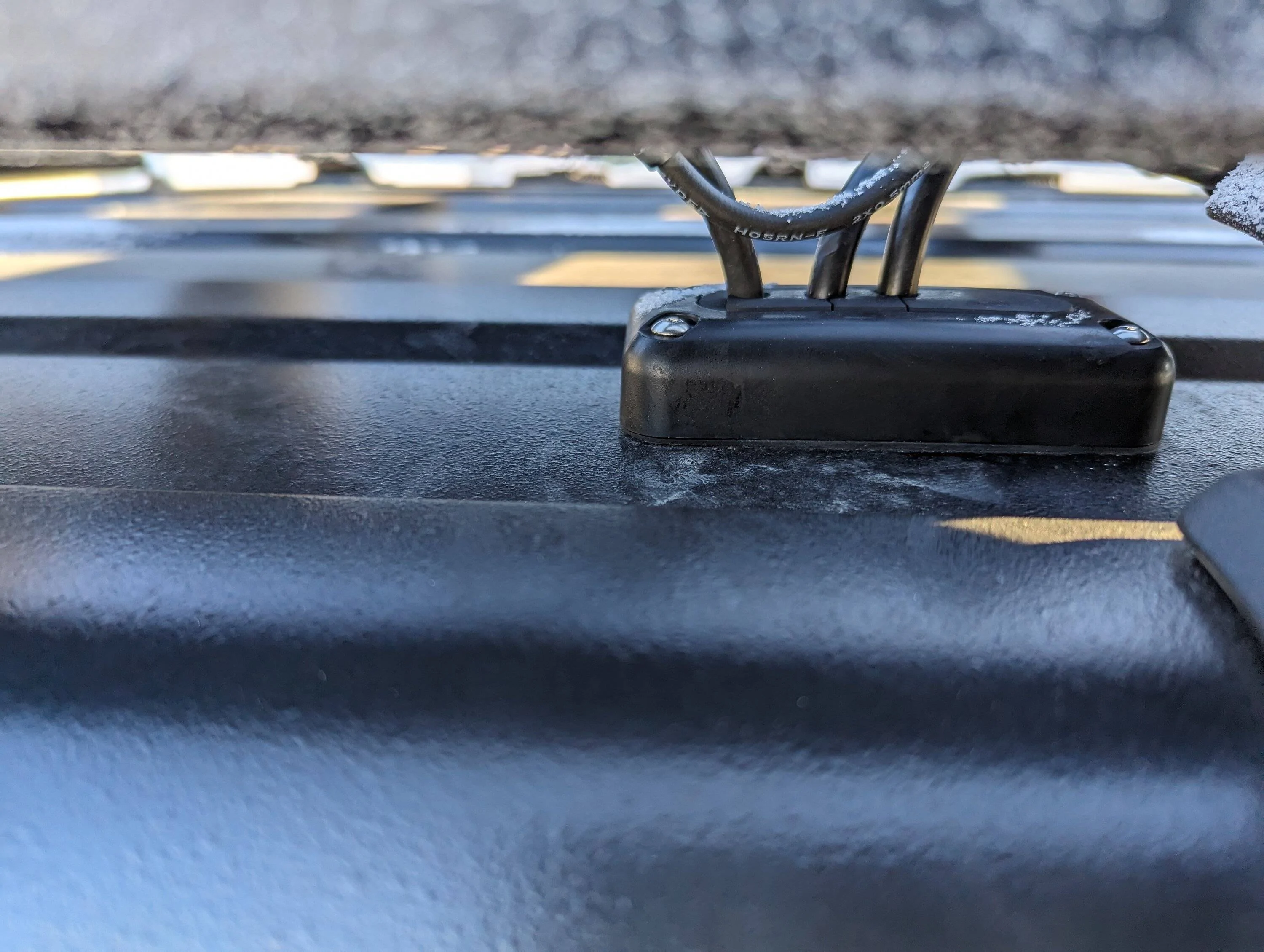
The bar comes with a ~6ft cable attached. There are many conductors, I presume for each of the modules and perhaps to do some flash patterns. However, KC provides a separate controller module, so only power, ground, and two digital signal wires are used. Rather than providing a control panel for the module (which I would be interested in!), the module has many signal input wires, which you can connect to switches to tell the controller what you want it to do. So the owner decides what functions they want and connects those wires to their own switch mechanism. These are signal inputs only and draw negligible power, and don't feed back into the circuit they are connected to, so tapping into existing vehicle circuits is practical.
For taillights, there is an input to dim both red modules at the same time.
For brake/turn lights, I connected each red module's full brightness input to the corresponding brake/turn wire on the Jeep.
These three connections I tapped into the harness behind the right side cargo panel, which is wired to the trailer connector. I used positap connectors to T into the factory wires. I feel this is less intrusive than cutting and splicing, and still a very good solid connection.
To control other functions, as well as a light bar and pods, I installed an auxbeam 8 output switch panel. I use one output to power on the lightbar and controller (leaving this off disables the light bar). One output activates alternating yellow lights, an amber caution beacon. Another output turns on the pair of white lights (I have bumper mounted lights wired to my reverse lights). And I have two outputs for traffic directors - a sequence that encourages traffic to pass or merge left or right, or by activating both does a center-out pattern.
There are many other options, with some configuration for flashing speed and patterns. However I'm trying to keep it as legally justifiable as possible. My intentions are that if I am on the side of the road, I can provide notice and encouragment to other drivers to make room. I'm a truck driver and find myself working inches from vehicles traveling 75 MPH on an all too-frequent basis.

KC Hilites sells a 28" light bar with 6 LED modules of Red, Amber, and White (the race version includes blue as well, not a good idea for road use). The modules are very bright and capable of strobing, and this makes sense because they are made for emergency vehicles. KC is packaging and re-branding parts from Feniex, a US manufacturer providing lights for public safety. I was initially disappointed when I opened the box and discovered the Feniex logos, but after researching their site and product positioning I think it's the right thing to do. Feniex has many different options and control schemes, and it's more than a little confusing for a layperson. I think it would be possible to build a system with standard parts, but KC has already done the work and it doesn't apparently cost any more.
I installed a Rhino Rack Pioneer Platform, in large part to mount lights all around my Jeep. I am trying to keep a low profile, resistant to low-hanging branches on the trail, so the lights are mounted below, or in case of my front light bar, just in front of the platform. Mounting the KC chase bar is a little awkward. M4 holes are threaded in the ends, and there is a T-slot for bolts in the rear, but no brackets were provided. I probably couldn't have used them anyway. I used some 90 degree brackets from the hardware store and attached to the bottom T-slot of the platform. It turned out that it angles down slightly, so I may improve on this solution to get a horizontal beam.
The bar comes with a ~6ft cable attached. There are many conductors, I presume for each of the modules and perhaps to do some flash patterns. However, KC provides a separate controller module, so only power, ground, and two digital signal wires are used. Rather than providing a control panel for the module (which I would be interested in!), the module has many signal input wires, which you can connect to switches to tell the controller what you want it to do. So the owner decides what functions they want and connects those wires to their own switch mechanism. These are signal inputs only and draw negligible power, and don't feed back into the circuit they are connected to, so tapping into existing vehicle circuits is practical.
For taillights, there is an input to dim both red modules at the same time.
For brake/turn lights, I connected each red module's full brightness input to the corresponding brake/turn wire on the Jeep.
These three connections I tapped into the harness behind the right side cargo panel, which is wired to the trailer connector. I used positap connectors to T into the factory wires. I feel this is less intrusive than cutting and splicing, and still a very good solid connection.
To control other functions, as well as a light bar and pods, I installed an auxbeam 8 output switch panel. I use one output to power on the lightbar and controller (leaving this off disables the light bar). One output activates alternating yellow lights, an amber caution beacon. Another output turns on the pair of white lights (I have bumper mounted lights wired to my reverse lights). And I have two outputs for traffic directors - a sequence that encourages traffic to pass or merge left or right, or by activating both does a center-out pattern.
There are many other options, with some configuration for flashing speed and patterns. However I'm trying to keep it as legally justifiable as possible. My intentions are that if I am on the side of the road, I can provide notice and encouragment to other drivers to make room. I'm a truck driver and find myself working inches from vehicles traveling 75 MPH on an all too-frequent basis.
Sponsored