
roaniecowpony
Well-Known Member
There's likely a specific method in a tire manufacturing spec, possibly SAE or other.measuring around the tire and dividing by 3.14 makes the most sense to me.
Sponsored
There's likely a specific method in a tire manufacturing spec, possibly SAE or other.measuring around the tire and dividing by 3.14 makes the most sense to me.

a bit more difficult mounted with weight on it. I just measure from the ground to a straight edge across the top. possibly off a tenth or two eyeballing it but close enough for the speedo to match GPS. … my 34.5” 35’s measured 33.8 at 32 psimeasuring around the tire and dividing by 3.14 makes the most sense to me.
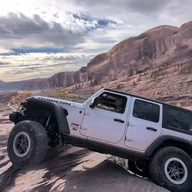
yes just under 11"Do you have same measurement with same pressure on your 35's?
that is how the inventor of the AEV procal told me to do it if you wanted your speed spot on...but you are 100% correct that is different than the manufacturing spec is about..two different things..I think some are measuring from the ground up to the center and multiplying 2x. I'm thinking that's not what the tire manufacturing spec is about.
it does for manufacturer spec for sure just not for speedo calibrations....measuring around the tire and dividing by 3.14 makes the most sense to me.
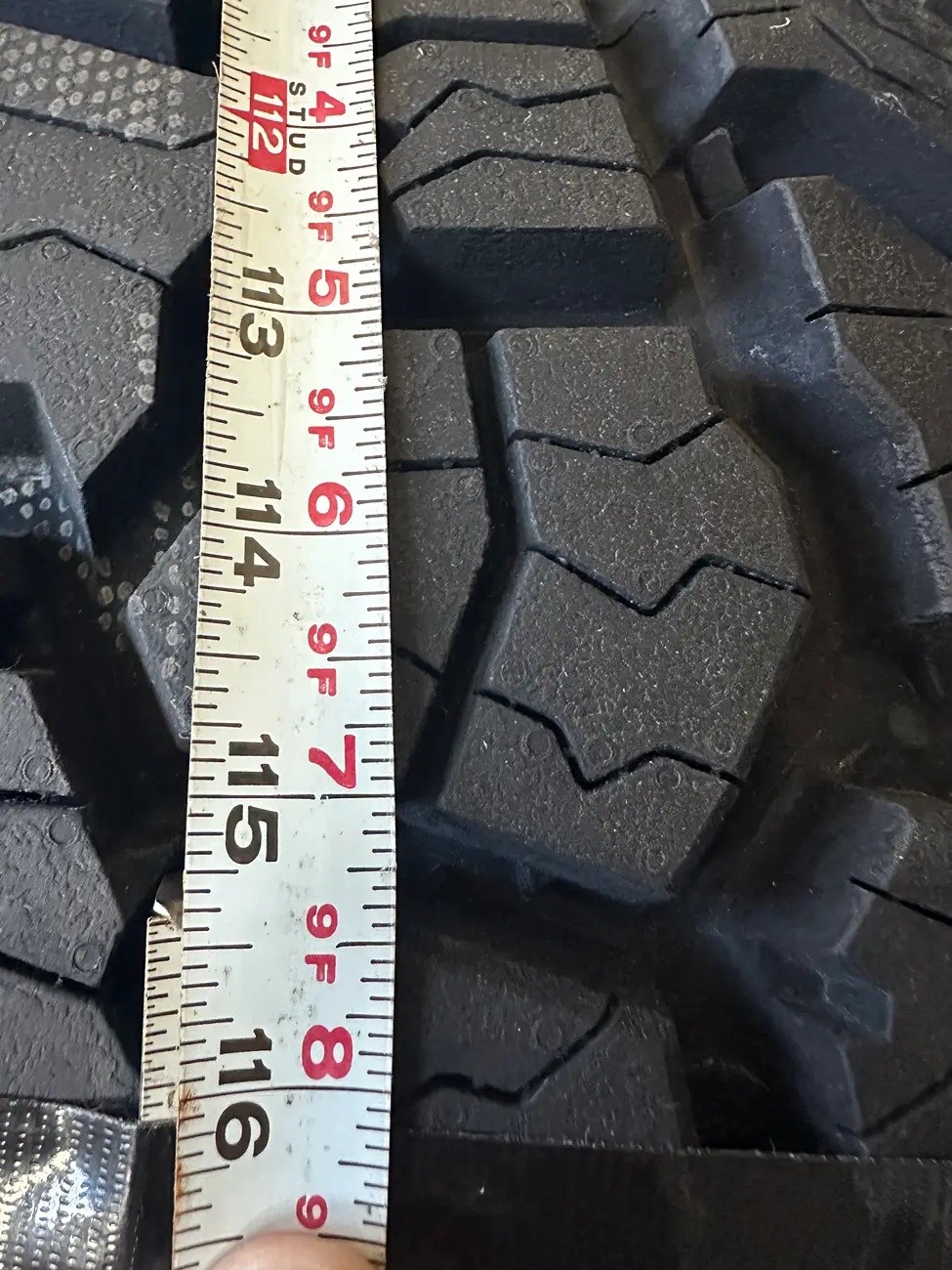
Turns out you were spot on with the FMVSS 571.139measuring around the tire and dividing by 3.14 makes the most sense to me.
For my Mickey BBAT 37s, I used JSCAN right after installation of the tires and input the published specification from their website (or as close to it as possible within JSCAN) then checked against GPS over a straight hwy at various speeds from 40 to 80 mph. It was spot on with tire pressure around 32 psi. (during the test)it does for manufacturer spec for sure just not for speedo calibrations....



Yep, so if a tire has a stupidly high max pressure like 80 PSI then its published size will reflect that.Turns out you were spot on with the FMVSS 571.139
So, forever more on this forum, we know how the manufacturer comes up with the published dimensional spec on their websites.

I had the same thought at first, but row S6.1.1.1.5 says to "readjust the pressure to that specified" on the table. 180/220kPa = 26/32psi. Do you read it the same way?Yep, so if a tire has a stupidly high max pressure like 80 PSI then its published size will reflect that.

Every 37" K02 we have installed at the shop only measures 35.5 on a good day. (we aren't normally installing KM3's)That is odd. the 37" KM3 that I have measured 36.5 just like BFG list them as.

measuring around the tire and dividing by 3.14 makes the most sense to me.
That's for passenger tires. Read the next bullet item for LTs.I had the same thought at first, but row S6.1.1.1.5 says to "readjust the pressure to that specified" on the table. 180/220kPa = 26/32psi. Do you read it the same way?
If your tire spec shows revolutions per mile you don't even have to do this calculation. That number is already the actual diameter under load and should be dead on with your actual speed if you convert it to a tire size. For example, my 32.1" KO2s spec 649 revs/mile, which is 31.1" rolling diameter.since for speed accuracy purposes what we really care about is how far it travels when it rolls, wouldn't it be easier and more accurate to measure rollout?
make a mark on the tire at the ground (at working pressure and under working load), roll it until that mark on the ground returns back to the ground, and measure the distance between those marks?
divide by pi to get the diameter.


