
Sponsored
Okay to jack up underneath rear diff that has a rear diff skid plate?
OP
OP

Trails
Well-Known Member
- Thread starter
- #17
Thanks all. I was asking because I wasn't sure if it was meant to carry long-term static weight (versus transient sliding weight that a slid plate typically sees.) I was seeing the skid plate's purpose as more to prevent chunks of iron from being chunked off the lip, rather than more of a weight bearing article. But, all your answrrs make sense. People are going to get hung up longer term, so the skid would need to carry the weight, too.
Thanks everyone.
Thanks everyone.

Twisted10
Well-Known Member
- First Name
- Brandon
- Joined
- Jan 25, 2024
- Threads
- 6
- Messages
- 2,696
- Reaction score
- 7,401
- Location
- Western NY
- Vehicle(s)
- 2023 Wrangler 392 XR/2022 Ram Cummins
I normally try to jack it in private. But you do you.


Terrymo
Well-Known Member
Which diff skid plate are you getting?Thanks all. I was asking because I wasn't sure if it was meant to carry long-term static weight (versus transient sliding weight that a slid plate typically sees.) I was seeing the skid plate's purpose as more to prevent chunks of iron from being chunked off the lip, rather than more of a weight bearing article. But, all your answrrs make sense. People are going to get hung up longer term, so the skid would need to carry the weight, too.
Thanks everyone.
yokramer
Well-Known Member
All of that said they arent really necessary the diff housing itself is very unlikely to break and you lose clearance with them. To me youre better off with a beefier diff cover and keep the clearance.Thanks all. I was asking because I wasn't sure if it was meant to carry long-term static weight (versus transient sliding weight that a slid plate typically sees.) I was seeing the skid plate's purpose as more to prevent chunks of iron from being chunked off the lip, rather than more of a weight bearing article. But, all your answrrs make sense. People are going to get hung up longer term, so the skid would need to carry the weight, too.
Thanks everyone.
Sponsored
jadmt
Well-Known Member
with the AEV type skid you loose less than a RCH of clearance and the ribs of the diff pumpkin don't get hung up...different strokes no doubt so one has to do what makes them feel warm and fuzzy.All of that said they arent really necessary the diff housing itself is very unlikely to break and you lose clearance with them. To me youre better off with a beefier diff cover and keep the clearance.
yokramer
Well-Known Member
I dont know that spending AEV money on stamped steel is ever worth it.with the AEV type skid you loose less than a RCH of clearance and the ribs of the diff pumpkin don't get hung up...different strokes no doubt so one has to do what makes them feel warm and fuzzy.
Ratbert
Well-Known Member
A beefier cover will still have that lip that tends to catch on rocks. Yes, NVM's diff skids are overkill, but they provide some warm fuzzies after having so many damn issues with diff gears going out.All of that said they arent really necessary the diff housing itself is very unlikely to break and you lose clearance with them. To me youre better off with a beefier diff cover and keep the clearance.
jadmt
Well-Known Member
It was 100% worth it for me. But no doubt not for you.I dont know that spending AEV money on stamped steel is ever worth it.
Terrymo
Well-Known Member
I wheel with a guy with a JL 2 door, factory skids, 2.5 inch lift, 35s, with 30 plus years of wheeling and his undercarriage looks pretty pristine. I go on the same trails with him and try to follow his lines but for some reason hear a lot of banging and screeching coming from the underside of my Jeep.A beefier cover will still have that lip that tends to catch on rocks. Yes, NVM's diff skids are overkill, but they provide some warm fuzzies after having so many damn issues with diff gears going out.
Sponsored
R3TRO
Well-Known Member
- First Name
- Steve
- Joined
- Jun 7, 2020
- Threads
- 22
- Messages
- 762
- Reaction score
- 1,064
- Location
- Pasadena, CA
- Vehicle(s)
- '20 Jeep Willys
- Occupation
- Film Industry
Tough crowd! Lol
I have a Metalcloak rear diff skid and that's my jack point. But I also put jack stands under the frame rails and drop to them and use the handjack more for secondary support.
I have a Metalcloak rear diff skid and that's my jack point. But I also put jack stands under the frame rails and drop to them and use the handjack more for secondary support.
iklo
Well-Known Member
- Joined
- Mar 17, 2024
- Threads
- 25
- Messages
- 174
- Reaction score
- 204
- Location
- Top right corner
- Vehicle(s)
- 24' Willys 6MT
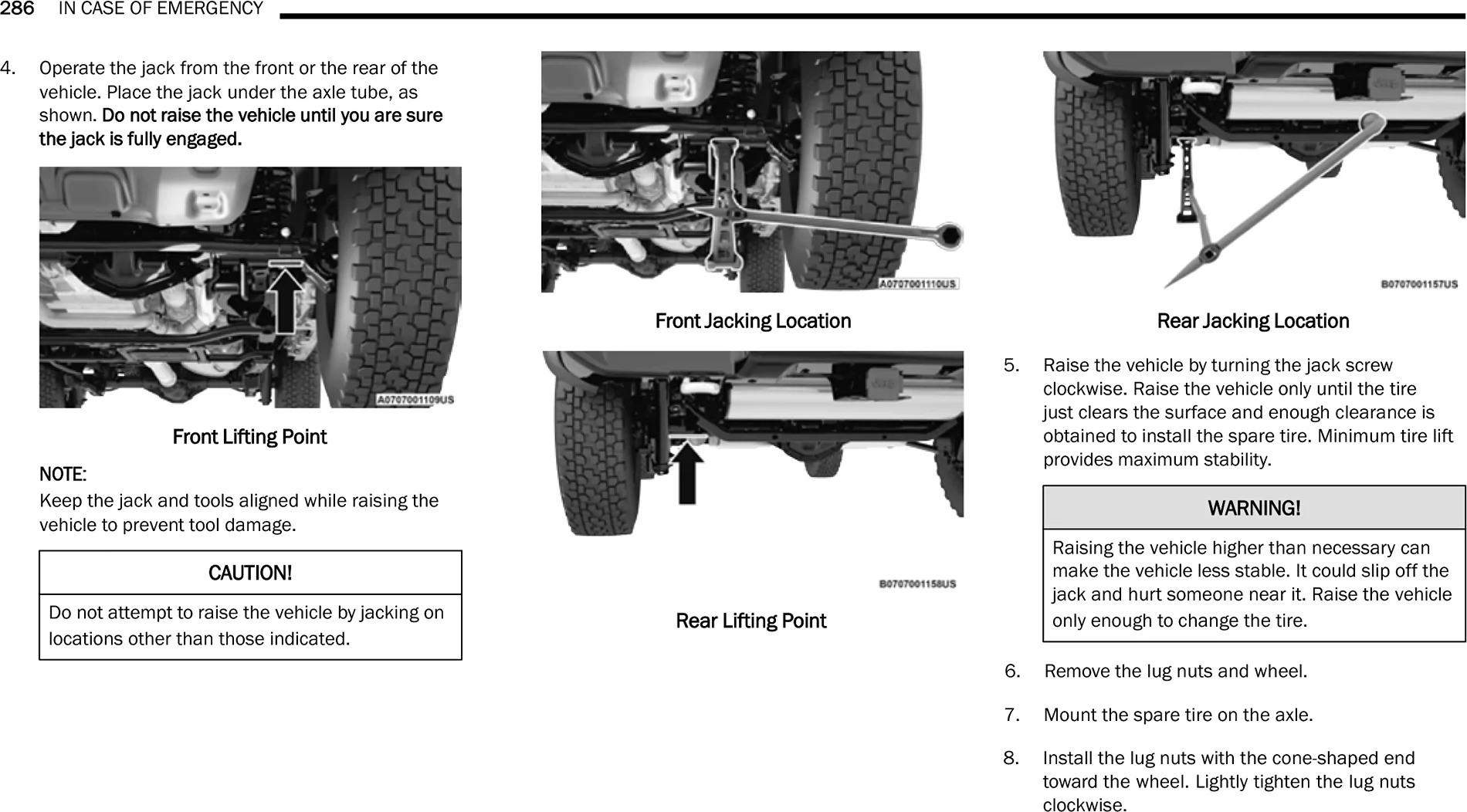
Why is this that my owner's manual specifically indicates axles as the jacking points, and not the rear differential?

Terrymo
Well-Known Member
Not sure if that’s a rhetorical question if not my non-expert opinion follows.Why is this that my owner's manual specifically indicates axles as the jacking points, and not the rear differential?
This is the factory recommendation for lifting one corner of the vehicle with a cheap factory scissor jack in order to change a tire and possibly with the assumption it is a road side repair. If you were to lift from the rear differential with the OEM jack it would not be optimal and may not lift only one corner of the vehicle.
With caution, common sense, a good floor jack, and jack stands in a garage setting you can lift from the differential or the frame. If you remove a tire and wheel for some repairs in the garage, I would also lay the wheel under the frame as an additional safety measure. If the job allows it I leave the floor jack, jack stands, and wheel under the frame all in place.
iklo
Well-Known Member
- Joined
- Mar 17, 2024
- Threads
- 25
- Messages
- 174
- Reaction score
- 204
- Location
- Top right corner
- Vehicle(s)
- 24' Willys 6MT
No, the question is not rhetorical: My BMW owner's manual specifies four corner jacking points and two central jacking points. The rear differential is not one of them, even though it is rather prominent, convenient and hard to miss.Not sure if that’s a rhetorical question if not my non-expert opinion follows.
This is the factory recommendation for lifting one corner of the vehicle with a cheap factory scissor jack in order to change a tire and possibly with the assumption it is a road side repair. If you were to lift from the rear differential with the OEM jack it would not be optimal and may not lift only one corner of the vehicle.
With caution, common sense, a good floor jack, and jack stands in a garage setting you can lift from the differential or the frame. If you remove a tire and wheel for some repairs in the garage, I would also lay the wheel under the frame as an additional safety measure. If the job allows it I leave the floor jack, jack stands, and wheel under the frame all in place.
Terrymo
Well-Known Member
Ok I took it as the owners manual say this, why would you do otherwise? The Jeep with solid front and rear axles and its frame allow for more potential jacking points.No, the question is not rhetorical: My BMW owner's manual specifies four corner jacking points and two central jacking points. The rear differential is not one of them, even though it is rather prominent, convenient and hard to miss.
Sponsored


