
Sponsored

Should You Change Your Rear Diff at 5k mi if you tow

OP
OP
UncleJimmy

UncleJimmy

Well-Known Member
First Name
James
Joined
Mar 22, 2019
Threads
9
Messages
691
Reaction score
671
Location
AZ
Vehicle(s)
2020 JLUR; 2016 Toyota Tundra
Good marketing video to sell his diff covers. But he leaves out any mention of any tests that prove the bearings aren't actually getting enough oil. Carrying more oil up and over is fine but a lot of that exta oil just splashes around inside the diff. Once you get enough to flow up and over, more doesn't buy you anything.
Every time there is a diff thread those Banks videos get inevitably linked; it's like the Amsoil of diff covers.

I am not super impressed with his (Banks marketing). I noticed he was going to test all the flat-back alu finned covers and compare for testing. Made a big deal of it and never published the results that I am aware of. And he makes a big deal about aeration, well aren't the gears perpindicular and running like an egg beater inside the diff already? Is it really going to make that much of a difference? He doesn't compare the flat back to his design.

HD truckers have been using flat back alu diff covers long before Banks, and many served them well.
Sponsored

 

jadmt

Well-Known Member
First Name
jeff
Joined
May 19, 2020
Threads
78
Messages
5,149
Reaction score
9,831
Location
montana
Vehicle(s)
2024 wrangler rubicon w/AEV 2.5 dualsport lift
I am in a dusty environment. What’s the downside to frequently changed filters?
dirt is often introduced during the filter change
 

jadmt

Well-Known Member
First Name
jeff
Joined
May 19, 2020
Threads
78
Messages
5,149
Reaction score
9,831
Location
montana
Vehicle(s)
2024 wrangler rubicon w/AEV 2.5 dualsport lift
Every time there is a diff thread those Banks videos get inevitably linked; it's like the Amsoil of diff covers.

I am not super impressed with his (Banks marketing). I noticed he was going to test all the flat-back alu finned covers and compare for testing. Made a big deal of it and never published the results that I am aware of. And he makes a big deal about aeration, well aren't the gears perpindicular and running like an egg beater inside the diff already? Is it really going to make that much of a difference? He doesn't compare the flat back to his design.

HD truckers have been using flat back alu diff covers long before Banks, and many served them well.
pretty sure before Banks they were delivering via horse an wagon.......dude has been around since the Model T i think.....
 

Terrymo

Well-Known Member
First Name
Terry
Joined
Jun 17, 2022
Threads
48
Messages
10,838
Reaction score
33,468
Location
SoCal
Vehicle(s)
2023 JLURXR 3.6 ET
Clubs
 
dirt is often introduced during the filter change
I vacuum out my air box with a shop vac and clean the inside of my diff and cover each time. I guess what you’re saying is possible. Metal is a bigger concern to me than dirt. I admit it’s overkill.
 

Apples491

Well-Known Member
First Name
Nick
Joined
Jan 16, 2022
Threads
6
Messages
514
Reaction score
1,054
Location
Denver, CO
Vehicle(s)
2022 JLUR in Hydro Blue, 2024 Nissan Ariya
Who here has actually called dana spicer and ask? They told me 75-85 on my rubicon, I did put 75-140 this last change but the 75-85 i removed looked new both times i changed it. next time will most likely go back to 75-85 because I have 3 qts of mopar 75-85 still.. just returned from Moab and traveled pretty fast back and forth and noticed 0 difference on mpg so there is that...I have made this trip 4X's now in this rig...
I asked this exact question in the larger thread and was provided with a Dana spec sheet for the m220 calling for 75w-140. Plus, the Wrangler manual calls for 75w-140 for towing. I looked for the reply but I'm not finding it quickly. If you care enough, I'm sure you could search for it.
 

Sponsored

OP
OP
UncleJimmy

UncleJimmy

Well-Known Member
First Name
James
Joined
Mar 22, 2019
Threads
9
Messages
691
Reaction score
671
Location
AZ
Vehicle(s)
2020 JLUR; 2016 Toyota Tundra
I am in a dusty environment. What’s the downside to frequently changed filters?
They say the filter becomes more efficient as it traps dirt - up to a certain point, so changing it too often will reduce efficiency.

However, if you are in an off road application, I would rather change too much than too little.
 

grimmjeeper

Well-Known Member
First Name
Roy
Joined
May 6, 2021
Threads
13
Messages
8,282
Reaction score
41,354
Location
Castle Rock, CO
Website
www.grimmjeeper.com
Vehicle(s)
2021 Wrangler, 1987 Comanche, 1997 F250
Build Thread
Link
Occupation
enginerd
They say the filter becomes more efficient as it traps dirt - up to a certain point, so changing it too often will reduce efficiency.

However, if you are in an off road application, I would rather change too much than too little.
That tends to apply to the oil soaked cotton filters like K&N. They aren't good at filtering fine particulates, which is the grit that fouls up your engine. As they get dirty they start to trap more dirt, but flow worse (like any dirty filter).

Personally, I'm not racing so that 1-2 HP gain from the filter isn't worth the long term wear on the engine.
 
OP
OP
UncleJimmy

UncleJimmy

Well-Known Member
First Name
James
Joined
Mar 22, 2019
Threads
9
Messages
691
Reaction score
671
Location
AZ
Vehicle(s)
2020 JLUR; 2016 Toyota Tundra
That tends to apply to the oil soaked cotton filters like K&N. They aren't good at filtering fine particulates, which is the grit that fouls up your engine. As they get dirty they start to trap more dirt, but flow worse (like any dirty filter).

Personally, I'm not racing so that 1-2 HP gain from the filter isn't worth the long term wear on the engine.
I believe it applies to most filters; the more the media fills with debris, the less porous it becomes, thereby improving filtration efficiency. The down side, is if it goes to far then it begins to restrict flow beyond design specs which can lead to starvation of water, oil or air, engaging bypass valves, increasing load and wear on blower motors etc. depending on application: to water filtration, house air, engine air, engine oil, and so on. And as mentioned previously, doing field check to knock out debris in the engine air filter may improve air flow (which modern engines will more than enough compensate for) at the risk of dust and dirt falling into air box to be inhaled by the engine. In those cases some sort of snorkel/centrifugal pre-filter is a better option.
 

Aonarch

Well-Known Member
First Name
Mike Hawk
Joined
Oct 20, 2021
Threads
10
Messages
903
Reaction score
1,592
Location
North GA / MT
Vehicle(s)
'25 JLUR '41, '24 F-150 V8 4x4, '22 Mach 1 6MT
Occupation
Motorsports Engineer
I am in a dusty environment. What’s the downside to frequently changed filters?
A dirty filter is a clean filter.

Dirt and dust attract dirt and dust. Even a dirty filter will still flow very well, the surface area might be reduced, but then the velocity will increase.

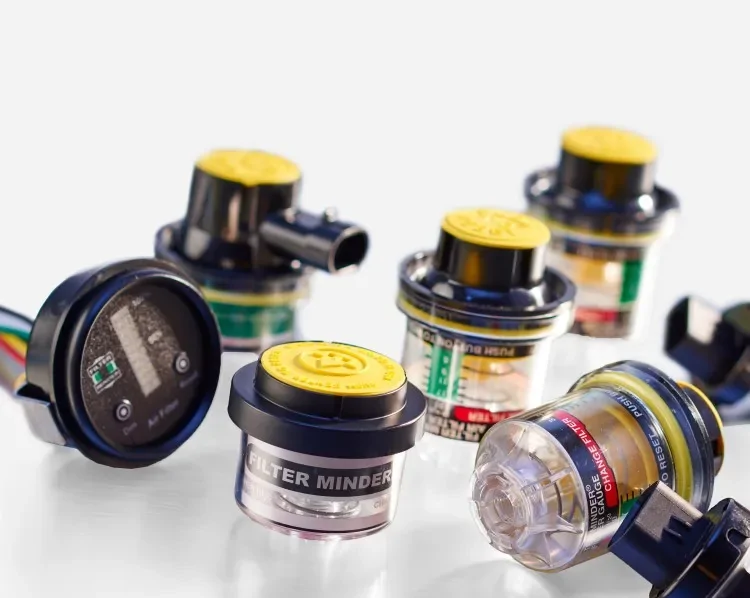
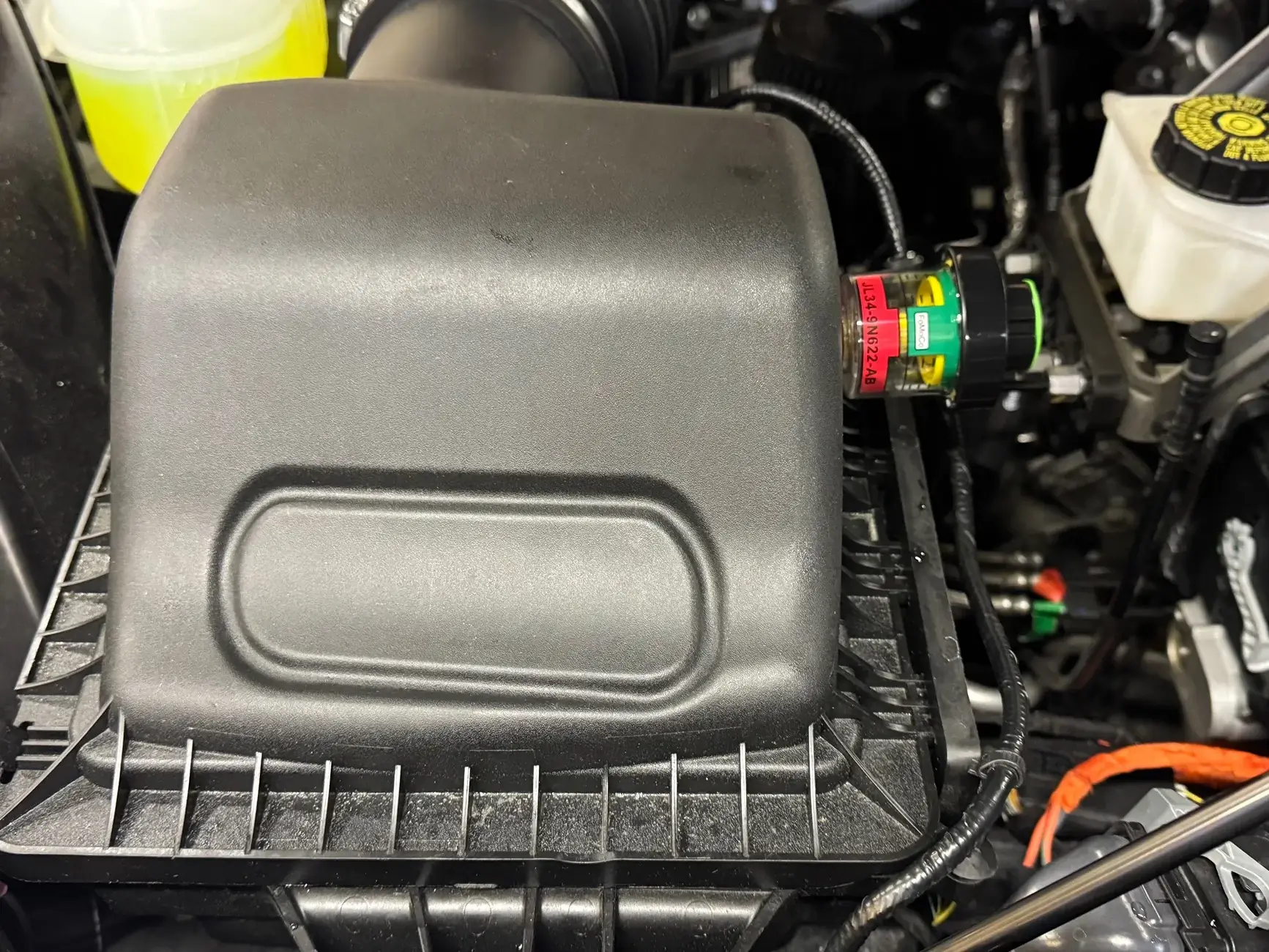
Diesels and industrial engines use Filter Minders for that exact reason. You don't change the filter until it stops flowing in spec.

Jeep Wrangler JL Should You Change Your Rear Diff at 5k mi if you tow 1763653275720-pg


F-150:

Jeep Wrangler JL Should You Change Your Rear Diff at 5k mi if you tow 1763653412368-c
 
OP
OP
UncleJimmy

UncleJimmy

Well-Known Member
First Name
James
Joined
Mar 22, 2019
Threads
9
Messages
691
Reaction score
671
Location
AZ
Vehicle(s)
2020 JLUR; 2016 Toyota Tundra
I decided to put the data from @CarbonSteel including the temp-mileage interval recommendation, into a table below for reference:

Speed:Rear Diff Temp:Change Interval:
65 mph (inferred)190F60k mi
70 mph200F50k mi
75 mph210F35k mi
80-85 mph225F20k mi
mountains245F10k mi
towing (inferred)260F5k mi

*Data is based on Rubicon, 33" tires, unloaded, 4.10 gears.
** If higher load (tires, gears, weight, wind, mountains, extreme heat etc), increase interval.
*** Reduce speed to reduce temps, particularly at the extreme of towing, in the mountains, with large tires, heavily loaded.

Link to original post with data:
https://www.jlwranglerforums.com/fo...-temperature-gauges.41835/page-2#post-1267004

Link or original change interval recommendations:
https://eastcoastgearsupply.com/ft-2536-ecgs-gear-oil-recommendation.html
 
Last edited:

Sponsored

OP
OP
UncleJimmy

UncleJimmy

Well-Known Member
First Name
James
Joined
Mar 22, 2019
Threads
9
Messages
691
Reaction score
671
Location
AZ
Vehicle(s)
2020 JLUR; 2016 Toyota Tundra
Very important read. Pasting here in case link breaks:

ECGS Gear Oil Recommendation
ECGS recommends Dino (Non-Synthetic) 85w140 Lucas oil with a Ford or Dana limited slip additive for clutch style posi's. The gear oil question is an age old debate that comes down to opinion. We base our opinion on differentials we have seen. Scientifically it has been proven that when measuring diff temps, the actual “metal objects” stay cooler using a quality dino oil with an additive package over synthetic oils. However it has been proven that synthetic “oils” can stay cooler then dino oil. So it depends on what temperature you measure the “metal” or the “oil” hence why both can claim they are better.

Other findings, and this varies based on the actual synthetic used: Synthetics thin out quickly once hot and lose their cling ratio to the metal object, when the oil is stuck to the gear it provides a cooling factor for the metal. We also believe that dino oil has better pressure properties, ie it provides a better cushion then synthetic for two reasons. First, it does not thin out as much and two it clings to the gear.

Another important attribute of differential oil is water separation. A gear oil that will hold its separation from water will protect the differential. It is in our experience that if you add water to a diff with Synthetic there is no clear delineation between the two. On a dino oil there is excellent water separation properties. Water will ruin diffs as it affects its pressure properties resulting in surface wear quickly, so any oil that keeps its separation properties will outperform one that will not.
An easy not so scientific test is to install synthetic and run your diff for 30 minutes, pop cover and watch how it comes out and feel it. Most we have seen are extremely thin and act almost like water. Same test with Lucas it runs slower and will be stuck to the gear.

All synthetics cost more money than Lucas dino oil, and I feel there is a risk in what you are getting with synthetic. I find it much wiser to run the lower cost oil and increase the frequency of change. No matter which oil used, the higher the heat in the diff, the faster oxidation occurs and the oil breaks downs. At 140 degrees if no trash or moisture is introduced oil will basically last a million miles. However for roughly every 20 degrees above 140 it cuts life expectancy in half. A well broke in diff under normal conditions will run around 200 degrees and a quality gear oil will last 100k using above formula. However it is not uncommon for differentials to see higher temps when worked hard (steep grades, towing, speed, shock loading, ect.) which is why manufacturers generally recommend 30k intervals normal service and 15k or less for severe service. A differential that is too small for the vehicle obviously sees more strain and thus builds more heat. So an undersized diff under normal conditions will run hotter and require more frequent changes. Other notes on heat: 300 degrees is too hot, 250-270 is normal for a new diff and gear oil should be changed at 500 miles.

In the end comparing gear oil is a useless debate that is tainted by advertisement and claims that aren’t proven, it all comes down to heat and the oil breaking down. Instead of spending $100 dollars on synthetic, spend $20 on Lucas and install a $50 temp gage on your diff. If your diff regularly sees mileage over 200f change the oil frequently, if it doesn't save your money. The flip side to this is synthetic sellers say their oil stays cooler and lasts longer. I think it is false advertisement that can't be proven by the average purchaser. If you ran dino and the diff regularly ran above 200 it would be worth trying a high quality synthetic oil and proving their claims with a temp gauge.

Opinions on specific gear oils:

Royal Purple:
In our opinion one of the worst gear oils made
Valvoline synthetic: Better than royal purple but dino out performs
Ford synthetic: Probably Valvoline not the worst but think dino is better
GM synthetic: Similar to ford
Toyota synthetic: Average same performance as most dino's I think lucas is better
Mobil 1 synthetic: Better than economy dino's and is likely comparable to Lucas or other quality dinos with additive packages
Amsoil severe duty: Better than all economy Dino's and all synthetics on the market, but marginal over a quality dino with additive package
Redline shockproof: Same as amsoil

The only synthetic's I would consider are Amsoil, and redline, along with some industrial synthetic's that aren't really marketed to your everyday user. But would only consider if I was trying to control a heat problem, or shock load issue generally related to doing something the differential was never designed to do in the first place.

In the end changing the oil more frequently will result in less wear and longer life in and will cost less money.

Conclusion Notes:
• ECGS RECOMMENDS LUCAS DINO 85W140 & LUCAS 80W90 FOR EXTREME COLD

• 4 Most Important Attributes to Gear Oil
o Cling Ratio
o Water separation properties
o Cushioning Factor
o Temperature Control

• Temp Reference Chart – oil change frequency
o 170 Deg - 100,000 Miles
o 200 Deg - 50,000 Miles
o 220 Deg - 25,000 Miles
o 240 Deg - 12,000 Miles
o 260 Deg - 5,000 Miles
o 260-300 Deg – 500-1000 Miles until Temp is controlled

• Differential Temp Guide
o 250-275 Degrees is Normal for new differentials breaking in, do not Tow or take long road trips for first 500 miles as this builds additional heat. 300 degrees is to hot and diff should be allowed to cool.
o Normal operating Temp for a differential adequate for vehicle in stock applications 170-220 degrees
o Normal operating Temp - Large tires, Undersized Differentials, Towing 200-250 Degrees.

• Final Notes
o Change your oil frequently your diff will thank you
o If water is ever introduced to differential change it immediately, keep in mind that a differential that is hot and then becomes cool will naturally draw in moisture, so it is not always a water crossing that causes moisture contamination, always run a vent to a dry area and insure it breathes easily.


https://eastcoastgearsupply.com/ft-2536-ecgs-gear-oil-recommendation.html
 

CarbonSteel

Well-Known Member
Joined
Jul 21, 2019
Threads
305
Messages
5,795
Reaction score
8,216
Location
Colorado
Vehicle(s)
2001 Cherokee; 2023 Bronco Wildtrak; 2024 Grand Cherokee 4xe
Vehicle Showcase
1
Very important read. Pasting here in case link breaks:

ECGS Gear Oil Recommendation
ECGS recommends Dino (Non-Synthetic) 85w140 Lucas oil with a Ford or Dana limited slip additive for clutch style posi's. The gear oil question is an age old debate that comes down to opinion. We base our opinion on differentials we have seen. Scientifically it has been proven that when measuring diff temps, the actual “metal objects” stay cooler using a quality dino oil with an additive package over synthetic oils. However it has been proven that synthetic “oils” can stay cooler then dino oil. So it depends on what temperature you measure the “metal” or the “oil” hence why both can claim they are better.

Other findings, and this varies based on the actual synthetic used: Synthetics thin out quickly once hot and lose their cling ratio to the metal object, when the oil is stuck to the gear it provides a cooling factor for the metal. We also believe that dino oil has better pressure properties, ie it provides a better cushion then synthetic for two reasons. First, it does not thin out as much and two it clings to the gear.

Another important attribute of differential oil is water separation. A gear oil that will hold its separation from water will protect the differential. It is in our experience that if you add water to a diff with Synthetic there is no clear delineation between the two. On a dino oil there is excellent water separation properties. Water will ruin diffs as it affects its pressure properties resulting in surface wear quickly, so any oil that keeps its separation properties will outperform one that will not.
An easy not so scientific test is to install synthetic and run your diff for 30 minutes, pop cover and watch how it comes out and feel it. Most we have seen are extremely thin and act almost like water. Same test with Lucas it runs slower and will be stuck to the gear.

All synthetics cost more money than Lucas dino oil, and I feel there is a risk in what you are getting with synthetic. I find it much wiser to run the lower cost oil and increase the frequency of change. No matter which oil used, the higher the heat in the diff, the faster oxidation occurs and the oil breaks downs. At 140 degrees if no trash or moisture is introduced oil will basically last a million miles. However for roughly every 20 degrees above 140 it cuts life expectancy in half. A well broke in diff under normal conditions will run around 200 degrees and a quality gear oil will last 100k using above formula. However it is not uncommon for differentials to see higher temps when worked hard (steep grades, towing, speed, shock loading, ect.) which is why manufacturers generally recommend 30k intervals normal service and 15k or less for severe service. A differential that is too small for the vehicle obviously sees more strain and thus builds more heat. So an undersized diff under normal conditions will run hotter and require more frequent changes. Other notes on heat: 300 degrees is too hot, 250-270 is normal for a new diff and gear oil should be changed at 500 miles.

In the end comparing gear oil is a useless debate that is tainted by advertisement and claims that aren’t proven, it all comes down to heat and the oil breaking down. Instead of spending $100 dollars on synthetic, spend $20 on Lucas and install a $50 temp gage on your diff. If your diff regularly sees mileage over 200f change the oil frequently, if it doesn't save your money. The flip side to this is synthetic sellers say their oil stays cooler and lasts longer. I think it is false advertisement that can't be proven by the average purchaser. If you ran dino and the diff regularly ran above 200 it would be worth trying a high quality synthetic oil and proving their claims with a temp gauge.

Opinions on specific gear oils:

Royal Purple:
In our opinion one of the worst gear oils made
Valvoline synthetic: Better than royal purple but dino out performs
Ford synthetic: Probably Valvoline not the worst but think dino is better
GM synthetic: Similar to ford
Toyota synthetic: Average same performance as most dino's I think lucas is better
Mobil 1 synthetic: Better than economy dino's and is likely comparable to Lucas or other quality dinos with additive packages
Amsoil severe duty: Better than all economy Dino's and all synthetics on the market, but marginal over a quality dino with additive package
Redline shockproof: Same as amsoil

The only synthetic's I would consider are Amsoil, and redline, along with some industrial synthetic's that aren't really marketed to your everyday user. But would only consider if I was trying to control a heat problem, or shock load issue generally related to doing something the differential was never designed to do in the first place.

In the end changing the oil more frequently will result in less wear and longer life in and will cost less money.

Conclusion Notes:
• ECGS RECOMMENDS LUCAS DINO 85W140 & LUCAS 80W90 FOR EXTREME COLD

• 4 Most Important Attributes to Gear Oil
o Cling Ratio
o Water separation properties
o Cushioning Factor
o Temperature Control

• Temp Reference Chart – oil change frequency
o 170 Deg - 100,000 Miles
o 200 Deg - 50,000 Miles
o 220 Deg - 25,000 Miles
o 240 Deg - 12,000 Miles
o 260 Deg - 5,000 Miles
o 260-300 Deg – 500-1000 Miles until Temp is controlled

• Differential Temp Guide
o 250-275 Degrees is Normal for new differentials breaking in, do not Tow or take long road trips for first 500 miles as this builds additional heat. 300 degrees is to hot and diff should be allowed to cool.
o Normal operating Temp for a differential adequate for vehicle in stock applications 170-220 degrees
o Normal operating Temp - Large tires, Undersized Differentials, Towing 200-250 Degrees.

• Final Notes
o Change your oil frequently your diff will thank you
o If water is ever introduced to differential change it immediately, keep in mind that a differential that is hot and then becomes cool will naturally draw in moisture, so it is not always a water crossing that causes moisture contamination, always run a vent to a dry area and insure it breathes easily.


https://eastcoastgearsupply.com/ft-2536-ecgs-gear-oil-recommendation.html
I really like ECGS and the services they provide, but will disagree with them that a synthetic like Amsoil is "marginal over a quality dino with additive package". There is no way a conventional (dino) gear oil can handle either cold or heat better than a synthetic. It has been proven countless times in the past 20 years.

I use conventional for break-in because it is cheap, gets the job done, and will be dumped in short order, but synthetics rule everywhere they can be applied.

TBT even many of the conventional engine oils on the market today are part synthetic and are no longer "all dino".
 

Terrymo

Well-Known Member
First Name
Terry
Joined
Jun 17, 2022
Threads
48
Messages
10,838
Reaction score
33,468
Location
SoCal
Vehicle(s)
2023 JLURXR 3.6 ET
Clubs
 
A dirty filter is a clean filter.

Dirt and dust attract dirt and dust. Even a dirty filter will still flow very well, the surface area might be reduced, but then the velocity will increase.

Diesels and industrial engines use Filter Minders for that exact reason. You don't change the filter until it stops flowing in spec.

1763653275720-pg.webp


F-150:

1763653412368-ce.webp
Is a new filter out of spec in your example?
I concede that changing a filter too often may be wasteful in some environments, I’m still not hearing anything to that convinces me against “too often”. Doesn’t mean I’m right, just my choice.
 

Aonarch

Well-Known Member
First Name
Mike Hawk
Joined
Oct 20, 2021
Threads
10
Messages
903
Reaction score
1,592
Location
North GA / MT
Vehicle(s)
'25 JLUR '41, '24 F-150 V8 4x4, '22 Mach 1 6MT
Occupation
Motorsports Engineer
Is a new filter out of spec in your example?
I concede that changing a filter too often may be wasteful in some environments, I’m still not hearing anything to that convinces me against “too often”. Doesn’t mean I’m right, just my choice.
Generic example/ explanation: A brand new filter will not filter as well as a filter with 5k miles or 10k miles for the average driving conditions. The dirt and dust in the filter media help trap incoming dirt and dust. When the filter element is brand new and clean, there is no dirt and dust to help trap the containments, only the filter media itself.

Similar thing will oil. Changing your oil and oil filter every single day would be worse than 3k miles. The detergents would be refreshed every single day to their maximum levels and containments wouldn't be trapped either.
 

Terrymo

Well-Known Member
First Name
Terry
Joined
Jun 17, 2022
Threads
48
Messages
10,838
Reaction score
33,468
Location
SoCal
Vehicle(s)
2023 JLURXR 3.6 ET
Clubs
 
Generic example/ explanation: A brand new filter will not filter as well as a filter with 5k miles or 10k miles for the average driving conditions. The dirt and dust in the filter media help trap incoming dirt and dust. When the filter element is brand new and clean, there is no dirt and dust to help trap the containments, only the filter media itself.

Similar thing will oil. Changing your oil and oil filter every single day would be worse than 3k miles. The detergents would be refreshed every single day to their maximum levels and containments wouldn't be trapped either.
It’s a Jeep with a 3.6 mostly driven in dusty off road conditions. I don’t have high hopes either way. I appreciate your answer though.
Sponsored


Top