
Sponsored

Viscosity Breakdown in Oils

TheRaven

Well-Known Member
Joined
Oct 22, 2020
Threads
6
Messages
2,844
Reaction score
4,176
Location
Reading, Pennsylvania
Vehicle(s)
Sold
Isn't the contention that we once had a 4.0L inline 6 that would march to 400k without complaint, and now we have a finicky V6 that uses aluminum and plastic parts (lighter) and might eek out 200k without needing a top-end rebuild because, lighter weight oils and other marginal improvements in fuel economy - basically a comforting scapegoat, blaming the government for all our problems -

200k is still a good run and doesn't sacrifice reputation, but it's not legendary. What automakers are saying is the bulk of consumers who are the initial buyer don't want to keep a vehicle to 400k anyway, they dump them and buy a new one, probably closer to the 200k mark on a long run. So they feel they can get away with these engineering trade-offs.
Yes - there are like 10 people on the planet who might expect to keep a vehicle to 400k. No automaker has ever engineered a vehicle with that kind of longevity in mind. 200k is the benchmark. And that's exactly what i'm saying - no one is going to see any kind of difference up through the 200k mark whether they use 0W-20 or 5W-30, or really any of the viscosities you'll find on the WalMart shelf. If the lighter weight oil actually even does make the motor more efficient, it's not going to be something that's going to show up in EPA testing, let alone end-user daily driving...so it's not something that any automaker is going to risk a quality reputation on. That's just crazy talk.

How long an engine SHOULD last can certainly be debated...but above 200k I think most would agree all bets are off. Anything that makes it that long is damn impressive.

Don't really know how anyone could believe this after the last few decades of build quality.

Ask any mechanic - modern cars are built to go 100K miles. After that, all bets are off.
Last few decades? Nah. Maybe last decade...but i'd say more like last 6-8 years at most. I've had several 21st century vehicles pass the 200k threshold without a single drivetrain issue. I've had many more that I had perfect confidence would have if I had kept them that long.

Even saying that - the big problem with today's vehicles lasting that long isn't even the drivetrain - it's all the complexity. There's just too much schtuff amounting to too much money involved which means that today's vehicles are going to become economically poor choices at high mileage.
Sponsored

 

21 Willys

Well-Known Member
First Name
David
Joined
Feb 13, 2021
Threads
1
Messages
113
Reaction score
154
Location
Shoals Junction, SC
Vehicle(s)
2021 JL Willys Sarge Green
I'm not sure, but I may have posted this before. But it is definitely applicable to the Title of this Thread. The Design Engineer, for the Pentastar 3.6 engine, explains the oil viscosity needed, in certain parts of the engine. In other words, this is from the horses mouth, of the Design Engineer, that designed it. GREAT ADVICE! Please see below:

Nice! As an former Pentastar design engineer I am slightly bias but the engine is really high quality. Few points from the development using tens of millions of dollars in analysis and testing regarding the oil and durability..... The lighter oil was chosen mostly for fuel economy BUT engineering is the science of compromise. You help one thing but hurt another. A thicker oil will reduce timing chain and tensioner wear because the center timing chain idler doesn't go fully hydrodynamic till about 1650rpm on 5w-20. So, a thicker oil will lower that number slightly and with general loads/speeds the engine spends a lot of time around 1500-1750 rpm with the 8 speed. So thicker oil is a win there. Additionally, the earlier engines had what was called the "McDonald's Arches" in the idler bearing which was intended in making a more uniform distribution but in actuality acted as a knife edge. This design was changed around 2014 to a smooth bearing. So overall timing chain issues will likely follow the 2011-2014 engine years more than 2014+. Where you lose.... The head is very complicated with a Type II valve train. Meaning lots of things to pressurize and pump up at start up. A thicker oil didn't do so well here (on long sit times +cold start) and contributed to a overall increased engine wear especially in the head and cam bearings. Last point. This engine needs occasional WOT runs if you want it to last. Granny cycling is bad for it. So bad for it we actually created a new granny cycle test during the cylinder #3 misfire issue. The highest wear is in the valve guides, because of tight valve stem seals (for emissions, reduce oil burn). They basically dry out. When you go WOT/high rpm/load you get some fresh oil in there and this keeps the wear down. Thicker oil might not help this condition but we also change the valves/guides/seals in 2014+. Not sure the impact. Cheers! Kevin PS. Turn off stop start and do not run e85 if you are concerned about engine wear. Eats the engine alive.
So, what viscosity would you recommend for someone who is not worried about fuel mileage, but wants their engine to last longer?
 

NWJeepr

Banned
Banned
Banned
Joined
Apr 28, 2023
Threads
29
Messages
3,638
Reaction score
7,873
Location
Twin Peaks
Vehicle(s)
2025 Wrangler 2-door
Yes - there are like 10 people on the planet who might expect to keep a vehicle to 400k. No automaker has ever engineered a vehicle with that kind of longevity in mind. 200k is the benchmark. And that's exactly what i'm saying - no one is going to see any kind of difference up through the 200k mark whether they use 0W-20 or 5W-30, or really any of the viscosities you'll find on the WalMart shelf. If the lighter weight oil actually even does make the motor more efficient, it's not going to be something that's going to show up in EPA testing, let alone end-user daily driving...so it's not something that any automaker is going to risk a quality reputation on. That's just crazy talk.

How long an engine SHOULD last can certainly be debated...but above 200k I think most would agree all bets are off. Anything that makes it that long is damn impressive.


Last few decades? Nah. Maybe last decade...but i'd say more like last 6-8 years at most. I've had several 21st century vehicles pass the 200k threshold without a single drivetrain issue. I've had many more that I had perfect confidence would have if I had kept them that long.

Even saying that - the big problem with today's vehicles lasting that long isn't even the drivetrain - it's all the complexity. There's just too much schtuff amounting to too much money involved which means that today's vehicles are going to become economically poor choices at high mileage.
People have been lamenting "build quality" for so many decades, as well as complexity. Remember the 80's? Old guys hissing at things like Tuned Port Injection with primitive electronic engine management, and saying these "80's ****boxes" will never last! Here we are 40 years later, they're still around, you can still buy parts for them, and there are no shortage of people who can fix things like old ECMs/PCM's and all those archaic old modules. And troubleshooting those things is actually fairly simple with basic electrical knowledge.

New cars are a level-up, obviously, but I think that trend will continue. For better or worse, vehicles are "disposable" but there will always be a market for repairing old stuff, and there's also a market for used stuff (salvage, resellers, etc).
 
OP
OP
roaniecowpony

roaniecowpony

Well-Known Member
Joined
Dec 4, 2018
Threads
193
Messages
12,903
Reaction score
20,398
Location
SoCal
Vehicle(s)
2018 JLUR, 14 GMC 1500 CC All TERRAIN
Occupation
Retired Engineer

TheRaven

Well-Known Member
Joined
Oct 22, 2020
Threads
6
Messages
2,844
Reaction score
4,176
Location
Reading, Pennsylvania
Vehicle(s)
Sold
People have been lamenting "build quality" for so many decades, as well as complexity. Remember the 80's? Old guys hissing at things like Tuned Port Injection with primitive electronic engine management, and saying these "80's ****boxes" will never last! Here we are 40 years later, they're still around, you can still buy parts for them, and there are no shortage of people who can fix things like old ECMs/PCM's and all those archaic old modules. And troubleshooting those things is actually fairly simple with basic electrical knowledge.

New cars are a level-up, obviously, but I think that trend will continue. For better or worse, vehicles are "disposable" but there will always be a market for repairing old stuff, and there's also a market for used stuff (salvage, resellers, etc).
Yes - but never before has so much money been involved. That's the differentiator - because that is always (for the smart person) the question that leads to the decision to replace a vehicle: "is this vehicle worth putting $XXXX into at this point?". We've always complained about vehicles getting more complex, more difficult to repair...but never before has there been such high potential for what should be a routine repair to cost more than a vehicle is worth (or at least so much that it's not worth keeping the vehicle any longer). Combined with the fact that for any given person, the vehicle they drive continues to become a larger and larger relative expense for them as time passes. We all know how slow household incomes have been to increase, but a $50k vehicle is now considered mainstream whereas that was exclusively luxury car territory a little over a decade ago.
 

Sponsored

Odyssey USA

Well-Known Member
First Name
Daniel
Joined
Oct 22, 2019
Threads
124
Messages
3,894
Reaction score
3,394
Location
Indiana
Website
www.youtube.com
Vehicle(s)
2021 JLU Rubicon
Build Thread
Link
I run 5w-40 API SP now, slowly progressing up from the standard weight. No economy loss. No additional time added to cold start noise. Nothing notable during my self done oil changes. Magnetic fancy neodymium oil drain plug…. Same. Nothing considerable.

Much much quieter though.

In the winter, I might go with a 0w-40 to be safe with cold flow characteristics but it’s not necessary if you look at the operating temp range.
 

NWJeepr

Banned
Banned
Banned
Joined
Apr 28, 2023
Threads
29
Messages
3,638
Reaction score
7,873
Location
Twin Peaks
Vehicle(s)
2025 Wrangler 2-door
Yes - but never before has so much money been involved. That's the differentiator - because that is always (for the smart person) the question that leads to the decision to replace a vehicle: "is this vehicle worth putting $XXXX into at this point?"
<snip>
Agreed. Sadly, I think the equation has become "I want a new car, or I have to replace an old car, can I afford a $,$$$ monthly payment? Nope? I'll take it! Will the bank do an 84-month loan?!"
 

NWJeepr

Banned
Banned
Banned
Joined
Apr 28, 2023
Threads
29
Messages
3,638
Reaction score
7,873
Location
Twin Peaks
Vehicle(s)
2025 Wrangler 2-door
Speaking of viscosity, have we breached the subject of viscosity dilution because of fuel, aka government-mandated Direct Injection? Should we start with straight 75-140 gear oil in the engine now?
 
OP
OP
roaniecowpony

roaniecowpony

Well-Known Member
Joined
Dec 4, 2018
Threads
193
Messages
12,903
Reaction score
20,398
Location
SoCal
Vehicle(s)
2018 JLUR, 14 GMC 1500 CC All TERRAIN
Occupation
Retired Engineer
One thing I learned in 30 years of engineering is that a good portion of designs of complex machines will not perform in service as perfectly as intended. Some fail completely to perform as intended, some get it done for a while, but not as long as expected. All kinds of unexpected performance failures occur. I made a career out of understanding chronic failures of critical airplane systems and communicating to regulators what happened, why, and what we were going to do to fix it. That interview with the Mopar engineer highlights the reality. He couldn't know what the in-service experience would bring. Failed cams and rockers, blown head gaskets, and endless oil filter housing issues.
 
OP
OP
roaniecowpony

roaniecowpony

Well-Known Member
Joined
Dec 4, 2018
Threads
193
Messages
12,903
Reaction score
20,398
Location
SoCal
Vehicle(s)
2018 JLUR, 14 GMC 1500 CC All TERRAIN
Occupation
Retired Engineer
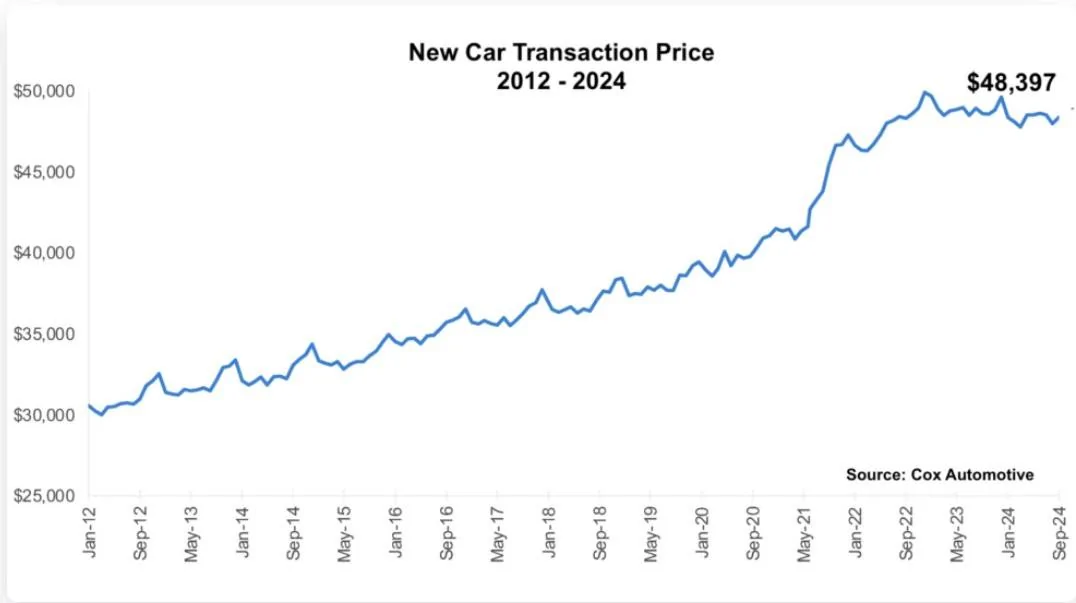
Yes - but never before has so much money been involved. That's the differentiator - because that is always (for the smart person) the question that leads to the decision to replace a vehicle: "is this vehicle worth putting $XXXX into at this point?". We've always complained about vehicles getting more complex, more difficult to repair...but never before has there been such high potential for what should be a routine repair to cost more than a vehicle is worth (or at least so much that it's not worth keeping the vehicle any longer). Combined with the fact that for any given person, the vehicle they drive continues to become a larger and larger relative expense for them as time passes. We all know how slow household incomes have been to increase, but a $50k vehicle is now considered mainstream whereas that was exclusively luxury car territory a little over a decade ago.
Agreed. In 2012 a new car average about 68% of the average annual wage. In 2023, a new car averaged about 73% of the average annual wage. The cost of vehicles makes a big bump from around 2021. Pretty obvious what did it.

Jeep Wrangler JL Viscosity Breakdown in Oils new car prices
 

Sponsored

azjl#3

Well-Known Member
First Name
Scott
Joined
Sep 24, 2022
Threads
17
Messages
3,041
Reaction score
3,681
Location
North AZ
Vehicle(s)
2024 silver zenith or atomic silver. JLUR Extreme Recon-ish
Occupation
retired, grumpy, yet, friendly
I'm going to disagree. Profitability of any company is its top priority. Without profitability you don't have a business, you have a philanthropic enterprise.

If a company could magically create an engine or car that would 100% of the time run reliably a specified number of miles, then stop running, they may not do it if it costs too much. They certainly wouldn't have a design goal of lasting as long as possible. That would be economically impracticable. So, they play the game of statistical probabilities of failures and how that affects the bottom line.

Two airplane companies design a plane for the same market. Both had the same target market. But each had slightly different goals. One made their fuselage .062" thick. The other made their fuselage .032" thick. Decades later, it was clear who won the most sales. The thinner one just edged out the thicker one in fuel economy. It was also clear which one lasted longer. The thicker ones lasted much longer than the thinner ones. In the end, the company that made thin airplanes made much more money and beat the other company out of the market completely. Those airliners had original design life around 30,000 hours. But Douglas airplanes were able to continue to fly safely out beyond twice that. The other, not so much, but it burned less fuel. The companies were Douglas and Boeing.

An engine, like an airplane, has a design life. The design life is established by input from marketing, customer support, bean counters, etc. Engineering has a place at the table in the decision, but it isn't their's alone to decide the design life. If it were, many products would last much longer than they do. The project management has to consider regulatory requirements as well as marketing requirements. Engineering has the job of implementing what is possible.
Yet, I don't see Douglas around anymore. Being a Fan of Douglas products, see avatar.

On longevity, while hoping a motor runs for 200,000 miles would be great, is that a realistic goal when it will take 20 years to get there, and btw, the rest of the car was all replaced at 15 years tranny, radiator, seats, etc). I remember reading a study on keeping a car for life. And it turned out right around 20 years was the best case life for a car, beyond that, sell it and start over or you are just throwing money at it.
 

BDinTX

Well-Known Member
First Name
Brad
Joined
Jul 18, 2020
Threads
49
Messages
2,941
Reaction score
5,438
Location
Dallas, Tx
Vehicle(s)
2020 JLU Rubicon Recon, 2021 JLU Rubicon
The EcoDiesel also has a couple of monster timing chains that breaks down the oil modifiers, not to mention it runs hot as sin...

A 40 weight oil should be between 11.9 & 15.3 cSt@ 100* C
Virgin oil analysis of my oil (Motul 5w40) showed it at 12.66.
Every oil analysis I've done on the used oil shows it between 11.37 & 11.48 cSt with varying OCIs and no fuel dilution thinning it out.

Three examples of Jeep decisions to meet emissions/mpg standards vs component longevity.
  • Gear oil recommended by Jeep is thinner than the gear oil recommended by Dana.
  • Jeep says the transmission fill is a "lifetime" fill vs ZF saying it should be changed at 50k miles.
  • Oil specifications that require low ZDDP and SAPs to protect emissions components (DPF/SCR/CAT). Those additives were specifically added to reduce engine wear.
 

jbcrane

Well-Known Member
First Name
John
Joined
Jul 4, 2021
Threads
35
Messages
1,317
Reaction score
2,980
Location
40.5853° N, 105.0844° W
Vehicle(s)
Just a Jeep, M'am.
Build Thread
Link
Occupation
3D Animation
Vehicle Showcase
1
I'm not an engineer, but sure understand science of compromise. My 3.6 has seen nothing but the recommend 0W-20 full synthetic since the beginning because that's what 'it' says to do.

From the aforementioned article with the Pentastar engineer (thanks for that @Old Dogger - great stuff), it seems the 'thinner' 0W-20 is still the preferred choice due to the complicated type II valve train. If I read correctly it sounds like the idler bearing problem was somewhat mitigated by eliminating the "McDonalds Arches," leaving the next up problem to solve: getting oil to all the moving parts in the valve train at start up. 0W-20 seems to address this.

But I've gotta say... this seems to make a strong case for circling back to the Baxter Oil Filter Adaptor (and perhaps running a thicker oil). If so, I can't help wondering why engineers didn't figure something like this into the Pentastar design...

That said, I enthusiastically support the recommendation of giving the engine WOT runs. I'm heading out to lunch now ;-). Great thread @roaniecowpony.Thanks. JBC
 

Old Dogger

Well-Known Member
First Name
Bill
Joined
Nov 15, 2021
Threads
21
Messages
3,275
Reaction score
3,955
Location
Cave Creek Arizona
Vehicle(s)
2013 JKR, 2016 JKURHR 2018 JLR, 2025 Gladiator Mojave.
Occupation
Retired
So 0w30 would fit your definition of ticker oil ?
That means, that it has more resistance to flow, than 0w20. As the viscosity numbers increase, so does the resistance for the oil to flow. Therefore, 30 viscosity is thicker than 20 viscosity.
 
OP
OP
roaniecowpony

roaniecowpony

Well-Known Member
Joined
Dec 4, 2018
Threads
193
Messages
12,903
Reaction score
20,398
Location
SoCal
Vehicle(s)
2018 JLUR, 14 GMC 1500 CC All TERRAIN
Occupation
Retired Engineer
Yet, I don't see Douglas around anymore. Being a Fan of Douglas products, see avatar.

On longevity, while hoping a motor runs for 200,000 miles would be great, is that a realistic goal when it will take 20 years to get there, and btw, the rest of the car was all replaced at 15 years tranny, radiator, seats, etc). I remember reading a study on keeping a car for life. And it turned out right around 20 years was the best case life for a car, beyond that, sell it and start over or you are just throwing money at it.
The military side of MDC is still pretty well intact under Boeing. The commercial side of MDC is just a thin wisp of vapor, having lost the race for commercial market. After the merger, commercial in LB dwindled sharply from about 10,000 employees (all disciplines) down to a few hundred design engineers, a couple hundred customer support engineers and zero production people. I survived all of the reductions. Most of the engineering staff was "gray-beards". The former MDC engineering staff was kept around by Boeing because they were a very profitable organization doing passenger to freighter conversions of MD-11s. But we didn't have a future. We had to beg for projects from the north to work on. They gave out some crumbs, a little at a time. The advantage of a bunch of older more seasoned engineers was very clear. We got shit done under budget and schedule, repeatedly. Pretty soon, we were getting enough work to expand the staff. 25 years later, it's a key design center for the company. Most of the MDC retreads are gone, myself included.

I had one vehicle I drove about half a million miles. It would be unrealistic to expect most DIY mechanics to have maintained that car, let alone anyone that had to pay someone to maintain/repair that 79 El Camino. I drove a 99 GMC pickup for a couple hundred thousand. That engine never had one issue and it's still going with a friend at around 300k. The last couple of pickups got sold after 100k without any issues. I got 34k out of my first 3.6 engine in my JL. I have no trust that the new engine will go the next 50k without issue. That's pretty difficult for me to stomach, coming from GM trucks.
Sponsored


Top